
Southwest Missouri sits in one of the most storm-active corridors in the state. A single spring storm cell can drop golf-ball hail and produce tornado-force winds in the same hour. After the storm passes, most homeowners in Springfield, Ozark, Nixa, or Branson are left wondering what actually hit their roof. This guide explains what tornado damage looks like compared to hail damage, why the difference matters for insurance, and what a professional roofer checks during an inspection.
TLDR: Hail damage is random and circular, with bruises and granule loss scattered across the whole roof. Tornado and high-wind damage is directional, concentrated at edges and corners, with missing or lifted shingles. Southwest Missouri often gets both in the same storm. Knowing the difference strengthens your insurance claim.
Why Southwest Missouri Gets Both Types of Storm Damage
The NWS Springfield forecast area records about 10 tornadoes per year. Missouri as a whole averages 56 tornadoes per year (1997 to 2022, NOAA), and 87 hailstorms caused $17.5 million in property damage statewide from 2012 to 2021. Peak severe weather runs from April through June, but storms hit year round.
The damage type matters because insurance adjusters evaluate hail claims and wind claims differently. Hail damage follows a random pattern and may qualify for a full replacement based on hit count alone. Wind damage follows a directional pattern and may result in a partial repair. When both types exist, each needs separate documentation.
Pro tip: Insurance companies use NWS weather data to verify storm events. Having the storm date and the NWS Springfield event summary ready strengthens your claim.
What Hail Damage Looks Like on a Roof
Hail damage on asphalt shingles appears as circular dark spots where granules have been knocked off, exposing the asphalt mat underneath. Fresh hits look shiny. Older hits turn dull, which is how adjusters determine when damage happened.
Roofers press on suspect spots during inspection. A soft or spongy feel means the fiberglass mat is fractured below the surface. This is functional damage that shortens the roof’s ability to shed water over time.
The key identifier is the pattern. Hail damage is random and scattered across the entire roof, not concentrated at edges. Beyond shingles, roofers check gutters, pipe boots, roof vents, and AC units for dents. These are the hard evidence adjusters rely on. For a deeper breakdown, check out the hail size chart for roof damage.
| Hail Size | Common Name | Expected Roof Damage | Action Needed |
|---|---|---|---|
| Under 1 inch | Pea to marble | Minor granule displacement on aging shingles | Monitor only |
| 1 inch | Quarter | Granule loss, possible mat bruising | Schedule inspection |
| 1.5 inches | Ping pong ball | Significant bruising, mat fracture likely | File claim, get inspection |
| 1.75 inches | Golf ball | Cracked shingles, split ridge caps | File claim immediately |
| 2.5+ inches | Tennis ball or larger | Shingle failure, punctures possible | Emergency tarp and claim |
University of Missouri Extension confirms that insurance companies commonly look for about 10 verified hail hits per 100 square feet when deciding if a full replacement is warranted.
Tip: Roofers check metal items like gutters and AC units first because those dents are undeniable proof of hail impact. Adjusters use them to verify hail size.
What Tornado and High-Wind Damage Looks Like
Tornado and high-wind damage looks very different. The pattern is directional. It concentrates at roof edges, corners, rakes, and ridges because those areas face the highest wind uplift pressure.
Missing shingle sections. Tornado-force winds (75+ mph) can remove entire fields of shingles at once. Large bare areas with exposed underlayment are a tornado signature. Tarp these areas before rain arrives.
Lifted or creased shingles. Wind creates suction that lifts shingle edges and breaks the sealant bond. Even if the shingle stays attached, a crease means water can get underneath. Thin horizontal lines of granule loss just below the overlapping shingle mean it was flapping in the wind.
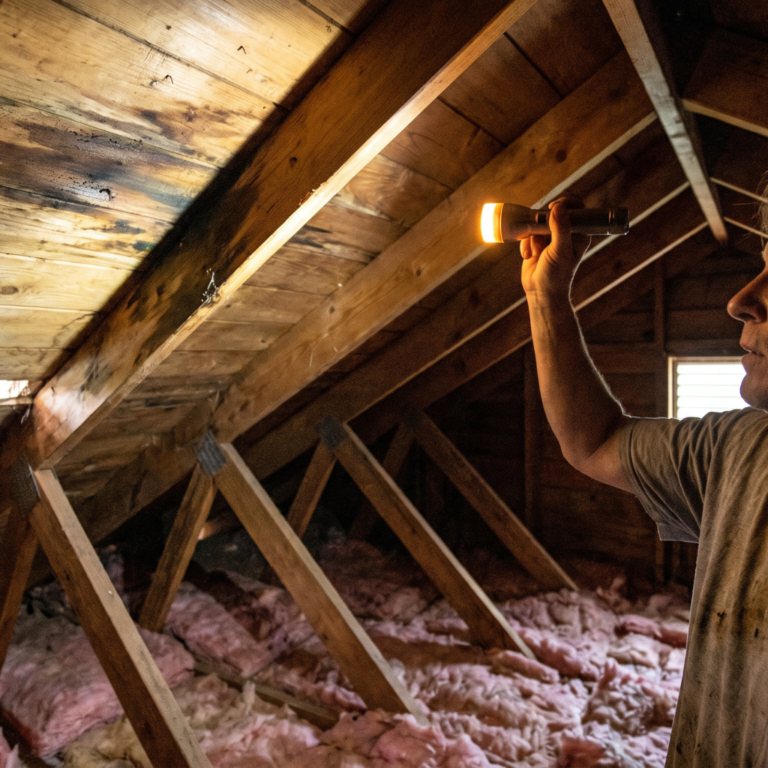
Sagging roofline or soft decking. This signals structural damage. Tornado uplift can crack rafters or shift truss plates. Roofers check the attic for these signs.
Debris impact. Tornado-carried tree limbs and fence boards create irregular punctures and gouges that look nothing like circular hail marks.
The NWS Springfield April 2025 storm report documents wind gusts of 80 to 95 mph across Greene County, 87 mph in Nixa, and confirmed tornadoes in Christian County and Lawrence County. Even an EF-0 tornado (65 to 85 mph) can peel shingle surfaces and damage roof edges. EF-1 winds (86 to 110 mph) begin peeling roof surfaces off frame homes. EF-2 tornadoes (111 to 135 mph) can tear entire roofs off well-constructed houses.
Pro tip: If underlayment is visible where shingles are missing, cover it with a tarp immediately. Do not wait for the adjuster or roofer.
The Side-by-Side Comparison
This table is the fastest way to tell the two damage types apart on a roof. In Southwest Missouri, many storms produce both.
| What to Look For | Hail Damage | Tornado or High-Wind Damage |
|---|---|---|
| Damage pattern | Random, scattered across entire roof | Directional, at edges and corners |
| Shingle condition | Bruising, granule loss, mat fracture (stays in place) | Missing, lifted, or creased (sealant broken) |
| Metal components | Circular dents in gutters, vents, caps | Bent, torn, or missing metal |
| Visible from ground? | Often invisible, needs roof inspection | Usually visible from the yard |
| Structural risk | Low (surface damage) | Medium to high (possible rafter damage) |
| Insurance evidence | Hit count, metal dents, mat fracture | Missing sections, directional pattern |
| Typical outcome | Full replacement if hit count meets threshold | Partial or full depending on scope |
Illustrative scenario: A homeowner in Battlefield experienced a storm cell that produced both large hail and high winds. The inspection found random circular hail bruising across the full roof surface, plus directional missing shingle sections on the southwest corner from wind uplift. Both damage types were documented separately, and the roofer was present during the adjuster visit. The claim covered a full replacement.
Tip: When both hail and wind damage exist, document each type separately with photos. They may be covered differently under your policy.
What to Do After a Storm Hits Your Roof in Southwest Missouri
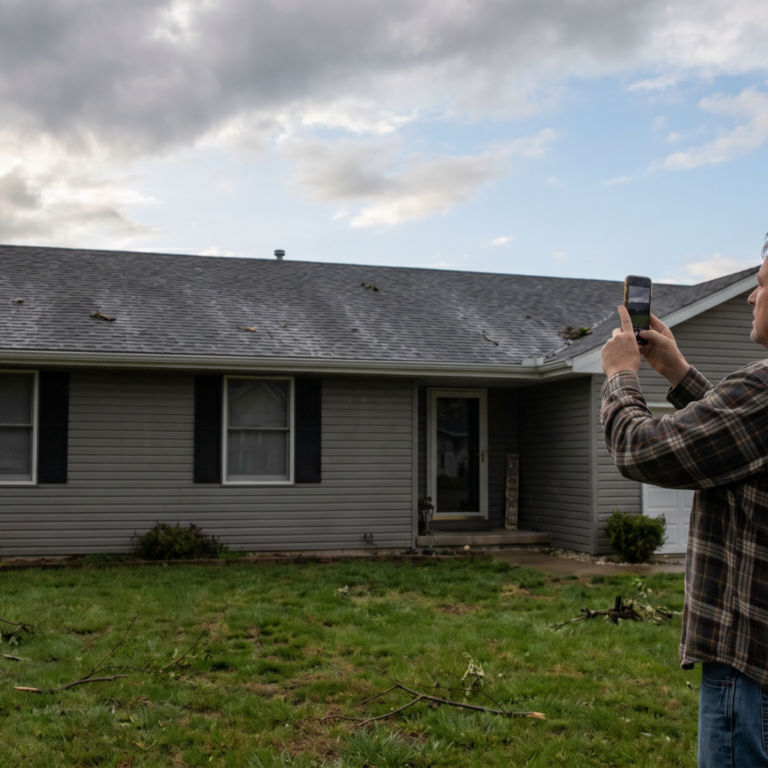
Photograph everything from the ground within 24 to 48 hours. Gutters, yard debris, siding dents, AC unit damage. Do not climb the roof yourself.
Tarp exposed areas. If shingles are missing and underlayment or decking is visible, cover it before rain.
Call your insurer within 48 hours. Delayed reporting is a top reason claims are denied. Knowing how the roof insurance claim process works before you call puts you in a stronger position.
Schedule a professional inspection. A trained roofer documents everything in a format insurers accept and can be present during the adjuster visit to point out damage that might be missed. Understanding the difference between storm chasers vs local roofers helps you choose the right contractor.
Do not let a contractor negotiate your claim. Missouri law (Mo. Rev. Stat. 407.725) says contractors cannot negotiate insurance claims on your behalf. A good roofer assists with documentation and advocates, but does not negotiate.
Pro tip: Check NWS Springfield for post-storm event summaries. That public data supports your claim if the insurer questions whether a qualifying event hit your area.
Frequently Asked Questions
Q: How do I tell if my roof has hail damage or wind damage? A: Hail damage is random and circular with granule loss scattered across the surface. Wind damage is directional with missing or lifted shingles at edges, rakes, and ridges. Southwest Missouri storms often produce both.
Q: Does hail damage always mean a full roof replacement? A: Not always. Adjusters check hit count, mat fracture, and roof age. Class 4 impact-resistant shingles handle hail up to about 2 inches, reducing the chance of functional damage from all but the largest hail.
Q: Can a storm cause both hail and tornado damage on the same roof? A: Yes, and this is common in Southwest Missouri. A single storm cell can produce hail from its core and high winds on its edges. Both damage types need separate documentation.
Q: What is functional damage vs. cosmetic damage? A: Functional damage shortens the roof’s lifespan or reduces water-shedding ability. Cosmetic damage affects appearance only. Missouri courts have ruled that granule loss is functional when it exposes the shingle mat. Some policies carry cosmetic exclusions.
Q: How do insurance adjusters evaluate storm damage? A: They check dented metal components, granule loss counts, and shingle hit patterns. For hail, many use a minimum hit count per 100 square feet. For wind, they check directional patterns. MU Extension advises having a roofer present during the adjuster visit.
Q: What should I do immediately after a hailstorm or tornado? A: Photograph all damage from ground level within 24 to 48 hours. Tarp exposed areas. Report to your insurer within 48 hours. Schedule a professional inspection. Do not climb the roof yourself.
Q: How do I document storm damage for my insurance claim? A: Photograph metal components, close-ups of shingle bruising, and any missing sections. Note the storm date and check NWS Springfield for confirmed hail size and wind speeds.
Q: How quickly should I schedule an inspection after a storm? A: Within the first few days. Documenting damage early, before rain washes granules from gutters and before weathering dulls fresh hail impacts, produces the strongest evidence for your claim.
Key Takeaways
Know the Patterns
- Hail damage is random, circular, and scattered evenly across the roof
- Tornado and wind damage is directional, concentrated at edges and ridges
- Southwest Missouri storms frequently produce both in the same event
Document Everything Quickly
- Photograph damage from the ground within 24 to 48 hours
- Tarp exposed areas before rain arrives
- Report to your insurer within 48 hours
Work With a Professional
- A trained roofer documents both hail and wind evidence for your claim
- Ask the roofer to be present during the adjuster inspection
- Avoid storm chasers who pressure you to sign before you compare options
Concerned About Storm Damage on Your Roof?
You now know what hail damage looks like compared to tornado and wind damage, and why the difference matters for your insurance claim. The next step is getting a professional set of eyes on your roof.
ProNail Exteriors inspects for both hail and wind damage on every storm call across Southwest Missouri, from Springfield and Ozark to Nixa, Branson, Battlefield, Forsyth, Marshfield, and Republic. The crew documents everything in a format insurers accept and can be present during the adjuster visit.
Wondering what the storm did to your roof? Call 844-321-6245 for a free inspection and an honest assessment with zero pressure.
ProNail Exteriors | Roofing, Siding, Windows, Gutters, Decks, and More | Serving Southwest Missouri Since 2025