There is a brown stain on the bedroom ceiling, and you are not sure what it means. Maybe it showed up after last week’s rain. Maybe it has been growing for months. Either way, you want a straight answer before you spend a dime. This guide covers what roof repairs actually cost in Springfield, what the repair process looks like from inspection to final walkthrough, and how to know if repair is the right call for your home.
TLDR: Most roof repairs in Springfield fall between $300 and $3,500. Minor leak fixes, shingle replacement, and flashing repair are the most common jobs after a Southwest Missouri storm. Repair makes sense when damage is localized and the roof is under 15 years old. If damage covers more than 25 percent of the roof area, or repair costs approach half the cost of replacement, a full replacement is the better move.
You are not alone in wondering whether a leak means a whole new roof. Most of the time, it does not. A trained roofer can pinpoint the source and fix the problem, often in a single day. But the only way to know is to get someone on the roof who will give you an honest answer.
By the end of this guide, you will understand what types of repairs exist, what they cost in the Springfield area, what the process looks like, and how to hire a contractor who will not push a replacement you do not need.
Does My Roof Need Repair or Replacement?
This is the first question every homeowner asks. The answer depends on a few key factors: the age of your roof, how much of it is damaged, and what condition the underlying structure is in.
Repair is usually the right call when damage is limited to one area, the roof is under 15 years old, and the wood decking beneath the shingles is still solid. Replacement makes more sense when the roof is over 20 years old, leaks are showing up in multiple spots, or repair costs start approaching half the price of a full roof replacement.
A common industry guideline holds that once more than 25 percent of a roof’s area needs attention, replacement becomes a stronger financial option than repeated repairs. This is a practical decision rule, not a Springfield building code requirement. Springfield’s permit trigger is based on structural elements and deck sheathing replacement, not roof area percentage.
For a deeper look at this decision, read our repair vs. replacement guide for Nixa homeowners.
| Signal | Likely Repair | Likely Replacement |
|---|---|---|
| Roof age | Under 15 years | Over 20 years |
| Damage area | Less than 25% of roof | 25% or more |
| Leak locations | One area, one slope | Multiple spots |
| Decking condition | Solid and dry | Soft, spongy, or rotted |
| Repair cost vs. replacement | Under 50% of replacement | Approaching or exceeding 50% |
| Shingle lifespan remaining | 10+ years left | Few years left |
Tip: Asphalt shingles in the Springfield area typically last 15 to 30 years under normal conditions. Heat and storm stress in Southwest Missouri can shorten that range for many homes.
The Most Common Roof Repairs in Springfield
Knowing what type of repair you might need helps you ask better questions when a contractor gives you a quote. Here are the most common roof repair jobs in Springfield and Southwest Missouri.
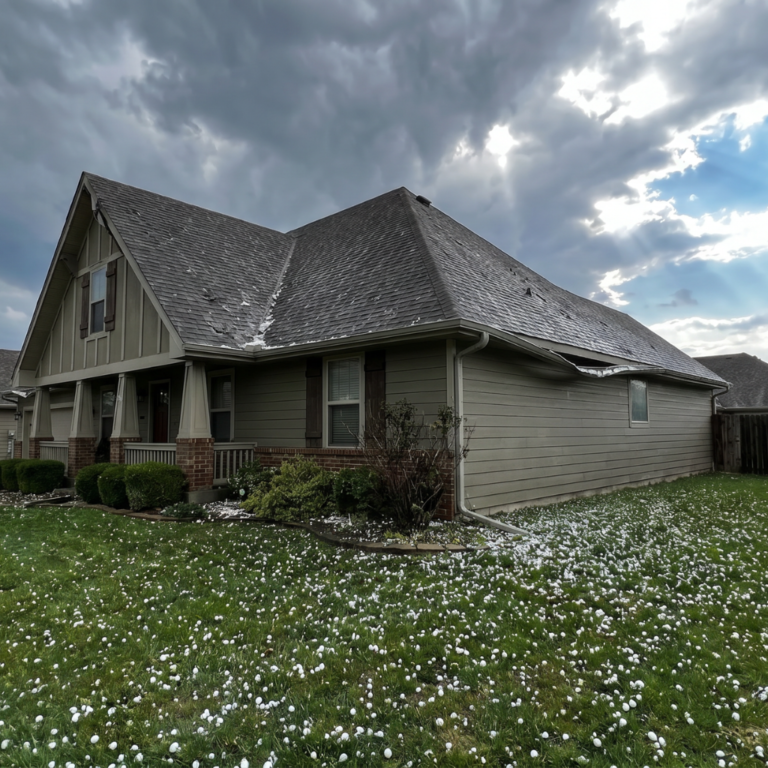
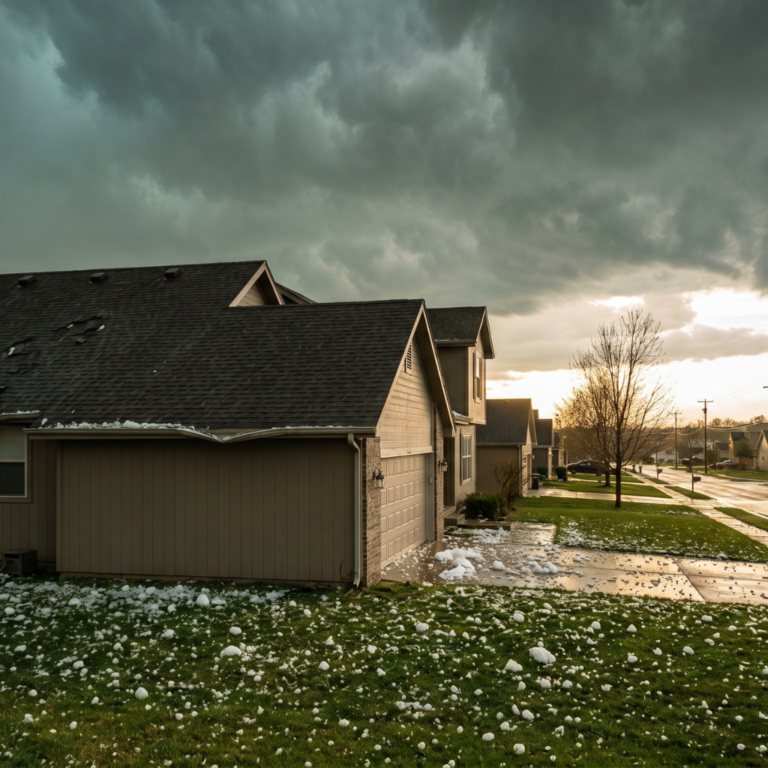
Shingle repair or replacement is the most common job after a spring storm. Missing, cracked, or wind-lifted shingles expose the underlayment beneath them.
Flashing repair addresses the thin metal where the roof meets a chimney, vent, skylight, or wall. Flashing failure is one of the top causes of interior leaks in Springfield homes.
Pipe boot and vent boot repair fixes the rubber seal around plumbing vents that pass through the roof. UV and freeze-thaw cycles crack these boots.
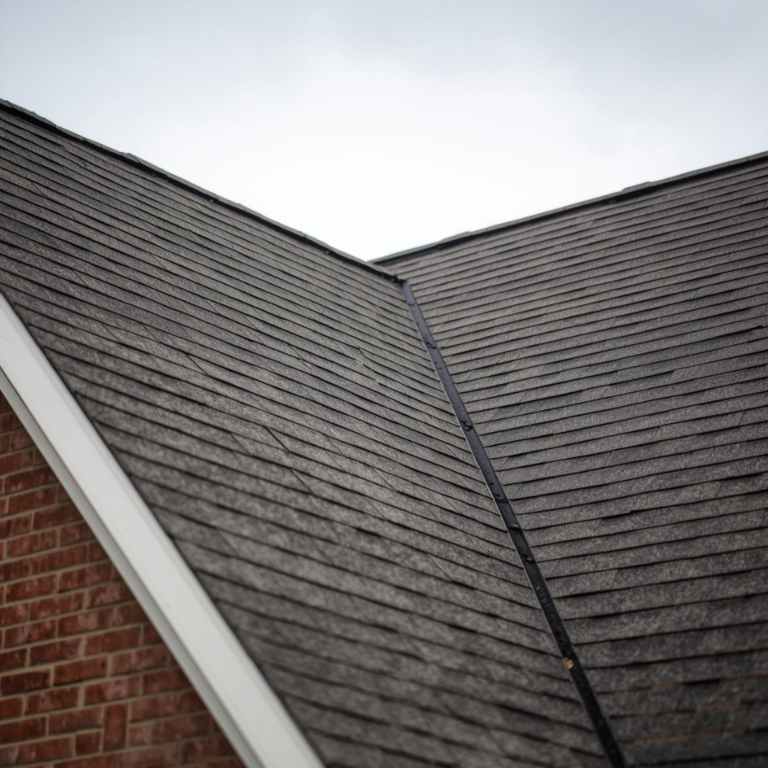
Valley repair targets where two roof planes meet and water concentrates during heavy rain. Valley flashing can lift, crack, or erode under that volume.
Roof deck and sheathing repair replaces plywood or OSB that water has rotted or softened. Soft decking will not hold fasteners, and new shingles over a bad deck will fail.
Leak detection and repair traces the actual entry point of water. Ceiling stains are rarely directly below where water gets in. Leak tracing starts in the attic.
Ridge cap repair replaces caps along the roof peak that wind has cracked or blown off.
Soffit and fascia repair fixes the boards under the roof overhang and along the roofline edge where gutters attach.
If you are not sure whether your roof has damage worth repairing, check our list of signs your roof needs attention in Springfield.
Tip: Freeze-thaw cycles cause pipe boot and flashing failures more often in Southwest Missouri than in warmer climates. Springfield averages about 57 freeze-thaw cycles per year, according to NOAA engineering climate data. Each cycle forces water to expand about 9 percent inside cracks and shingle seams, widening them every time.
Roof Repair Costs in Springfield, MO
This is what most people searching for “roof repair Springfield MO” want to know. Here are verified cost ranges based on Springfield-area market data. These are not ProNail Exteriors prices. They reflect what Springfield homeowners typically pay across the local market.
| Repair Type | Typical Range in Springfield | Notes |
|---|---|---|
| Minor repairs and patching | $300 to $1,200 | Replacing a few shingles, sealant fixes |
| Leak detection and repair | $500 to $2,000 | Tracing the source adds time and cost |
| Flashing repair | $300 to $1,500 | Type of flashing affects price |
| Chimney flashing | $700 to $2,000 | Most complex flashing job |
| Valley flashing | $600 to $1,500 | High water volume area |
| Pipe boot or vent boot | $150 to $1,200 | National average is about $400 |
| Ridge cap repair | $300 to $1,000 | Requires roof peak access |
| Deck and sheathing repair | $1,000 to $3,500 | Per damaged section |
| Moderate repair or partial reroof | $4,000 to $10,000 | Multiple issues or larger area |
| Emergency tarping | $600 to $2,000 | Temporary measure only |
The total cost depends on roof pitch and accessibility, how many slopes are affected, materials used, whether a permit is needed, and whether hidden damage is found mid-repair.
| Scope | Typical Range |
|---|---|
| Small (minor leaks, patching) | $300 to $1,000 |
| Medium (shingle replacement, vent repairs) | $1,000 to $3,500 |
| Major (extensive damage, structural) | $3,500 to $7,000 |
Tip: A repair quote that seems very low often means the contractor plans to patch over a problem rather than removing damaged material. Ask specifically: “Will you remove the damaged shingles or patch over them?”
Important: Repair costs for storm damage may be covered by your homeowner’s insurance. See the insurance section below for when filing a claim makes sense.
The Roof Repair Process: What to Expect
Knowing what happens during a repair removes the guesswork. Here is what a professional roof repair looks like from start to finish.
Inspection and Diagnosis
The crew inspects from the attic first. Water stains on ceilings are rarely directly below the entry point. Water travels along rafters and sheathing before it drips through. An attic-first inspection traces the actual path. Then the crew gets on the roof.
After the inspection, you get a written scope: what is damaged, what needs to be done, and what materials are needed. A written scope protects you if anything is disputed later.
Repair Execution
Before work begins, tarps protect landscaping, decks, and walkways. If water is actively entering, the crew addresses that immediately with a temporary measure while the permanent repair is planned.
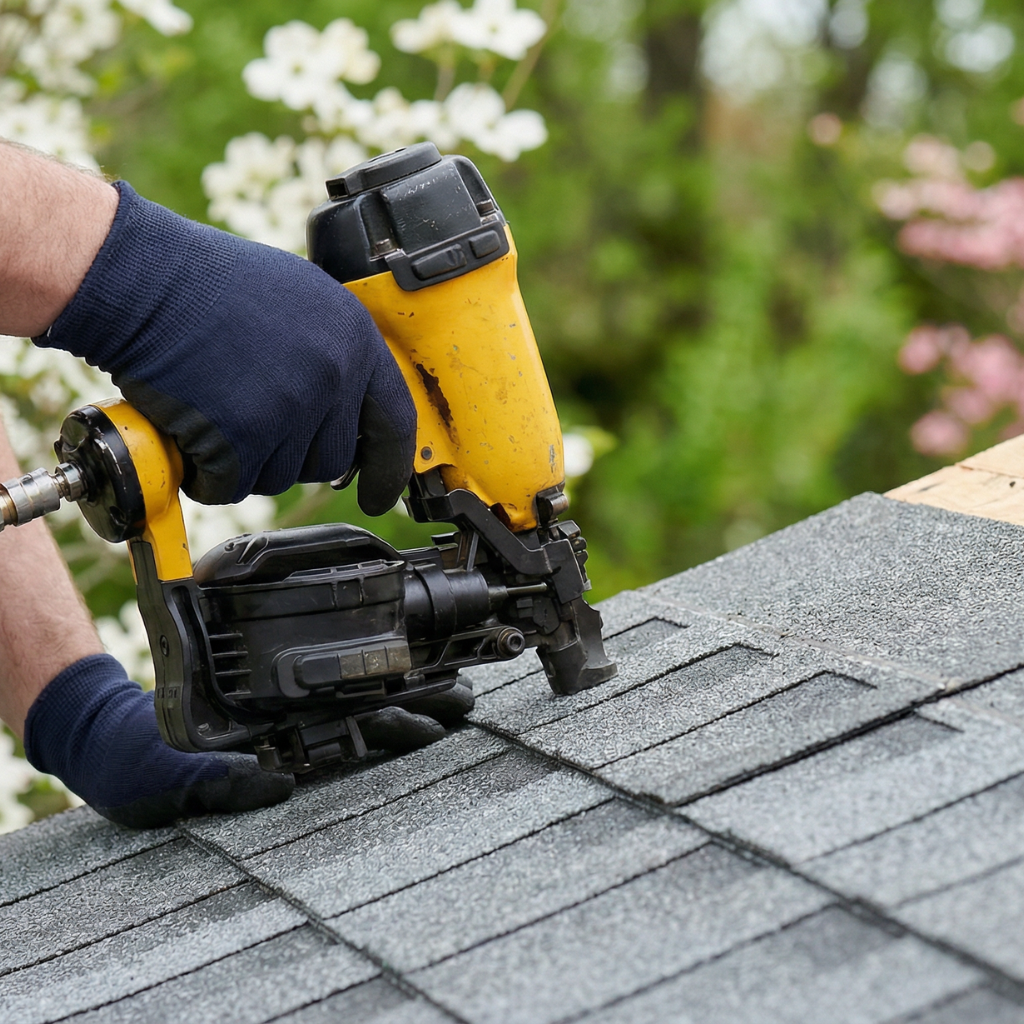
Good repair contractors do not patch over failed material. Damaged shingles, torn underlayment, and failed flashing come off. The deck beneath is checked. If the plywood or OSB is soft or rotted, it gets replaced before anything new goes down. New components are installed to manufacturer specs, matching the existing roof to minimize color variation.
Cleanup and Walkthrough
The repaired area is checked to confirm water cannot bypass the new work. The crew cleans debris, runs a magnet for nails, clears gutters of material, and walks the completed repair with the homeowner.
How Long Does Roof Repair Take?
Simple repairs like a single shingle section or boot replacement typically take one day. Standard repairs involving flashing or a small section of decking take one to two days. Larger repairs across multiple areas with deck replacement can take two to four days.
Illustrative scenario: A homeowner in Ozark noticed a brown ceiling stain in their master bedroom after heavy May rain. ProNail Exteriors inspected the attic and found water entering through a cracked pipe boot three feet from where the stain appeared. The boot was replaced, the surrounding shingles reseated, and the deck under the boot was dry. Total repair time: one day.
Pro tip: Do not start any permanent repair before an insurance adjuster inspects if the damage may be storm-related. Temporary tarps are fine. Permanent work completed before the adjuster visits can complicate the release of your insurance payment.
Springfield Permit Rules for Roof Repair
This section uses information directly from the City of Springfield Roofing and Re-roofing Bulletin, which is the official city guide for residential roofing work.
Standard roof replacement and re-cover in Springfield do not require a permit. The city classifies these as repair and maintenance. A permit is required only if a structural element is altered or replaced, or if more than 32 square feet of deck sheathing is replaced.
Many contractors pull permits on standard repairs “to be safe.” In Springfield, that adds cost and timeline for no benefit on most jobs. However, if significant deck replacement is involved, a permit is required.
The city also does not require ice barriers, because Springfield does not have a recognized history of ice forming along eaves per IRC R905.1.2. And asphalt shingles may only be installed on roof slopes of 2:12 or greater.
Important: Permit rules vary by city. Ozark, Nixa, Branson, and Rolla all have different requirements than Springfield. Always confirm with your contractor which rules apply to your property.
Tip: Ask your contractor: “Will you pull a permit if one is required for this job?” If they say no to work that clearly needs a permit, that is a red flag.
Why Southwest Missouri Is Hard on Roofs
Springfield sits in one of the toughest climates for residential roofs in the Midwest. The city receives about 44.71 inches of rain per year, well above the national average of 38 inches. May is the wettest month at 5.56 inches. July highs average 89.6 degrees, and attic temperatures can reach 130 to 160 degrees without proper ventilation.
Springfield also averages about 57 freeze-thaw cycles per year. Every cycle forces water to expand about 9 percent inside cracks and shingle seams. Small cracks become big cracks fast. Missouri experienced 120 billion-dollar weather and climate disasters from 1980 to 2024, and Southwest Missouri takes the heaviest share.
| Season | Primary Threat | Effect on Roof | Repair Timing |
|---|---|---|---|
| Spring (April to June) | Hail, wind, tornadoes | Missing shingles, flashing lifts, granule loss | File and repair within 30 to 60 days |
| Summer (July to September) | Extreme heat, UV, humidity | Shingle baking, sealant failure | Heat reveals hidden spring damage |
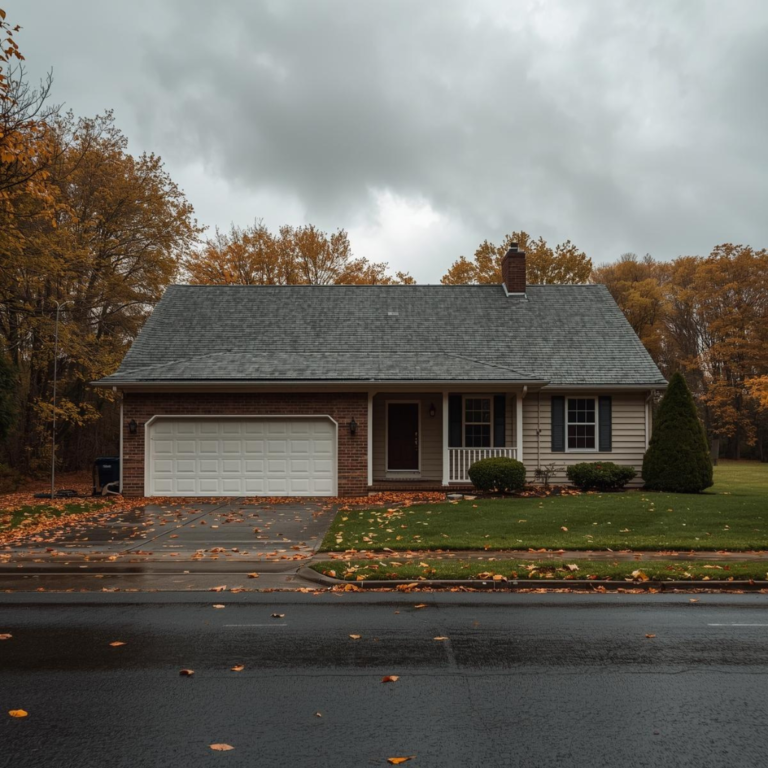
| Fall (October to November) | Wind events, early freeze | Pipe boot cracks, loose shingles | Best season for pre-winter repair |
| Winter (December to March) | Freeze-thaw, ice backup | Crack expansion, flashing separation | Document and repair after thaw |
Illustrative scenario: A homeowner in Nixa had a pipe boot that cracked during a late-October freeze. It was small and did not appear to be leaking. By February, after dozens of freeze-thaw cycles, the crack widened enough that water entered the attic during a warm-day rain event. A $400 repair in October became a $1,400 repair plus attic moisture cleanup in March.
Tip: Schedule a professional inspection every fall before freeze season and every spring after storm season. ProNail Exteriors offers free roof inspections across Southwest Missouri. If you are concerned about poor roof ventilation, summer heat will reveal the damage faster.
Illustrative scenario: A Springfield homeowner put off replacing a cracked ridge cap after a November windstorm. By January, two freeze-thaw cycles opened the seam wide enough that snowmelt entered the attic. The ridge cap repair itself was minor, but the wet insulation and ceiling stain repair added to the total. Catching it in November would have been a fraction of the final cost.
Repair and Insurance: When a Claim Makes Sense
Standard homeowner policies in Missouri cover roof repairs caused by sudden storm damage, not just full replacements. Wind and hail account for nearly 40 percent of all homeowner insurance claims, so repairs after storms are common. But filing a claim for a small repair does not always make financial sense.
If your repair costs less than your deductible, you pay the full repair out of pocket anyway. Filing a claim in that situation gains you nothing and may affect your premium at renewal. If repair costs clearly exceed your deductible and the damage is storm-related, filing is usually the right call.
| Repair Cost Estimate | Deductible | File a Claim? | Why |
|---|---|---|---|
| $400 | $1,500 | No | Below deductible; pay out of pocket |
| $1,200 | $1,000 | Maybe | Marginal; weigh premium risk |
| $2,500 | $1,000 | Yes (if storm) | Above deductible; worth filing |
| $4,500+ | $1,500 | Yes (if storm) | Clear financial benefit |
Missouri law prohibits contractors from waiving your deductible for any job, whether repair or replacement. Anyone who offers to “eat your deductible” is breaking the law. For more on the insurance claim process, including ACV vs. RCV policies and what the adjuster looks for, check our full guide.
Tip: Under an ACV policy, even a storm-related repair claim may return a smaller check than expected if your roof is older. Use the Missouri DCI free coverage comparison tool to see what your insurer offers before assuming full coverage.
Important: Before filing a claim on any repair, call your insurance company to ask about their minimum threshold and whether a small claim will affect your premium. Some Missouri insurers track claims frequency.
How to Hire a Roof Repair Contractor in Springfield
Choosing the right contractor for a repair is just as important as choosing one for a full replacement. Here is what to look for and what to avoid.
What to Look For
Ask for proof of general liability and workers’ compensation insurance. Request actual certificates, not just a verbal “yes.” Get a written estimate with an itemized scope covering materials, labor, timeline, and what happens if hidden damage is found. Confirm the crew is in-house, not subcontracted. And verify the company has a real local address in Springfield or the surrounding area.
Questions to Ask Before Signing
Before agreeing to any repair, ask these questions: Will you give me a written estimate? Do your workers carry workers’ comp insurance? Will you pull a permit if needed? Is your crew in-house or subcontracted? What happens if you find damage beyond the quote? What does the workmanship warranty cover?
Red Flags
Watch for door-to-door solicitation right after a storm with pressure to sign the same day. Offers to waive your deductible are illegal in Missouri since 2012. No written estimate, full payment demanded before work, and no verifiable local address are all serious warning signs.
For more on spotting bad actors, read our guide on storm chasers vs. local roofers.
Tip: Missouri does not require a statewide roofing contractor license. Ask for proof of insurance instead. That is the more meaningful protection for homeowners.
How ProNail Exteriors Handles Roof Repairs
ProNail Exteriors was founded by Eden Branson in Ozark, Missouri, after years of watching homeowners get pushed into replacements they did not need. If a repair will hold, that is what we quote.
Every repair starts with a free inspection. No charge, no obligation. The crew inspects from the attic first, then gets on the roof. If a minor repair is all you need, that is what gets quoted. All work uses quality materials, and our in-house crews handle every job. You get a written quote before work begins, and the crew walks the finished repair with you before they leave.
If the damage is storm-related, we also help with insurance documentation and can attend the adjuster visit.
Illustrative scenario: A homeowner in Branson called ProNail after a spring storm left two missing shingles and a ceiling stain. ProNail inspected the attic and roof, and found the actual entry point was a lifted section of step flashing near a dormer, not the missing shingles. The repair: step flashing replaced, missing shingles installed, and the deck under the flashing was dry. No replacement needed. The homeowner had been told by a door-to-door contractor that the entire roof needed to go. It did not.
Illustrative scenario: A Springfield family noticed a small leak after a spring thunderstorm. They called ProNail for a free inspection. The crew traced the water entry to valley flashing that had lifted during high winds. The valley flashing was replaced, the surrounding shingles reseated, and the deck was solid. The repair was covered by their insurance since the damage was clearly storm-related and exceeded their deductible.
Frequently Asked Questions About Roof Repair in Springfield
Q: How much does roof repair cost in Springfield, MO? A: Most repairs range from $300 to $3,500. Larger repairs involving partial roof sections can reach $4,000 to $10,000.
Q: How long does roof repair take? A: Minor repairs are often done in a single day. Standard repairs take one to two days, and larger multi-area repairs take two to four days.
Q: Does homeowners insurance cover roof repairs in Missouri? A: Most standard policies cover repairs caused by sudden storm events. Whether filing makes sense depends on your repair cost vs. your deductible.
Q: Do I need a permit for roof repair in Springfield? A: For most standard repairs, no. A permit is needed only if a structural element is altered or more than 32 square feet of deck sheathing is replaced.
Q: When should I repair vs. replace my roof? A: Repair when damage is localized, the roof is under 15 years old, and damage covers less than 25 percent of the total area. Replace when repair costs approach 50 percent of replacement cost.
Q: What are the most common roof repairs in Springfield? A: Shingle replacement, flashing repair, pipe boot replacement, leak tracing, and deck patching. Flashing failure is one of the leading causes of interior leaks.
Q: What causes roof leaks in Springfield? A: Cracked or missing shingles, failed flashing, cracked pipe boots, and clogged gutters. Springfield’s heavy rainfall and freeze-thaw cycles accelerate these failures.
Q: Can I patch my roof myself? A: Minor fixes like resealing exposed nail heads can be DIY. Anything involving flashing, decking, or leak tracing should use a professional.
Q: What happens if hidden damage is found during repair? A: A good contractor explains what happens if the scope expands before work begins. Get this policy in writing before signing.
Q: How do I know if my roof repair was done correctly? A: All damaged material should be removed, not patched over. The contractor should walk the completed repair with you and provide a written workmanship warranty.
Key Takeaways
Know When to Repair vs. Replace: Repair when damage is localized and the roof has years of life left. Replace when damage exceeds 25 percent or repair costs approach half of replacement cost.
Understand Springfield Costs: Most repairs fall between $300 and $3,500. Chimney flashing and deck repair run the highest.
Follow the Process: Professional repair starts with an attic-first inspection, includes a written scope, removes damaged material, and ends with a walkthrough.
Know the Permit Rules: Springfield does not require permits for most standard repairs. Permits kick in only when structural elements change or more than 32 square feet of decking is replaced.
Act Fast: Southwest Missouri’s freeze-thaw cycles make small problems worse fast. A $400 fix in October beats a $1,400 fix in March. Class 4 impact-resistant shingles are worth the upgrade when it is time.
Hire Smart: Ask for proof of insurance, a written estimate, and in-house crews. If anyone offers to waive your deductible, walk away.
Your Roof Might Not Need as Much Work as You Think
That is the honest truth. Most homeowners who call expecting a full replacement actually need a repair. The only way to know is to get a trained set of eyes on the roof.
ProNail Exteriors inspects for free, gives you a written answer, and does not push work you do not need. Call (844) 321-6245 or schedule a free inspection to find out exactly what your roof needs. No pressure. No surprises.
This article is for informational purposes. Cost ranges reflect Springfield-area market data and are not ProNail Exteriors quotes. Always get a written estimate for your specific project.
ProNail Exteriors | Roofing, Siding, Windows, Gutters, Decks, and More | Serving Southwest Missouri Since 2025