If you are replacing a roof in Southwest Missouri in 2026, your contractor is probably quoting architectural shingles. Maybe another quote came in with 3-tab shingles at a lower price. The question of architectural shingles vs. 3-tab shingles in Missouri goes deeper than cost or appearance. Missouri’s climate, storm frequency, and a shrinking supply of 3-tab options all factor into which shingle actually makes sense for your home.
TLDR: For most Missouri homeowners, architectural shingles are the clear choice in 2026. They handle 110 mph winds compared to 60 mph for 3-tab. They last 25 to 30 years instead of 15 to 20. Available 3-tab options have dropped 68% in five years, making future repairs difficult to match. And a Class 4 impact-resistant upgrade adds hail protection plus 10 to 35% insurance discounts.
What Makes These Two Shingles Different
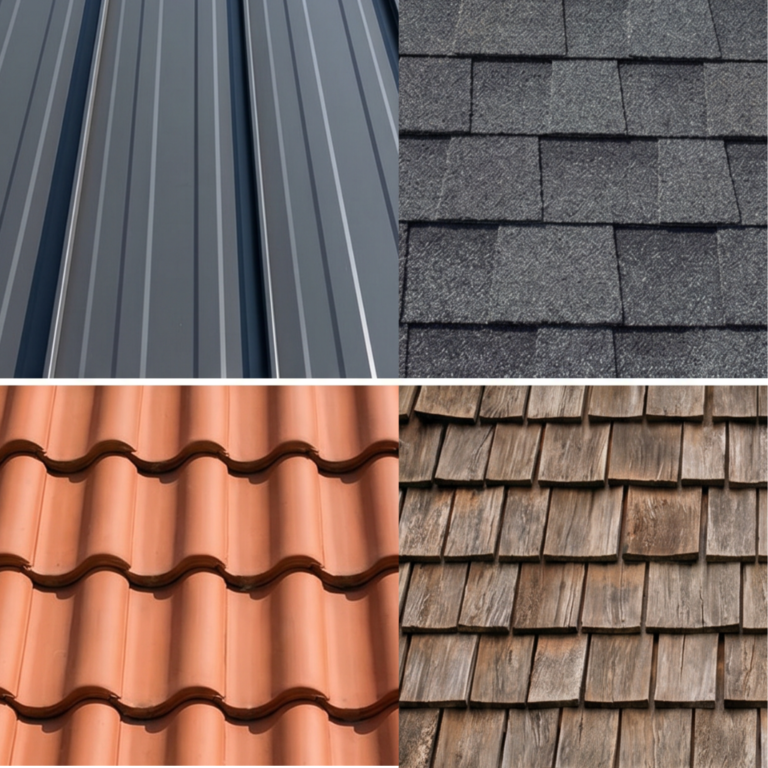
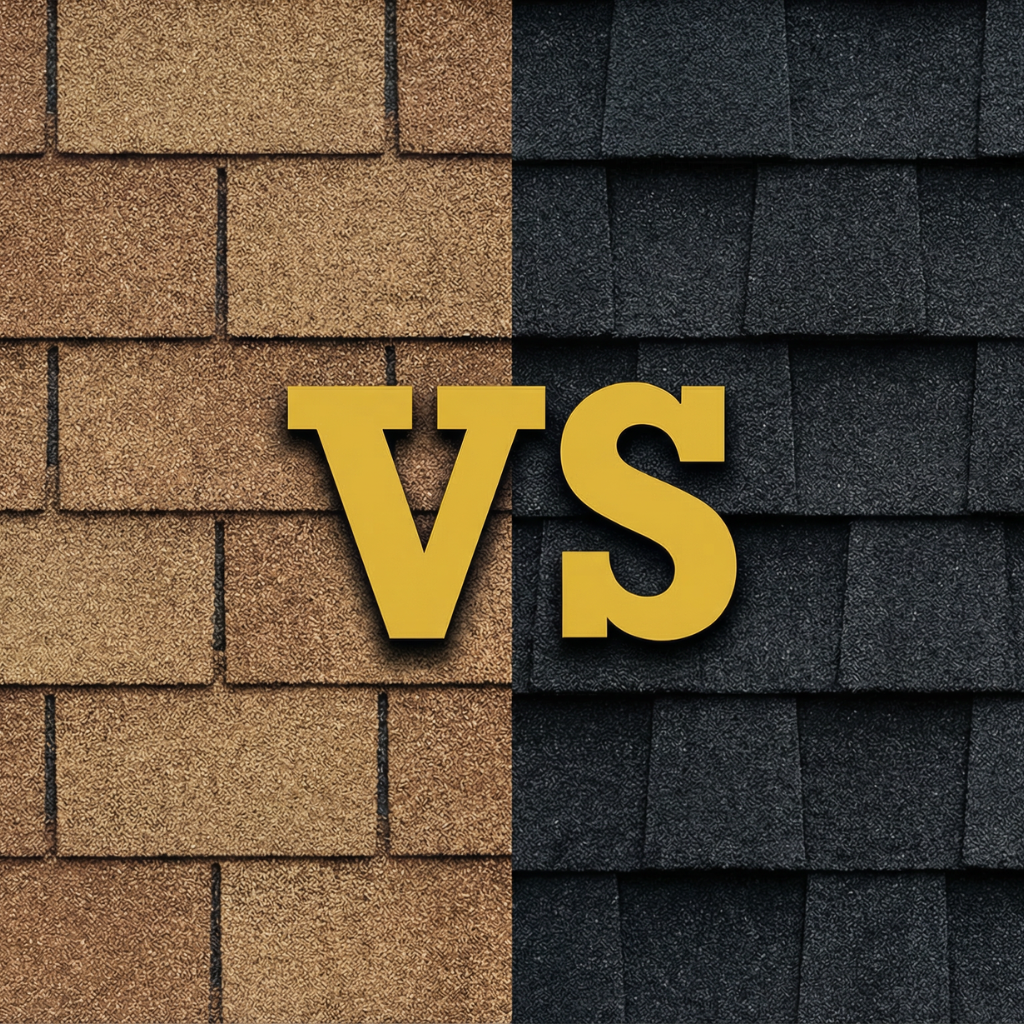
The core difference is construction. A 3-tab shingle is a single layer of asphalt over fiberglass mat, with cutouts along the bottom edge that create three flat tabs. It lies flush against the roof and creates a uniform, brick-like pattern.
An architectural shingle (also called dimensional or laminated) uses two or more layers of asphalt laminated together over a heavier fiberglass mat. It is thicker, textured, and mimics the look of wood shakes or slate.
That extra layer changes everything about how the shingle performs.
| Feature | 3-Tab | Architectural |
|---|---|---|
| Construction | Single layer | Multi-layer laminated |
| Weight per square | 175 to 250 lbs | 240 to 400 lbs |
| Lifespan | 15 to 20 years | 25 to 30+ years |
| Wind rating (ASTM D3161) | Class A: 60 to 70 mph | Class F: 110 to 130 mph |
| Impact resistance (UL 2218) | Class 1 (basic) | Class 3 standard, Class 4 available |
| Warranty | 20 to 25 years limited | 30 years to lifetime limited |
| Appearance | Flat, uniform | Dimensional, textured |
| Availability trend | Declining rapidly | Industry standard |
| Insurance discount eligible? | No | Class 4 upgrade: yes |
The weight difference alone matters for wind performance. A heavier shingle requires more force to lift, and the laminated construction creates a stronger sealant bond between courses. FEMA guidance on shingle wind resistance confirms that both shingle rating and installation method affect real-world performance.
Why Missouri’s Weather Changes the Math
This is not a generic comparison. Missouri’s climate creates specific challenges that separate these two products in ways that matter.
The Springfield area averages approximately 57 freeze-thaw cycles per year, more than many homeowners realize. When temperatures swing above and below freezing within a 24-hour period, especially from December through March, water seeps into tiny cracks, freezes, expands by about 9%, and widens those cracks. One winter of this cycling can turn a small crack into real damage. Single-layer 3-tab shingles have less mass to absorb that stress than multi-layer architectural shingles.
The wind gap is even more concerning. NWS Springfield defines damaging wind at 58 mph. Standard 3-tab shingles are tested at 60 mph under lab conditions, right at the NWS severe wind threshold, leaving very little margin in real storms where gusts, turbulence, and roof geometry affect performance. Architectural shingles start at 110 mph, nearly double the tolerance.
Missouri also sits in a documented high-frequency hail corridor. Southwest Missouri averages 3 to 5 hail events per year. The NWS Springfield severe weather climatology confirms that hail peaks in April and the storm season runs April through August, with June being the most active month for damaging wind. 3-tab shingles carry only UL 2218 Class 1 impact resistance, the minimum standard. Architectural shingles typically provide Class 3, with a Class 4 impact-resistant upgrade available for the strongest hail protection.
Pro tip: If your roof still has 3-tab shingles, every severe thunderstorm in the Springfield area tests them right at their rated wind limit. Architectural shingles give you nearly twice the margin.
The 3-Tab Phase-Out Problem
This is the angle most homeowners never hear about. Over the past five years, available 3-tab shingle options across the country have dropped by 68%. Owens Corning discontinued their Supreme 3-tab line in seven major plant service areas in January 2025, including the Minneapolis and Denver markets. The trend is continuing. Architectural shingles have become the industry standard for residential roofing, with demand for 3-tab declining year over year. By 2024, a matching 3-tab shingle could not be found in the open market for 54% of insurance claims involving 3-tab roofs, up from just 17% in 2020.
Why does this matter? If a homeowner installs a 3-tab roof today and needs a storm repair in three to five years, the exact shingle color and profile may already be discontinued. When shingles cannot be matched, insurance adjusters may require a full roof replacement instead of a partial repair. That can create a much larger claim or a much larger out-of-pocket cost, depending on the policy type.
This is not a scare tactic. It is a supply chain reality. In regions with high 3-tab prevalence, these shingles now account for the majority of all asphalt shingle insurance claims, while becoming harder than ever to repair. In a state like Missouri, where NOAA has confirmed 120 billion-dollar weather disasters since 1980, the matchability problem is not hypothetical. Installing 3-tab today introduces a future repairability risk that architectural shingles do not have.
The Insurance Angle
Standard 3-tab shingles do not qualify for insurance discounts on their own. Moving from 3-tab to architectural earns a modest rate improvement simply because the roof is newer with better-rated materials.
The real savings come with the Class 4 upgrade. Class 4 impact-resistant architectural shingles (certified under UL 2218 Class 4) typically earn 10 to 35% off the dwelling coverage portion of Missouri homeowners insurance. Most Southwest Missouri insurers offer discounts in the 15 to 25% range for Class 3 vs. Class 4 rated shingles. For many homeowners, the cost difference between standard architectural and Class 4 architectural pays for itself within four to eight years through insurance savings alone.
Pro tip: When getting roofing quotes, ask the contractor to quote both standard architectural and Class 4 architectural side by side. The cost difference is often smaller than homeowners expect, and the insurance savings can cover the gap.
When 3-Tab Still Makes Sense
Balanced perspective matters. Three situations where 3-tab can still be a rational choice:
A landlord planning to sell a rental property within three to five years who needs the lowest upfront cost. A low-slope garage or accessory structure where appearance and longevity are less important. Or matching an existing 3-tab roof on a partial repair vs. replacement when the color is still available.
Even in these cases, the discontinued-SKU risk is real. Homeowners should understand this before choosing 3-tab in 2026.
Which Is Better for Missouri? The Verdict
Architectural shingles are the minimum standard for Missouri homeowners in 2026. The 110 mph wind rating matters every June. The 25 to 30 year lifespan matters when Missouri storms shorten actual useful life. The ongoing availability of colors and profiles matters when the next storm comes through and you need a repair. And the Class 4 upgrade path makes the decision even clearer for anyone planning to stay in their home long-term.
Frequently Asked Questions
Q: What is the difference between 3-tab and architectural shingles? A: 3-tab is a single-layer, flat shingle rated to 60 mph wind. Architectural is multi-layer, heavier, dimensional, and rated to 110 mph or higher. Architectural lasts 25 to 30 years compared to 15 to 20 for 3-tab.
Q: Are 3-tab shingles still available? A: Yes, but availability is declining. Available 3-tab options have dropped 68% in five years. Owens Corning discontinued their Supreme 3-tab line in seven major plant service areas in January 2025. By 2024, a matching 3-tab shingle could not be found for 54% of insurance claims involving 3-tab roofs.
Q: How long do architectural shingles last in Missouri? A: Standard warranties run 25 to 30 years. In Missouri’s storm-heavy climate, real lifespan tends to run 20 to 25 years. Still significantly longer than 3-tab, which often lasts only 15 to 20 years in this market, and potentially less given Missouri’s severe weather frequency.
Q: What shingles are best for Missouri wind and hail? A: Architectural shingles rated ASTM D3161 Class F (110 mph) are the baseline. For hail protection, Class 4 impact-resistant shingles (UL 2218 Class 4) are the strongest option and earn insurance discounts.
Q: Do architectural shingles qualify for insurance discounts? A: Standard architectural alone earns a modest improvement from having a newer roof. Class 4 impact-resistant architectural shingles earn 10 to 35% off dwelling coverage in Missouri.
Q: Can I mix 3-tab and architectural on a repair? A: No. They have different profiles, thicknesses, and appearances. A repair using the wrong type will be visually obvious and may void the warranty.
Q: Should I upgrade to Class 4 when replacing my roof? A: For most Missouri homeowners staying long-term, yes. The insurance discount typically pays for the upgrade within four to eight years, and the hail protection reduces future claim frequency.
Q: Do architectural shingles work on every roof pitch? A: Both 3-tab and architectural shingles require a minimum roof pitch, typically 4:12 for standard installation. Low-slope roofs (2:12 to 4:12) may need special underlayment. Your contractor can confirm what works for your specific roof.
Key Takeaways
Construction: 3-tab is single-layer at 60 mph wind rating. Architectural is multi-layer laminated at 110 mph or higher. The weight, thickness, and sealant bond all favor architectural.
Missouri Climate: Springfield’s 57 annual freeze-thaw cycles, 58 mph severe wind threshold, and hail corridor placement all stress 3-tab shingles beyond their rated capacity. Architectural shingles offer meaningful margin.
Supply Chain: 3-tab SKUs have dropped 68% in five years. Matching after storm damage is becoming difficult. Architectural shingles are widely available with no supply concerns.
Insurance: Class 4 architectural shingles earn 10 to 35% off dwelling coverage in Missouri. The upgrade often pays for itself within four to eight years.
Ready to Compare Your Options?
If you are weighing shingle choices for your next roof, the best next step is a conversation with a contractor who can walk your property and explain what makes sense for your home, your budget, and your insurance situation.
ProNail Exteriors quotes both standard architectural and Class 4 side by side so homeowners can see the real difference. Free inspections across Springfield, Ozark, Nixa, Republic, Battlefield, Marshfield, and Rolla. Call (844) 321-6245.
ProNail Exteriors | Roofing, Siding, Windows, Gutters, Decks, and More | Serving Southwest Missouri Since 2025