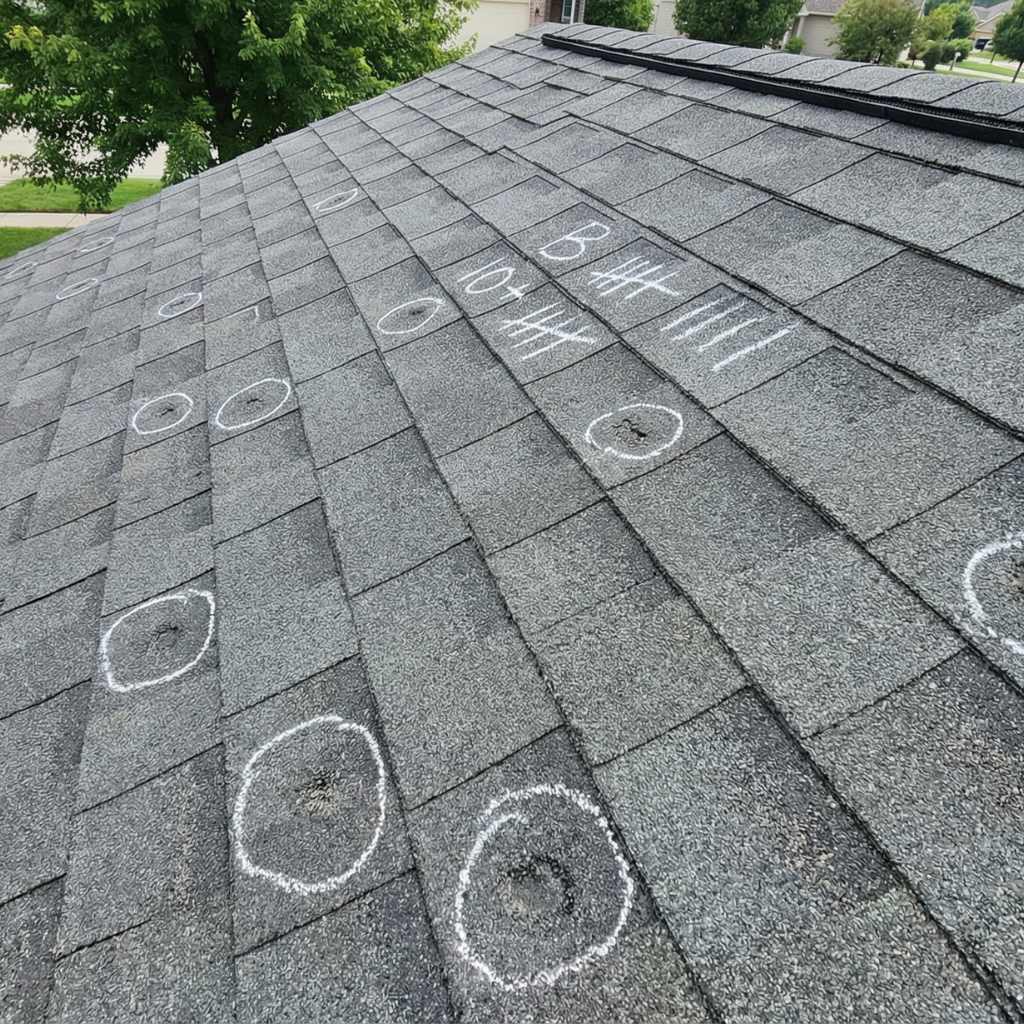
Your roof just took a beating from a Southwest Missouri storm, and now you are staring at your insurance policy wondering what happens next. This guide walks you through the complete roof insurance claim process in Springfield and across Southwest Missouri. You will learn what your policy covers, how ACV and RCV affect your payout, what the adjuster looks for, and what to do if your claim gets denied.
TLDR: Most homeowner policies in Missouri cover sudden storm damage like hail and wind, but your payout depends on whether you have an ACV or RCV policy. Missouri insurers are shifting to higher percentage-based wind and hail deductibles, and a 2024 Weiss Ratings analysis found the 13 largest U.S. home insurers closed 47.5% of homeowner claims without payment in 2023, well above the industry average. Know your policy, document everything, and work with a local roofer who walks the roof with your adjuster.
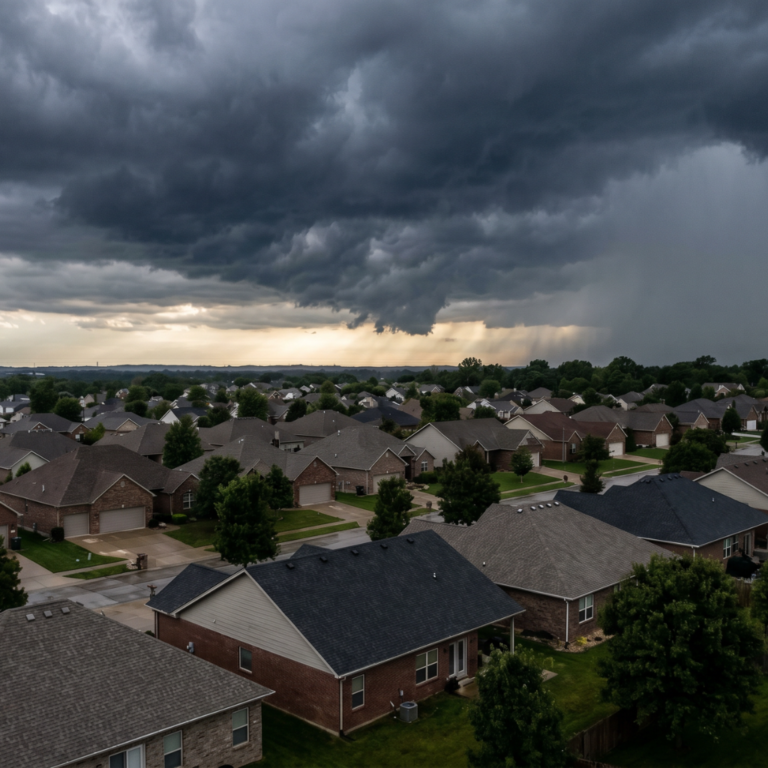
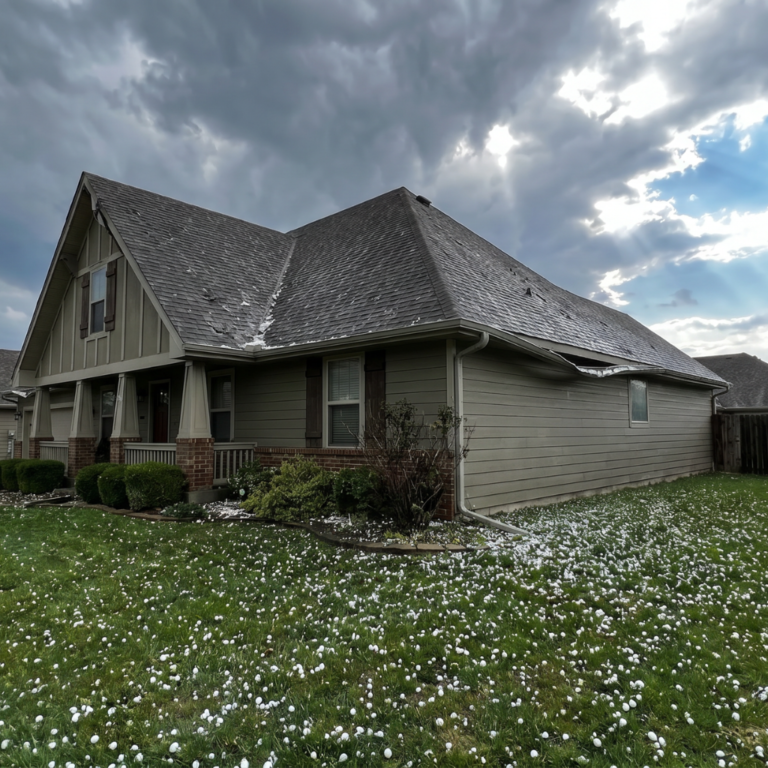
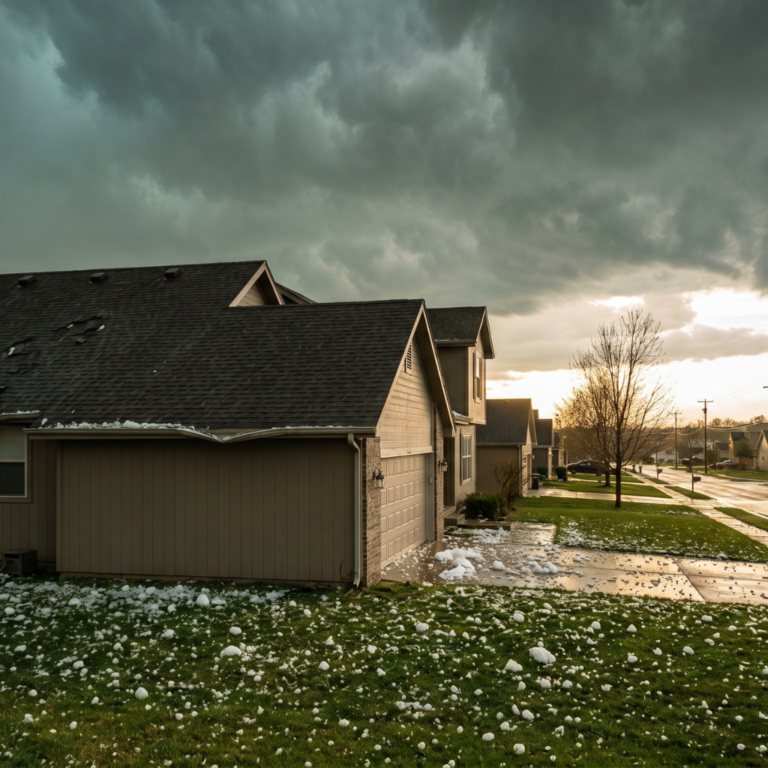
You heard the sirens last night. Maybe the hail woke the whole house. Now the sun is out, and you are walking the yard staring at dented gutters and shingle pieces on the ground. Someone you have never seen before just left a business card on your door.
This is when homeowners feel the most pressure and confusion. You do not know if the damage is serious. You are not sure if filing a claim will raise your rates. And you do not want to get taken advantage of by a contractor chasing the storm.
The roof insurance claim process in Missouri is not as complicated as it feels. But a few critical details can make or break your outcome. This guide covers all of them. By the end, you will feel confident making the right call for your home.
Does Homeowners Insurance Cover Roof Damage in Missouri?
Most standard homeowner policies in Missouri cover sudden storm damage, including hail, wind, lightning, and falling debris. If a storm caused the damage, your policy is designed to help you fix it.
Your policy does not cover normal aging, wear and tear, or years of skipped maintenance. The adjuster looks for one thing above all: was the damage caused by a specific storm event, or was it already there?
Tip: Pull your declarations page before calling your insurance company. Look for “Replacement Cost Value” or “Actual Cash Value.” That one detail shapes everything about your payout.
| Damage Type | Covered? | Notes |
|---|---|---|
| Hail damage | Yes | Must be from a specific storm event |
| Wind damage | Yes | Includes missing or lifted shingles |
| Tornado damage | Yes | Covered as a wind event |
| Falling trees or debris | Yes | Must fall due to storm or sudden event |
| Wear and tear | No | Gradual aging is not covered |
| Deferred maintenance | No | Skipped repairs weaken your claim |
| Flooding | No | Requires separate flood insurance |
| Gradual leaks | No | Slow leaks are a maintenance issue |
If your damage falls in the “covered” column, the next question is how much your insurer will actually pay.
Tip: Flooding is not covered under a standard homeowner policy. If water entered through the foundation or from ground-level flooding, you need a separate flood insurance policy.
ACV vs. RCV: The Policy Detail That Changes Everything
The difference between Actual Cash Value (ACV) and Replacement Cost Value (RCV) determines whether you get a full roof or a fraction of one. Most Springfield homeowners do not know this detail until it is too late.
RCV pays the full cost to replace your roof with new materials of similar quality, minus your deductible. No deduction for the age of your current roof. RCV policies usually pay in two checks: an initial ACV payment first, then the “depreciation holdback” released after repairs are complete and receipts submitted.
ACV subtracts depreciation based on your roof’s age and condition. The older your roof, the smaller the check. The Missouri Department of Commerce and Insurance warns that under ACV, a 20-year-old roof may receive as little as 20 percent of replacement cost.
Important: Many Missouri insurers have quietly switched customers from RCV to ACV at renewal. If you have not reviewed your policy in the last two years, check it now.
| Factor | ACV Policy | RCV Policy |
|---|---|---|
| Depreciation | Subtracted based on roof age | Not subtracted |
| Older roof payout | Shrinks significantly with age | Full replacement still covered |
| Payment structure | One check (depreciated amount) | Two checks (initial + holdback) |
| Best for | Newer roofs with minimal depreciation | Any roof, especially older ones |
The Missouri DCI offers a free roof coverage comparison tool for the top 20 insurers in the state. Use it before your next renewal.
Illustrative scenario: A homeowner in Ozark had an 18-year-old roof damaged by hail. They expected full replacement coverage. Their policy had been switched to ACV at renewal without the homeowner catching the notice, and the check barely covered a third of the work. They paid the rest out of pocket and now review their policy every year.
Pro tip: Under an RCV policy, do not start permanent repairs before the adjuster inspects. Completing work early can complicate the release of your depreciation holdback.
Wind and Hail Deductibles in Southwest Missouri
Many homeowners do not realize they have two separate deductibles: a standard deductible and a wind and hail deductible. Missouri insurers now set wind and hail deductibles at 1 to 2 percent of your home’s Coverage A value instead of a flat amount.
Wind and hail account for nearly 40 percent of all homeowner insurance claims nationwide. Insurers are managing that risk by pushing more upfront cost to homeowners.
| Factor | Standard (Flat) Deductible | Wind/Hail (Percentage) Deductible |
|---|---|---|
| Applies to | Most non-weather claims | Wind and hail claims only |
| Calculation | Fixed amount | 1 to 2 percent of Coverage A |
| Trend in Missouri | Steady | Rising across most carriers |
| Impact on payout | Smaller out-of-pocket cost | Can be significantly higher |
Important: Before filing, confirm your damage exceeds your wind and hail deductible. If damage is minor, filing may not make financial sense and could affect your premium.
Tip: Missouri law prohibits contractors from waiving, absorbing, or discounting your deductible. Anyone who offers to “eat your deductible” is violating Missouri law. That is a red flag.
Step by Step: How the Roof Insurance Claim Process Works
The roof insurance claim process follows a clear sequence. Here are the eight steps every Missouri homeowner should know.
- Document damage right away. Walk your property within 24 to 48 hours. Photograph gutters, siding, shingle damage, and interior water stains.
- Call your insurance company. Open the claim yourself with the storm date and description.
- Schedule a free professional inspection. A trained roofer finds damage invisible from the ground. ProNail Exteriors offers free storm damage inspections across Southwest Missouri.
- Insurance assigns an adjuster. You have the right in Missouri to have your contractor present.
- The adjuster inspects. They document damage and produce a written scope of work that controls what gets paid.
- Review the scope. Compare the adjuster’s scope with your roofer’s findings. Gaps can be addressed with a supplement.
- Approval, first check, and repairs. Under RCV, the initial ACV check comes first. The holdback is released after receipts are submitted.
- Close the claim. Submit all invoices and receipts to release any remaining holdback.
| Step | Who Does It | Typical Timeline | Key Tip |
|---|---|---|---|
| Document damage | Homeowner | Within 24 to 48 hours | Timestamp every photo |
| File the claim | Homeowner | Within 48 to 72 hours | Call the insurer yourself |
| Professional inspection | Roofer | Within 1 week | Finds hidden damage |
| Adjuster inspection | Adjuster + roofer | 2 to 3 weeks after filing | Written scope is what matters |
| Scope review | Roofer + homeowner | After adjuster report | Submit supplement if needed |
| Approval and repairs | Contractor | 1 to 4 weeks after approval | Keep all receipts |
| Claim closed | Insurance company | After work completion | Submit invoices promptly |
Missouri does not set a statutory deadline for reporting a property claim. That timeline is set by your policy. Standard Missouri policies typically require a proof of loss within 60 days of the storm, and many require notification of the claim much sooner. Act within 30 to 60 days for the strongest outcome.
What Missouri Law Requires of Your Insurer
Most homeowners only think about their own deadlines. But Missouri insurance regulations also hold your insurer to specific response timelines. Knowing these gives you leverage if communication stalls.
Your insurer must acknowledge your claim within 10 working days of receiving it, per 20 CSR 100-1.030. They must affirm or deny coverage within 15 working days after receiving all forms necessary to establish the nature and extent of the claim. If the insurer needs more time to investigate, it must notify you within that 15-working-day window with the reasons more time is needed, then update you on the status of the claim every 45 days until it is resolved.
If your insurer misses these deadlines without explanation, that is worth noting in your records. It strengthens your position if you need to file a complaint with the Missouri DCI or pursue action under RSMo 375.420.
Illustrative scenario: A family in Springfield noticed dented gutters after a spring hailstorm. They filed within three days, had ProNail Exteriors inspect the same week, and the adjuster visited 10 days later. The claim was approved in two weeks, and the crew replaced the roof with Class 4 impact-resistant shingles the following week.
Pro tip: You have the right to have your roofer present when the adjuster inspects. A second set of trained eyes catches damage the adjuster may miss.
Tip: Keep all photos, notes, and communications with your insurer in a single folder. You will need this if a dispute comes up later.
What the Adjuster Actually Does on Your Roof
The adjuster works for the insurance company. Their written scope of work controls coverage decisions. Verbal comments at the roofline mean nothing.
What Adjusters Look For
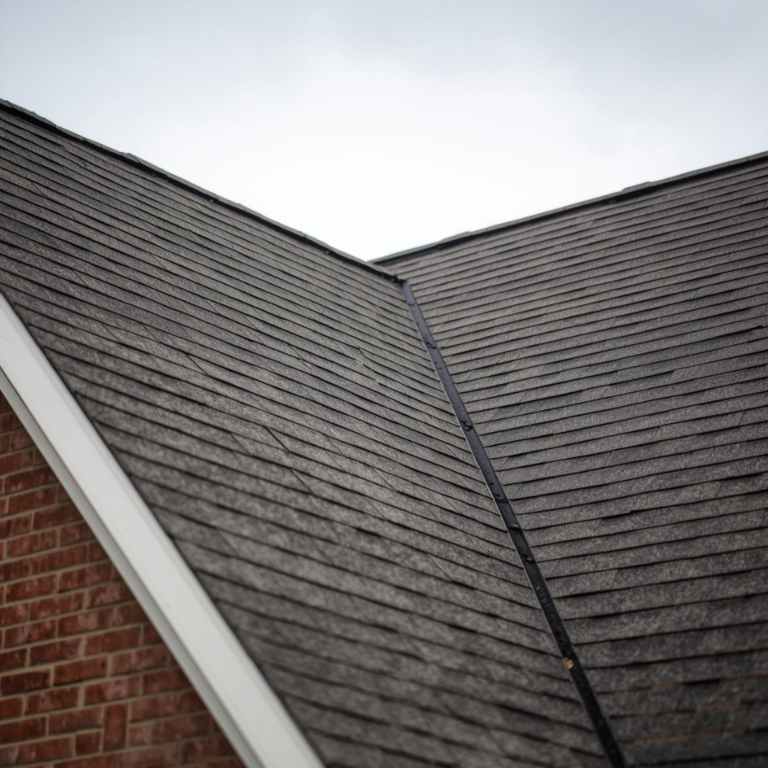
Adjusters look for hail impact marks, granule loss, missing shingles from wind, flashing damage, ridge cap damage, gutter dents, and interior staining. They also assess damage density per slope to determine how widespread the impact was. In Springfield and surrounding communities, spring storms often damage multiple slopes at once. A complete scope documents every affected side.
| Damage Type | What Adjuster Documents | Why Homeowners Miss It | How to Capture It |
|---|---|---|---|
| Hail impacts on shingles | Circular bruises or cracks | Hard to see from the ground | Roofer gets on the roof |
| Granule loss | Bare spots on surface | Looks like normal aging | Trained roofer knows the difference |
| Flashing damage | Bent or separated metal | Hidden behind trim or vents | Both adjuster and roofer check |
| Ridge cap damage | Cracked caps at roof peak | Requires roof-level access | Roofer flags during walk |
| Gutter denting | Dents from hail along runs | Overlooked if gutters still drain | Photograph from multiple angles |
Why Your Roofer Should Be Present
Having a contractor at the adjuster visit is not adversarial. It adds a second set of documented observations. Your roofer can point out damage the adjuster might pass over, especially on slopes that are harder to access.
Tip: Before the adjuster arrives, photograph gutters, downspouts, window frames, siding, and fence tops. All of it supports the storm event date and severity.
Pro tip: Ask for the adjuster’s written scope after the visit. If items are missing, you can request a supplement with additional documentation.
Illustrative scenario: A homeowner in Branson had their roofer present during the adjuster visit after an April hailstorm. The roofer pointed out hail impacts on the north slope the adjuster initially passed over. Those slopes were added to the scope, and the final claim covered a full replacement on all affected areas.
Denied or Underpaid Claims: What Missouri Homeowners Can Do
A 2024 Weiss Ratings analysis found the 13 largest U.S. home insurers closed 47.5% of homeowner claims without payment in 2023, well above the industry-wide rate of 37.4% reported by the National Association of Insurance Commissioners. If your claim gets denied or underpaid, you have options.
Common denial reasons include weak documentation, damage classified as cosmetic, wear and tear blamed instead of the storm, pre-existing conditions, and claims filed outside the policy window.
Missouri RSMo 375.420 allows homeowners to sue for “vexatious refusal to pay.” If the insurer denied without reasonable cause, homeowners can recover the claim amount, statutory penalties, and attorney fees. The Missouri DCI also accepts consumer complaints at insurance.mo.gov.
| Action Step | When to Use It | What to Expect |
|---|---|---|
| Review denial letter and policy | Right after denial | Understand the specific reason |
| Request adjuster’s written scope | If scope seems incomplete | Compare to roofer’s findings |
| Submit additional documentation | If damage was underreported | Supplement with photos and reports |
| Request re-inspection | If scope was incomplete | Second adjuster may be assigned |
| File complaint with Missouri DCI | If communication breaks down | DCI contacts insurer on your behalf |
| Consult attorney (RSMo 375.420) | If insurer refused without cause | May recover claim plus penalties |
Important: A denial is not the final word. Request the reason in writing and compare it to your policy language.
Tip: Keep maintenance records for your home. Regular roof inspections, gutter cleanings, and repairs show the insurer your roof was maintained. Insurers often argue damage resulted from skipped maintenance. Records counter that argument.
Illustrative scenario: A homeowner in Nixa had wind damage denied because the adjuster found pre-existing wear. They requested the denial in writing, hired a roofer to document storm-specific damage separately, and submitted a supplement. The insurer approved a partial claim for the storm-affected slopes.
Illustrative scenario: A homeowner in Rolla received an inadequate settlement for confirmed storm damage. They filed a complaint with the Missouri DCI, which contacted the insurer. A revised settlement covered the full roof replacement about six weeks later.
Insurance Claims in Southwest Missouri: Why This Region Is Different
Southwest Missouri sits in one of the most active severe weather corridors in the country. According to NWS Springfield severe weather climatology, the Springfield NWS coverage area averages roughly 10 tornadoes per year. Hail events are common across the region, particularly during the spring storm season.
This storm frequency is why Missouri insurers have tightened coverage. Percentage-based deductibles are more common here. ACV policies are becoming the default at renewal. Homeowners in Ozark, Nixa, Springfield, Branson, and Rolla need to review their policies more often than homeowners in calmer regions.
| Season | Primary Threat | Common Damage | Claim Tip |
|---|---|---|---|
| Spring (April to June) | Hail, tornadoes, wind | Impact marks, missing shingles | Peak filing season; act fast |
| Summer (July to September) | Strong storms, heavy rain | Leaks, granule loss, gutter damage | Heat reveals hidden spring damage |
| Fall (October to November) | Wind events, early ice | Lifted shingles, debris damage | Good time for pre-winter inspection |
| Winter (December to March) | Ice, snow, freeze-thaw | Ice dams, moisture intrusion | Document and file after thaw |
Building permits also factor into the picture, but not the way many homeowners assume. The City of Springfield classifies standard roof repair, roof replacement, and roof recovery as repair and maintenance, so no building permit is required for a typical insurance-funded reroof. A permit only triggers if a structural element (rafter, truss, or framing member) is altered or replaced, or if more than 32 contiguous square feet of deck sheathing is replaced during the job. This is laid out in the City of Springfield Roofing and Re-roofing Bulletin.
Permit rules in Ozark, Nixa, Branson, Rolla, and unincorporated Christian and Greene Counties are set by those jurisdictions, not by the City of Springfield. Confirm with the relevant local building department before work begins. Insurance-funded work still must meet local code requirements wherever it happens.
Tip: Check your policy for “code upgrade coverage.” This pays for upgrades to current building codes when storm damage triggers repairs. Without it, you pay the upgrade cost out of pocket.
Tip: If a severe storm passes within miles of your home, schedule an inspection even if you see no obvious damage from the ground.
How ProNail Exteriors Helps With Roof Insurance Claims
ProNail Exteriors was founded by Eden Branson after years of watching Southwest Missouri homeowners get taken advantage of by roofers who cut corners and disappeared. That experience shapes our approach to insurance claim assistance.
We start with a free roof inspection to see if storm damage is present and if a claim makes sense. We document everything in the format adjusters expect. We show up for the adjuster walk. If a claim is undervalued, we provide supplemental documentation.
We do not promise specific claim outcomes. We do not offer to cover your deductible. And we do not pressure anyone to sign on the spot. After approval, our in-house crews handle the work from start to finish. No random subcontractors.
Tip: A roofer who shows up uninvited after a storm and pressures you to sign is a red flag. Learn more about local roofers vs. storm chasers.
Important: Never sign a contingency agreement that transfers your insurance rights to a contractor without fully understanding what you are signing.
After-Storm Roof Checklist for Southwest Missouri
Bookmark this section. Here is exactly what to do after the next storm. For a deeper walkthrough tailored to a specific community, see our storm damage inspection checklist.
- Make sure it is safe before going outside.
- Walk your property and photograph all damage to gutters, shingles, siding hit by wind or hail, and damaged window frames and seals.
- Check the attic for water stains, daylight through decking, or damp insulation.
- Write down the storm date and time.
- Call your insurer to open the claim with your policy number ready.
- Note your claim number and every name you speak with.
- Schedule a free inspection with ProNail Exteriors at (844) 321-6245.
- Organize photos and pull your declarations page before the adjuster arrives.
- Confirm your roofer will attend the adjuster walk.
- After the visit, request the written scope and compare to your roofer’s findings.
- If items are missing, have your roofer prepare a supplement.
| Action | Timing | Why It Matters |
|---|---|---|
| Photograph all damage | Within 24 to 48 hours | Timestamps prove storm-related damage |
| Call your insurer | Within 48 to 72 hours | Opens the claim officially |
| Schedule roofer inspection | Within 1 week | Finds damage invisible from the ground |
| Roofer at adjuster visit | When scheduled | Catches missed damage |
| Review scope and supplement | Within 2 weeks of scope | Adds undocumented damage |
| Keep all repair receipts | Through claim closure | Required for holdback release |
Pro tip: Do not make permanent repairs before the adjuster inspects. Temporary tarps are fine. Permanent work before the inspection can complicate your claim.
Frequently Asked Questions About Roof Insurance Claims
Q: Does my homeowners insurance cover hail damage in Missouri? A: Most standard policies cover hail as a sudden event. The payout depends on whether you have ACV or RCV coverage. Under ACV, a 20-year-old roof may receive as little as 20 percent of replacement cost.
Q: How long do I have to file a roof insurance claim in Missouri? A: Missouri does not set a statutory deadline for opening the claim. That is governed by your policy, which typically requires proof of loss within 60 days, though the exact window varies by policy. Missouri’s 5-year statute of limitations under RSMo 516.120 is the deadline to sue for vexatious refusal, not to open the claim. File within 30 to 60 days for the strongest outcome.
Q: What is the difference between ACV and RCV? A: ACV pays depreciated value based on roof age. RCV pays full replacement cost minus your deductible. RCV policies release the holdback after repairs are complete.
Q: Should I have my roofer at the adjuster inspection? A: Yes. Your roofer documents from a second vantage point and can flag damage the adjuster might miss. Only the written scope matters.
Q: What are the most common reasons claims get denied? A: Weak documentation, damage called cosmetic, wear and tear blamed instead of the storm, pre-existing conditions, and late filing.
Q: What is a wind and hail deductible? A: A separate deductible on many Missouri policies, calculated as 1 to 2 percent of your home’s insured value. It applies only to wind and hail claims.
Q: Can my roofer waive my deductible in Missouri? A: No. Missouri law prohibits contractors from waiving or absorbing deductibles. Anyone who offers is breaking the law.
Q: What if my claim is denied or underpaid? A: Request the denial reason in writing, provide supplemental documentation, request a re-inspection, file a DCI complaint, or consult an attorney under RSMo 375.420.
Q: How does ProNail Exteriors help with claims? A: Free inspection, professional documentation, adjuster walk attendance, supplemental documentation if underpaid, and in-house crews for roof repair or replacement after approval.
Q: Do I need a permit for a roof replacement after an insurance claim? A: Insurance funding does not change the local permit rule. In Springfield, a standard tear-off and reroof does not require a permit because the City classifies it as repair and maintenance. A permit only triggers if a structural element is altered or replaced, or if more than 32 contiguous square feet of decking is replaced. Rules in Ozark, Nixa, Branson, Rolla, and unincorporated county areas are set by those jurisdictions, so confirm with the relevant local building department before work begins.
Key Takeaways
Know Your Policy: Check whether you have ACV or RCV before a storm. Review your wind and hail deductible separately. Use the Missouri DCI comparison tool before your next renewal.
Document Everything: Photograph damage within 24 to 48 hours with timestamps. Keep all communications and reports in one folder. Maintenance records prove your roof was in good shape.
Work the Process: File within 30 to 60 days. Have your roofer at the adjuster inspection. Review the scope and submit supplements for anything missing.
Protect Your Rights: A denial is not the final answer. Missouri RSMo 375.420 protects against vexatious refusals. The Missouri DCI accepts free consumer complaints at insurance.mo.gov.
Choose the Right Contractor: Never sign with a roofer who pressures you after a storm. Deductible waivers are illegal in Missouri. In-house crews mean accountability from inspection to final nail.
Think Local: Southwest Missouri’s severe weather makes hail-resistant shingles a smart choice. Standard Springfield reroofs do not require a permit; structural framing changes or more than 32 contiguous square feet of decking replacement do. Other cities set their own rules. Local roofers who know the storm patterns provide stronger advocacy during the claims process.
Not Sure if That Last Storm Damaged Your Roof?
We will walk you through it. ProNail Exteriors runs multiple in-house crews across Southwest Missouri. We show up for the adjuster walk, document everything adjusters expect, and treat your home like it belongs to a neighbor.
Call (844) 321-6245 to schedule your free inspection and find out where things stand. No pressure. No empty promises. Just honest answers from a team that does this every day.
This article is for informational purposes. Homeowners should consult their insurer and, if needed, an attorney for specific legal questions.
ProNail Exteriors | Roofing, Siding, Windows, Gutters, Decks, and More | Serving Southwest Missouri Since 2025