After a storm or a leak, Nixa homeowners face one of the most stressful questions in home ownership: patch it or replace the whole thing. Getting that call wrong costs real money in either direction. This post walks through 7 clear factors to help you make that decision with confidence, without getting talked into more or less than what your roof actually needs.
TL;DR: If the roof is under 15 years old and damage is in one spot, a roof repair is usually fine. If it is over 20 years old, leaking in multiple places, or repair costs are climbing toward 30% of replacement cost, replace it. Partial replacement is a middle option, but new shingles rarely match old ones perfectly. Always get 2 to 3 written estimates before deciding.
You spot a water stain on the ceiling the morning after a spring storm. You call a roofer. They walk around the house for ten minutes and tell you the whole roof needs to go. You call a second roofer. They say it is just a flashing repair and you will be fine. Now you have two completely different answers and no idea who to trust.
This situation plays out in Nixa every storm season. One contractor sees a replacement job. Another sees a patch. You are stuck in the middle trying to figure out the right call without any framework to lean on.
That is exactly what this guide gives you. Seven factors. Clear direction. By the end, you will know how to evaluate your own situation before any contractor walks through the door.
Why This Decision Is Harder After a Missouri Storm
Southwest Missouri storm season peaks April through June, but storms hit year-round across the region. The Springfield NWS forecast area tracks significant weather activity through every season, and Missouri has recorded 120 billion-dollar weather disasters since 1980 — 82 of those driven by severe storms.
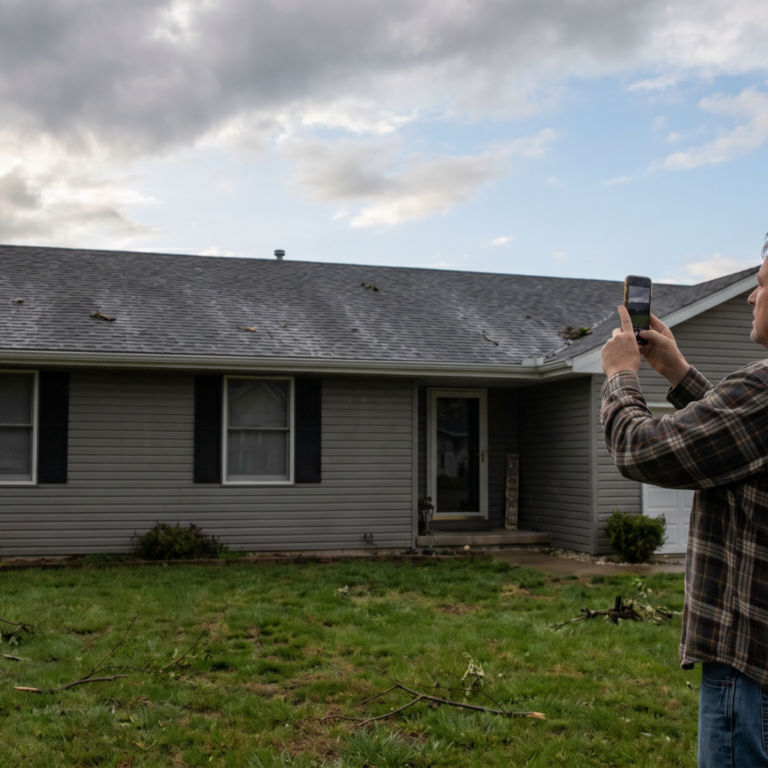
After a major hail or wind event in Nixa, every roofing company in the area gets busy fast. Crews are stretched. Schedules fill up. That creates pressure to sign something quickly before you have had time to think clearly or compare options.
The repair vs. replacement decision should never be made at the door on the day of the inspection. It should be made after calm review of the facts — ideally with estimates in hand from more than one source.
Tip: Get your own independent inspection from a local, insured roofer before discussing the scope of work with your insurance company. Your inspector works for you, not the claim outcome.
Factor 1: Age of the Roof
Asphalt shingle roofs last 20 to 30 years under normal conditions in Southwest Missouri. Knowing your roof’s actual age is the single most important factor in the repair vs. replacement decision.
Roofs under 10 to 15 years old with isolated damage are strong candidates for repair. Most of the system is still performing well, and a good repair extends it further without wasting a roof that has years of life left. Roofs over 20 years old showing visible wear should lean toward replacement. Repairs on aging systems fix the symptom but not the underlying decline across the whole surface.
Roofs approaching 25 to 30 years are near the end of their expected lifespan. Even a solid repair is temporary at that point. The Owens Corning reroof vs. repair guide outlines similar age benchmarks that most roofing professionals follow when making this recommendation.
| Roof Age | General Direction |
|---|---|
| Under 10 years | Repair almost always right |
| 10 to 15 years | Repair if damage is isolated |
| 15 to 20 years | Repair or replace depending on condition |
| 20 to 25 years | Replacement often smarter |
| 25+ years | Replace — repair is temporary |
Age alone does not make the decision, but it sets the frame for every other factor. Start here.
Tip: Check your closing paperwork or local permit records to confirm the actual age of the roof. Many homeowners guess wrong by 5 to 10 years — and that difference changes the recommendation.
Factor 2: Extent and Location of Damage
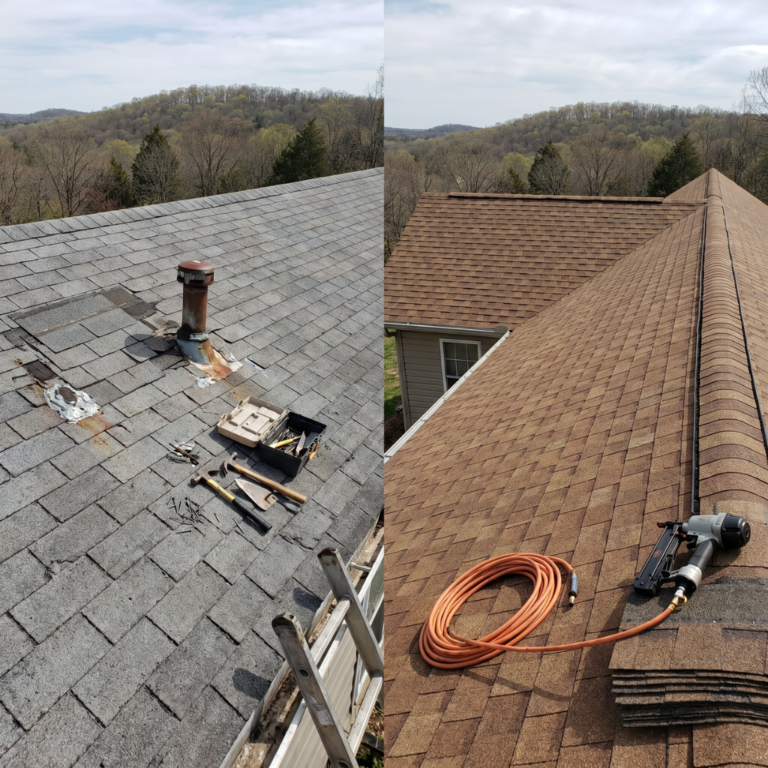
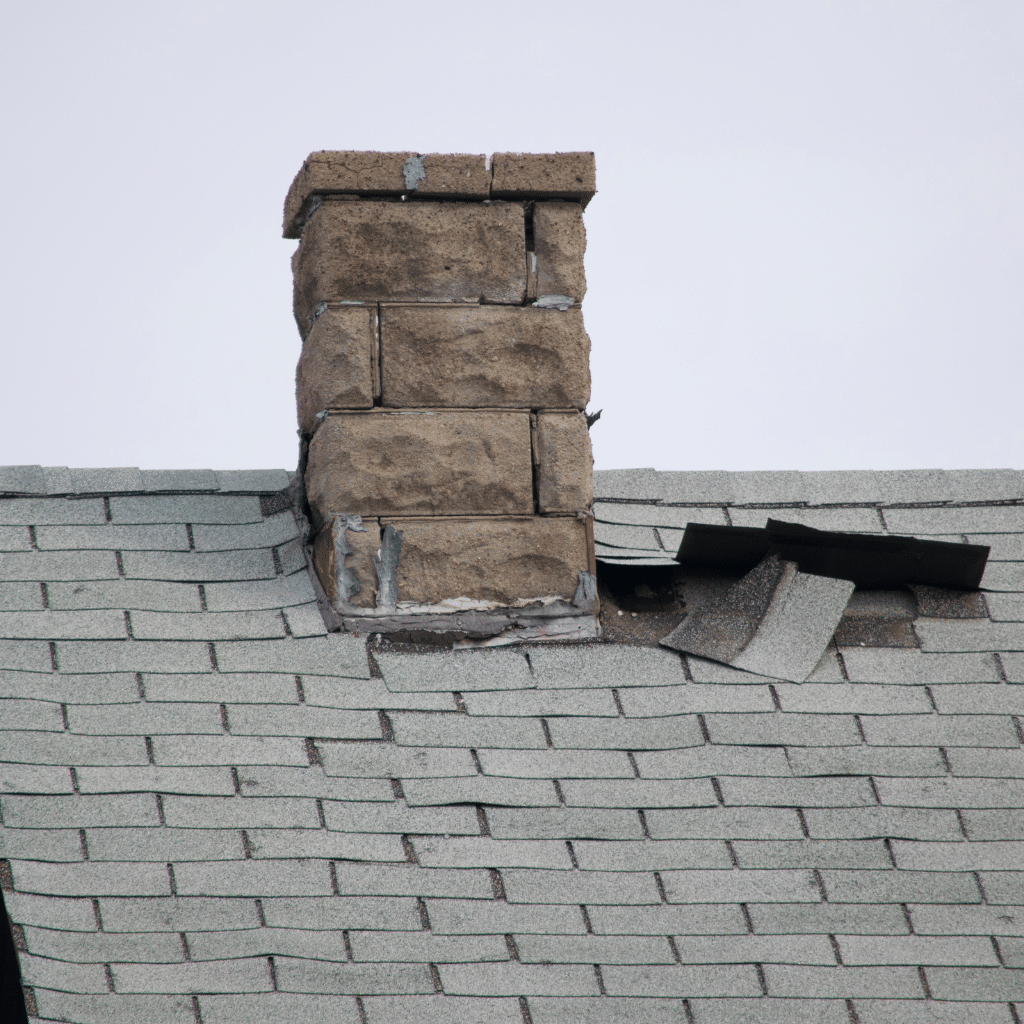
Isolated damage in one spot — a few missing shingles, a failed pipe boot, damaged flashing around a chimney — is almost always repairable. The rest of the system is intact. A targeted fix solves the problem without touching what does not need to be touched.
Widespread damage across multiple sections or slopes tells a different story. Storm damage that covers more than 30% of the roof surface typically points toward full replacement rather than a patchwork approach across multiple areas. Damage to the roof decking, the plywood layer under the shingles, requires a much larger repair and often signals the need for a broader scope of work.
Location matters as much as size. Damage at valleys, ridges, and penetrations like chimneys, vents, and skylights is more complex to repair correctly. These areas see the most water movement and are more likely to cause future leaks if the repair is not done right. Our roof repair services cover all of these areas with in-house crews who know where moisture travels.
Tip: Ask your roofer to show you the damaged areas in person on the roof or via video before agreeing to any scope of work. A trustworthy contractor will show you what they are seeing.
Factor 3: How Often You Have Repaired It Recently
One repair in five years is completely normal for an active roof in Southwest Missouri. Two repairs in the same area within 12 months is a red flag worth paying attention to.
Frequent repairs in different sections point to a roof that is aging across the whole system, not just dealing with isolated problems. Each repair might be legitimate on its own, but the pattern tells you the roof is declining broadly. If your repair expenses are climbing toward 30% of what a full roof replacement would cost, replacement becomes the smarter long-term investment.
Tip: Keep a simple log of every roofing repair with the date, what was fixed, and who did the work. That record tells a clear story over time and is useful when talking to any new contractor.
Factor 4: Active Leaks and Interior Damage
A single isolated leak caught early and before any interior damage occurs is usually repairable. It points to a specific failure — a popped nail, failed sealant, or cracked shingle — that can be addressed without touching the whole roof.
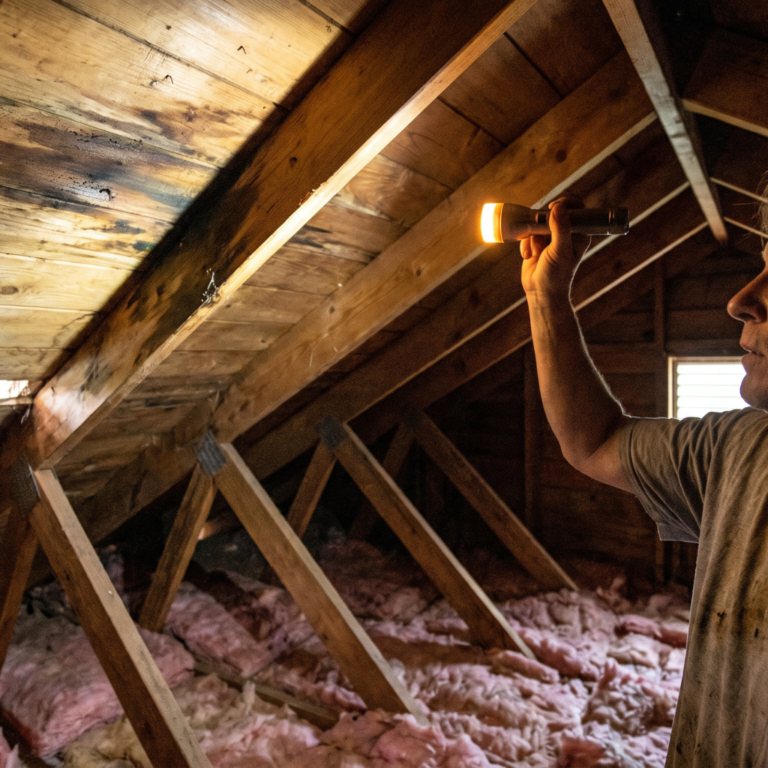
Leaks that have caused significant interior damage are a different situation. Soaked insulation, wet drywall, and ceiling stains in multiple rooms suggest the roof has been failing longer than the homeowner realized. Water that has been sitting in the attic or decking causes rot and mold. Once the decking is compromised, a surface repair cannot fix what is happening underneath.
Always check the attic after any suspected leak. Standing water, dark staining on wood, soft spots in the decking, and compressed insulation all point to bigger problems than the surface damage alone.
| Leak Type | What It Usually Means |
|---|---|
| Single spot, no interior damage | Repair likely appropriate |
| Single spot with minor ceiling stain | Repair and monitor |
| Multiple spots, different rooms | Roof may be failing broadly |
| Wet insulation, rotted decking | Replacement likely needed |
| Long-standing leak, mold present | Full assessment required |
The table above gives a quick read on severity. Any situation in the bottom two rows deserves a full attic inspection before any scope of work is agreed to. Our insurance claim assistance team can help document interior damage for your insurance file if a claim is part of the picture.
Tip: Never ignore a ceiling stain. Water travels along framing and sheathing before it drops. The leak source is often well away from where the stain appears on the ceiling.
Factor 5: The 30% Rule
The roofing industry uses a widely accepted benchmark: if repair costs reach 30% or more of what a full replacement would cost, replacement is usually the better long-term investment. A repair that runs under 30% of replacement cost and extends the roof 5 to 10 more years is money well spent on a newer or mid-life system.
On an older roof near the end of its life, that same repair might only buy 1 to 2 years before the next failure shows up somewhere else. At that point, you are putting money into a declining system on borrowed time. Replacement makes better financial sense even if it costs more today.
Tip: Ask your contractor for both a repair estimate and a replacement estimate in writing. Put them side by side and do the math before you decide. A contractor who refuses to give you both numbers is worth questioning.
Factor 6: Full Replacement vs Partial Replacement
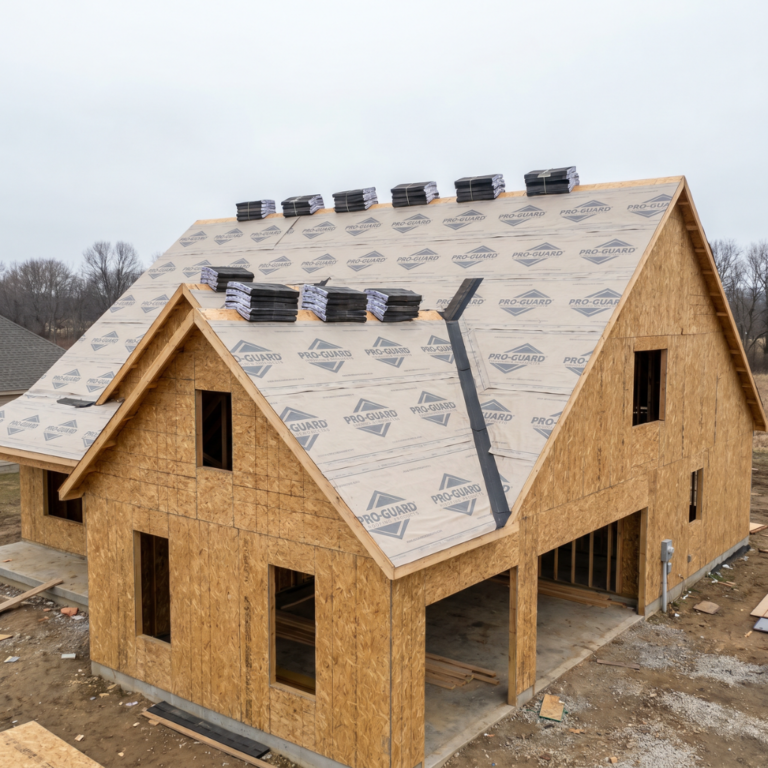
Full replacement tears off all existing shingles, inspects and repairs the decking where needed, installs new underlayment, and lays new shingles across the entire roof surface. It is the most complete solution and gives you a uniform, warrantied system from top to bottom.
Partial replacement covers only the damaged section or slope. It costs less upfront but creates a visible seam where new shingles meet old ones. New shingles almost never match old shingles exactly — color, texture, and granule tone shift between production runs. On a front-facing slope visible from the street, that patchwork look will show.
Partial replacement makes sense when damage is on a back slope, when the roof is mid-life and otherwise in solid condition, and when budget is a genuine constraint. It is a legitimate option — just go in with clear expectations about the appearance result.
| Factor | Full Replacement | Partial Replacement |
|---|---|---|
| Cost | Higher upfront | Lower upfront |
| Shingle match | Uniform | Visible seam likely |
| Best for | Older roofs, widespread damage | Mid-life roof, isolated section |
| Warranty | Full new system | Partial coverage |
| Long-term value | Best | Moderate |
The right choice depends on which slope is damaged, the age of the rest of the system, and how long you plan to stay in the home. See the full overview of our roofing services if you want to understand what each scope of work actually involves.
Tip: If the damaged section faces the street, the color difference between old and new shingles will be visible from the curb. Full replacement is worth considering in that case even on a mid-life roof.
Factor 7: Are You Selling the Home Soon?
If a home sale is within 1 to 2 years, a full replacement often adds more value than a patch repair and removes a common inspection flag. Buyers and inspectors notice aging roofs. A recent full replacement is a selling point that shows up in listing descriptions and gives buyers confidence.
A documented repair history is a negotiating chip for the buyer. It does not disqualify the home, but it gives them reason to ask for a credit or a price reduction. If the home is a long-term hold, a solid repair on a mid-life roof is often exactly the right call. There is no reason to replace a roof with 8 years of life remaining just because it needed a repair.
Tip: Talk to your real estate agent before committing to a major roofing project ahead of a sale. They know what the Nixa market responds to and can help you decide whether repair or replacement serves the sale better.
The Decision Checklist: 7 Questions to Ask Before You Decide
- How old is the roof — and do you know the actual age from permit records or closing documents?
- Is the damage in one spot or spread across multiple sections and slopes?
- Is the decking solid or are there soft spots, rot, or areas with visible moisture damage?
- How many times has this roof been repaired in the last 3 to 5 years?
- Is the repair estimate under 30% of what a full replacement would cost?
- Are you planning to sell the home within 1 to 2 years?
- Have you gotten at least 2 written estimates from local, insured roofers?
Tip: Bring this list to every contractor conversation. A trustworthy roofer answers every question directly without steering you toward the more expensive option by default.
FAQs About Roof Repair vs Replacement in Southwest Missouri
Q: How do I know if I need a repair or full replacement? Start with age and extent of damage. If the roof is under 15 years old and damage is in one spot, repair is usually the right call. If the roof is over 20 years old or damage is widespread across multiple sections, replacement is often the smarter long-term move. When in doubt, get two independent assessments.
Q: Can I repair just one side of my roof? Yes, this is called a partial replacement. It costs less upfront but new shingles rarely match old shingles exactly. If the repaired section faces the street, the color difference is likely to be visible from the curb. Partial replacement works best on back slopes or when the rest of the roof is mid-life and in solid condition.
Q: What is the 30% rule for roof repair? If your repair estimate is 30% or more of what a full replacement would cost, most roofing professionals recommend replacing the roof instead. Repairs that approach replacement cost do not make financial sense on an aging system. You end up spending significant money without solving the root problem.
Q: How long does a roof repair last? A good repair on a structurally sound mid-life roof can last 5 to 10 years or more. A repair on an aging roof near the end of its life may only hold 1 to 2 years before something else fails. The age and overall condition of the system matter more than the quality of the patch itself.
Q: Will my insurance pay for repair or replacement? It depends on the policy and the extent of damage. Insurance typically covers sudden storm damage, not normal wear and aging. The adjuster determines whether the damage justifies repair or replacement based on what they find. Document everything thoroughly and consider having a local roofer present during the adjuster visit.
Q: Can a roofer repair storm damage without full replacement? Yes, for isolated storm damage on a roof that is otherwise in good shape. Missing shingles, broken flashing, and damaged pipe boots are common storm repairs. If the storm caused widespread damage across the entire roof surface, full replacement may be the right call and may be covered under your homeowners policy.
Q: Does a roof repair require a permit in Nixa? Minor repairs typically do not require a permit in most Missouri cities. Larger repairs and full replacements usually do. Permit requirements and code compliance vary by municipality. Nixa falls under Christian County. Check with the Nixa building department before any significant roofing work begins.
Q: What happens if I keep repairing an old roof instead of replacing it? Each repair buys time but does not fix the aging of the overall system. Underlayment, flashing, and decking continue to decline. At some point, repairs stop being cost-effective and you are putting money into a failing system. Replacement becomes unavoidable — usually at the worst possible moment.
Q: Is a roof overlay a good idea? In limited situations, yes. But most building codes and roofing professionals in Missouri limit roof layers to two. An overlay hides the condition of the existing shingles and decking. If decking damage exists underneath, it will not be found or repaired. That hidden damage keeps getting worse.
Q: How do I find a trustworthy roofer in Nixa? Look for local companies with a physical presence in Southwest Missouri, in-house crews, proof of liability insurance and workers compensation, and reviews from local homeowners. Get at least 2 to 3 written estimates before signing anything. Never sign a contract on the same day as the inspection. Have questions ready for the most common roofing FAQs before any contractor arrives.
Key Takeaways
- Roofs under 15 years old with isolated damage are usually strong candidates for repair over full replacement.
- Roofs over 20 years old with widespread damage or a pattern of repeated repairs lean toward replacement.
- The 30% rule: if repair costs reach 30% of replacement cost, replacement is the smarter long-term investment.
- Partial replacement saves money upfront but new shingles rarely match old ones, and the seam will likely show.
- Active leaks with interior damage require a full attic and decking assessment before any scope of work is decided.
- Selling soon? A full replacement often adds more market value than a documented repair history.
- Always get 2 to 3 written estimates from local, insured roofers before making any final decision.
Not Sure What Your Nixa Roof Needs?
ProNail Exteriors serves Nixa, Springfield, Ozark, and all of Southwest Missouri. When their crew inspects a roof, they walk homeowners through every finding in plain language and give an honest recommendation — repair when repair makes sense, replacement when it does not. No upsell. No pressure. Just a straight answer about what the roof actually needs.
A free inspection is the first step. Schedule one before summer storm season arrives and you are making the decision under pressure.
Not sure what to expect? Call 844-321-6245 or visit pronailexteriors.com and let ProNail Exteriors tell you exactly where your roof stands.
ProNail Exteriors | Roofing, Siding, Windows, Gutters, Decks, and More | Serving Southwest Missouri Since 2025