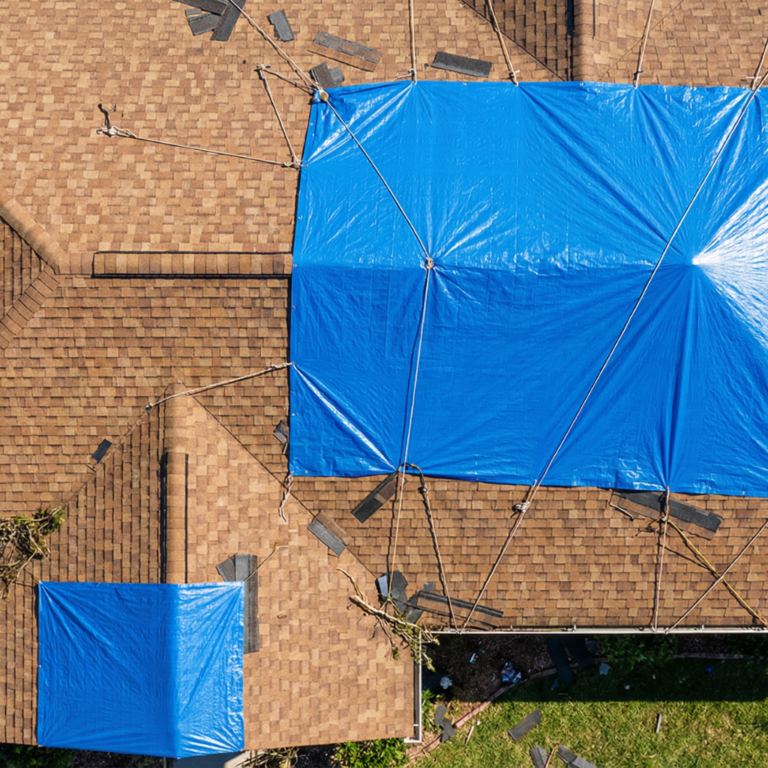
A roof supplement is one of the most misunderstood parts of the insurance claim process. After a storm, the check from your insurance company might not cover everything your contractor found wrong. That gap is where a roof supplement comes in, and understanding it can mean the difference between a complete repair and an out-of-pocket headache.
TLDR: A roof supplement is a request for additional insurance funds to cover items the adjuster missed or that building codes require. Supplements are normal, expected, and completely legal. Knowing what gets overlooked and how the process works puts you in a stronger position to get your roof repaired correctly and to code.
You filed the claim. The adjuster came out. A check arrived. But your contractor says the estimate does not cover everything. That does not mean anyone is trying to cheat you. It means the adjuster’s scope and the contractor’s findings do not match.
After storms like the March 4, 2026 golf ball-size hail event that hit Springfield, Ozark, Nixa, and Republic, adjusters handle hundreds of claims at once. Missouri insurers paid over $1.3 billion in residential property claims alone during 2025’s catastrophic weather season, with over 173,000 total claims filed across residential, renters, and auto policies by mid-July. That volume makes missed items more likely in every part of the roof insurance claim process.
What Exactly Is a Roof Supplement?
A roof supplement is a formal request for additional claim funds beyond the adjuster’s original estimate. Your contractor prepares the supporting documentation, and you, as the policyholder, submit or authorize the submission to your insurance company. The supplement covers overlooked items, damage discovered during tear-off, or upgrades required by local building codes. This is not about inflating costs. It is about making sure the scope of work is complete and compliant.
Pro tip: Do not confuse a supplement with fraud. Legitimate supplements are backed by photos, code citations, and professional estimates.
Why Adjusters Miss Items on Roof Estimates
Insurance adjusters are trained estimators, not roofing contractors. They follow company guidelines and software like Xactimate (the estimating program most insurance companies use to build claim estimates) that does not always account for local codes or hidden damage.
| Reason | What It Means for Your Claim | What a Good Contractor Does |
|---|---|---|
| Training gap | Adjusters may not know installation requirements | Reviews the adjuster’s scope line by line |
| Software limits | Xactimate does not auto-include every code item | Adds every code-required line item with citations |
| Code knowledge | Adjusters may not know Ozark’s 2018 ICC codes | Identifies local code upgrades the adjuster missed |
| Claim volume | High storm volume means less time per inspection | Provides thorough documentation with photos |
| Hidden damage | Rotted decking only appears at tear-off | Documents hidden damage and submits a supplement |
An experienced, local contractor who knows Southwest Missouri building codes catches what adjusters miss. Ozark’s 2018 ICC codes and Springfield’s permit requirements both require items like drip edge (a metal strip that directs water into the gutter) and proper ventilation (airflow through the attic that prevents heat buildup). These code upgrades are high-value supplement items after any hail event.
Pro tip: Have your contractor walk through the adjuster’s scope line by line before any work starts.
Items Most Commonly Missing from Roof Estimates
Knowing what gets left off helps you ask the right questions. Here are the most frequently supplemented line items.
| Item | Why It Gets Missed | Code Required |
|---|---|---|
| Starter shingles | Lumped into field shingle count | Manufacturer spec |
| Ice and water shield | Not included in non-coastal estimates | Yes, valleys and eaves |
| Drip edge | Required even if not on original roof | Yes (2018 ICC) |
| Step flashing replacement | Written as “reset” instead of “replace” | Best practice |
| Ridge cap shingles | Undercounted or missed entirely | Manufacturer spec |
| Steep slope charge (7/12+) | Not flagged from ground level | Labor standard |
| Multi-story charge | Skipped on two-story homes | Labor standard |
| Detach and reset gutters | Required for proper drip edge install | Tied to code upgrade |
| Chimney flashing | Written as repair instead of replace | Best practice |
| Decking replacement | Hidden until tear-off reveals damage | Code and safety |
| Ventilation code upgrades | Not on original roof, now required | Yes |
Many of these items come into play when deciding between repair vs. replacement. The number of missed supplement items can tip the scale toward a full roof replacement.
Pro tip: Photograph your existing gutters, flashings, and vents before tear-off. These items are the most likely to be disputed.
How the Roof Supplement Process Works
| Step | Who Does It | What Is Needed | Timeline |
|---|---|---|---|
| Review adjuster’s scope | Contractor | Adjuster’s estimate and contractor’s findings | 1 to 3 days |
| Document damage | Contractor | High-resolution annotated photos | Same day |
| Prepare supplement packet | Contractor | Updated estimate, code citations, explanation | 1 day |
| Submit to carrier | Homeowner (with contractor’s packet) | Packet sent via email or adjuster portal | 1 day |
| Follow up | Homeowner (contractor available for questions) | Consistent communication with carrier | Varies |
| Appeal if denied | Homeowner (with contractor documentation) | Additional documentation, formal appeal | Varies |
In Missouri, you can ask your contractor to be present during the adjuster’s inspection to document findings and answer questions about the estimate. The homeowner, not the contractor, is the party to the claim.
Pro tip: Never start work until the supplement is approved or you have a written agreement on how discrepancies will be handled.
What If the Supplement Gets Denied?
A denied supplement is not the end of the road. Read the denial carefully, gather stronger documentation, and file a formal written appeal.
If the appeal stalls, Missouri homeowners can file a complaint with the Missouri Department of Commerce and Insurance. Missouri law provides protections under RSMo 375.420, the Vexatious Refusal to Pay statute. If an insurer refuses a valid claim without reasonable cause, the homeowner may recover penalties plus attorney fees. This statute does not apply to every denial, so consult an attorney to evaluate your specific situation. For large or complex claims, consider hiring a licensed Missouri public adjuster who works on your behalf.
Pro tip: Document every interaction with your insurer. Write down dates, names, and what was said.
ACV vs. RCV: How Your Policy Affects Supplements
| Policy Type | How It Pays | Impact on Supplements |
|---|---|---|
| ACV (Actual Cash Value) | Depreciated value based on roof age | Total payout is limited by depreciation. On older roofs, ACV can pay as little as 20% of replacement cost. |
| RCV (Replacement Cost Value) | Full replacement cost; depreciation withheld until work is complete | Supplements are critical to capture the full scope before invoicing, since depreciation is released after repairs. |
The Missouri DCI offers a free roof coverage tool to help homeowners understand their policy type before storm season.
Pro tip: Review your policy before storm season. Knowing your ACV vs. RCV coverage helps you plan and avoid surprises.
Two Supplement Scenarios in Southwest Missouri
Illustrative scenario: A homeowner in Ozark files a claim after a quarter-size hail event. The adjuster’s estimate covers field shingles and basic labor. The contractor finds missing drip edge (required under Ozark’s 2018 ICC codes), damaged ridge cap counted as field waste, and rotted decking at tear-off. The supplement is approved, and the roof is completed to code with Class 4 impact-resistant shingles.
Illustrative scenario: A Republic homeowner receives a short insurance check after a wind and hail storm. The contractor identifies a missing steep-slope charge, missing starter shingles, and no line item for detaching and resetting gutters. The supplement is submitted with photos and code citations, and the carrier processes it within two weeks.
FAQs About Roof Supplements
Q: What is a roof supplement? A: A request for additional insurance funds to cover items the adjuster missed, damage found during repairs, or code-required upgrades. It is a normal part of the claims process.
Q: Is a roof supplement legal? A: Yes. Supplements are completely legal and standard. They make sure the scope of work matches the actual damage and code requirements.
Q: How long does a roof supplement take? A: Contractors typically prepare a supplement within one to three days. Carrier response times vary from days to weeks.
Q: Who files the supplement? A: Your contractor prepares the supplement packet, including the updated estimate, photos, and code citations. You, as the policyholder, submit or authorize the submission to your insurance company. Under Missouri law, contractors cannot negotiate your claim on your behalf, but they can provide the documentation and inspection support you need.
Q: What items are most commonly missed? A: Starter shingles, drip edge, ridge cap, ice and water shield, steep slope charges, decking replacement, and ventilation upgrades top the list.
Q: Can the supplement be denied? A: Yes, but denials can be appealed. Strong documentation improves approval odds. Missouri homeowners also have protections under RSMo 375.420.
Q: What is the difference between a supplement and an appeal? A: A supplement is a proactive request for additional scope items. An appeal is a formal challenge after a denial.
Q: Does filing a supplement raise my rates? A: A supplement tied to an existing claim does not typically affect rates more than the original claim. Filing multiple separate claims over time can impact premiums.
Q: What are my rights if a supplement is denied in Missouri? A: You can appeal in writing, request a re-inspection, or file a complaint with the Missouri DCI. RSMo 375.420 provides penalty protections for unreasonable denials. Consult an attorney for specifics.
Q: How does ACV vs. RCV affect supplements? A: ACV pays depreciated value, which can be very low on older roofs. RCV pays full replacement cost after work is complete. Supplements are especially critical with RCV to capture every line item before invoicing.
Key Takeaways
Supplements Are Normal. A roof supplement covers items the adjuster missed, code upgrades, and hidden damage. Gaps in the scope are expected, not a red flag.
Protect Your Claim. Photograph everything before and during the roofing process. Keep records of all communication with your insurer. Know your ACV vs. RCV coverage before storm season.
Your Contractor Matters. A local contractor who knows Southwest Missouri severe weather and building codes catches what adjusters miss. Have the scope reviewed line by line before work begins.
Missouri Homeowner Rights. You own the claim, not your contractor. You can ask your contractor to be present during the adjuster’s inspection, but you are the party to the claim. RSMo 375.420 protects against unreasonable claim denials. For disputes, consider a licensed Missouri public adjuster or attorney.
Get Your Claim Reviewed Before Work Starts
The right contractor catches what adjusters miss, documents every detail, and makes sure the supplement process is handled correctly from the start.
ProNail Exteriors provides free storm damage inspections across Southwest Missouri. Every roof is inspected thoroughly, every code-required item is documented, and in-house crews handle each project from start to finish. You own the claim. ProNail provides the documentation and expertise to support it.
Call 844-321-6245 to schedule a free roof inspection and find out if your claim covers everything it should.
ProNail Exteriors | Roofing, Siding, Windows, Gutters, Decks, and More | Serving Southwest Missouri Since 2025