Most homeowners in Strafford and Springfield never think about attic ventilation until something goes wrong. By then, shingles may already be failing early, mold may be growing on attic wood, and energy bills may have been climbing for years. This post covers 7 clear warning signs of poor roof ventilation and what to do about each one before the damage gets worse.
TL;DR: Poor attic ventilation bakes shingles from the inside, grows mold, and causes ice dams in winter. The fix is a balanced system of soffit vents at the eaves and ridge vents at the peak. If your attic hits 150 degrees in summer or smells musty year-round, ventilation is likely the problem. Catch it early and your roof lasts much longer.
It is July in Strafford. The upstairs of your home feels like a sauna no matter how hard the air conditioner runs. You noticed a few shingles that look wavy from the driveway last week. And the last time you opened the attic door, there was a musty smell you could not shake.
Most homeowners treat those three things as separate problems. They are not. All three often trace back to the same root cause: poor attic ventilation.
This guide explains why ventilation is the hidden factor behind early roof failure, mold growth, and high cooling bills. By the end, you will know what to look for, what causes it, and exactly what needs to happen to fix it.
Why Attic Ventilation Matters in Southwest Missouri
Missouri summers bring extreme heat and high humidity at the same time. That combination is brutal for any attic that is not moving air properly. Heat builds. Moisture gets trapped. The damage starts long before you can see it from the ground.
Without proper ventilation, attic temperatures in Missouri summers can reach 150 degrees Fahrenheit. That trapped heat bakes the underside of your shingles while the sun ages them from above. Shingles caught between those two heat sources fail in 10 to 15 years instead of the expected 20 to 30.
Winter brings a different threat. Warm, moist air from your living space rises into the attic. Without exhaust vents, that moisture condenses on cold wood and causes rot, mold, and ice dams. Southwest Missouri sees significant storm activity year-round, and rain that gets trapped in a poorly ventilated attic simply cannot dry out.
Tip: Proper ventilation does not just protect your roof. It also lowers your summer cooling bills by keeping attic heat from bleeding down into your living space.
How Roof Ventilation Works
Attic ventilation works on a simple principle: cool air enters at the bottom and hot air exits at the top. When both sides of that system are working, the attic stays close to outdoor temperatures year-round.
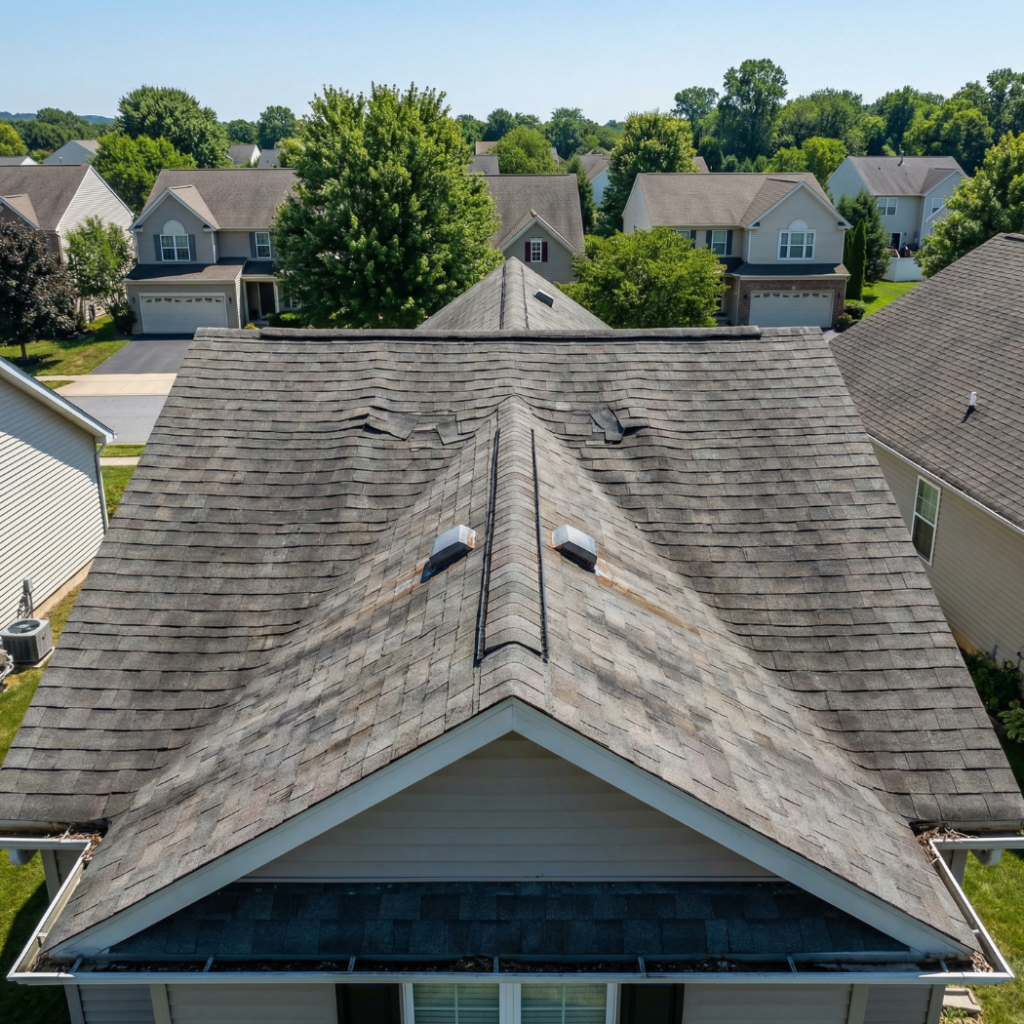
Soffit vents are installed in the underside of the roof overhang, called the eave. They pull fresh outside air into the attic. Ridge vents run along the very peak of the roof. Hot attic air rises naturally and escapes through the ridge vent. Together they create a continuous airflow that protects shingles, wood, and insulation.
One square foot of soffit vent is recommended for every 150 square feet of attic space. Many homes, especially older ones in Strafford and throughout Greene County, fall short of that target.
The table below shows how each vent type plays a role in the system.
| Vent Type | Location | Function |
|---|---|---|
| Soffit vents | Under roof eave | Pull cool air in |
| Ridge vents | Roof peak | Push hot air out |
| Gable vents | End walls of attic | Side exhaust (older homes) |
| Box/turtle vents | Roof deck | Spot exhaust only |
Ridge vents and soffit vents are designed to work together. One without the other is like breathing out but not in. You need both sides of the system functioning for it to do its job.
Tip: Ridge vents do not work properly without soffit vents. A ridge vent installed on a home with blocked soffits does almost nothing.
Sign 1: Your Attic Is Extremely Hot in Summer
If your attic feels like an oven when you step into it on a July afternoon, it is not getting enough exhaust airflow. That is one of the clearest roof ventilation problems signs you can find.
Attics without proper ventilation regularly hit 150 degrees Fahrenheit during Missouri summers. That trapped heat radiates down through the ceiling into living spaces, forces your cooling system to work harder, and bakes the underside of your shingles from below. The result is a roof that wears out far too soon.
Tip: Stand in your attic on a hot afternoon. If it feels unbearable within a few seconds, your ventilation system needs attention. Bring a thermometer if you want a real number to share with your contractor.
Sign 2: Shingles Curling, Cracking, or Blistering Early
Shingles that curl at the edges, crack, blister, or shed granules before their expected lifespan are classic signs of attic heat buildup. Shingle blistering and early curling are directly tied to ventilation failure because excessive attic heat dries out the asphalt from below and makes it brittle.
Blistering happens when trapped moisture or gas under the shingle coating has nowhere to escape. It shows up as raised bubbles on the shingle surface. Both curling and blistering tell you the shingles are aging faster than they should.
If a 10-year-old roof already looks like it is 20 years old, poor attic ventilation is often part of the cause. A roof repair inspection can help separate ventilation damage from normal wear.
Tip: Check shingles from the ground with binoculars after a summer heat wave. Early curling along the edges means the roof is aging fast and needs attention.
Sign 3: Moisture, Frost, or Mold in the Attic
In winter, warm moist air from your living space rises into the attic. Without exhaust vents, it has nowhere to go. That moisture condenses on cold roof decking and rafters. In very cold weather, it freezes into visible frost on the underside of the decking.
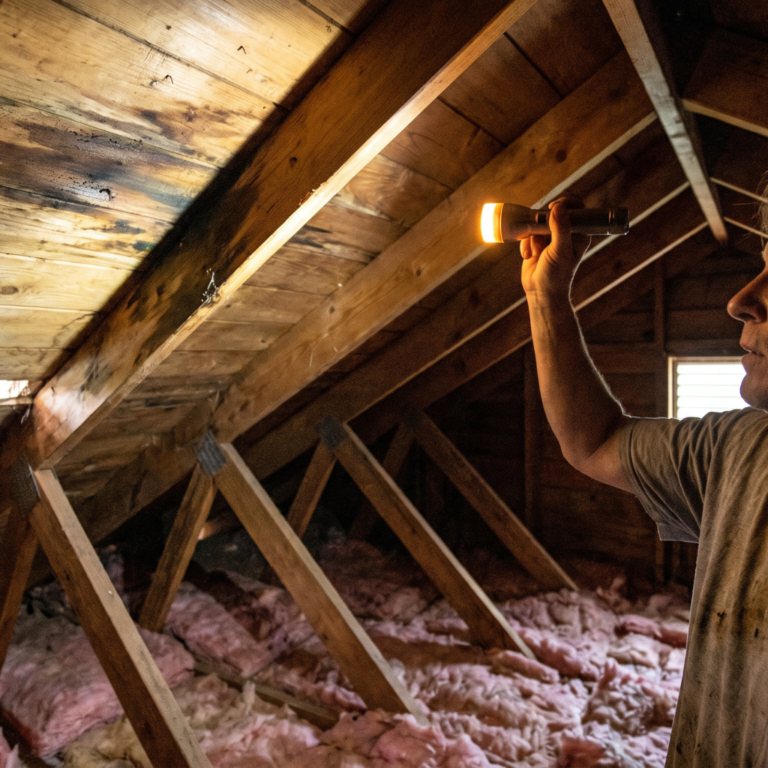
Over time, that moisture weakens wood, causes rot, and creates the perfect environment for mold and mildew. By the time you smell something musty when you open the attic door, the process may have been underway for months.
The table below shows the most common signs of attic moisture problems and what each one means.
| What You See | What It Means |
|---|---|
| Frost on roof decking in winter | Warm air trapped with no exhaust |
| Rust on nail tips | Repeated condensation cycles |
| Dark staining on wood | Mold or mildew from trapped moisture |
| Musty smell | Active moisture and possible mold |
| Compressed or damp insulation | Moisture soaking into insulation |
Any of these signs point to poor attic ventilation as a likely cause. Catching them early prevents rot from spreading to structural wood.
Tip: Check your attic in January after a cold snap. Frost on the underside of the decking is a clear sign of ventilation failure and a strong indicator that moisture damage has already started.
Sign 4: Ice Dams Forming Along the Roof Edge in Winter
Ice dams form when attic heat melts snow on the upper part of the roof. That meltwater runs down toward the colder eaves and refreezes into a thick ice ridge. The ice traps more meltwater behind it. That water then backs up under shingles and causes leaks into the attic, ceilings, and walls.
Ice dams are not a snow problem. They are a ventilation problem. A properly ventilated attic stays cold and allows roof snow to melt evenly or not at all.
Missouri winters are not extreme, but freeze-thaw cycles in January and February happen regularly enough to cause ice dams on homes that are running too warm in the attic. This is one of the most damaging poor attic ventilation signs because the water damage often shows up far from the original problem.
Tip: Large icicles hanging from gutters in winter are a warning sign of uneven roof temperatures. They point to heat escaping from the attic and melting roof snow unevenly along the edge.
Sign 5: High Summer Cooling Bills
When attic temperatures hit 150 degrees, that heat bleeds through the ceiling insulation and into your living space. Your air conditioner has to work harder to overcome that extra heat load, and energy bills climb as a result.
A properly ventilated attic stays much closer to outdoor temperature. That reduces the heat transfer into your home and gives your cooling system a real break during the hottest months.
Tip: If your cooling bills spike every July and August, ask a local, insured roofing professional to check your attic ventilation before assuming the problem is with your HVAC equipment.
Sign 6: Blocked or Missing Soffit Vents
Soffit vents can be blocked by insulation that was pushed too far toward the eave during installation. This cuts off the fresh air intake and shuts down the entire ventilation system even when ridge vents are in place and functioning.
Pests, accumulated debris, and old layers of exterior paint can also block soffit vents over time. Without intake air at the eaves, ridge vents cannot exhaust hot air at the peak. The system simply stops working.
Look under your eaves from outside the home. Soffit vents should be visible and clear. If they are painted over, packed with debris, or not present at all, that is a direct cause of roof ventilation problems. The full range of exterior services includes ventilation assessments as part of roofing work.
Tip: Vent baffles, also called rafter baffles, are installed between rafters inside the attic to keep insulation from blocking soffit vents. Ask your contractor whether they are installed in your attic.
Sign 7: Your Roof Is Aging Faster Than Neighbors’ Similar Roofs
If neighbors with similar-age homes have roofs that look tighter and newer than yours, ventilation could be a factor. A roof that ages 5 to 10 years faster than expected wastes the value of quality shingles.
Class 4 impact-resistant shingles, the highest-rated asphalt shingle for hail protection, still fail early on a poorly ventilated roof. The shingle is only as good as the system underneath it. Ventilation is part of that system, not an afterthought.
Good ventilation is not optional. It is part of making your shingle investment last its full lifespan. Pairing a new roof replacement with a proper ventilation upgrade is the most cost-effective way to get full value from your materials.
Pro tip: Always treat a new roof as a full system project. Installing new shingles without fixing ventilation is like buying new tires and skipping the wheel alignment.
How to Fix Poor Attic Ventilation in Strafford Homes
The fix depends on what is missing or blocked. Most homes need a balanced combination of soffit intake vents and a continuous ridge vent along the peak. That combination handles both ends of the airflow equation.
If soffit vents are blocked by insulation, vent baffles can often be installed from inside the attic to restore the intake path. If a home has only box vents or gable vents, upgrading to a continuous ridge vent provides more even exhaust across the full ridge line. Never mix powered attic fans with passive ridge vents. Powered fans can pull conditioned air from inside the home through ceiling gaps instead of drawing attic air out.
The best time to address ventilation is during a full roof replacement when the decking is exposed and the ridge vent can be properly installed. The table below breaks down the most common problems and their solutions.
| Problem | Fix |
|---|---|
| Blocked soffit vents | Install vent baffles, clear blockages |
| No ridge vent | Install continuous ridge vent at peak |
| Only box or gable vents | Upgrade to ridge vent and soffit system |
| Powered fan mixed with ridge vent | Remove powered fan or seal ceiling gaps |
Ventilation requirements and permit compliance vary by municipality. Greene County and the City of Springfield follow versions of the International Residential Code. Check with local building departments before any ventilation work begins.
Tip: A ventilation upgrade done during roof replacement saves labor and ensures the ridge vent is cut and sealed correctly from the start.
FAQs About Roof Ventilation in Southwest Missouri
Q: How do I know if my attic has poor ventilation? Stand in your attic on a hot summer afternoon. If it is unbearably hot within seconds, you likely have a problem. Other signs of poor roof ventilation include musty smells, frost on wood in winter, curling shingles, and cooling bills that climb every July. Any combination of these signs deserves a professional look.
Q: Do I need both soffit vents and ridge vents? Yes. Soffit vents bring cool air in at the bottom of the attic. Ridge vents push hot air out at the top. Without both working together, you do not have the airflow that keeps attic temperatures in check. One without the other is not an effective system.
Q: Can poor ventilation void my shingle warranty? Yes. Most shingle manufacturers, including Owens Corning, require proper ventilation as a condition of the warranty. If ventilation does not meet their specifications, the warranty can be voided. Always check ventilation requirements when choosing shingles and before installation begins.
Q: What temperature should my attic be in summer? A properly ventilated attic should stay within 10 to 20 degrees of the outdoor temperature. If it is 90 degrees outside and your attic reads 150 degrees, ventilation is failing. Temperatures above 120 degrees accelerate shingle and decking damage significantly.
Q: Can I add ventilation without replacing my whole roof? Sometimes. Soffit vent blockages can often be fixed from inside the attic by installing vent baffles. Ridge vents typically require cutting along the ridge line and are best done during a full roof replacement. A local, insured roofing professional can assess what your specific attic needs.
Q: What causes ice dams on Missouri roofs? Ice dams form when attic heat melts snow on the upper roof. That meltwater runs to the cold eaves and refreezes. The ice blocks more water from draining and it backs up under shingles, causing leaks. Better ventilation keeps the roof deck cold and prevents the uneven melting that starts the cycle.
Q: Can gutter guards help with ventilation problems? No. Gutter guards protect gutters from debris but have no impact on attic ventilation. They are separate systems. If you need both addressed, a contractor who handles gutter replacement and roofing can assess them together but will fix each one independently.
Q: How much ventilation does my Strafford home need? The general rule is one square foot of ventilation for every 150 square feet of attic floor space, split evenly between intake and exhaust. Many homes fall short of this standard. A roofing professional can measure your attic and calculate exactly what is needed for your home.
Q: Does new insulation affect attic ventilation? It can if installed incorrectly. Insulation pushed too far toward the eaves blocks soffit vents and stops the intake airflow. Vent baffles must be installed between rafters before adding insulation to keep the air path open from the eave to the attic.
Q: Does Strafford require a permit to add roof vents? Adding roof vents typically requires a permit in most Missouri municipalities. Strafford falls under Greene County jurisdiction. Check with the Greene County building department before any ventilation work begins. Your contractor should handle the permit process as part of the project.
Key Takeaways
- Poor ventilation causes shingles to age early, mold to grow in attic wood, and cooling bills to rise every summer.
- Attic temperatures can hit 150 degrees Fahrenheit in Missouri summers without proper exhaust venting in place.
- Soffit vents and ridge vents used together are the most effective balanced ventilation system for most homes.
- Ice dams in winter are caused by uneven roof temperatures from poor ventilation, not just snow accumulation.
- Shingle warranties can be voided if ventilation does not meet manufacturer requirements at the time of installation.
- Vent baffles must be in place to keep insulation from blocking soffit intake vents along the eaves.
- Fix ventilation during roof replacement for the most cost-effective upgrade to the full roofing system.
Have more questions about attic ventilation and roofing in Southwest Missouri? ProNail Exteriors covers the most common homeowner questions across all their exterior services.
Worried About Your Attic Ventilation in Strafford or Springfield?
ProNail Exteriors serves Strafford, Springfield, Ozark, and all of Southwest Missouri. When they inspect a roof, they check ventilation as part of every assessment. If your attic is running hot, growing mold, or causing shingles to age early, their crew will tell you exactly what is happening and what needs to be fixed. No pressure. No guesswork. Just honest answers about your home.
A free roof inspection is the easiest first step you can take before summer storm season arrives. Missouri has seen 120 billion-dollar weather disasters since 1980, with 82 of those driven by severe storms. Do not let a ventilation problem turn the next one into a much bigger repair bill.
Call 844-321-6245 or visit pronailexteriors.com to schedule your free roof inspection today.
ProNail Exteriors | Roofing, Siding, Windows, Gutters, Decks, and More | Serving Southwest Missouri Since 2025