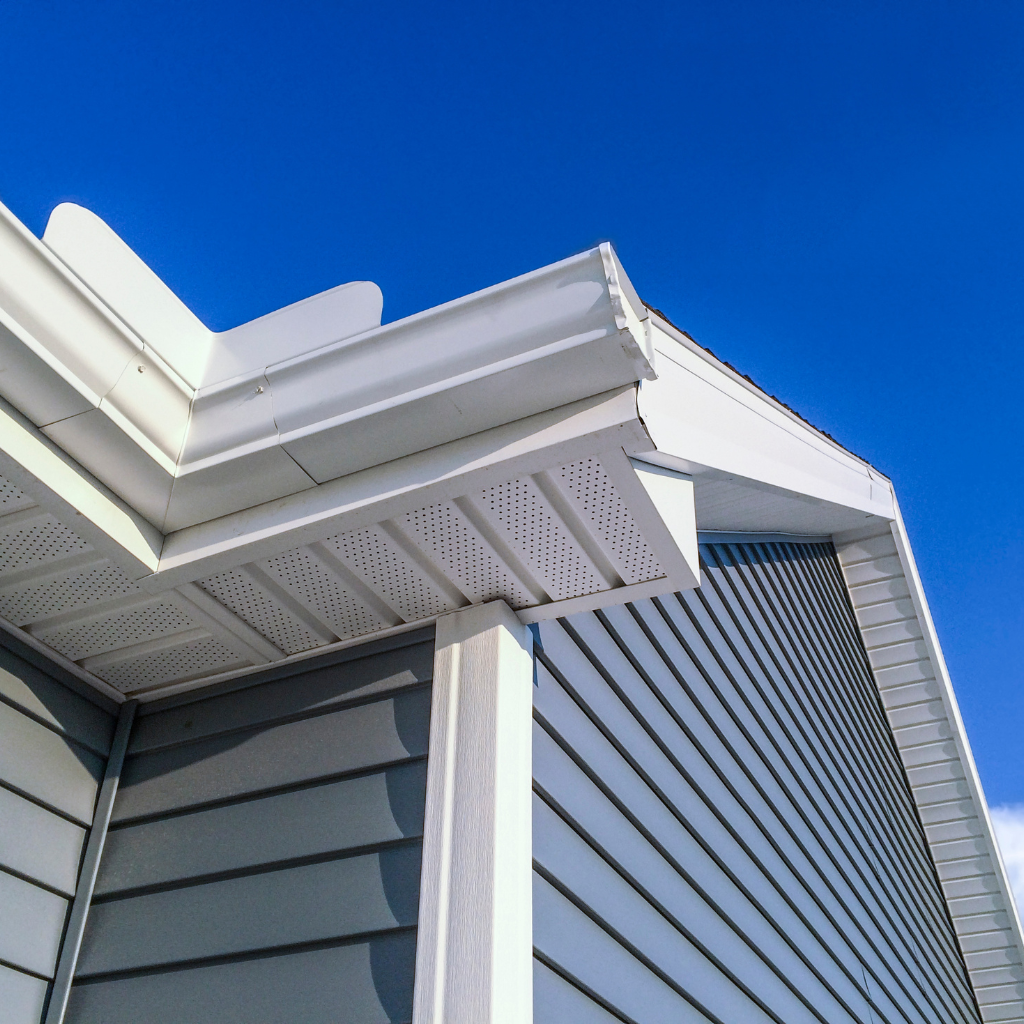
Gutters in Willard and across Southwest Missouri take a beating every spring. Heavy rain, storm debris, falling leaves, and wide temperature swings push gutter systems hard year after year. This post explains the difference between seamless and sectional gutters, which one holds up better in Missouri weather, what gutter size actually matters, and whether gutter guards are worth adding to your home.
TL;DR: Seamless gutters have no joints except at corners, so they leak far less than sectional gutters. They cost a little more upfront but last longer and need fewer repairs. For most Willard homeowners dealing with heavy spring rain and storm debris, seamless gutters are the smarter long-term choice. Size matters to; 6-inch gutters handle more water volume than the standard 5-inch option.
You watched the water pour right over the edge of your gutters during last spring’s storm. Or maybe you found a strip of brown staining along your foundation and started wondering where it came from. Either way, gutters that fail to do their job cause real damage fast.
Most homeowners do not think much about gutters until something goes wrong. But the choice between seamless and sectional gutters, the right size for your roofline, and whether to add guards all have a direct impact on how well your home holds up through storm season.
By the end of this guide, you will understand the difference between the two main gutter types, which one makes sense for your home, and what steps to take before calling a contractor.
Why Gutters Matter More in Southwest Missouri
Missouri averages 44 inches of rain per year, well above the national average of 38 inches. That extra rainfall has to go somewhere, and gutters are the first line of defense between your roofline and your foundation.
Southwest Missouri peaks in spring. April through June brings the heaviest rainfall of the year, and that same stretch is also peak severe weather season for the Springfield area. Storms can dump 2 to 4 inches of rain in a short window. Gutters that cannot keep up let water spill over the edge and pool next to your home.
Clogged or leaking gutters cause fascia rot, foundation erosion, basement seepage, and landscape damage. Missouri experienced 120 billion-dollar weather disasters between 1980 and 2024, and 82 of those were severe storms. That kind of weather demands gutters that are built to last.
Tip: After every major storm, walk your roofline and check gutters for debris buildup, sagging, and any sections pulling away from the fascia board.
What Are Sectional Gutters?
Sectional gutters come in pre-cut lengths, usually 10 to 20 feet, and are joined together on-site with caulk or metal connectors. Each joint where two sections meet is a potential leak point. Over time, those joints expand and contract with temperature changes and eventually separate or allow water to seep through.
Sectional gutters are widely available at home improvement stores and can be installed as a DIY project. That accessibility makes them appealing upfront. But in Southwest Missouri, where temperatures can swing 80 to 90 degrees between seasons, joint failure happens faster than in milder climates.
The more sections on a run, the more joints to maintain. A long roofline with multiple sections can develop several leak points within a few years of installation.
| Feature | Sectional Gutters |
|---|---|
| Joints | Every 10 to 20 feet |
| Leak Risk | Higher at every joint |
| Installation | DIY possible |
| Lifespan | 10 to 20 years typical |
| Maintenance | More frequent |
Sectional gutters work, but they require more attention over time. Budget for regular caulking and joint repairs, especially after winter.
Tip: If you already have sectional gutters, check every joint after winter. Freeze-thaw cycles in Missouri separate caulked joints faster than almost anything else.
What Are Seamless Gutters?
Seamless gutters are formed from a continuous coil of aluminum, steel, or copper that is cut to the exact length of your roofline on-site. A portable machine on the contractor’s truck extrudes and shapes the gutter to fit your home perfectly. The only joints in the entire system are at inside corners, outside corners, and downspout outlets.
Fewer joints mean fewer leak points, less maintenance, and a cleaner look along your roofline. Seamless gutters make up about 70% of all new gutter installations in the United States today. That number reflects what homeowners learn after dealing with leaky sectional gutters for a few years.
Because the forming machine stays on the contractor’s truck, seamless gutters require professional installation. There is no pre-cut seamless gutter you can buy off a shelf.
| Feature | Seamless Gutters |
|---|---|
| Joints | Corners and downspouts only |
| Leak Risk | Very low |
| Installation | Professional only |
| Lifespan | 20 to 30+ years typical |
| Maintenance | Less frequent |
Seamless gutters are the most common choice for homeowners who want a long-term solution. Visit the ProNail Exteriors gutters page to learn more about what a professional seamless installation includes.
Tip: Ask to see the gutter machine on the contractor’s truck before any work begins. If they show up with pre-cut sections, they are installing sectional gutters, not seamless.
Seamless vs Sectional Gutters: Head-to-Head Comparison
Both gutter types move water off your roof. The difference is in how long they do it without leaking.
| Category | Sectional Gutters | Seamless Gutters |
|---|---|---|
| Joints | Every 10 to 20 feet | Corners only |
| Leak Risk | High over time | Very low |
| Lifespan | 10 to 20 years | 20 to 30+ years |
| Maintenance | More repairs | Fewer repairs |
| Installation | DIY possible | Pro only |
| Appearance | Visible seams | Clean roofline |
| Best For | Short-term or budget | Long-term protection |
For most Willard homeowners who plan to stay in their home long-term, seamless gutters are the clear winner. Sectional gutters can work for rental properties or situations where upfront cost is the top priority.
The upfront cost difference between the two options is often smaller than people expect. The long-term repair cost difference is not small at all.
Pro tip: If your home is nearing the end of its roof life, replacing gutters at the same time as the roof saves labor. A new roof replacement and new gutters installed together ensure the drip edge and gutter system works as one unit.
Gutter Size: Does It Matter in Southwest Missouri?
Most homes come with 5-inch K-style gutters. K-style refers to the profile shape, which looks flat on the back and decorative on the front face. Standard 5-inch K-style gutters handle about 1.2 inches of rain per hour under normal conditions.
That capacity works fine for average rain events. But Southwest Missouri spring storms can dump 2 to 4 inches of rain in a short window. Homes with steep roofs or large roof areas shed water faster and can overwhelm a standard 5-inch gutter. Upgrading to 6-inch gutters significantly increases water-handling capacity and reduces the chance of overflow during heavy storms.
Homes with heavy tree coverage also benefit from larger gutters. More debris means more clogging risk, and larger gutters stay functional longer between cleanings.
| Gutter Size | Rain Capacity | Best For |
|---|---|---|
| 5-inch K-style | Standard rain events | Most homes |
| 6-inch K-style | Heavy rain and large roofs | Steep roofs, large homes |
| Half-round | Moderate rain | Historic or decorative homes |
If your gutters overflow regularly during spring storms and they are clean, the problem is usually size, not clogging. A professional can measure your roof area and recommend the right size for your specific home.
Tip: Larger gutters pair well with larger downspouts. A 6-inch gutter feeding into a 2×3 inch downspout creates a bottleneck. Ask your installer about upgrading downspout size at the same time.
Are Gutter Guards Worth It in Willard?
Willard and surrounding Greene County have heavy tree coverage. Oak, sweet gum, and pine drop leaves, seed pods, and needles throughout fall and into spring. All of that debris lands in your gutters and builds up fast.
Gutter guards reduce how often gutters need cleaning. The best type available today is micro-mesh, which blocks small debris including pine needles and seed pods while still allowing water to flow freely into the gutter. Cheap foam inserts and brush guards trap debris inside the gutter and often make clogs worse over time.
Quality micro-mesh guards added to a seamless aluminum gutter system give you the longest service life with the least maintenance. They do not eliminate cleaning entirely, but once a year is much better than three or four times a year.
| Guard Type | Effectiveness | Notes |
|---|---|---|
| Micro-mesh | Best | Blocks fine debris, allows water |
| Reverse curve | Good | Works well with moderate debris |
| Foam or brush insert | Poor | Traps debris inside |
| Screen | Moderate | Better than no guard |
Gutter guards are a smart add-on for homes with heavy tree coverage. They are less critical for homes on open lots with few nearby trees.
Tip: No gutter guard is completely maintenance-free. Even micro-mesh guards need at least one cleaning per year to clear debris that collects on top of the screen.
How Gutters Connect to Your Roof and Siding
Gutters attach to the fascia board, the long board running along the edge of your roofline where the roof meets the exterior wall. If the fascia is rotten or soft, it must be replaced before new gutters go up. Gutters screwed into rotten fascia will pull away within months.
Gutters must also be installed with proper slope, about 1 inch of drop per 10 feet of run, so water flows toward the downspout instead of pooling in the middle of the run. Downspouts should direct water at least 4 to 6 feet away from the foundation.
When gutters are installed alongside new exterior siding, the integration between the siding, drip edge, and gutter needs careful attention. A contractor who handles both trades avoids common mistakes that cause water to run behind the gutter and against the wall.
Pro tip: Always check fascia board condition before gutter installation. Rotten fascia is the number one reason new gutters sag and pull away within the first year.
How to Pick the Right Gutters for Your Willard Home
- Walk your roofline and note where gutters are sagging, leaking, pulling away, or overflowing during rain.
- Check fascia boards for soft spots, rot, or peeling paint. These must be repaired or replaced before new gutters go up.
- Measure your roofline length and note any steep sections or large roof areas that shed water quickly.
- Decide between 5-inch and 6-inch gutters based on your roof size and your experience with overflow during spring storms.
- Choose seamless aluminum for most homes, or seamless steel for extra strength in hail-prone areas.
- Consider micro-mesh gutter guards if your yard has heavy tree coverage.
- Get two to three written estimates from local, insured gutter installers before signing anything.
You can see the full range of exterior services ProNail Exteriors offers if you are looking at more than just gutters for your next project.
FAQs About Seamless vs Sectional Gutters in Southwest Missouri
Q: What is the difference between seamless and sectional gutters? Sectional gutters come in pre-cut pieces joined together with caulk or connectors. Every joint is a potential leak point over time. Seamless gutters are cut from one continuous piece on-site, with no joints except at corners and downspouts. Fewer joints means fewer leaks and less maintenance.
Q: Are seamless gutters worth the extra cost? Yes, for most homeowners. Seamless gutters last longer, leak less, and need fewer repairs over time. The upfront difference between seamless and sectional is often smaller than people expect. The long-term savings on repairs and water damage prevention make seamless the better value for homes people plan to stay in.
Q: What size gutters do I need in Willard? Most homes do fine with 5-inch K-style gutters. If your roof is steep, large, or heavily shaded by trees, 6-inch gutters handle more water volume and are less likely to overflow during heavy spring storms. A contractor can measure your roof area and recommend the right size.
Q: How long do seamless gutters last? Seamless aluminum gutters typically last 20 to 30 years or more with basic maintenance. Steel gutters can last even longer. Keeping them clean, checking hangers annually, and clearing debris after storms extends their service life significantly.
Q: Do gutter guards really work? Quality micro-mesh guards reduce cleaning frequency and block most debris from entering the gutter. Cheap foam or brush inserts often trap debris and make clogs worse. No guard is completely maintenance-free, but good micro-mesh guards can reduce cleaning from several times a year to once.
Q: Can I install seamless gutters myself? No. Seamless gutters require a portable forming machine that the contractor keeps on their truck. The machine extrudes and cuts the gutter to the exact length of your roofline on-site. This is a professional installation only. Pre-cut gutters from a store are sectional, not seamless.
Q: Do gutters need to be replaced when I replace my roof? Not always, but it is a good time to evaluate their condition. If gutters are old, sagging, or pulling away from the fascia, replacing them alongside the roof saves labor and ensures the drip edge and gutter work together correctly from day one.
Q: What causes gutters to pull away from the house? The most common cause is rotten fascia boards that can no longer hold gutter screws. Overloaded gutters full of debris also pull hangers loose from the weight. Always check fascia condition before any new gutter installation.
Q: How far should downspouts extend from the foundation? Downspouts should direct water at least 4 to 6 feet away from the foundation. Extensions and splash blocks help move water further. Poor downspout positioning is one of the most common causes of foundation water problems in Missouri homes.
Q: Does Willard require a permit for gutter replacement? Gutter replacement typically does not require a permit in most Missouri cities, but fascia replacement or structural changes may. Check with the Willard city office or the Greene County building department to confirm requirements before work begins. Missouri does not have a statewide contractor licensing requirement for general contractors, so focus on hiring someone insured, experienced, and local.
Key Takeaways
- Seamless gutters have far fewer leak points than sectional gutters and typically last 20 to 30 years or more.
- Sectional gutters work for short-term or budget situations but need more joint maintenance over time.
- 6-inch gutters handle more water volume and are a smart upgrade for large or steep Southwest Missouri roofs.
- Gutter guards reduce cleaning frequency but do not eliminate it. Micro-mesh is the most effective type available.
- Fascia condition must be checked before any gutter installation. Rotten fascia causes new gutters to fail fast.
- Downspouts should extend at least 4 to 6 feet from the foundation to prevent water from pooling near the home.
- Missouri averages 44 inches of rain per year, and gutters here work harder than in most of the country.
Have questions about your specific home? The ProNail Exteriors FAQ page covers common questions about gutters, roofing, and exterior projects across Southwest Missouri.
Ready to Replace Your Gutters in Willard or Springfield?
ProNail Exteriors installs seamless gutters throughout Willard, Springfield, Ozark, and all of Southwest Missouri. Their in-house crews handle gutter replacement as a standalone project or as part of a full roof and exterior upgrade. Every crew is professional, clean-cut, and respectful of your property from start to finish.
Schedule a free estimate and find out what size, style, and guard system makes the most sense for your home. There is no pressure and no guesswork. ProNail Exteriors walks you through every option and explains exactly what your home needs.
Call 844-321-6245 to schedule your free gutter estimate.