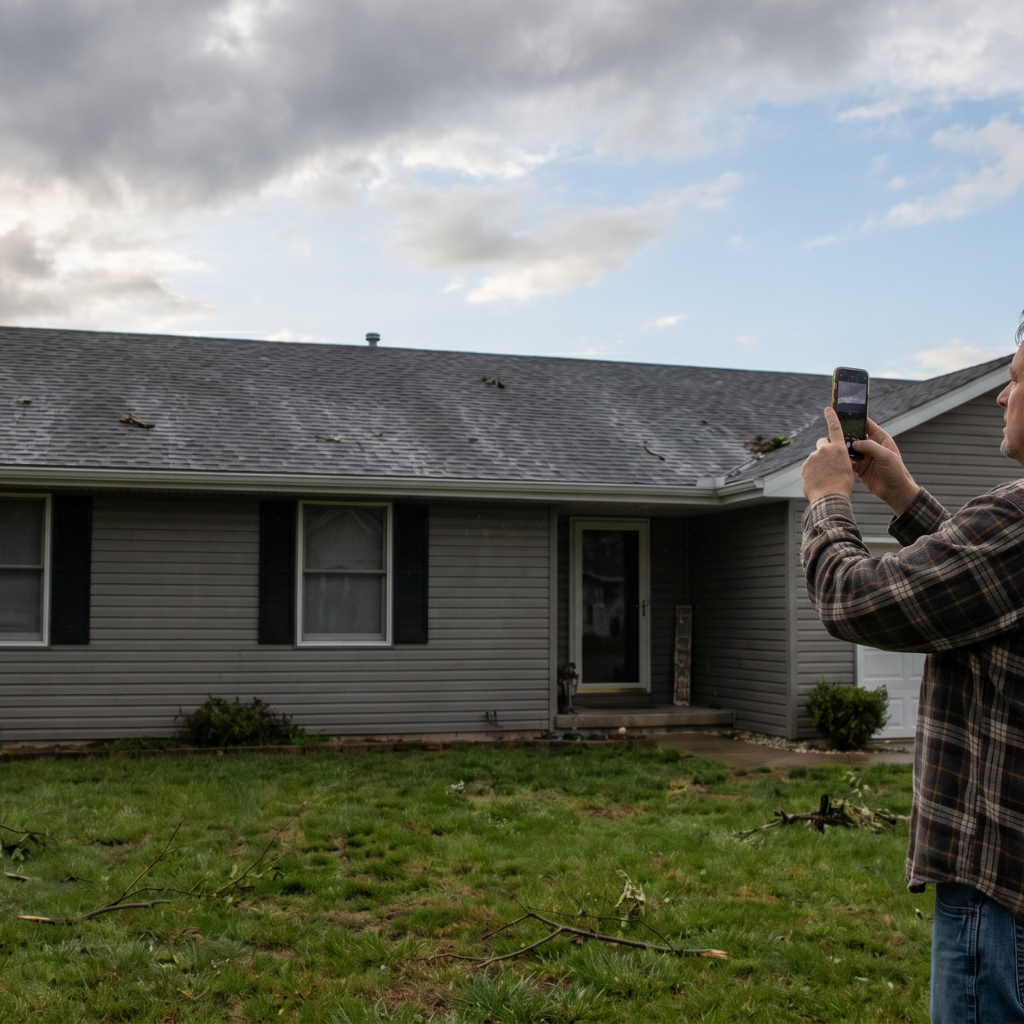
TLDR: After a storm rolls through Republic, you can learn a lot before you ever call anyone. Start inside the attic with a flashlight, then walk the ground and read the soft metal around your home, your gutters, air conditioner, and window screens. Those dents tell you whether hail was big enough to hurt your roof. Photograph everything with the date, and treat your findings as evidence for an insurance claim, not just peace of mind.
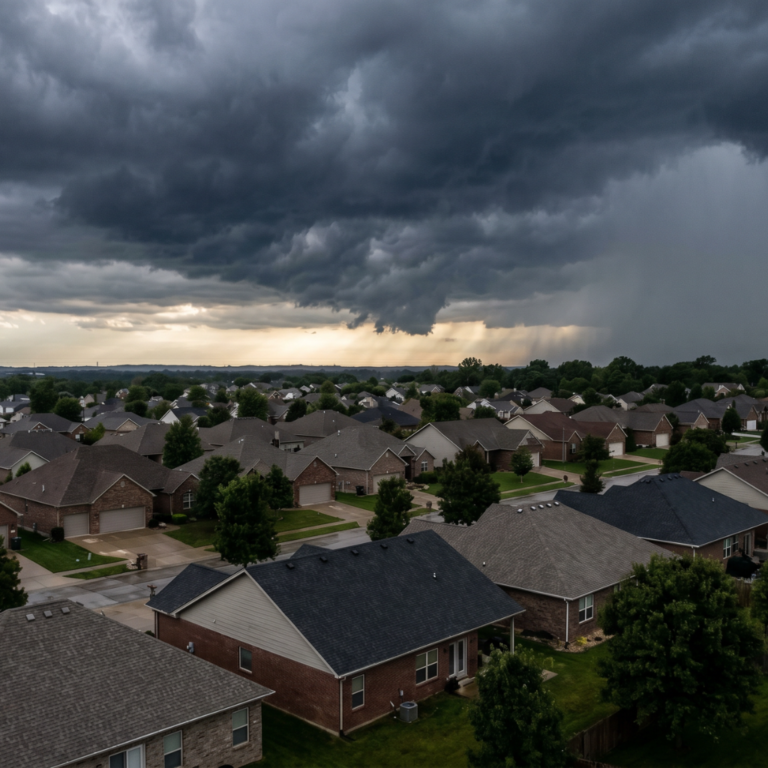
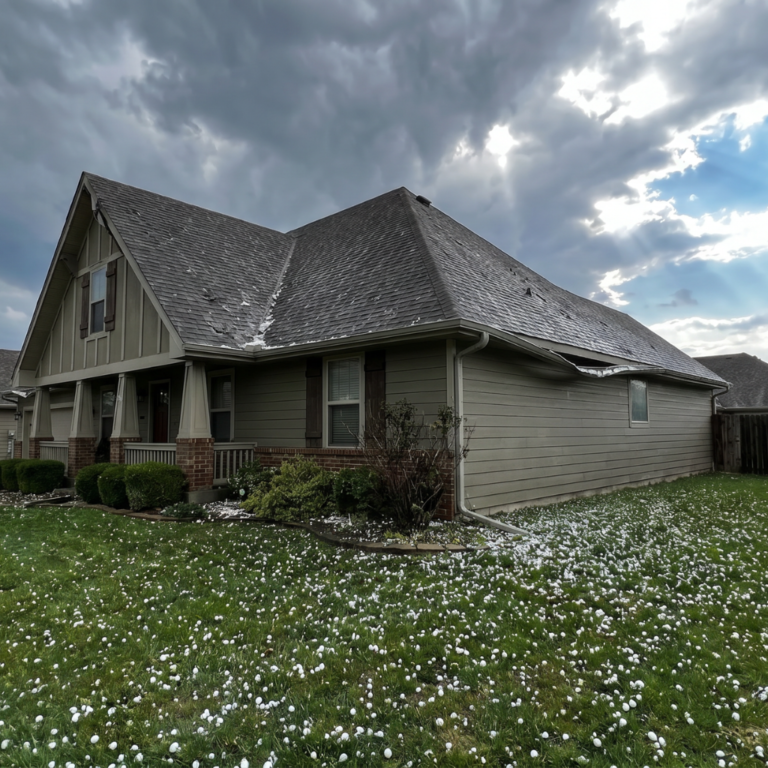
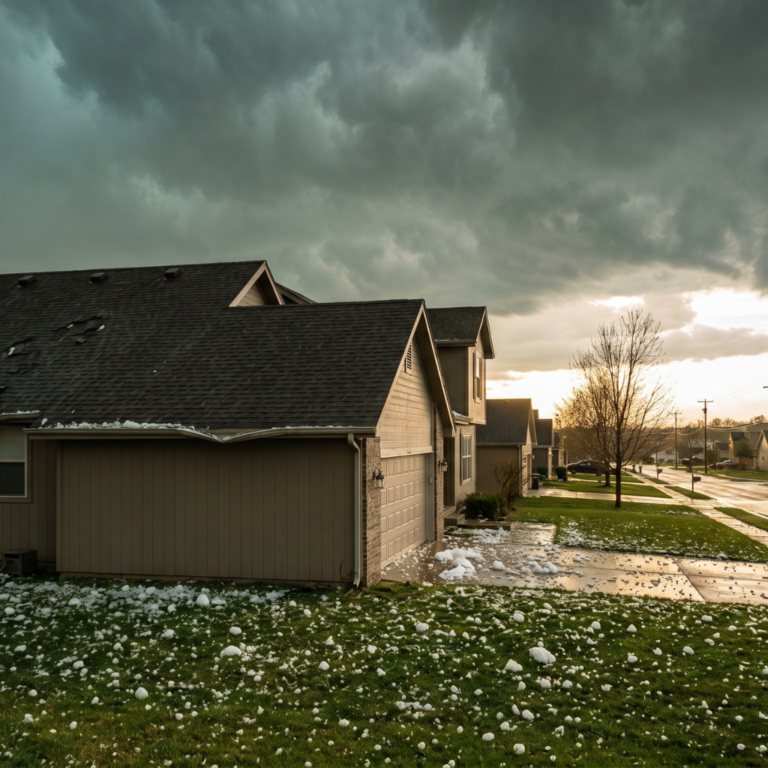
A storm just moved through Republic. Maybe it dropped hail the size of marbles, maybe golf balls. Now you are standing in the yard wondering whether your roof took a hit, and whether the contractor who knocked on your door an hour later is telling you the truth.
Here is the good news. You do not have to climb a ladder or trust a stranger to get a first read on your own roof. A careful homeowner can spot the signs of storm damage from the ground and the attic, safely, in about thirty minutes. Most people glance up, see no missing shingles, and assume they are fine. That misses most of the actual damage, because hail rarely tears a shingle off. It bruises the surface in ways you cannot see from the street. Knowing how hail damage differs from normal wear and tear helps you read what you find with a clearer eye.
This guide walks you through the exact inspection our crews would run, minus the part where anyone gets on the roof. You will learn what to check, what each clue means, and how to turn what you find into solid documentation. If your inspection points to real damage, a professional look at a Republic roof replacement or repair is the right next step, but start here first.
Safety First: What Not to Do
Before you check anything, a few hard rules keep you safe.
Never climb onto a wet, damaged, or recently struck roof. Shingles that just took hail are slick and may be loose, and a fall from roof height is serious. Every exterior step in this guide is done from the ground.
Wait until the storm has fully passed. Check radar from Springfield’s National Weather Service office for a second line of cells before you step outside. Storms in our area often roll through in waves.
Stay at least thirty five feet from any downed power line, and assume every fallen line is live. If you go into the attic, keep your weight on the solid framing and never on the insulation between the joists. With those rules in mind, you are ready to inspect.
The Two Part Inspection System
A good inspection has two halves. You go inside first, then you read the outside from the ground. Doing both is what separates a real assessment from a quick glance.
Part 1: The Interior Attic Inspection
Start inside, because the attic shows you water entry that the outside hides. Grab a flashlight and head up.
Look for daylight coming through the roof decking. Any beam of light means a gap or a hole. Then scan the underside of the decking and the rafters for fresh water stains, which look darker and sharper edged than old ones. Check the insulation for damp or matted spots, and look for any dripping or pooled water.
If you find moisture in the attic, you have confirmed water is getting in, which raises the urgency on everything that follows. Catching it here, before it shows up on your ceiling, can save you from a much larger repair.
Part 2: The Ground Level Exterior Inspection
Now go outside and read your home like an inspector would. The trick is to stop looking at the roof and start looking at the soft metal around your property. You cannot see shingle bruising from the ground, but dented metal tells you the hail was big enough to cause it. Roofers call these proxy indicators, and they are the most reliable read a homeowner can get without a ladder.
Walk the perimeter and check each of these:
| What to Check | How to Check It | What It Tells You |
|---|---|---|
| Air conditioner fins | Photograph all four sides | Dents confirm hail size and the direction it fell |
| Gutters and downspouts | Look and run a hand along them | Dimples and dents mean hail hit hard |
| Granules at downspout bases | Look at the ground | A pile of sandy grit means the shingles above lost their coating |
| Window screens | Walk the perimeter | Tears and holes confirm hail direction and size |
| Garage door | Look across the surface | Soft metal that dings easily, a clear impact record |
| Aluminum fascia and trim | Look for dings and chipped paint | Pitting marks a real hail event |
| Mailbox, grill, meter housing | Quick visual | More soft metal that records impacts |
| Vehicles left outside | Check the hood and roof | A parked car is a perfect hail gauge |
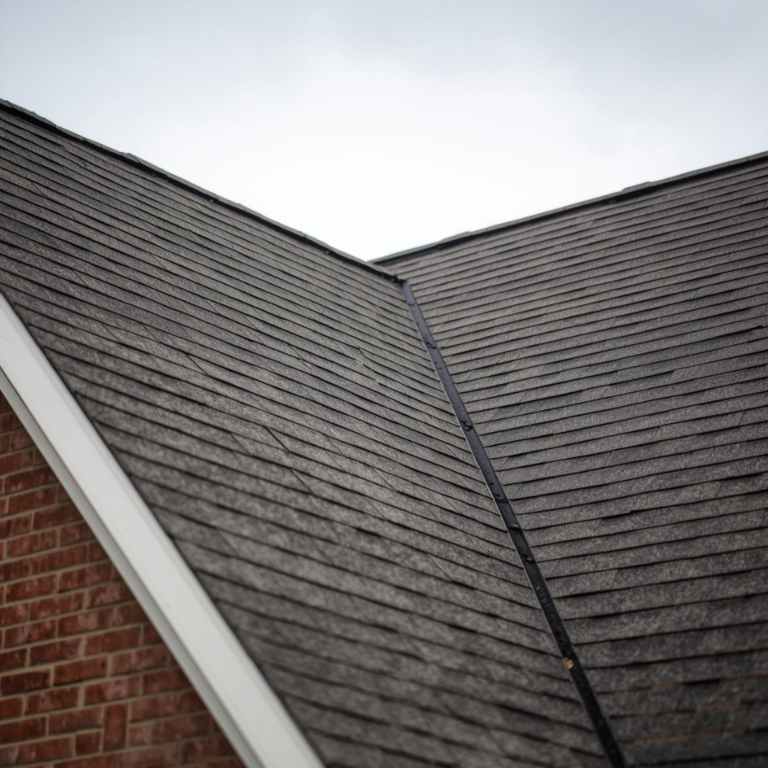
After you read the metal, look up at the roof itself using binoculars or your phone camera zoom. From the ground you can still spot missing or lifted shingles, dark bald patches where granules are gone, displaced ridge caps at the very peak, and bent or separated metal in the valleys and around the chimney or vents. You will not catch everything from down there, but you will catch enough to know whether you need a closer look.
What Hail Damage Actually Looks Like Versus Normal Aging
One of the hardest things for a homeowner is telling storm damage apart from a roof that is simply getting old. They can look similar at a glance. This table lays out the difference.
| Feature | Hail Damage | Normal Aging |
|---|---|---|
| Granule loss | Random scattered spots and bruising | Even thinning across the whole roof |
| Shingle surface | A soft, dented spot under the granules | A hard, dry, brittle surface |
| Vents and metal | Round dents that match the hail size | General rust and weathering, no dents |
| Valley metal | Bent, kinked, or separated | Slow rust or failing caulk over years |
| Pipe boot rubber | Cracked or split from impact | Slowly dried and cracked over time |
| Gutters | Round dents in a pattern | Sagging, seam leaks, gradual rust |
The pattern is the giveaway. Hail leaves random, scattered, fresh damage. Age leaves uniform, gradual wear. An experienced inspector can usually tell within a minute which one it is, and the soft metal around the house almost always confirms the story the shingles tell.
Why Republic Homeowners Need This Skill
This is not a rare event you can ignore. Republic sits inside the Springfield National Weather Service forecast area, which is one of the more storm active zones in the Midwest. That forecast area averages roughly ten tornadoes a year, and hail season runs hard from April through June.
The recent history makes the point. The April 28, 2026 hailstorm dropped very large hail across Southwest Missouri, including the Republic area, with some reports approaching 4.75 inches. State Farm alone reported more than 17,000 claims tied to that event. When hail that size falls, roofs get hurt whether or not the damage is obvious from the curb.
Zoom out and the trend holds. NOAA’s record of billion dollar disasters shows Missouri logged 120 separate billion dollar weather and climate disasters between 1980 and 2024. Living in this part of the state means storms are a seasonal certainty, not a surprise. Knowing how to inspect your own roof is genuinely useful here.
Documenting What You Find for Insurance
Your inspection is not just for your own peace of mind. It is the first layer of evidence for a claim, so document it like it matters, because it does.
Timestamp every photo. The date is what ties your damage to a specific storm, so make sure your phone is set correctly. A simple trick is to write the storm date on a piece of paper and photograph it next to the damage. Pull the official storm record for your Republic zip from the NOAA Storm Events Database so you have a government source confirming what hit and when.
Photograph from all four sides of the house, because hail comes in at an angle and the damage shows on the slopes facing the storm. Save everything to the cloud right away. If your phone is lost or damaged, the evidence survives. Learning why hidden hail damage gets missed will help you understand why thorough documentation matters so much, even when the roof looks fine.
After Your Inspection: What to Do Next
What you found points to your next move. Use this guide.
| What You Found | What to Do Next |
|---|---|
| Nothing visible, but the storm was close | Get a professional inspection anyway, roof level damage hides from the ground |
| Dented air conditioner and granules in the gutters | Schedule a professional inspection and open a claim |
| Missing shingles with exposed decking | Tarp it if you can do so safely, then call for a same day look |
| Visible gaps in valley or chimney metal | Call a professional now, water entry risk is immediate |
| Confirmed attic moisture | Treat it as urgent, the longer it sits the bigger the repair |
When the signs point to a claim, storm damage roof repair starts with a written inspection report, and understanding how the claims process works before you file keeps the whole thing moving. Walking through your first moves after a storm keeps this stretch from dragging.
When Storm Chasers Knock: What Republic Homeowners Should Know
After any big storm, out of town crews flood the area knocking on doors. Some are legitimate. Many are not. A little knowledge protects you.
First, no contractor can legally pay or waive your insurance deductible. Under Missouri’s residential roofing law, waiving or rebating your deductible is prohibited, and so is a contractor negotiating your claim on your behalf. Anyone who offers to make your deductible disappear is offering to break the law, which tells you everything about how they do business.
Second, Missouri does not issue a statewide roofing license, and in recent years state law has directed roofing contractors to register with the Missouri Department of Commerce and Insurance. The practical takeaway is simple: verify that any company is properly insured and in good standing before you sign, and Missouri’s insurance department is the place to check your rights as a policyholder. If you would rather have a professional manage the documentation side, insurance claim help in Republic keeps the paperwork from stalling your repair.
The simplest rule of all: do not sign anything with a contractor who showed up uninvited right after a storm. Spotting storm chaser tactics ahead of time keeps a high pressure pitch from costing you. A real local company will give you time to think and will gladly show proof of insurance.
Your contractor handles any required permits as part of the job. Ask upfront so nothing delays your start date.
Practical Application: Your Storm Inspection Checklist
When a storm passes, work this list in order. It keeps you safe and turns what you find into usable evidence.
- Wait for the storm to fully pass and check radar for a second wave of cells.
- Go into the attic first with a flashlight and look for daylight, fresh stains, and damp insulation.
- Walk the ground and photograph the soft metal, your gutters, air conditioner, screens, and trim.
- Note any granule piles at the downspouts, a clear sign of shingle damage above.
- Zoom in on the roof from the ground for missing shingles and bent valley or chimney metal.
- Timestamp every photo and write the storm date next to the damage.
- Pull the official storm record for your zip from the NOAA database and save it.
- If you found damage, or even if you are unsure, schedule a free inspection for a safe roof level look.
Frequently Asked Questions
How do I know if my roof has hail damage after a storm in Republic? Start with the soft metal around your home. Dented gutters, a dinged air conditioner, torn window screens, and granules piling at the downspouts all confirm the hail was big enough to hurt your roof. Then check the attic for daylight or fresh water stains. If those signs are present, the roof likely has damage you cannot see from the ground, and a professional inspection is the next step.
Can I inspect my own roof safely? Yes, as long as you stay off the roof. Everything in this guide is done from the ground or from inside your attic. Never climb a wet or damaged roof, and stay clear of downed power lines. A safe ground level inspection tells you whether you need a professional to take a closer look.
What does granule buildup in my gutters mean? Granules are the sandy coating that protects your shingles from the sun. A heavy pile of them at a downspout means the shingles above have lost a lot of that coating, often from hail impact. It is one of the clearest signs of storm damage you can spot from the ground.
My neighbor got a new roof after the last storm but I did not see any damage. Should I get an inspection? Probably yes. Hail falls in patterns, so two homes on the same street can take very different hits, but if your neighbor had enough damage to replace a roof, your home likely caught some too. Damage is often invisible from the ground, so a free professional inspection is worth it to know for sure.
How do I pull the storm record for my Republic address? Use the NOAA Storm Events Database, a free government source. Search by date and county to find the official record of hail and wind for your area. Printed alongside your dated photos, that record ties your damage to a specific storm, which strengthens any insurance claim.
Do I need to call my insurance company before calling a roofer? It often helps to get a professional inspection first, so you know what you are actually dealing with before you open a claim. A written report documenting storm specific damage gives you solid footing. Either order can work, but going in with documentation tends to make the process smoother.
What happens if I miss storm damage and never file? Unaddressed damage does not heal. Small breaches let water in slowly, and over months that leads to rot, mold, and a far bigger repair. There is no fixed sixty day deadline in Missouri law, but your policy sets a window, so file promptly once you find damage. Waiting also makes it harder to tie the damage to a specific storm.
Key Takeaways
Inspect Safely
- Never climb a wet or damaged roof, do everything from the ground or attic.
- Wait for the storm to fully pass and stay clear of downed lines.
- Start in the attic, then read the outside.
Read the Soft Metal
- Dented gutters, air conditioner, and trim confirm hail size.
- Granules at the downspouts mean shingle damage above.
- Torn window screens show hail direction.
Document for Insurance
- Timestamp every photo and note the storm date.
- Pull the official NOAA storm record for your zip.
- Photograph all four sides and save to the cloud.
Protect Yourself
- No contractor can legally waive your deductible.
- Do not sign with anyone who knocked uninvited after a storm.
Found Something? Found Nothing? Either Way, Get a Real Look
A ground level inspection gives you a strong first read, but it has limits. The only way to know exactly what your roof took is to have someone get up there safely and check every slope, valley, and seam.
The crews at ProNail Exteriors inspect roofs across Southwest Missouri after every major storm and know precisely where Republic storm damage hides. A free inspection gives you a clear answer and a written report you can hand to your insurer if a claim is in your future. Whether you found a yard full of clues or nothing at all, call (844) 321-6245 and we will tell you straight what your roof needs.
ProNail Exteriors | Roofing, Siding, Windows, Gutters, and More | Serving Southwest Missouri Since 2025