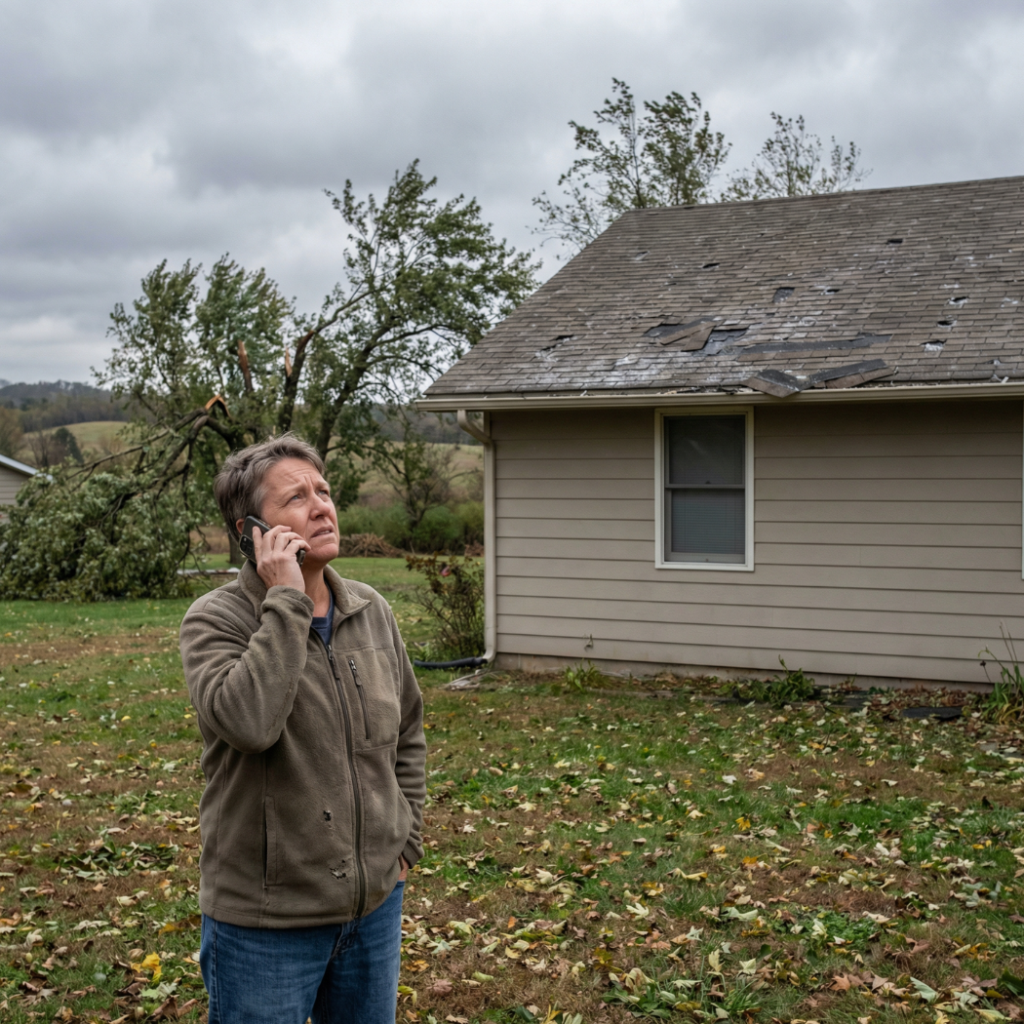
Getting a denial letter after filing a roof insurance claim is one of the most frustrating things a Fair Grove homeowner can experience. But a denial is not always the final word. This guide walks through the 6 most common reasons claims get denied, your rights as a Missouri homeowner, and the exact steps to take if you want to fight back.
TL;DR: A denied roof claim is not automatically the end. Read the denial letter carefully, get a second inspection from a local roofer, and file a formal written appeal with your carrier. Missouri homeowners have the right to have their contractor present during the adjuster visit. If the appeal fails, file a complaint with the Missouri Department of Insurance or request an appraisal. Document everything and act fast.
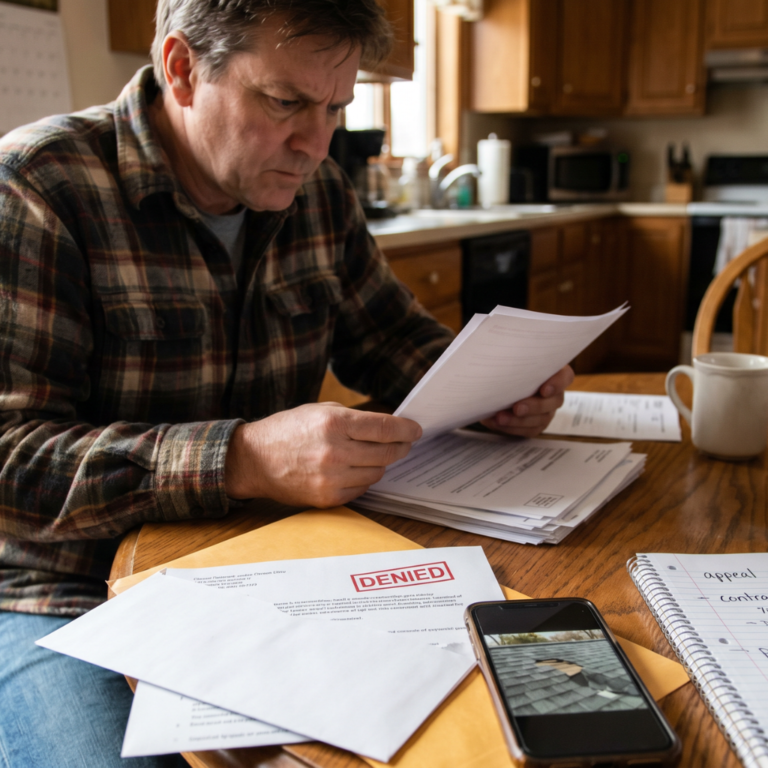
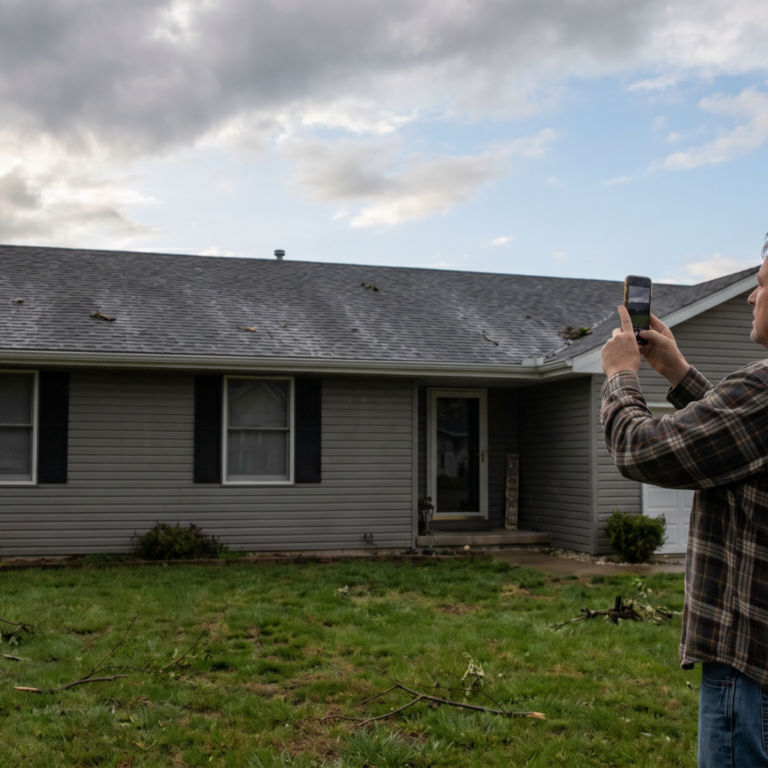
You filed the claim after that hail event in April. You waited through the adjuster visit, answered every question, and then the letter came back: denied. The reason listed was “wear and tear.” Your neighbor two streets over had the same storm hit their house, filed the same week, and got a full roof replacement approved.
That gap between what happened to you and what happened to your neighbor is exactly what this post explains. Insurance claim denials in Missouri follow patterns. There are specific reasons they happen, specific rights you have as a homeowner, and specific steps that give you the best chance of reversing the decision.
By the end of this guide, you will know what your denial letter actually means, whether it is worth fighting, and exactly how to do it.
Why Roof Insurance Claims Get Denied in Missouri
Insurers deny claims for specific reasons, and they are required to state that reason in the denial letter. That reason is the starting point for every appeal. Here are the 6 most common denial reasons and what each one means for your ability to fight back.
Reason 1: Normal Wear and Tear
This is the most common denial reason across Southwest Missouri. The adjuster decides the damage came from aging and general weathering rather than a specific storm event. Wear and tear is not a covered peril under any standard homeowners policy. Only sudden storm damage qualifies.
Fighting this: A detailed inspection report from a local roofer documenting storm-specific damage patterns counters this argument. Hail bruising shows up in circular patterns on shingles. Wind damage shows directional tearing. Impact marks on metal vents and AC units confirm the storm date. These patterns look very different from gradual aging, and a professional report explains the difference clearly.
Reason 2: Pre-Existing Damage
The insurer argues the damage existed before the storm you reported. Without documentation of your roof’s condition before the storm, this argument is harder to refute but still not impossible.
Fighting this: Use weather reports showing the exact storm date, reports of neighbor claim approvals from the same event, and a professional inspection that specifically identifies storm-pattern damage rather than progressive deterioration. Pre-storm inspection records from prior years help even more.
Reason 3: Delayed Reporting
Most carriers require damage to be reported within 60 days of the storm. Some allow up to 12 months. Waiting too long gives the insurer a procedural grounds for denial that is separate from the actual damage question.
Fighting this: If your delay was due to reasonable circumstances, document them. File a complaint with the Missouri Department of Insurance if you believe the denial on timeline grounds was improper. Missouri has a 5-year statute of limitations on insurance contract claims, but earlier documentation always produces stronger outcomes.
Reason 4: Policy Exclusions
Some policies carry cosmetic exclusion riders. These policies cover functional damage but not cosmetic denting alone. A dented metal vent that still seals properly may not qualify under a cosmetic exclusion. Some policies also exclude damage attributed to lack of maintenance.
Fighting this: Read your exact policy language and compare it word by word against the denial letter. A public adjuster or insurance attorney can identify cases where the insurer is misapplying the exclusion language in ways that do not match what the policy actually says.
Reason 5: ACV vs RCV Underpayment
Some homeowners receive a technical approval, but the payout is so reduced by depreciation that it barely covers a repair. This is not a denial on paper, but it functions like one in practice.
Actual Cash Value (ACV) policies deduct depreciation based on the roof’s age. A 20-year-old roof under an ACV policy may only receive 20% of the full replacement cost. Replacement Cost Value (RCV) policies pay the full cost to replace the roof with new materials of similar kind and quality. If you have RCV coverage and the insurer is paying you at ACV rates, that is grounds for a formal dispute.
Fighting this: Pull your declarations page and confirm which coverage type you have. If you have RCV coverage, any offer that falls significantly below full replacement cost warrants a written response and formal appeal.
Reason 6: No Proof of Storm Damage
The adjuster completed the inspection and found no visible damage to document. This is more common than it should be. Insurance adjusters are not roofing professionals. They can miss bruised shingles, soft spots in the mat layer, damage in valleys and at flashings, and impact marks that only show at certain angles.
Fighting this: Have a local insured roofer complete a second inspection and produce a written report documenting specific storm damage evidence before filing the appeal. That report gives you objective third-party documentation the insurer must address.
| Denial Reason | What It Means | Counter Step |
|---|---|---|
| Wear and tear | Damage blamed on aging, not storm | Inspection report with storm-specific damage patterns |
| Pre-existing damage | Damage said to predate the storm | Weather reports, neighbor approvals, professional inspection |
| Delayed reporting | Filed too late under policy terms | File with MO Dept. of Insurance if timeline was reasonable |
| Policy exclusion | Cosmetic damage not covered | Review exact policy language; consult public adjuster |
| ACV underpayment | Depreciation reduces payout severely | Confirm RCV coverage; push back in writing |
| No damage found | Adjuster missed existing damage | Second roofer inspection; request formal re-inspection |
Your Rights as a Missouri Homeowner
Missouri homeowners have the right to have their contractor present during the insurance adjuster’s inspection. This right matters. A professional roofer can point out damage the adjuster might walk past, explain the technical difference between storm-specific impact patterns and gradual aging, and ensure nothing gets missed during a visit that determines your claim outcome.
If your claim is denied or underpaid, you can file a formal complaint with the Missouri Department of Insurance. The MDI regulates insurance companies operating in Missouri and investigates consumer complaints. Filing a complaint creates an official record and can compel the insurer to explain or reconsider their decision. The MDI also provides a roof coverage comparison tool for the top 20 homeowners insurance companies in Missouri, which is useful for evaluating whether your carrier’s payout standard is consistent with the market.
Missouri law passed in 2012 prohibits contractors from paying, waiving, or absorbing your insurance deductible. Any contractor who offers to cover your deductible or “work within your deductible” is operating outside Missouri law. That practice is a red flag about how they do business overall.
Pro tip: Before the adjuster visits, call a local roofer and ask them to be present for the inspection. A roofer who speaks the same technical language as the adjuster changes the dynamic of that visit. Issues get identified and documented on the spot rather than disputed after the fact.
Step-by-Step: How to Fight a Denied Roof Claim
Follow these steps in order. Each one builds the case for the next.
- Read the denial letter word by word. The insurer must state the exact reason for denial. That reason tells you precisely what you need to counter. Do not skip this step.
- Pull your full policy. Find the declarations page, the coverage section, and the exclusions list. Compare the denial reason directly against your coverage language. This is where you find out if the denial is based on a legitimate exclusion or a misapplication of policy terms.
- Get a second inspection from a local insured roofer. Ask for a written report that specifically documents storm-pattern damage evidence, not just a general list of roof problems. The report needs to distinguish between storm-caused damage and normal aging. For professional inspection and claim documentation, ProNail Exteriors provides written reports specifically designed to support insurance appeals.
- Gather supporting evidence. Pull weather reports from NWS Springfield showing the storm date and reported hail size at your zip code. Document any neighbor claim approvals from the same storm event. Collect the ground-level photos you took immediately after the storm, including AC unit dents and granule buildup in gutters.
- Request a re-inspection with your roofer present. Contact the insurer by phone and follow up in writing. Ask for a formal re-evaluation and provide the new inspection report and supporting evidence at the same time.
- File a formal written appeal. Send a certified letter to the insurance company. Include your policy number, claim number, the stated reason for denial, and a specific argument for why you dispute it. Attach all supporting documentation. State clearly what outcome you are requesting: re-inspection, claim reopening, or repair authorization.
- File a complaint with the Missouri Department of Insurance if the internal appeal does not produce a satisfactory resolution. MDI accepts complaints online and investigates insurer conduct in Missouri.
- Consider a public adjuster or insurance attorney for large claims or cases where the insurer is clearly acting in bad faith. Public adjusters are licensed to negotiate settlements on your behalf. Insurance attorneys can pursue bad faith denial claims and recover additional damages in serious cases.
Pro tip: Send every communication with your insurance company by certified mail with return receipt requested. You need a paper trail that shows what was sent, when it was sent, and that it was actually received.
ACV vs RCV: The Payout Type That Changes Everything
Many Fair Grove homeowners do not know whether they have Actual Cash Value or Replacement Cost Value coverage until they file a claim. That distinction determines whether a claim payout actually covers a new roof or falls far short.
ACV policies calculate the payout by taking the replacement cost and subtracting depreciation based on the roof’s age and condition. According to NOAA, Missouri has experienced 120 billion-dollar weather disasters between 1980 and 2024, with 82 involving severe storms. A lot of Southwest Missouri roofs are aging through repeated storm exposure. Under an ACV policy, a 20-year-old roof may only receive 20% of what a new roof actually costs. RCV policies pay the full cost to replace the roof with new materials of similar kind and quality, minus your deductible only.
Check your declarations page today. If your policy says ACV, talk to your agent about upgrading to RCV coverage before the next storm season. The premium difference is usually modest compared to the payout difference on a real claim.
| Factor | ACV (Actual Cash Value) | RCV (Replacement Cost Value) |
|---|---|---|
| Payout basis | Depreciated value of old roof | Full cost of new replacement |
| Old roof payout | Can be as low as 20% of cost | Full replacement minus deductible |
| Premium | Lower | Higher |
| Best for | Budget-conscious short-term | Long-term homeowners |
Pro tip: The Missouri Department of Insurance provides a free roof coverage comparison tool for the top 20 carriers in Missouri. Use it to see exactly what your carrier offers and compare it against what you are actually receiving before accepting any payout.
What a Local Roofer Can and Cannot Do for Your Claim
Understanding the boundaries of what a roofer can do for you during a disputed claim helps you use the right people for the right tasks.
A local roofer can inspect your roof and produce a detailed written damage report. They can be present during the adjuster visit and point out damage the adjuster may have missed. They can provide a full scope of work showing exactly what needs to be repaired or replaced. They can help you understand what the damage actually is and how it relates to the storm event you reported. For full roof replacement scopes and documentation support, ProNail Exteriors includes written reports as part of their free inspection process.
A local roofer cannot approve or deny your claim, negotiate your settlement amount on your behalf, or waive your deductible. Missouri law prohibits deductible waivers by contractors. A public adjuster is a different role: they are licensed to negotiate insurance settlements for a percentage of the final payout, and they work for you rather than the insurance company. They are the right call for large or complex disputes where the roofer’s documentation alone is not moving the claim forward.
For a broader look at what ProNail Exteriors handles across exterior projects, the full services overview covers roofing, siding, gutters, and more.
Pro tip: If any contractor offers to waive, absorb, or “take care of” your deductible, walk away immediately. That is illegal under Missouri law passed in 2012 and signals how they conduct the rest of their business.
FAQs About Denied Roof Claims in Southwest Missouri
For more answers to common roofing and insurance questions, visit our frequently asked questions page.
Q: Can I fight a denied roof insurance claim in Missouri?
Yes. A denial is not a final determination. You have the right to appeal in writing, request a second inspection with your contractor present, and file a complaint with the Missouri Department of Insurance. Many denials are overturned when homeowners come back with better documentation and a formal written appeal.
Q: How long do I have to appeal a denied roof claim in Missouri?
Missouri has a 5-year statute of limitations on insurance contract claims, but your specific policy will have shorter internal appeal deadlines, often 30 to 60 days from the denial date. Read the denial letter for the stated timeline and act within it. Waiting weakens your position even when the law allows more time.
Q: What is the difference between ACV and RCV coverage?
ACV pays the depreciated value of your roof based on its age and condition. The older the roof, the less you receive. RCV pays the full cost to replace the roof with new materials of the same kind and quality. A 20-year-old roof under ACV may only receive 20% of full replacement cost. Check your declarations page to confirm which coverage you have.
Q: Can my roofer negotiate my insurance claim?
No. A roofer can document damage, produce a professional written inspection report, and be present at the adjuster visit. They cannot negotiate your settlement amount. That role belongs to a licensed public adjuster or an insurance attorney. Using a roofer in a negotiating role creates legal exposure for both of you.
Q: What if my neighbor got their roof replaced after the same storm but I got denied?
Neighbor approvals from the same storm event are useful supporting evidence. Document the storm date, pull a weather report confirming hail at your zip code, and include reference to nearby claim approvals in your formal written appeal. It shows the adjuster’s determination was inconsistent with what was actually on the ground that day.
Q: What does the Missouri Department of Insurance do for denied claims?
The MDI regulates all insurance companies operating in Missouri. If you believe your claim was wrongly denied or underpaid, you can file a complaint at insurance.mo.gov. The MDI investigates complaints and can compel the insurer to explain or reconsider their handling of your claim.
Q: Do I need a lawyer to fight a denied roof claim?
Not always. Many denials are resolved through a second inspection, a professional written report, and a formal written appeal without involving an attorney. An insurance attorney becomes the right call when the insurer is acting in bad faith, the claim amount is large, or the internal appeals process has run its course without resolution.
Q: What is a public adjuster and when should I use one?
A public adjuster is licensed to negotiate insurance claims on your behalf. They work for you rather than the insurer and typically charge a percentage of the final settlement amount. They are most useful on large claims, complex damage situations, or cases where the insurer is significantly undervaluing the damage and a roofer’s inspection report alone is not moving the process forward.
Q: Can I file a new claim for the same storm after a denial?
Sometimes. If new evidence of damage was found after the original inspection, or the denial was based on an inadequate inspection, you may be able to reopen the existing claim rather than file a new one. Contact the insurer in writing and request a re-inspection with new documentation. A public adjuster can advise on whether reopening or a new claim is the better path.
Q: What are the biggest mistakes Fair Grove homeowners make after a denial?
Accepting the denial without appealing, not reading the denial letter closely enough to understand the stated reason, failing to get a second professional inspection, waiting too long to respond, and signing over assignment of benefits to a contractor without understanding what they are agreeing to. Any one of those mistakes can close a claim that could have been won.
Key Takeaways
Your rights
- A denial is not final. You have the right to appeal in writing and request a re-inspection.
- Missouri homeowners have the right to have their contractor present during the adjuster inspection.
- Missouri law prohibits contractors from waiving your deductible. Any offer to do so is illegal.
Fighting the denial
- Read the denial letter word by word. The stated reason tells you exactly what to counter.
- Get a second inspection from a local insured roofer before appealing. Their written report is your most important piece of evidence.
- Send all appeals and communications by certified mail with return receipt.
Coverage and payout
- ACV vs RCV is the difference between a 20% payout and a full replacement payout on an old roof. Check your declarations page now.
- File with the Missouri Department of Insurance at insurance.mo.gov if the internal appeal fails.
Who does what
- Roofers document damage and attend adjuster visits. They do not negotiate settlements.
- Public adjusters negotiate on your behalf for a percentage of the settlement.
- Insurance attorneys handle bad faith denial claims and large disputes.
Got a Denied Claim in Fair Grove or Springfield?
ProNail Exteriors helps Fair Grove, Springfield, Ozark, and Southwest Missouri homeowners navigate denied and underpaid insurance claims. Their team conducts thorough roof inspections, produces professional damage documentation, and attends adjuster re-inspections to make sure nothing gets missed the second time around. Whether you need a targeted roof repair or a full replacement scope to support your appeal, the process starts with a free inspection and an honest report.
Schedule your free inspection and get the documentation you need to make your appeal as strong as possible.
ProNail Exteriors | Roofing, Siding, Windows, Gutters, Decks, and More | Serving Southwest Missouri Since 2025