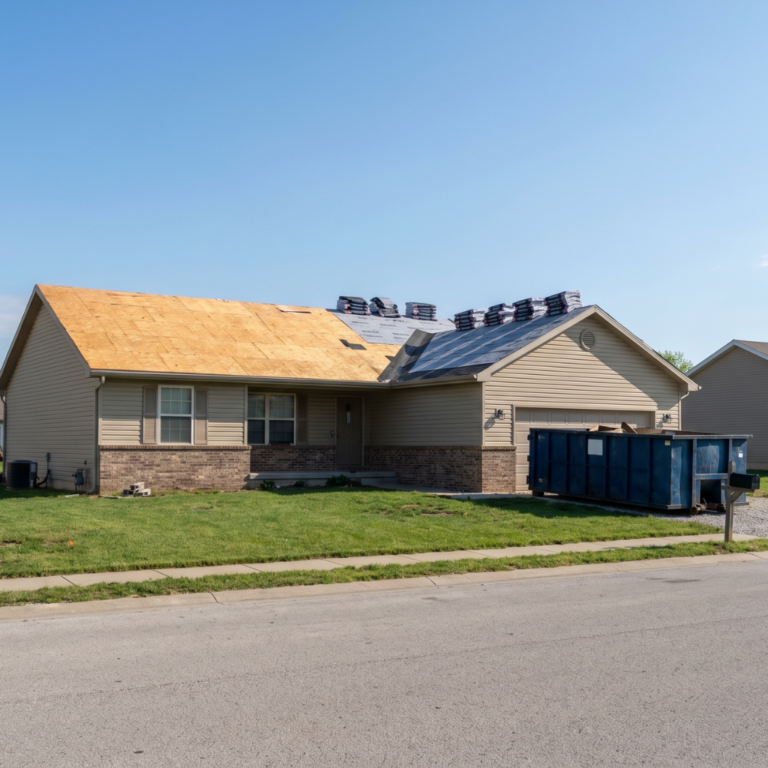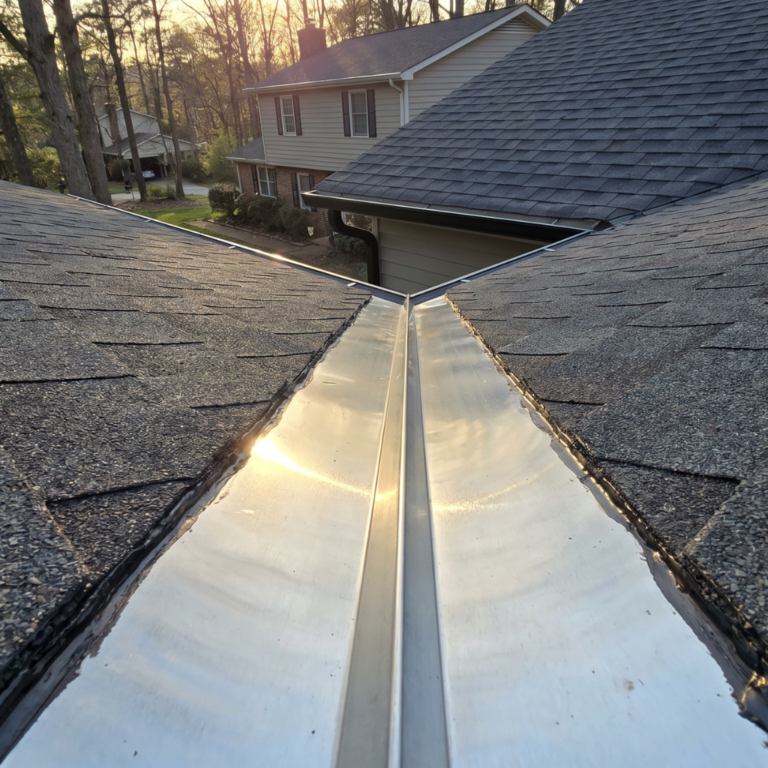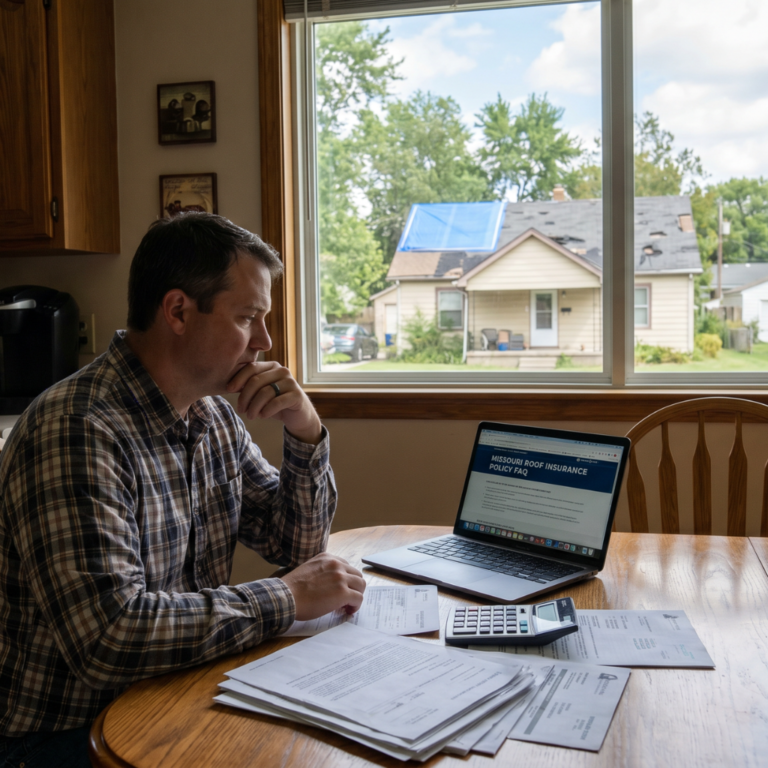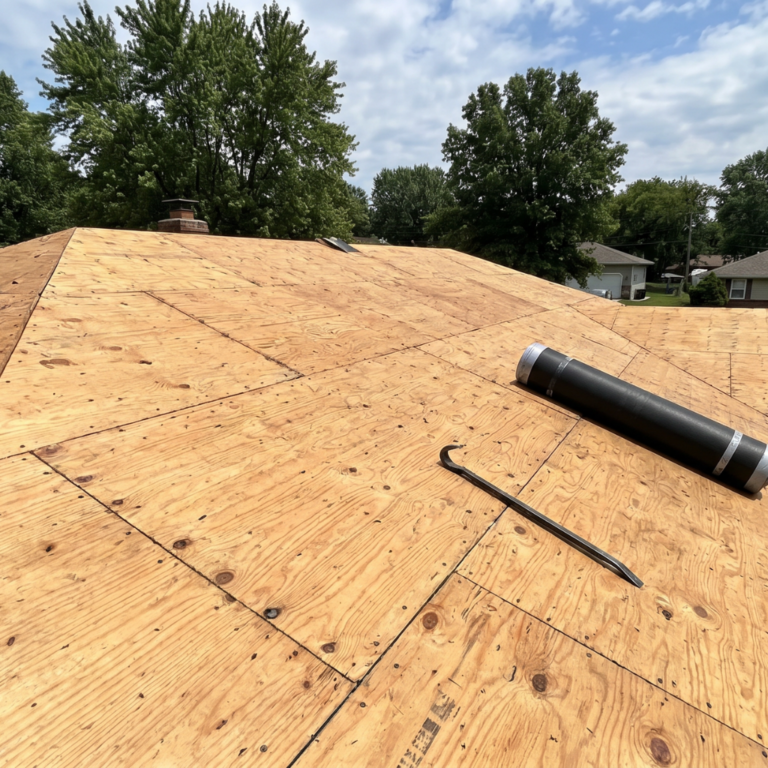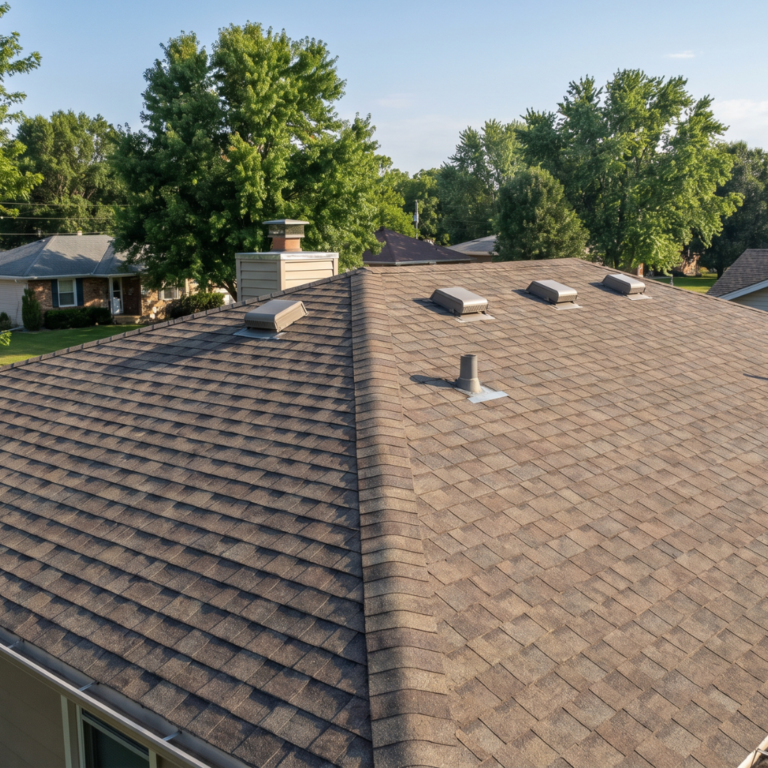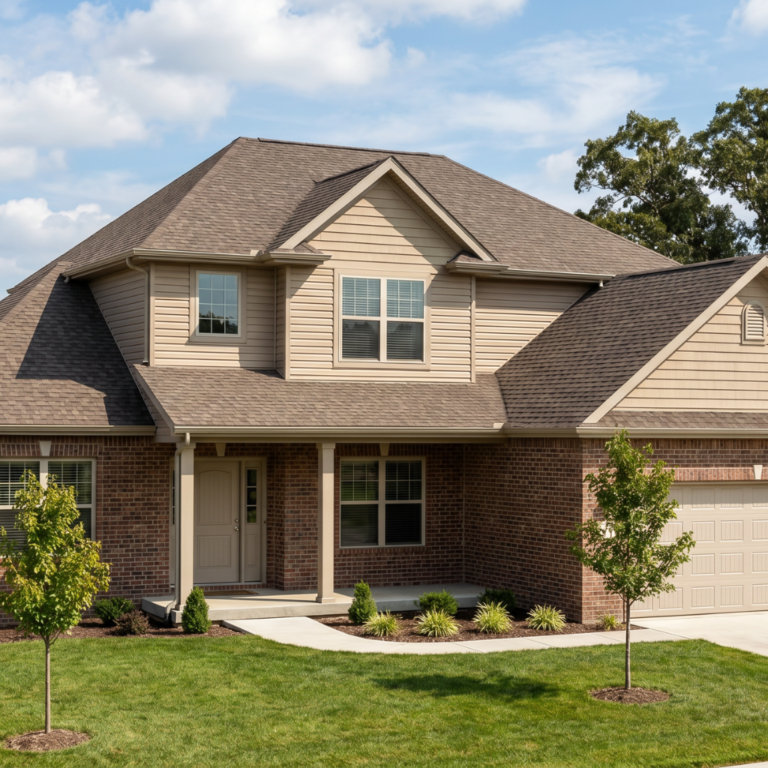
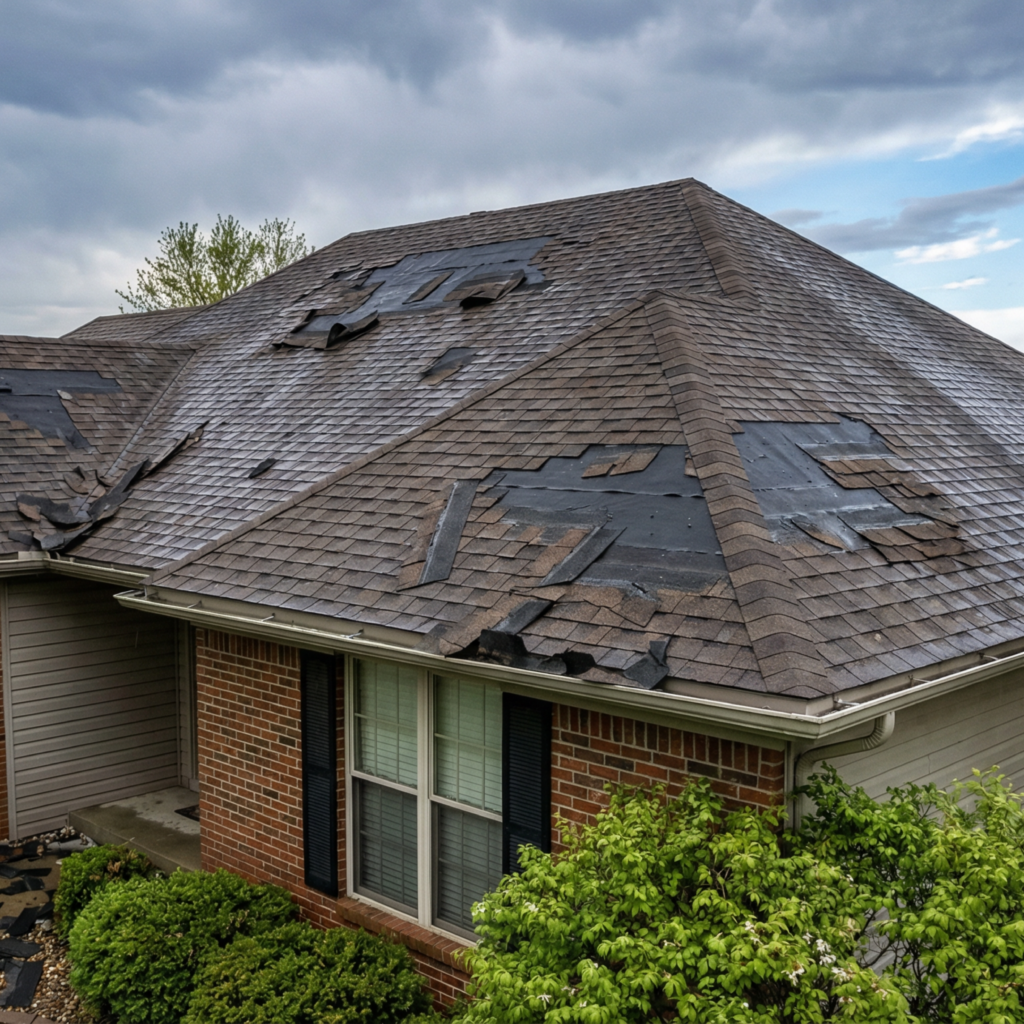
On April 29, 2025, a line of severe thunderstorms ripped through Springfield with a 90 mph wind gust recorded at Springfield-Branson National Airport. Over 50,000 homes lost power. Multiple tornadoes touched down across Southwest Missouri, including damage in Lawrence County near Verona. If you lived through that morning, you remember it. And your roof took the hit whether you could see it or not.
This guide covers everything Springfield homeowners need to know about storm damage roof repair, from telling hail damage apart from wind damage, to navigating the insurance claim, to avoiding the storm chasers who show up before the rain stops. Whether you need hail damage roof repair in Springfield, Missouri or wind and tornado recovery, start here.
TLDR: Hail, wind, and tornado damage each leave different evidence on your roof. Hail creates circular granule bruising and dented metal vents. Wind lifts and tears shingles in sections. Tornado damage can range from missing shingles to structural failure. After any storm, document everything before cleanup, get a professional inspection before calling your insurer, and never sign with a contractor who shows up at your door uninvited. Class 4 impact-resistant shingles are the top upgrade for Springfield homes after storm damage.
Why Southwest Missouri Is One of the Most Storm-Active Regions in the Country
Southwest Missouri sits in one of the most active severe weather corridors in the United States. The NWS Springfield forecast area averages roughly 10 tornadoes per year according to NWS Springfield severe weather climatology. April is the peak month for both tornadoes and hail, with the active storm season running March through June.
Storm activity in Southwest Missouri is the annual reality for every roof in the Springfield metro area, not a once-in-a-lifetime risk. The April 29, 2025 severe thunderstorm event was not unusual in its severity for this region. What was unusual was the number of homeowners who assumed their roof was fine because they could not see damage from the ground.
Tip: The NWS Springfield forecast office documents every significant storm event. After any major storm, that page is the first place to verify hail size and wind speeds for your zip code. That information matters when you file an insurance claim.
The Three Storm Types and What Each Does to Your Roof
Most storm damage guides cover “storm damage” as one category. But hail, wind, and tornadoes leave completely different evidence. Knowing what to look for changes everything about how you document damage, talk to your insurer, and decide between repair and replacement.
Hail Damage
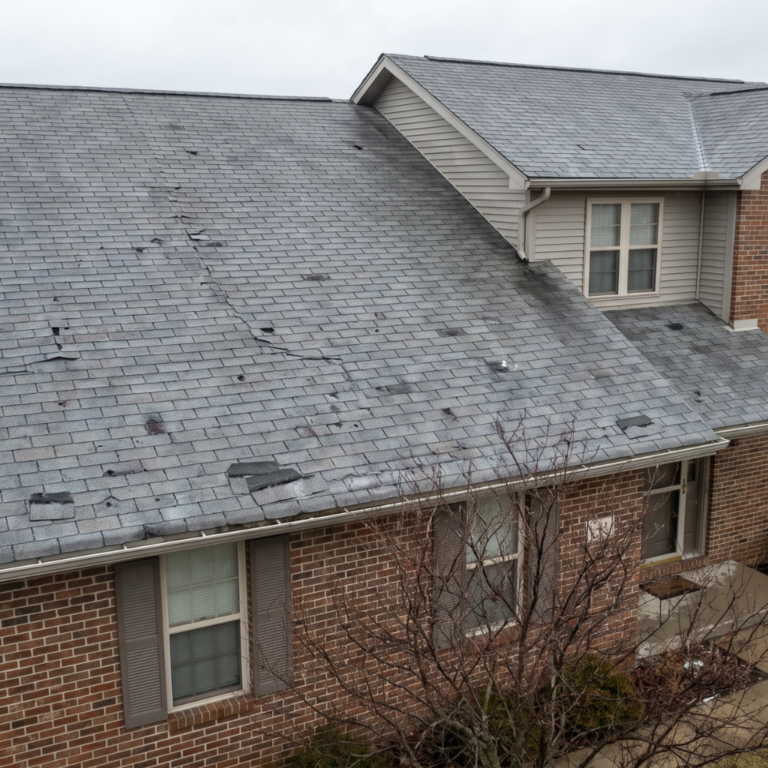
On asphalt shingles, hail damage shows as circular dark spots where granules were knocked off, exposing the asphalt mat underneath. This shingle bruising is invisible from the ground. New hail hits appear shiny because the fresh asphalt has not had time to weather. Dented metal vents, gutters, and downspouts are often the most reliable evidence of hail size and impact density. Insurance adjusters typically look at metal components first.
Southwest Missouri sees hail in the 1 to 1.5-inch range multiple times during an active storm season, and larger 2-inch-plus events come through periodically.
| Hail Size | Common Object | Effect on Asphalt Shingles | Recommended Action |
|---|---|---|---|
| Under 1 inch | Pea to nickel | No functional damage | No action needed |
| 1 to 1.25 inches | Quarter to half dollar | Rare granule loss; dents on soft metals | Monitor; check gutters |
| 1.5 inches | Ping pong ball | Granule bruising; shingle cracking likely | Schedule professional inspection |
| 1.75 inches | Golf ball | Heavy granule loss; cracks possible | Inspection and likely repair |
| 2 inches | Hen egg | Heavy damage; likely leaks | Full replacement likely needed |
| 2.5 inches and larger | Tennis ball or larger | Structural damage possible | Emergency inspection required |
For a more detailed breakdown, see our hail size chart for Nixa.
Wind Damage
Standard asphalt shingles typically carry wind warranties in the 60 to 90 mph range, depending on the product and installation. Class 4 impact-resistant shingles typically carry wind warranties up to 130 mph when installed with enhanced nailing. The April 29, 2025 storm hit 90 mph at the Springfield airport, which means standard shingles were at or past their rated threshold.
Wind damage shows as lifted shingles, torn edges, creased shingles, exposed underlayment (the protective layer under your shingles), flashing separation at pipe boots and ridge caps, and missing shingles found in the yard. The ridge, hips, and leading edges of a roof take the first and hardest wind impact.
Even if a lifted shingle returns to position after the wind stops, the adhesive seal may be broken. It looks intact but is no longer waterproof.
| Wind Speed | Classification | Typical Roof Damage |
|---|---|---|
| 45 to 55 mph | Minor | A few shingles may lift or blow off |
| 55 to 75 mph | Moderate | Shingles tear away in sections; edges curl |
| 75 to 90 mph | Severe | Widespread shingle loss; underlayment exposed |
| 90+ mph | Structural | Decking exposed or damaged; major failure possible |
Pro tip: After a wind event, walk your yard and look for shingles or shingle pieces. Then look at your roof from the street, focusing on the ridge line and edges. If anything looks uneven, lifted, or missing, call for a professional inspection. Do not get on the roof yourself.
Tornado Damage
Tornadoes create intense air pressure differences that cause upward wind uplift, ripping shingles and entire panels away from the decking (the wood surface under your shingles). Damage ranges from missing shingles at the edge of a tornado path to complete structural roof failure in the direct path. Flying debris can puncture roofing systems at high velocity even on homes outside the tornado’s direct path.
Important: If a roof is visibly sagging, partially collapsed, or if a tree is resting on the structure, do not re-enter the home until a structural professional clears it. Safety comes first.
Storm Type Quick Reference
| Storm Type | Typical Evidence on Roof | Evidence on Ground | First Action |
|---|---|---|---|
| Hail | Circular dark spots on shingles; dented vents | Dented gutters, AC units, window screens | Inspect gutters; call for inspection |
| Wind | Missing, lifted, or torn shingles; exposed underlayment | Shingles in yard; bent flashing | Inspect from ground; call for inspection |
| Tornado | Sections of roof lifted; debris punctures; exposed decking | Structural debris; large tree contact | Safety first; do not re-enter if damage visible |
What Happens Inside the Roof You Cannot See
The damage you can see from the ground is rarely the full story. Hail bruises the shingle mat below the granule surface. That damage is invisible from the ground and often invisible on a basic visual check. Only a close inspection with hands on the shingles reveals the extent.
Wind that lifts shingles can break the adhesive seal even if the shingle returns to position. It looks intact, but it is no longer waterproof. The next rain finds the gap.
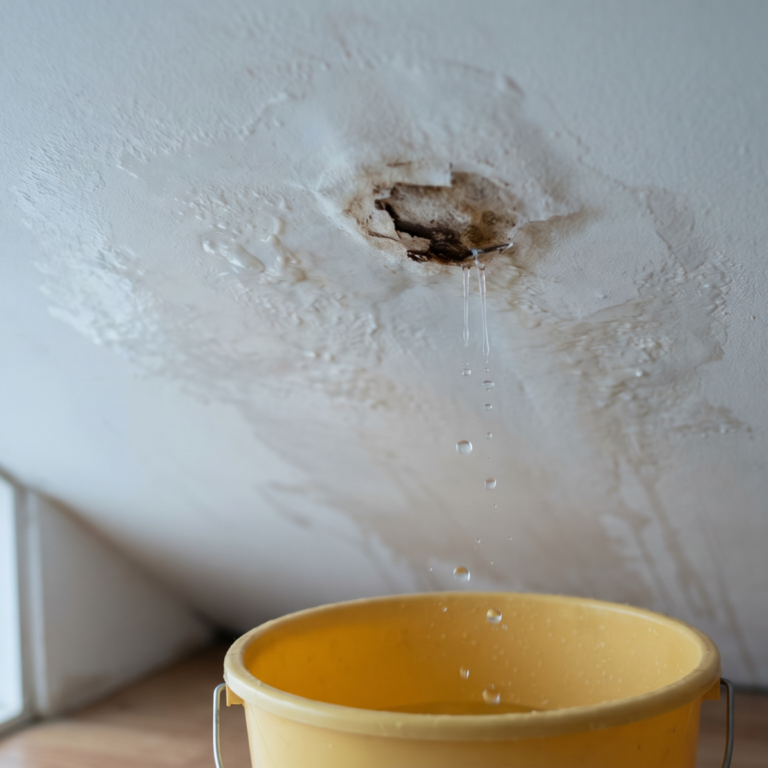
Water from a compromised roof can travel along decking and joists, showing up as ceiling stains in rooms far from the actual entry point. According to the EPA mold and moisture guidance, mold can begin developing within 24 to 48 hours of water exposure. Early tarping is not optional if decking is exposed.
Tip: A dented gutter or an AC unit with pockmarks is not just cosmetic damage. Those are the same conditions your roof experienced. Adjusters use metal damage as evidence of hail size and impact density. Photograph every dented surface before any cleanup.
The First 48 Hours After a Storm
The first two days after a storm are the most important for protecting your home and your insurance claim.
| Time | Action | Why It Matters |
|---|---|---|
| Immediately after | Stay inside until wind and debris stop | Safety; storm can resume; wet roofs are dangerous |
| Within 30 minutes | Walk the property; photograph gutters, vents, AC, siding, shingles on ground | Creates your damage evidence baseline |
| Within 1 to 2 hours | Check attic for water stains, daylight, or wet insulation | Interior intrusion means the clock on mold is running |
| Within 24 hours | Call a local roofing contractor for a free professional inspection | Gets you documentation before the insurance process starts |
| Within 24 to 48 hours | Contact your insurance company to report potential damage | Most policies have reporting timelines; late reporting is a documented denial reason |
| Before any cleanup | Do not remove storm debris until documented | Adjuster needs to see the post-storm condition |
| If decking is exposed | Ask your contractor about emergency tarping | Mold starts in 24 to 48 hours; tarping is usually covered by the claim |
What NOT to do: Do not get on the roof yourself. Do not sign anything with a contractor who shows up uninvited. Do not make permanent repairs before the adjuster visit. Do not throw away damaged materials.
Emergency Roof Tarping: When and Why
Emergency tarping installs a heavy-duty waterproof tarp over exposed decking or missing shingle areas to stop water intrusion until permanent repairs begin. It is needed when shingles are missing down to the decking, when a tree has punctured the roof, when flashing has failed and is causing active leaking, or when you can see water inside the house.
In most cases, emergency tarping is covered as part of the overall storm damage insurance claim and does not count against your deductible.
Tip: If water is actively coming into your home, do not wait for the adjuster. Get tarping done and document it with photos. Your insurer expects you to prevent further damage.
Storm Damage Roof Repair vs. Full Replacement in Springfield, MO
This is the question every homeowner asks after a storm. The answer depends on four factors: roof age, damage scope, decking condition, and what your insurance approves.
| Factor | Lean Toward Repair | Lean Toward Replacement |
|---|---|---|
| Roof age | Under 15 years | Over 20 years |
| Damage scope | One slope, localized area | Multiple slopes, widespread |
| Decking condition | Intact, dry | Rotted or water-damaged sections |
| Prior storm history | First significant damage | Repeated repairs in last 3 to 5 years |
| Insurance | Partial damage approved | Full replacement approved |
| Material match | Newer shingles, easy match | Color match impossible on aged shingles |
When repair costs approach 25 to 30 percent of what a full replacement would cost, replacement is almost always the better financial decision.
Illustrative scenario: A homeowner in Springfield called after the April 2025 storm to ask about repairing just the north slope. The inspection found granule loss across all four slopes. The decking had moisture intrusion at two valleys. The roof was 21 years old. The contractor recommended full replacement. The adjuster confirmed damage consistent with the storm event and approved it.
Navigating the Insurance Claim: Storm Damage Edition
Understanding two concepts before you file can save you thousands: your policy type and your deductible structure.
ACV vs. RCV: What You Must Know
Your policy is either Actual Cash Value (ACV) or Replacement Cost Value (RCV). The difference is significant.
ACV pays the depreciated value of your roof. A 15-year-old roof on a 20-year lifespan may be considered substantially depreciated, which reduces your payout. RCV pays the full cost to replace with comparable new materials, without subtracting depreciation. The difference between the two can be thousands of dollars on an older roof.
| Element | Actual Cash Value (ACV) | Replacement Cost Value (RCV) |
|---|---|---|
| Depreciation deducted? | Yes, age reduces payout | No, full replacement covered |
| Out-of-pocket exposure | Higher after storm | Lower after storm |
| Best for | Budget or short-term coverage | Homeowners planning to stay long-term |
If you do not know which type you have, call your insurance agent today.
Illustrative scenario: An Ozark homeowner filed a claim after a hail event and received a partial payout that fell well short of the replacement estimate. They had an ACV policy, something they had not noticed when they set up coverage. After discussing options with their contractor and insurance agent, they completed the replacement and upgraded to an RCV policy at renewal.
Wind and Hail Deductible Warning
Many Missouri policies now carry percentage-based wind and hail deductibles. A 2 percent deductible on a $300,000 insured home means $6,000 out of pocket before coverage applies. Missouri law prohibits contractors from waiving or absorbing your deductible (RSMo 407.725), so any contractor offering to do so is breaking state law.
What Adjusters Look For
Adjusters start with the metal. Dented vents, gutters, and AC unit fins are the fastest way to confirm hail occurred and estimate its size. On the shingles themselves, adjusters look for circular impact marks where granules were knocked loose, exposing fresh asphalt underneath. Real hail hits follow a random pattern across the roof and can often be felt by pressing on the shingle. Adjusters typically look for a verified density of impact marks across multiple roof slopes before approving replacement. Specific thresholds vary by carrier.
Pro tip: Have your contractor present at the adjuster visit. An experienced roofer who walks the roof alongside the adjuster can point out damage that might otherwise be missed, and that often changes the outcome of the claim.
For the full step-by-step walkthrough, read our guide on how the roof insurance claim process works.
Missouri law (RSMo 407.725) prohibits roofing contractors from representing or negotiating insurance claims on behalf of homeowners. Your roofer can document damage and provide technical information, but only you, a licensed Missouri public adjuster, or an attorney can negotiate with your insurer.
The 2025 Missouri Homestead Disaster Tax Credit
This is something most Missouri homeowners do not know about, and most contractors never mention it.
The Missouri Homestead Disaster Tax Credit was created through Senate Bill 3 during the 2025 Special Session. It allows Missouri homeowners and renters who paid an insurance deductible in 2025 for damage to their primary residence to claim a credit equal to that deductible, capped at $5,000 per taxpayer. The credit is non-refundable, meaning it reduces your Missouri tax liability but does not generate a refund beyond what you owe. Any unused portion may be carried forward.
The credit applies only to disasters for which the Governor of Missouri requested a federal disaster declaration. As of this writing, the confirmed qualifying disaster periods are:
- March 14 to 15, 2025
- March 30 to April 8, 2025
- April 29, 2025
- May 16, 2025
- May 23 to 26, 2025
The April 29, 2025 storm that hit Springfield directly is on the qualifying disaster list. Springfield homeowners who paid an insurance deductible on a primary residence as a result of that storm may be eligible to claim the credit. Always verify your specific situation with the Missouri Department of Revenue or a tax professional before filing.
There is also an important legal caveat. Senate Bill 3 is currently facing a constitutional challenge before the Missouri Supreme Court. The Missouri Department of Revenue is processing returns but is not currently applying the HDC pending the court’s decision. If Senate Bill 3 is upheld, returns will be adjusted to apply the credit. If it is struck down, the credit will not be applied. Eligible taxpayers are still advised to file claiming the credit by the October 15, 2026 deadline so the option stays open.
To claim the credit, file Missouri Form 5926 (Homestead Disaster Tax Credit Affidavit) and Form MO-TC with your Missouri return, along with documentation from your insurer showing the deductible paid. A mailed return is typically required.
Important: This section is informational, not tax advice. Consult your tax professional for individual eligibility and current status. If you paid a deductible after any qualifying 2025 storm, this credit is worth a phone call to your accountant.
Choosing a Storm Damage Contractor in Springfield, MO
The hours after a major storm are when the worst contractors show up and the best contractors get busy. Missouri has no statewide general contractor license, which means anyone can legally call themselves a roofer. Your own vetting process is the only real filter.
| What to Check | Green Flag | Red Flag |
|---|---|---|
| Timing | You called them | Knocked on your door within 24 hours of a storm |
| Insurance certificate | Provides on request | Cannot or will not produce |
| Permit knowledge | Can explain when a permit is and is not required for your jurisdiction | Cannot explain the local permit rules at all |
| Estimate format | Detailed written quote | Verbal only or vague summary |
| Deductible talk | Honest about what you owe | Offers to “cover your deductible” |
| Business location | Physical address in the area | Out-of-state, no local office |
| Crew type | In-house crews only | Unknown subcontractors |
A note on permits: In Springfield specifically, the City classifies standard roof repair, replacement, and recover as repair and maintenance, so a permit is not required for a typical reroof. A permit is only triggered if a structural element is altered or replaced, or if more than 32 contiguous square feet of deck sheathing is replaced, per the City of Springfield Roofing and Re-roofing Bulletin. Permit rules in Nixa, Ozark, Branson, Rolla, and other cities are set by those jurisdictions. The red flag is not a contractor saying no permit is needed, because for a standard Springfield reroof that is the correct answer. The real red flag is a contractor who cannot clearly explain the local permit rule for your specific city or who claims a permit is needed when one is not.
Illustrative scenario: A homeowner in Republic signed a contract within 24 hours of a spring storm with an out-of-state crew that offered to “take care of everything.” The crew delayed three weeks, then completed the work poorly with the wrong underlayment and a vague non-answer when asked about local building codes. The homeowner had no local recourse.
Pro tip: Ask any contractor if they have recent projects in your specific city. Local work means local references you can actually verify.
For a deeper look at warning signs, read our guide on storm chasers vs local roofers.
Upgrading After Storm Damage
When insurance approves a full replacement, it is the lowest-cost moment to upgrade your roofing material. For storm damage roof repair in Springfield, MO, the labor and tear-off are already covered by the claim. The upgrade to a better shingle class is the only additional cost.
Class 4 impact-resistant shingles are the top recommendation for Southwest Missouri. They are rated to handle a 2-inch steel ball drop in UL 2218 testing and often qualify for an insurance premium discount, though the exact discount varies by carrier. Standing seam metal roofing is the upgrade choice for homeowners who want 40 to 70 years of near-maintenance-free protection.
Pro tip: Before you choose your replacement material after a storm claim, call your insurance agent. Ask directly: does a Class 4 impact-resistant shingle qualify for a premium discount on my policy? The conversation takes five minutes.
Storm Damage Recovery Across Southwest Missouri
Every community in Southwest Missouri faces the same storm exposure. Whether you are in Springfield, Republic, Battlefield, or Willard across Greene County, or in Ozark, Nixa, Clever, or Billings in Christian County, or in Branson, Forsyth, or Hollister in Taney County, the hail patterns and tornado risk are shared. The same is true for Marshfield in Webster County, Rolla in Phelps County, Aurora in Lawrence County, and Lebanon in Laclede County.
Illustrative scenario: Following the April 29, 2025 storm, one local contractor completed storm damage inspections across Greene, Christian, and Webster counties within four days. Springfield and Ozark homeowners had wind damage from the 90 mph gusts. Marshfield homeowners had hail-related granule loss. Different documentation for different claims, but the same process: inspection, documentation, adjuster meeting, material selection.
Tip: If you are in Branson, Forsyth, or Hollister, steep pitches, wooded lots, and lake-adjacent humidity all factor into the inspection and material recommendation. Make sure your contractor has worked in Taney County before.
FAQ: Storm Damage Roof Repair in Springfield, MO
Here are the most common questions homeowners ask about storm damage roof repair in Springfield, MO after a hail, wind, or tornado event.
Q: What does hail damage to a roof look like? A: Circular dark spots where granules were knocked off, exposing the asphalt mat. New damage looks shiny. Dented metal vents, gutters, and AC units are often easier to see than shingle damage and are what adjusters use as primary evidence of hail size.
Q: How do I know if wind damaged my roof? A: Lifted, creased, or missing shingles, especially at the ridge, edges, and hips. You may find shingles in your yard or see exposed underlayment. Even shingles that returned to position may have broken adhesive seals.
Q: Does homeowners insurance cover tornado damage? A: Yes, in most cases. Standard policies cover sudden storm damage from wind, hail, tornadoes, and debris. Wear and tear and deferred maintenance are not covered. Document everything before cleanup and have a contractor present at the adjuster visit.
Q: How do I document roof damage for an insurance claim? A: Record the storm date. Check NWS Springfield to confirm the event. Photograph all exterior damage. Check your attic for water stains or daylight. Get a professional inspection before calling your insurer so you have a documented baseline. Insurance claim documentation is the most underappreciated part of a successful claim.
Q: Should I repair or replace my roof after a storm? A: Under 15 years old with localized damage and intact decking, repair usually works. Over 20 years with widespread damage or compromised decking, replacement is the better financial decision.
Q: What is the difference between ACV and RCV? A: ACV pays the depreciated value of your roof. RCV covers the full cost to replace with comparable new materials, without depreciation. The difference can be thousands of dollars on an older roof.
Q: What are the signs of a storm chaser? A: They arrive uninvited within 24 to 48 hours, pressure you to sign immediately, offer to “cover your deductible” (illegal in Missouri), provide only verbal estimates, and have no local office or verifiable references.
Q: How soon after a storm should I call a roofer? A: Within 24 hours if you have visible damage, water intrusion, or exposed decking. A missed shingle leads to open underlayment, then water, then mold within 24 to 48 hours.
Q: What is emergency roof tarping? A: A heavy-duty tarp installed over exposed or damaged areas to prevent water intrusion until permanent repairs begin. It is typically covered as part of your storm damage insurance claim.
Q: Was the April 29, 2025 storm a qualifying disaster for the Missouri Homestead Disaster Tax Credit? A: Yes. The April 29, 2025 storm is on the Missouri Department of Revenue’s list of qualifying disasters for the credit, along with the March 14 to 15, March 30 to April 8, May 16, and May 23 to 26, 2025 disaster periods. Springfield homeowners who paid an insurance deductible on a primary residence after the April 29 storm may be eligible. The credit itself is currently under constitutional challenge before the Missouri Supreme Court, and the Department of Revenue is not applying the credit during the litigation. Eligible taxpayers are still advised to file claiming the credit and verify their specific situation with a tax professional.
Key Takeaways
Identifying Storm Damage
- Hail leaves circular granule loss and dented metal surfaces; adjusters start with the metal
- Wind lifts and tears shingles at ridge lines, hips, and edges
- Tornado damage ranges from isolated shingle loss to structural failure
- Hidden damage is common; only a professional inspection reveals what a ground check misses
First 48 Hours
- Photograph everything before cleanup; your photos are your evidence
- Do not get on the roof yourself
- Call a local contractor before calling your insurer; inspection first, then claim
- Emergency tarping stops water intrusion and is usually covered by the claim
Insurance
- Know your policy type: ACV vs. RCV can mean thousands of dollars difference
- Missouri 2% wind and hail deductible on a $300K home means $6,000 out of pocket
- Missouri law (RSMo 407.725) prohibits contractors from waiving your deductible or negotiating your claim
- If you paid a deductible in a qualifying 2025 disaster window, check the Missouri Homestead Disaster Tax Credit, but verify your event qualifies and note the credit is under constitutional challenge
Contractor Selection
- Never sign with a contractor who arrives uninvited after a storm
- Missouri has no statewide contractor license; verify insurance independently
- In-house crews and a local address are your two most important qualifying factors
- A contractor saying no permit is needed for a standard Springfield reroof is correct, not a red flag. The red flag is a contractor who cannot explain the local permit rule at all.
Ready for a Free Storm Damage Inspection?
You now have everything you need to navigate storm damage roof repair in Springfield, MO, from inspection to claim to contractor. The next step is getting a professional set of eyes on your roof.
ProNail Exteriors brings hands-on roofing experience and multiple in-house crews to every project across Southwest Missouri. Based in Ozark, the company serves every community within 50 miles of Springfield. We document everything, meet adjusters on-site, and give you the straight answer on storm damage roof repair in Springfield, MO, whether that means a quick fix or a full replacement.
If your roof took a hit, do not wait. The longer exposed damage sits, the worse it gets.
Call 844-321-6245 today to schedule your free storm damage inspection.
ProNail Exteriors | Roofing, Siding, Windows, Gutters, Decks, and More | Serving Southwest Missouri Since 2025