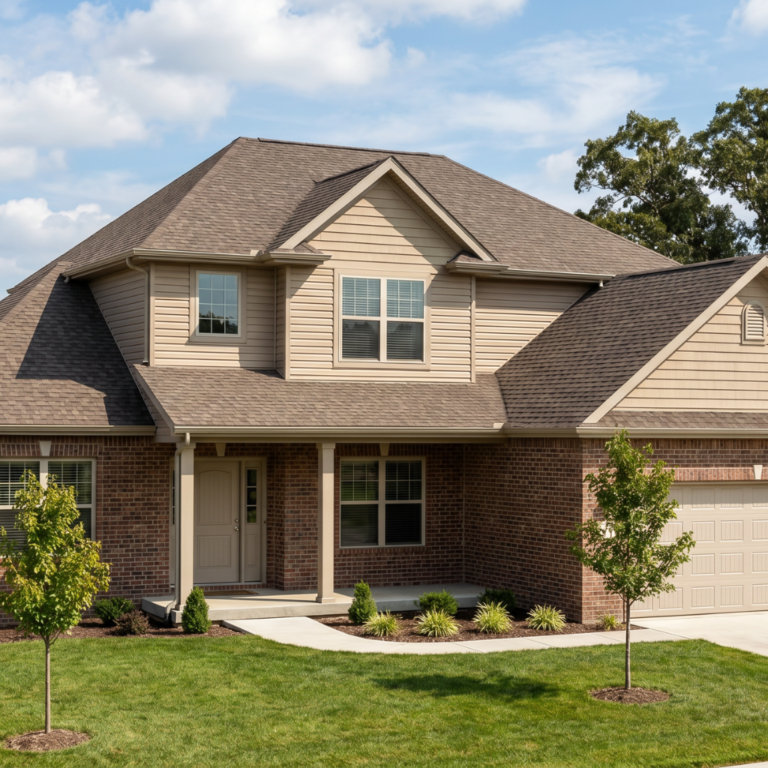
Most Ash Grove homeowners walk past their soffit and fascia every day without knowing what they are. But these two components hold up gutters, seal the roofline, and keep the attic breathing properly. When they fail, it causes gutter problems, attic moisture issues, and pest entry. This guide covers what they are, why they matter, and 6 signs it is time to replace them.
TL;DR: Fascia is the board along the roofline that gutters attach to. Soffit is the panel underneath the roof overhang that ventilates the attic. Rotten or damaged fascia causes gutters to sag and pull away from the house. Damaged soffit blocks airflow and invites pests. Wood fascia and soffit fail faster in Southwest Missouri humidity. Vinyl and aluminum wraps last much longer with almost no maintenance.
You noticed your gutters pulling away from the house a little. Or maybe there is a strip of peeling paint running along the underside of your roofline that you keep meaning to look into. Maybe a wasp nest tucked into a gap under the eave finally got your attention this spring.
All of those signs point to the same place: your soffit and fascia. Most homeowners have never heard of either one until something goes wrong. By then, the damage is often more than cosmetic.
This post explains exactly what soffit and fascia are, what they do for your home, and how to know when they need to be replaced rather than repainted. By the end, you will have a clear picture of what to look for, which materials hold up best in Southwest Missouri, and what to ask any contractor before work begins.
What Is Fascia and What Does It Do?
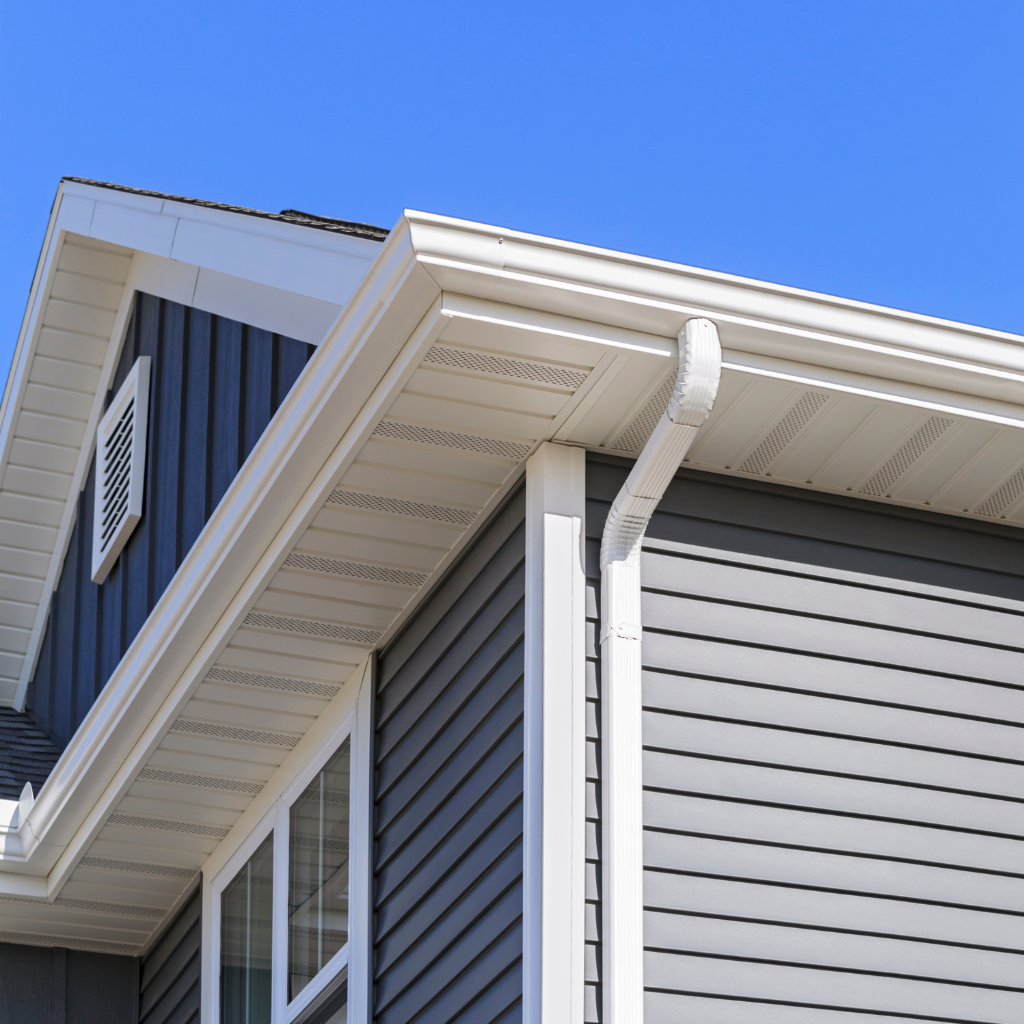
Fascia is the vertical board that runs along the entire lower edge of the roofline. It sits right where the roof meets the outside of the house, and it is the board your gutters attach to directly. Every gutter bracket and hanger screw drives into the fascia. If the fascia is soft, rotten, or pulling away, the gutters have nothing solid to hold them.
Beyond holding gutters, fascia seals the gap at the roofline edge. It keeps water, pests, and wind-driven debris from getting into the roof structure from the sides. A solid fascia board is part of what keeps the interior of your roof system dry and intact through Southwest Missouri storm seasons.
Most fascia boards are wood. Typically that means 1×6 or 1×8 pine or spruce. These boards are directly exposed to rain, sun, and temperature swings year-round. Without consistent maintenance and good gutter drainage, they absorb moisture and begin to rot from the outside in.
Pro tip: Check your fascia boards once a year by pressing firmly with your thumb at the corners and behind the gutter brackets. Soft or spongy wood means rot has already started, even when the paint still looks fine.
What Is Soffit and What Does It Do?
Soffit is the horizontal panel that covers the underside of the roof overhang. It fills the gap between the fascia board at the edge and the exterior wall of the house. Without soffit, that gap is open to weather, pests, and debris. Soffit closes it and gives the roofline a finished appearance.
The more important function is ventilation. Ventilated soffit panels are perforated with small holes that let outside air flow up into the attic. That intake air is what makes ridge vents work. A ridge vent at the peak of the roof cannot pull hot air out of the attic unless cool air is coming in from somewhere below. Soffit vents are that somewhere. Proper soffit ventilation can reduce attic temperatures by up to 30 degrees in summer, which protects shingles from heat degradation and reduces the load on your air conditioning.
Without working soffit vents, hot moist air gets trapped in the attic with nowhere to go. Over time that leads to mold on the decking and rafters, compressed insulation, and accelerated shingle aging from the bottom up.
| Component | Location | Primary Function |
|---|---|---|
| Fascia | Vertical board at roofline edge | Holds gutters, seals roofline edge |
| Soffit | Horizontal panel under roof overhang | Ventilates attic, seals eave gap |
Pro tip: Soffit and fascia work as a connected system. Replacing one often means replacing both since they are in the same location and the labor overlaps. Doing both together saves time and ensures everything integrates cleanly.
6 Signs Your Soffit or Fascia Needs Replacement
Sign 1: Gutters Sagging or Pulling Away From the House
If your gutters are separating from the roofline, the fascia board behind them is almost always the cause. Gutters attach to the fascia with screws and hanger brackets. When the fascia rots, those screws have nothing solid to grip and the whole gutter run slowly peels away from the house.
Tightening or re-hanging gutters on a rotten fascia does not fix anything. The fascia must be replaced first. New hardware in rotten wood pulls out again within one or two seasons.
Pro tip: Before installing new gutters, always have the fascia condition checked. New gutters installed on rotten fascia will pull away again before the year is out. The gutter replacement page covers how ProNail Exteriors approaches roofline work as a connected system.
Sign 2: Peeling Paint or Discoloration Along the Roofline
Peeling paint on fascia or soffit boards means moisture has gotten into the wood beneath the surface. Once moisture penetrates behind the paint layer, the constant expansion and contraction from Southwest Missouri temperature swings peels paint rapidly.
Discoloration, dark streaks, green algae, or black mold lines along the soffit or fascia mean the wood has been wet long enough for biological growth to take hold. These are not cosmetic problems waiting for a fresh coat of paint. They are signs of water damage happening inside the board.
Sign 3: Soft, Spongy, or Crumbling Wood
Soft spots on fascia or soffit boards confirm active rot. Press your thumb firmly along the board at several points. Any give in the wood means the fibers have broken down from sustained moisture exposure. Rotten wood cannot hold fasteners, cannot support gutters, and cannot keep pests from pushing through.
Once rot spreads beyond a small isolated section, replacing the full board run is the right call. Spot repairs on wood soffit and fascia rarely match the existing material cleanly, and adjacent sections often follow within a season or two.
Sign 4: Visible Gaps, Cracks, or Open Joints
Gaps in soffit panels or along fascia board joints give pests direct access into the attic and wall cavity. Birds, wasps, squirrels, and bats are the most common uninvited residents in Southwest Missouri attics. All of them enter through exactly these kinds of gaps.
Open joints also allow rain-driven wind to push moisture directly into the roof structure. According to NOAA, Missouri has experienced 120 billion-dollar weather and climate disasters between 1980 and 2024, with 82 of those being severe storms involving high winds and hail. Those wind events push water and debris into any gap that exists along the roofline.
Pro tip: Walk the perimeter of your home and look up along the soffit line after any severe wind event. Storm pressure opens small existing gaps into larger entry points for pests and water.
Sign 5: Mold or Moisture in the Attic
If an attic inspection reveals mold, excessive moisture, or damp insulation and the roof itself appears to be in good condition, blocked or damaged soffit vents are often the cause. Blocked soffit vents cut off the intake side of attic ventilation. Hot moist air builds up with nowhere to go. The NWS Springfield forecast area documents the high humidity and temperature swings that make attic moisture a real and recurring problem across Southwest Missouri.
This trapped moisture grows mold on decking and rafters, compresses insulation, and shortens shingle life from the bottom up. It is a slow problem that becomes an expensive one if it goes unaddressed.
Sign 6: Visible Pest Activity or Nesting at the Roofline
Wasp nests tucked into eave gaps, bird nests under sagging soffit panels, or squirrel gnaw marks at soffit corners all point to compromised soffit or fascia. Pests do not create the gaps. They find gaps that already exist and use them. Finding a nest means the structure has already been breached.
Full soffit and fascia replacement paired with pest control is the correct fix when active nesting is found. Plugging the gap without replacing the damaged material leaves the underlying rot in place.
Wood vs Vinyl vs Aluminum: Which Material Is Best?
Wood fascia and soffit are what most existing homes in Ash Grove and across Southwest Missouri have. They look traditional and can be painted any color. But wood absorbs moisture, rots, attracts insects, and requires regular painting and sealing to survive this region’s humidity and storm exposure. In practice, most homeowners are not keeping up with that maintenance cycle, and wood fascia deteriorates faster here than in drier climates.
Vinyl fascia and soffit wraps cover the existing wood board with a PVC shell. They do not rot, do not need painting, and hold up well against moisture and UV exposure. They are the most common upgrade choice for replacement projects and represent a significant reduction in long-term maintenance. When the existing wood board underneath is still solid, a vinyl wrap is an efficient and durable solution.
Aluminum soffit and fascia are the most durable option available. They do not rot, they resist denting better than vinyl in most hail events, and they hold up to Southwest Missouri severe weather better than any other material at this level. Aluminum costs a little more but requires almost no maintenance over its lifespan.
| Material | Rot Resistant | Maintenance | Best For |
|---|---|---|---|
| Wood | No | High (paint and seal regularly) | Original installs, historic homes |
| Vinyl wrap | Yes | Very low | Most replacement projects |
| Aluminum | Yes | Almost none | High storm exposure, long-term |
For a full look at how soffit, fascia, and gutter work fits into ProNail Exteriors’ approach to exterior projects, the full exterior services page covers the complete scope.
Pro tip: When getting a quote for fascia replacement, ask specifically whether the contractor is replacing the wood board underneath or just wrapping the existing board. Wrapping rotten wood hides the problem rather than fixing it. The rot continues underneath. The wood board must be replaced first if it has active rot.
How Soffit and Fascia Connect to Gutters and the Roof System
Fascia, soffit, gutters, drip edge, and the bottom course of shingles all work as a connected system at the roofline. They are not separate components that happen to be near each other. They are designed to work together to move water away from the house.
The drip edge is a metal strip that sits on top of the fascia board and directs water off the roof edge and into the gutter. If the fascia board rots and bows outward, the drip edge separates from it and water runs behind the gutter instead of into it. That water travels down the wall and can find its way into the foundation or the wall cavity. Proper fascia replacement and drip edge integration is a key part of making the full roofline system work correctly.
New soffit and fascia are almost always best done at the same time as gutter replacement. The gutters have to come off to replace the fascia anyway, and rehung gutters on new fascia with a properly set drip edge function far better than piecemeal repairs done at different times. Replacing all three components together saves labor and ensures every part of the system is new and integrated properly.
Pro tip: If you are already planning a gutter replacement, ask for a fascia inspection at the same time. Adding a fascia replacement when the gutters are already off costs significantly less than returning for a separate project later.
Step-by-Step: What the Replacement Process Looks Like
Knowing what the process involves helps you ask better questions and avoid surprises on the day of the job.
- Gutters are carefully removed and set aside if they are being reused, or removed for disposal if new gutters are part of the project.
- Old fascia and soffit boards are removed and the rafter tails and wall framing behind them are inspected for rot or damage.
- Any rotten rafter tails or framing damage is repaired before new boards are installed. Skipping this step means the same problem returns within a few years.
- New fascia boards are measured, cut, and fastened securely to the rafter ends.
- Ventilated soffit panels are installed in the underside of the overhang. Perforated panels go on ventilated runs and solid panels go where ventilation is not needed.
- Drip edge is checked and replaced if needed to ensure water properly directs into the gutter channel.
- Gutters are re-hung on the new fascia or new gutters are installed as part of the same project.
- All joints and seams are caulked and sealed to prevent moisture entry.
ICC building code standards followed by most Missouri municipalities include requirements around roofline ventilation and structural repair. Ash Grove falls under Greene County. Check with the Greene County building department before any substantial roofline work begins to confirm permit requirements for your specific project.
Pro tip: Ask your contractor to walk you through what they found on the rafter tails before they close everything up. If rafter damage existed and was not addressed, you will face the same problem again in a few years, and it will cost more to fix the second time.
FAQs About Soffit and Fascia in Ash Grove
For more answers on exterior roofline questions, visit our frequently asked questions page.
Q: What is the difference between soffit and fascia?
Fascia is the vertical board at the edge of the roofline that gutters attach to directly. Soffit is the horizontal panel under the roof overhang that covers the gap between the fascia and the exterior wall. They work together to seal and ventilate the roofline. Most replacement projects address both at the same time since they are in the same area and the labor overlaps naturally.
Q: How do I know if my fascia is rotten?
Press your thumb firmly into the fascia board at several points along the roofline, especially behind gutter brackets and at corners where water collects. Soft or spongy wood means rot is active. Peeling paint along the fascia is an earlier warning sign that moisture has been getting into the wood.
Q: Can I just paint over rotten fascia instead of replacing it?
No. Paint over rotten wood hides the problem for one season at most. The rot continues spreading underneath. Rotten fascia cannot hold gutter screws and eventually causes gutters to pull away from the house. The damaged wood must be replaced before any painting or wrapping is done.
Q: Does rotten soffit affect my attic?
Yes, in two ways. Rotten or damaged soffit creates gaps that let pests into the attic. It also blocks the ventilation intake that ridge vents depend on. Both outcomes cause real damage: pest infestations and moisture buildup that shortens roof life and grows mold on the decking and rafters.
Q: How long does vinyl soffit and fascia last?
Vinyl soffit and fascia typically last 20 to 40 years with minimal maintenance. It does not rot, does not require painting, and holds up well against moisture and UV. Aluminum lasts even longer. Both materials are significantly more durable than unprotected wood in Southwest Missouri’s humidity and storm exposure.
Q: Do I need a permit to replace soffit and fascia in Ash Grove?
Minor repairs typically do not require a permit. Full replacement projects that involve structural repairs like rafter tail work may. Ash Grove falls under Greene County jurisdiction. Check with the Greene County building department before any substantial roofline work begins to confirm what is required.
Q: Can I replace soffit and fascia without replacing gutters?
Yes, but the gutters must come off to access the fascia regardless. If the gutters are still in good condition, they can go back on the new fascia. If they are old, sagging, or damaged, replacing them while the fascia is already off saves significant labor. Most contractors will give you both options and let you decide.
Q: What causes fascia to rot faster in Southwest Missouri?
Southwest Missouri has high summer humidity, heavy spring rain, and temperature swings of 80 to 90 degrees between seasons. That combination drives moisture into unprotected wood faster than drier climates allow. Gutters that are clogged or already pulling away also direct water directly onto the fascia board rather than away from the house, which accelerates rot significantly.
Q: Will replacing soffit fix my attic ventilation problem?
It can be a key part of the fix. If soffit vents were blocked, missing, or damaged, replacing them with properly vented soffit panels restores the intake side of attic ventilation and allows ridge vents to function again. A full ventilation assessment alongside the new soffit installation is the most thorough approach.
Q: How much of my soffit and fascia needs to be replaced?
Only the sections that are rotten, structurally damaged, or compromised in theory. In practice, spot repairs on wood soffit and fascia rarely match the existing materials cleanly. Most homeowners replace the full run for a consistent finished appearance and to avoid dealing with adjacent sections failing within a season or two.
Key Takeaways
What these components do
- Fascia is the vertical roofline board that holds gutters. Rotten fascia is the number one reason gutters sag and pull away.
- Soffit is the horizontal panel under the overhang. Ventilated soffit panels are the intake air source for the entire attic ventilation system.
6 signs you need replacement
- Sagging or separating gutters, peeling paint along the roofline, soft or spongy wood, visible gaps or open joints, attic moisture or mold, and pest activity at the eave line.
Material choices
- Vinyl and aluminum wraps last 20 to 40 years with almost no maintenance, far longer than unprotected wood in this climate.
- Never wrap rotten wood. The existing board must be replaced before any wrapping is done.
The replacement process
- Replace fascia and gutters together when possible. The labor overlaps and every component comes out new.
- Always check rafter tails for rot when fascia is removed. Hidden rafter damage causes the same problem to repeat.
- Permits may be required in Ash Grove and Greene County for substantial roofline work. Confirm before starting.
Need Soffit or Fascia Replacement in Ash Grove or Springfield?
ProNail Exteriors handles soffit, fascia, and gutter replacement throughout Ash Grove, Springfield, Willard, and all of Southwest Missouri. Their crew inspects what is actually behind the fascia before quoting, addresses rafter damage when they find it, and installs everything as an integrated roofline system. Whether the project is a targeted roofline repair or a full exterior overhaul including new roof replacement, the work starts with an honest inspection and a clear written estimate.
Schedule your free roofline estimate and find out exactly what your soffit, fascia, and gutters actually need before another storm season arrives.
ProNail Exteriors | Roofing, Siding, Windows, Gutters, Decks, and More | Serving Southwest Missouri Since 2025