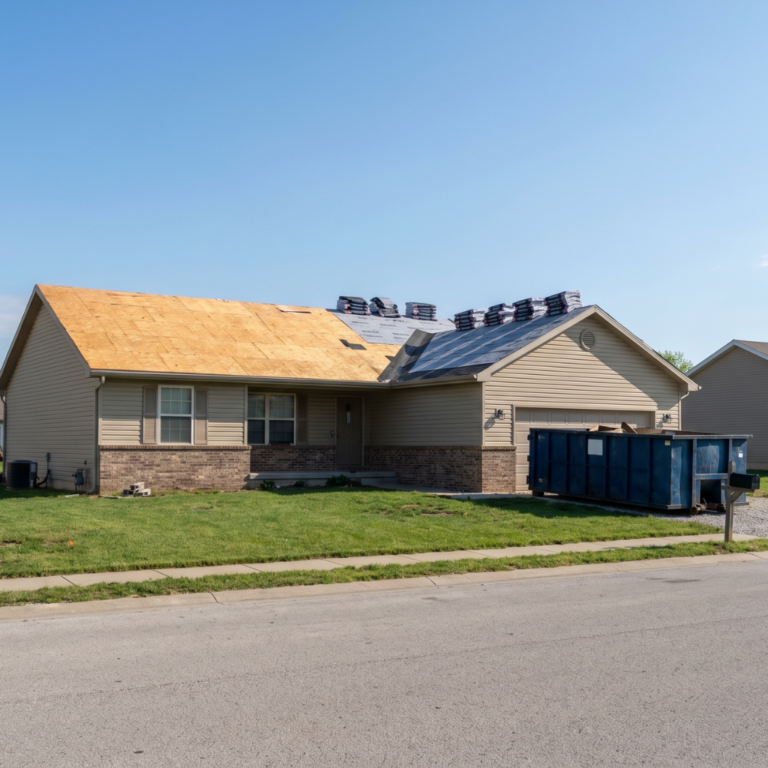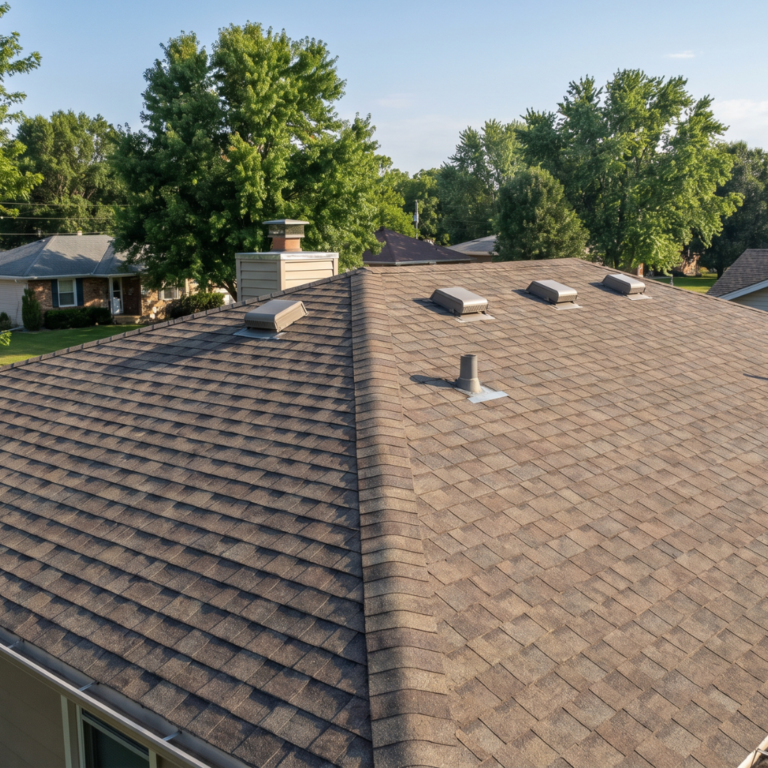

Hail storms hit Battlefield and Southwest Missouri regularly throughout the year, and not every storm leaves the same kind of damage. This post breaks down what each hail size does to asphalt shingles, metal roofs, and siding so you know exactly what you are dealing with after a storm. You will also learn when to monitor, when to document, and when to file an insurance claim.
TLDR: Pea and marble-sized hail causes minor granule loss, so monitor only. Dime and quarter-sized hail causes bruising and soft spots, so document for a potential claim. Ping pong and golf ball-sized hail cracks and fractures shingles, so file a claim. Tennis ball and larger destroys roofs completely and requires full replacement. Always photograph your roof, gutters, and AC unit right after any storm before rain washes away the evidence.
You woke up this morning to a yard full of hail. The car has a few dents, and you can see some white marks on your shingles from the ground. Now you are wondering: is that cosmetic or serious? Do you call your insurance company or just leave it alone?
Most homeowners have no way to answer that question on their own. The marks all look similar from the street, and the difference between a claim that gets approved and one that gets denied often comes down to knowing exactly what hail size does what kind of damage.
This guide gives you that breakdown. By the end, you will know what every common hail size does to asphalt shingles, metal roofs, and siding, what your insurance policy is likely to cover, and exactly what steps to take in the hours and days after a storm in Battlefield or anywhere across Southwest Missouri.
Why Hail Damage Is a Real Problem in Southwest Missouri
According to NOAA, Missouri has experienced 120 billion-dollar weather and climate disasters between 1980 and 2024. Of those, 82 were severe storm events involving hail and high winds. Hail is not a freak occurrence in this part of the state. It is a regular part of spring and early summer, and it shows up outside that window more often than most homeowners expect.
The NWS Springfield forecast area covers Battlefield and Greene County and averages about 10 tornadoes per year. Those same storm systems that produce tornadoes also produce hail. A storm cell that drops a tornado in one county can drop golf ball-sized hail across the next one. NOAA storm event records show that Southwest Missouri generates significant hail reports year after year, with the heaviest activity concentrated in April through June but real events scattered across every season.
Understanding what each hail size does to your roof protects you in two directions. It helps you avoid filing a weak claim that gets denied and costs you a rate increase for nothing. It also helps you catch serious damage before it turns into a leak that soaks through your attic and damages the interior of your home.
Pro tip: After every storm, check weather reports or the NWS Springfield storm summary page for the reported hail size in your zip code. That number tells you where to start looking and whether a professional inspection makes sense.
Hail Size Chart: From Pea to Tennis Ball
Here is what each hail size typically does to roofing materials, siding, and metal surfaces. Damage varies by material age, installation quality, and storm duration, but these ranges are consistent with what inspectors see across Southwest Missouri after major hail events.
| Hail Size | Common Name | Asphalt Shingles | Metal Roofing | Siding | Action |
|---|---|---|---|---|---|
| 1/4 inch | Pea | Minor granule loss | No damage | No damage | Monitor |
| 1/2 inch | Marble | Granule loss, minor bruising | Minor surface dings | No damage | Document |
| 3/4 inch | Dime | Significant granule loss, bruising | Small dents | Minor dents | Document for claim |
| 1 inch | Quarter | Soft spots, granule loss | Visible dents | Dents on vinyl | Claim likely |
| 1 1/4 inch | Half dollar | Cracked shingles | Deep dents | Cracked fiber cement | File a claim |
| 1 1/2 inch | Ping pong ball | Shingles cracked through | Hammered appearance | Broken siding pieces | File a claim |
| 1 3/4 inch | Golf ball | Shingles fractured badly | Severe deep dents | Major siding damage | Full replacement |
| 2 inches | Lime | Shingles destroyed | Metal torn | Siding destroyed | Full replacement |
| 2 1/2 inch | Tennis ball | Total shingle destruction | Metal punctured | Complete failure | Full replacement |
Use this chart alongside your post-storm photos. If the reported hail size in your area matches dime-sized or larger, call a local insured roofer for an inspection before you contact your insurance company.
Pro tip: Size alone does not determine damage. A 1-inch hail event on a 20-year-old roof causes more damage than the same event on a 5-year-old Class 4 roof. Always have a professional assess your specific materials and their current condition.
Pea to Marble (1/4 to 1/2 inch): Monitor Only
Pea-sized hail strips surface granules from asphalt shingles the way sandpaper removes finish from wood. The granules protect the asphalt layer from UV damage and weathering. Losing them accelerates aging, but a single pea-hail event does not immediately threaten your roof’s ability to keep water out.
Marble-sized hail adds minor shingle bruising on top of the granule loss. The bruising appears as a slight depression in the shingle surface under firm hand pressure. Metal roofs and most siding materials show almost no damage at either of these sizes.
Insurance rarely covers damage at this level, especially on older roofs. Document the granule loss in your gutters with photos anyway. This record becomes valuable if a larger storm hits the following season and an adjuster tries to argue that later damage was already there.
Pro tip: After pea or marble-sized hail, check your downspout cleanout for granule buildup. It looks like coarse, dark sand. Significant buildup means the shingles are losing their protective coating at an accelerated rate.
Dime to Quarter (3/4 to 1 inch): Document Everything
Dime-sized hail causes significant granule loss and visible shingle bruising. When you press firmly on a bruised shingle with your thumb, you can feel a soft spot where the mat layer below has been weakened. This is the threshold where damage starts to affect the shingle’s long-term performance. For roof repair questions at this damage level, a professional assessment in hand before making any decisions is always the better path.
Quarter-sized hail leaves visible dents in metal roofing and creates soft spots across asphalt shingles that experienced inspectors can confirm by walking the surface. Vinyl siding begins showing dents at this size. These dents matter because they can trap moisture and accelerate deterioration over time.
This is claim territory for many homeowners, depending on shingle age and the specific terms of your policy. Document everything with photos before calling anyone. Photograph the roof from all four sides, the gutters, the AC unit, any vents, and the siding. Then get a professional inspection report in hand before you call your insurer.
Pro tip: Check your AC condenser unit after dime to quarter-sized hail. Dents in the aluminum fins confirm that hail hit your property at a measurable size. Insurance adjusters recognize this evidence, and it strengthens your documentation considerably.
Ping Pong to Golf Ball (1 1/2 to 1 3/4 inch): File a Claim
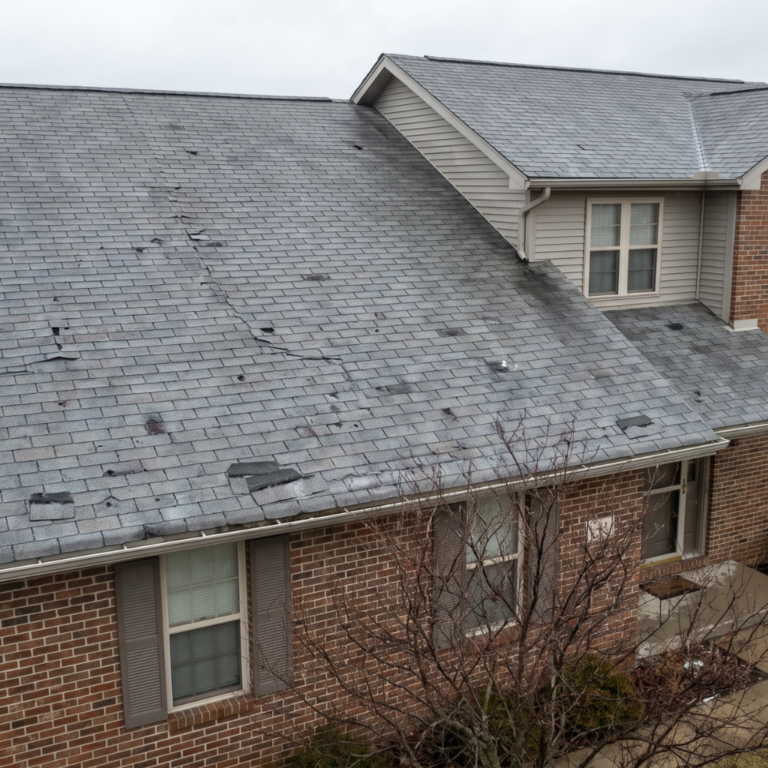
Ping pong ball hail cracks asphalt shingles through the fiberglass mat layer that gives the shingle its structural integrity. Once the mat is cracked, the shingle cannot seal properly and water intrusion becomes a matter of time. Metal roofs at this size take on a beaten, hammered appearance across the entire surface. This is the size ProNail Exteriors sees most often on full roof replacement claims after major Southwest Missouri storm events.
Golf ball hail fractures shingles badly across wide areas of the roof and leaves deep, irregular dents in metal surfaces. Fiber cement siding cracks and vinyl siding breaks in pieces. The damage at golf ball size is rarely limited to one slope or one section. It tends to affect the entire roof surface exposed to the storm.
This size range almost always justifies a full insurance claim and frequently results in full roof replacement approval from the adjuster. Contact a local insured roofer before you call your insurance company so you have a professional inspection report ready for the adjuster visit. The insurance claim assistance page walks through that entire process step by step.
Pro tip: At ping pong or golf ball size, document your vents, chimney cap, gutters, and downspouts in addition to the roof surface itself. All of those items are eligible for replacement under most storm damage policies, and adjusters sometimes overlook them without documentation.
Tennis Ball and Larger (2 1/2+ inches): Full Replacement
Tennis ball hail fractures asphalt shingles completely through and can tear or puncture standing seam metal roofing. This size is not common, but it happens in Southwest Missouri during strong supercell storm systems. When it does, the damage is total and visible from the street.
Siding at this size is not dented or cracked. It is destroyed. Panels split, pieces come off the wall, and the underlying sheathing is often exposed to direct rain before anyone even gets on the roof.
There is no monitoring and no repair scenario at this size. Full replacement is the only outcome. The damage is never subtle, and insurance adjusters universally recognize it.
Pro tip: Never climb on a roof hit by golf ball or larger hail. Fractured shingles are unstable and can give way underfoot. Photograph from the ground, document everything you can see safely, and leave the roof inspection to a professional.
Post-Storm Action Checklist for Battlefield Homeowners
After any hail event in Battlefield, Ozark, or Springfield, follow these steps in order.
- Check local weather reports or the NWS Springfield storm summary for the reported hail size in your zip code.
- Photograph the full roofline from ground level on all four sides of the home.
- Photograph the AC condenser unit, gutters, downspouts, and any vent caps or chimney covers.
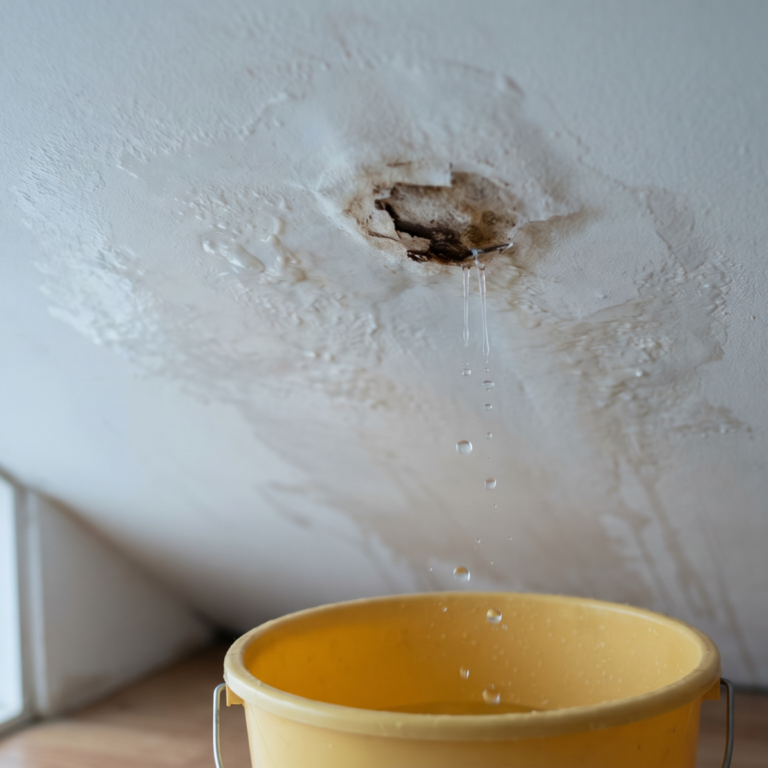
- Check inside the home for any new ceiling stains or water marks that were not there before the storm.
- Photograph granule buildup in gutters or at downspout cleanouts.
- If hail was reported at dime-sized (3/4 inch) or larger, call a local insured roofing company for a professional inspection.
- Do not contact your insurance company until you have your own photos and a written inspection report from a professional.
- Never sign anything on the same day as an inspection. Take at least two to three days to compare written estimates.
| Timeframe | Action |
|---|---|
| Within 24 hours | Photograph all damage from the ground |
| Day 2 to 4 | Get a professional hail inspection |
| Day 4 to 7 | Review inspection report and contact insurance |
| Day 7 to 14 | Compare written estimates before choosing a contractor |
| Before work starts | Confirm permit is pulled |
Pro tip: The best time to replace a roof is after a claimable storm. You pay your deductible and insurance covers the rest of the cost. Missing that window means paying the full replacement cost out of pocket when the roof eventually fails. Do not let the window close because you waited too long to file.
What Insurance Covers and What It Does Not
Most standard homeowners policies cover sudden storm damage, including hail, when that damage is functional. Functional damage means the roof’s ability to protect the home is compromised: cracked shingles, punctured metal, fractured mat layer, or any condition that leads to water intrusion.
Cosmetic damage alone is increasingly excluded under newer policy riders. A dented metal vent that still seals properly, or surface bruising on a shingle that has not cracked through, may not qualify for payment depending on your policy language. Checking your policy for a cosmetic damage exclusion before storm season starts is worth doing. The Missouri Department of Insurance consumer resource center explains homeowner rights after a denied claim and outlines the complaint process if you believe a claim was handled incorrectly.
Insurance also does not cover pre-existing damage, normal wear and aging, or roofs that were already in poor condition before the storm arrived. An annual inspection from a local insured roofer creates a maintenance record that protects you from that argument.
| Damage Type | Typically Covered | Typically Not Covered |
|---|---|---|
| Cracked or fractured shingles | Yes | |
| Granule loss only | Often not | |
| Functional metal dents | Yes | |
| Cosmetic dents only | Often not | |
| Pre-existing damage | No | |
| Normal wear and aging | No | |
| Storm damage on a maintained roof | Yes |
Pro tip: Call your insurance agent now and ask directly: “Does my current policy have a cosmetic damage exclusion for roofing?” Get the answer before a storm hits. Finding out after the fact limits your options considerably. You can also browse our frequently asked questions for more on how insurance and roofing decisions connect.
FAQs About Hail Damage in Battlefield
Q: What size hail is considered cosmetic damage?
Pea to marble-sized hail (1/4 to 1/2 inch) is typically cosmetic. It strips granules from the shingle surface but does not crack through the mat layer. Insurance rarely covers this level of damage on its own. Document it anyway because repeated minor storms weaken shingles faster and make the next larger event more destructive.
Q: When does hail damage become a legitimate insurance claim?
Dime-sized hail (3/4 inch) and larger that causes functional damage is typically claimable under most standard policies. Functional damage means the protective ability of the roof is compromised, including cracked mats, soft spots, or fractured shingles. Get a professional inspection report before calling your insurer to document the findings independently.
Q: Can I repair hail damage instead of replacing the whole roof?
Minor isolated damage on a newer roof can sometimes be repaired. Golf ball-sized and larger hail on any roof almost always requires full replacement because the damage is distributed across the entire surface exposed to the storm. Partial replacement also leaves mismatched shingles that age at different rates and can complicate future claims.
Q: How soon should I get a roof inspection after hail?
Within 7 to 10 days of the storm. Granule loss and shingle bruising are most visible before heavy rain washes surface evidence away. Acting quickly also means your claim is filed before adjuster backlogs build up after a large hail event affects a wide area.
Q: What else should I check besides the roof after hail?
Check the AC condenser unit, gutters, downspouts, vent caps, chimney cap, and siding panels. Dents on the AC condenser fins are among the strongest evidence that hail hit your property at a specific size. Document all of it before an adjuster visits.
Q: Does Battlefield require a permit for roof replacement?
Yes. Battlefield falls under Greene County jurisdiction. Roof replacements require a building permit before work begins. Your contractor should pull the permit and provide you the permit number before any crew sets foot on the roof.
Q: Can hail damage hide under the granules?
Yes. Hail can crack the fiberglass mat layer under the granule surface without removing all the granules above it. These hidden fractures allow water to seep in and cause leaks that may not show up for months. A professional inspection uses firm hand pressure and close visual checks to find damage that is not visible from the ground.
Q: How do I prove hail damage to my insurance company?
Ground-level photos taken right after the storm, photos of AC unit dents, granule buildup in gutters, and a written inspection report from a local insured roofer are your strongest tools. The written inspection report carries the most weight with adjusters. Your own photos support it but rarely stand alone as sufficient documentation.
Q: Does roof age affect how much insurance pays?
Yes. Some policies pay actual cash value, which means the payout is reduced based on the roof’s age and depreciation. Others pay replacement cost value, which covers the full cost of a new roof regardless of the old one’s age. Check your policy now to find out which type you have.
Q: Should I replace my roof if insurance denies my claim?
If hail was golf ball-sized or larger and a professional confirms functional damage, it is worth requesting a re-inspection or filing an appeal. If damage is minor cosmetic granule loss on a newer roof, monitor it and plan to file after the next significant storm. Never ignore confirmed functional damage. A weakened roof fails faster in the next storm and may not be coverable at all if it worsens before you act.
Key Takeaways
Hail size and action
- Pea and marble hail (1/4 to 1/2 inch): cosmetic granule loss, monitor only.
- Dime and quarter hail (3/4 to 1 inch): bruising and soft spots, document and consider a claim.
- Ping pong and golf ball hail (1 1/2 to 1 3/4 inch): cracked and fractured shingles, file a claim.
- Tennis ball and larger (2 1/2 inch and up): total destruction, full replacement required.
Documentation
- Photograph the roof, AC unit, gutters, vents, and siding immediately after any storm.
- Get a professional inspection within 7 to 10 days before evidence washes away.
- Never contact insurance before you have your own photos and a written inspection report.
Insurance
- Functional damage is covered. Cosmetic-only damage is often excluded under newer policies.
- Ask your agent about cosmetic damage exclusions before storm season, not after.
- Roof age affects payout type: actual cash value vs. replacement cost value.
Choosing a contractor
- Get 2 to 3 written estimates from local, insured companies before deciding.
- Never sign the same day as an inspection.
- Confirm permits are pulled before any work begins in Battlefield or Greene County.
Hail Hit Your Battlefield Roof? Get It Checked Today
ProNail Exteriors serves Battlefield, Springfield, Ozark, and all of Southwest Missouri. Their team documents hail damage thoroughly, provides written inspection reports, and gives straight answers about repair vs. replacement with no pressure. You can see the full range of exterior services ProNail Exteriors offers or go straight to booking.
A free hail inspection takes about 30 minutes and gives you either peace of mind or a clear path forward before storm season gets any deeper. Schedule your free hail inspection and know exactly where your roof stands.
ProNail Exteriors | Roofing, Siding, Windows, Gutters, Decks, and More | Serving Southwest Missouri Since 2025