After any hailstorm in Springfield, Ozark, Nixa, or Branson, the question is always the same: did that storm actually damage the roof, or was it already showing its age? The answer matters because insurance covers storm damage but does not cover normal aging. This guide shows you exactly what hail damage looks like compared to wear, how blistering gets confused with both, and what a professional inspection finds that photos alone cannot.
TLDR: Hail damage appears as random circular bruises with soft spots and sudden onset after a storm. Normal wear shows up as gradual, uniform changes like curling, widespread granule loss, and thermal cracking. Blistering is raised, not sunken, and is the most common misidentification. A professional press test is the only way to confirm mat fracture beneath the surface.
Why This Distinction Matters in Southwest Missouri
Springfield’s Doppler radar has detected hail on 137 occasions total, with 10 detections in the past 12 months. The NWS Springfield forecast area averages about 10 tornadoes per year, and severe weather events across Missouri have roughly tripled in recent decades (NOAA). With that volume of storm activity, adjusters process a high number of roof claims and are trained to separate real hail damage from aging.
The Missouri Department of Commerce and Insurance warns that policy coverage varies. Some policies pay Replacement Cost Value (full replacement). Others pay Actual Cash Value, which deducts depreciation. Check your declarations page before filing a roof insurance claim.
What Hail Damage Looks Like
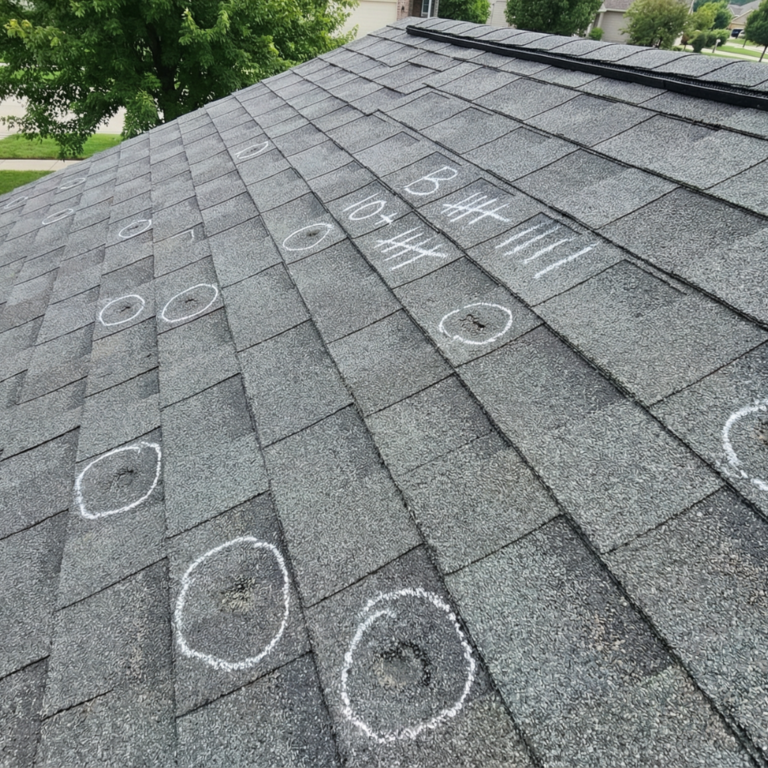
Hail damage on asphalt shingles has a specific pattern. Impacts land randomly and scattered across the entire roof, not following any line or section. Each impact appears as a dark circular bruise where granules have been knocked off, exposing shiny asphalt mat underneath. Fresh hits look shiny. Older hits dull over time.
The press test is what separates a professional inspection from a visual check. When a roofer presses on a suspect spot, a soft or spongy feel means the fiberglass mat under the surface is fractured. This is functional damage that shortens the roof’s water-shedding ability, even without an active leak.
Roofers check metal components first. Circular dents on gutters, pipe boots, vents, and AC units are the strongest evidence that hail fell. These dents corroborate the shingle damage and confirm the event for the adjuster.
| Hail Damage Sign | What It Looks Like | Why It Matters |
|---|---|---|
| Circular bruises on shingles | Dark spots with exposed asphalt, random pattern | Confirms impact, not aging |
| Soft or spongy shingle | Mat fracture below surface, detected by press test | Functional damage, covered by most policies |
| Dented gutters and metal vents | Circular dents in consistent pattern | Undeniable proof hail fell |
| Sudden granule pileup in gutters | Accumulation after specific storm | Correlates to a documented event |
Tip: Check gutters right after any storm. Sudden granule accumulation is evidence of impact. Gradual loss between storms is normal aging.
What Normal Wear and Tear Looks Like
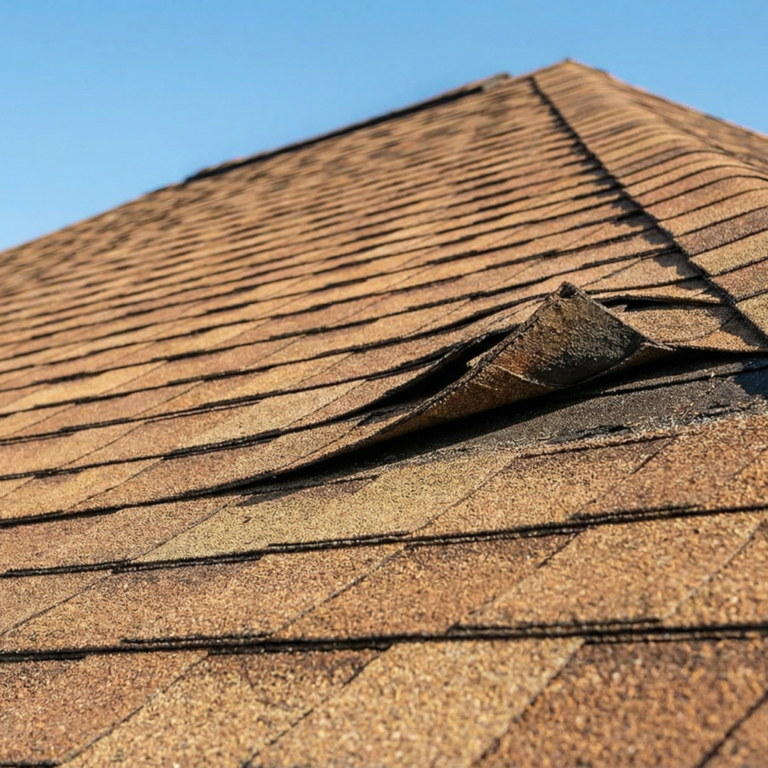
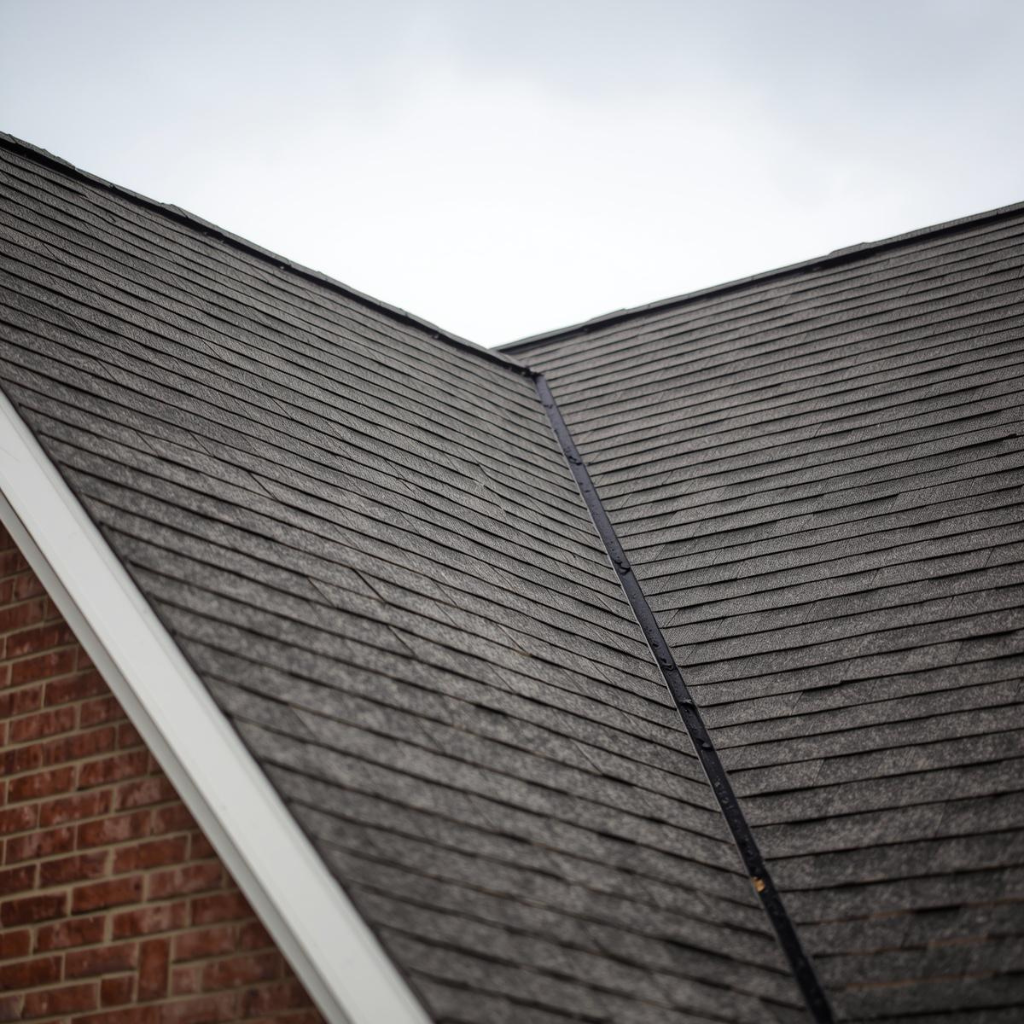
Normal wear develops slowly and spreads uniformly over months or years. Widespread granule loss from aging covers large areas evenly without circular patterns. Curling shingles, where edges turn up or centers bow downward, happen from years of UV exposure and thermal cycling. Thermal cracking shows up as long straight splits running parallel to shingle edges from asphalt hardening with age.
None of these conditions appear suddenly after a storm. None have circular impact patterns. And none come with dented metal components as corroboration. For a deeper look at aging signs, check out the guide on 7 signs you need a new roof.
Pro tip: If granules wash out of gutters consistently between storms, that is aging. Storm-related granule loss happens suddenly after a specific event.
Things That Look Like Hail Damage But Are Not
This is the section most roofing blogs skip. Two conditions get confused with hail damage constantly: blistering and thermal cracking.
Blistering vs. Hail Damage
This is the number-one misidentification error. The key difference is simple. Hail damage is sunken and depressed. Blistering is raised and dome-shaped.
Blisters form when trapped moisture or hydrocarbons from manufacturing create gas pockets under the shingle surface. When the shingle heats up, those pockets expand into raised bubbles. A popped blister leaves granule loss at the center, which can look like a hail impact at first glance. But the profile is completely different.
| Feature | Hail Damage | Blistering |
|---|---|---|
| Surface profile | Sunken, depressed | Raised, dome-shaped |
| Cause | External hailstone impact | Manufacturing defect or poor ventilation |
| Press test feel | Soft, spongy | Rigid sidewalls |
| Metal component dents? | Yes | No |
| Timing | Sudden, after storm | Usually early in shingle life |
Illustrative scenario: A homeowner in Battlefield was told by a contractor after a storm that the roof had significant hail damage. A second roofer identified raised bubble formations from a manufacturing defect, not the sunken indentations of hail. There were no dents on gutters or the AC unit. The blistering was a product issue, not a storm claim.
Thermal Cracking vs. Hail Cracking
Thermal cracks run in long parallel lines along shingle edges from years of temperature cycling. There is no bruising around the cracks, no circular granule loss, and no soft spots. Hail-caused cracks are sharp and sudden, with circular bruising around the crack edge and a soft center when pressed.
Illustrative scenario: A homeowner in Springfield noticed cracking on several shingles after a recent storm. Inspection found the cracks ran parallel to shingle edges without circular bruising. The pattern was consistent with thermal splitting from an 18-year-old roof, not hail impact. No metal damage was found.
How Professional Inspections Work
The Haag inspection protocol is the industry’s gold standard for hail damage assessment. Inspectors mark 100-square-foot test areas on each slope of the roof. Each test square gets a visual inspection and a tactile press test. About 8 to 10 confirmed hail impacts per 100 square feet is the threshold most carriers use, though some require higher impact density before approving full replacement. MU Extension confirms insurers commonly use about 10 verified hits per 100 square feet.
IBHS Hail Impact-Resistant Shingle Ratings cover about 95% of impact-resistant shingles sold annually. In their most recent assessment, 18 of 24 products tested earned a “Good” rating, with none yet reaching “Excellent.” Choosing a rated product reduces functional damage from hail in storm-heavy regions like Southwest Missouri.
Tip: Ask your roofer to mark test squares before the adjuster arrives. Using the same documentation standard strengthens the inspection report.
Functional vs. Cosmetic Damage in Missouri
Functional damage creates a water pathway, reduces water-shedding ability, or shortens expected roof life. Granule loss that exposes the mat is functional damage, even without an active leak. Most standard policies cover functional damage.
Cosmetic damage affects appearance only. Some Missouri policies carry cosmetic damage exclusions, especially on metal components. The Missouri DCI recommends checking your declarations page before filing.
Watch for adjusters calling hail bruising “wear and tear” when circular granule loss is present, or labeling mat fracture as “cosmetic” because no leak exists yet. Roof age alone does not justify denial when storm damage is documented.
Illustrative scenario: A homeowner in Ozark received an adjuster denial calling bruised shingles “cosmetic.” A roofer performed a press test, documented mat fracture with fiberglass exposure at multiple sites, and the insurer reclassified the damage as functional. The claim was approved for full replacement.
What to Do After a Storm
Photograph everything from the ground within 24 to 48 hours. Gutters, siding, AC unit, dented metal. Do not climb the roof.
Note the storm date and pull the NWS Springfield event log to confirm hail size. Insurers use this to verify the event.
Call your insurer within 48 hours. Delayed reporting is a top reason claims get denied.
Schedule a professional inspection. The tactile press test finds what photographs cannot. Learn why choosing the right contractor matters by reading about storm chasers vs local roofers.
Request the roofer be present at the adjuster visit. This is documented as the single best way to make sure no damage gets missed. For a visual reference on hail size levels, see the hail size chart for roof damage.
Frequently Asked Questions
Q: How do I know if my roof has hail damage or just normal aging? A: Hail damage is random and circular with soft spots when pressed. Normal aging is gradual and uniform with no circular patterns and no dented metal nearby.
Q: What is blistering and is it covered by insurance? A: Blistering is a raised dome from manufacturing defects or poor ventilation, not hail impact. It is not storm damage and is typically not covered under storm claims.
Q: Can insurance deny my claim by calling hail damage “wear and tear”? A: If circular granule loss, mat fracture, and metal dents are present, that is hail damage. A second inspection with documented press-test results can overturn the denial.
Q: What is the difference between functional and cosmetic roof damage? A: Functional damage reduces water-shedding ability or shortens roof life. Cosmetic damage affects appearance only. Mat exposure from granule loss is functional, even without a leak.
Q: How many hail hits qualify for a full roof replacement? A: About 8 to 10 confirmed impacts per 100 square feet is the threshold most carriers use, though some require higher density before approving full replacement.
Q: What should I look for in my gutters after a hailstorm? A: Sudden granule accumulation after a storm indicates shingle impact. Gradual granule buildup between storms is normal aging.
Q: Does Missouri law protect homeowners from unfair claim denials? A: The Missouri DCI provides consumer guidance and recommends understanding your policy type (RCV vs. ACV) before filing. Homeowners can request re-inspections and file complaints with the DCI.
Q: What does a professional hail damage inspection include? A: Test squares on each slope, visual check for bruises and granule loss, tactile press test for mat fracture, and metal component check for dents. Results are documented for insurers.
Key Takeaways
Know the Visual Differences
- Hail damage is random, circular, sunken, and sudden
- Normal wear is gradual, uniform, and widespread
- Blistering is raised (not sunken) with no metal dent corroboration
The Press Test Is Critical
- Soft or spongy feel confirms mat fracture below the surface
- Mat fracture is functional damage, covered by most policies
Protect Your Claim
- Photograph damage within 24 to 48 hours and report within 48 hours
- Have your roofer present at the adjuster visit
- If denied, request a re-inspection with documented press-test results
Not Sure What the Storm Did to Your Roof?
You now know the difference between hail damage and normal aging, how blistering gets confused with storm damage, and what documentation supports a successful claim.
ProNail Exteriors inspects for hail damage, aging, and everything in between across Springfield, Ozark, Nixa, Branson, Battlefield, Forsyth, Marshfield, and Republic.
Call 844-321-6245 for a free storm damage inspection and find out exactly what your roof needs.
ProNail Exteriors | Roofing, Siding, Windows, Gutters, Decks, and More | Serving Southwest Missouri Since 2025