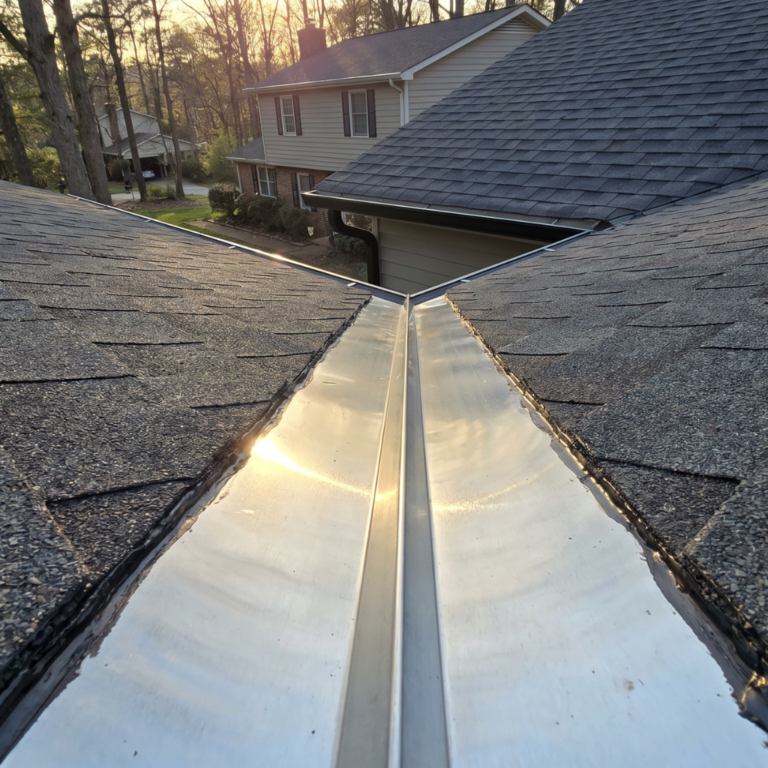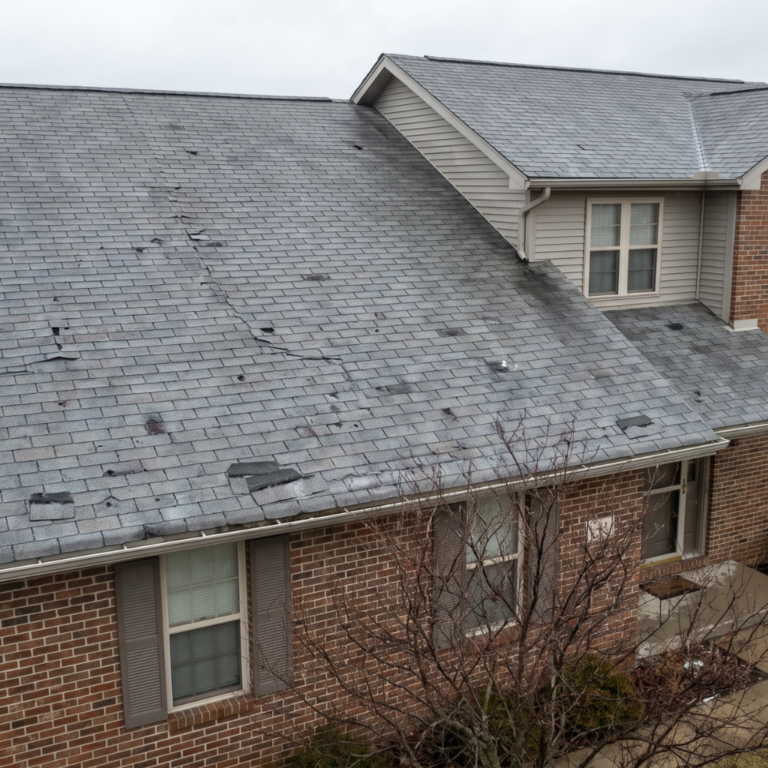
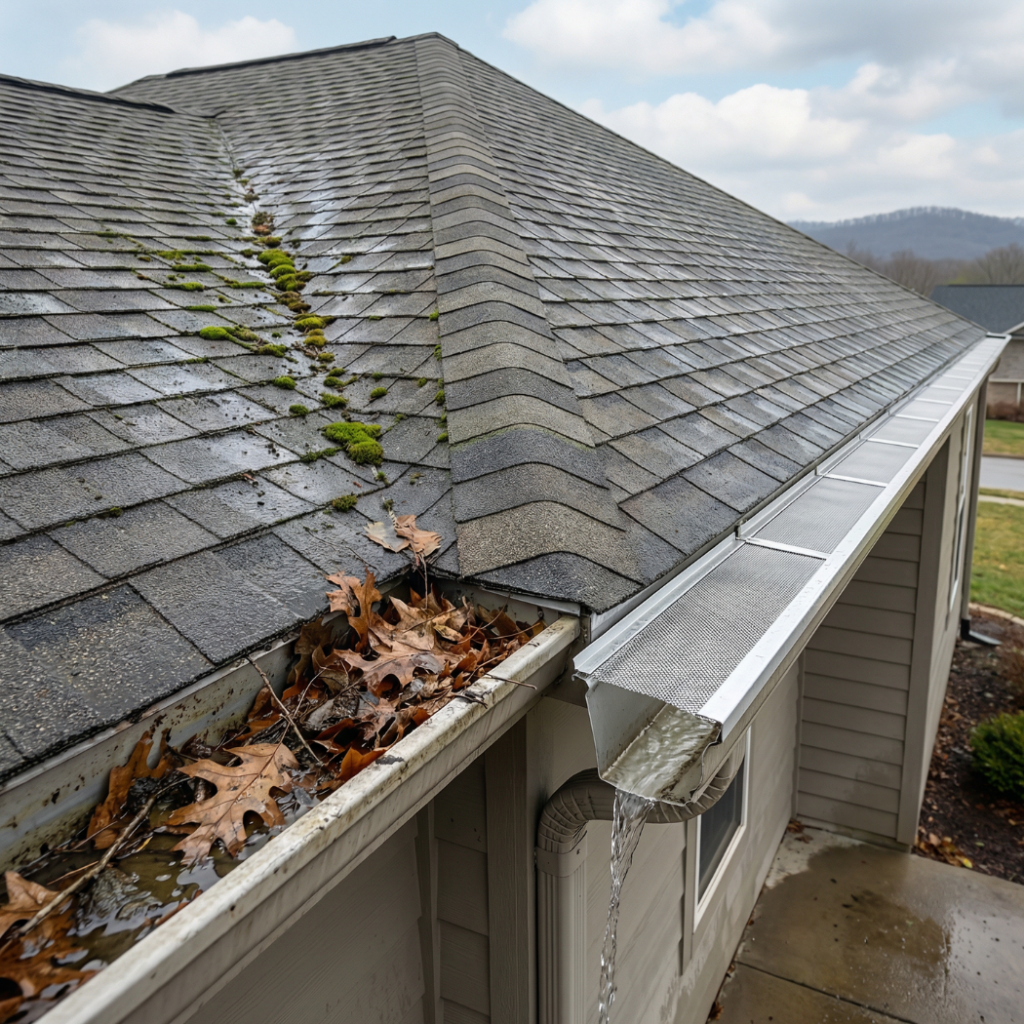
Aurora homeowners deal with oak leaves, sweet gum balls, walnut husks, and pine needles dropping into gutters every season. Gutter guards reduce how often gutters need cleaning, but not all types work the same way. This guide breaks down the 5 main types, which performs best in Southwest Missouri debris conditions, and what to avoid before spending money on the wrong product.
TLDR: Micro-mesh gutter guards are the best choice for Aurora homes with heavy tree coverage. They block 95 to 100% of debris including pine needles and last 25 to 40 years. Screen guards are a budget option that blocks large debris but lets small debris through. Foam and brush inserts make clogs worse over time. No guard is maintenance-free. Plan on at least one inspection per year no matter what type you install.
October arrives and you climb the ladder again. The gutters are packed solid with sweet gum balls and oak leaves. You cleaned them in April. You are tired of doing this twice a year, and you have seen the ads promising that one simple product will end gutter cleaning forever.
The problem is that those ads do not tell you which product is actually worth installing on a Lawrence County property surrounded by oak, pine, and sweet gum trees. Some guards work well. Some make the problem worse. And the price range between them is wide enough that choosing wrong costs real money.
This post gives you a straight comparison of all five types of gutter guards, how each one handles the specific debris that Aurora trees produce, and which one is actually worth the investment for Southwest Missouri conditions.
Why Gutters Clog Faster in Southwest Missouri
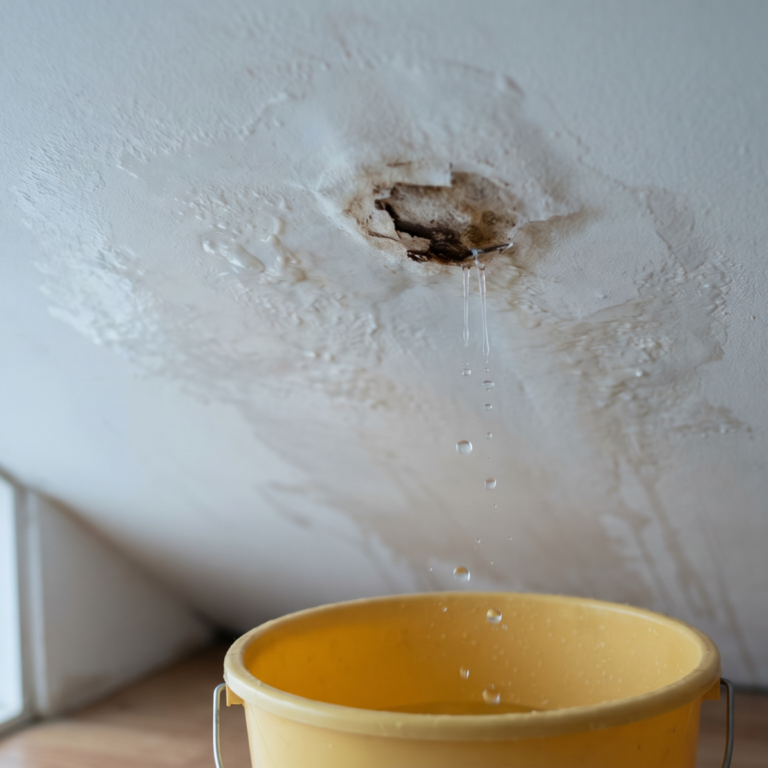
The Missouri Climate Center reports that Missouri averages 44 inches of rain per year, which is well above the national average of 38 inches. Southwest Missouri spring storms can push 2 to 4 inches of rain in a short window, sending large volumes of water through gutters in a short amount of time. Gutters that are partially blocked by debris overflow during those events and direct water against the fascia, the foundation, and the landscaping below.
Aurora and Lawrence County have heavy tree coverage. Oak, sweet gum, walnut, and pine are the dominant species in the area, and they drop debris across multiple seasons rather than just in fall. Oak drops leaves in autumn but also drops tassels and pollen in spring. Sweet gum drops spiky seed balls year-round when the wind blows. Walnut drops large husks that stain and break apart inside the gutter. Pine drops needles in late summer and fall.
Clogged gutters cause real damage over time. Overflowing water soaks the fascia boards behind the gutters and causes rot. Water that misses the gutter runs against the foundation and can work its way into basements and crawl spaces. It erodes landscaping and directs water toward areas that were never designed to handle it. According to NOAA, Missouri has seen 120 billion-dollar weather events between 1980 and 2024, with 82 involving severe storms. Each one dumps additional debris loads into gutters that are already working hard.
Pro tip: Sweet gum balls and walnut husks are the hardest debris types for most gutter guards to handle. If either tree is in your yard, the guard type you choose matters more than in most areas. Not every guard that works fine in other parts of the country handles these specific debris types well.
The 5 Types of Gutter Guards Explained
Here are the five main types of gutter guards, how each one works, what it actually blocks, and where it falls short in Southwest Missouri conditions.
Micro-Mesh Guards
Micro-mesh guards use ultra-fine stainless steel mesh stretched over a rigid aluminum or steel frame. The mesh openings are measured in microns, which is small enough to stop pine needles, shingle grit, seed pods, and even pollen from passing through. Water flows through the mesh while debris sits on top of the surface and eventually blows or washes off.
Micro-mesh guards block 95 to 100% of debris and last 25 to 40 years when made with surgical-grade stainless steel. They handle the full range of debris common to Southwest Missouri properties, including the fine debris that all other guard types allow through. They require professional installation and benefit from an occasional rinse with a garden hose when pollen or algae coats the mesh and slows water flow.
For Aurora homes with oak, pine, sweet gum, and walnut coverage, micro-mesh is the only guard type that addresses all four debris categories effectively. It is the highest upfront cost of the five types and the lowest long-term maintenance investment.
Pro tip: Ask specifically for surgical-grade stainless steel mesh, not aluminum mesh. Stainless holds up better to pollen, algae, and UV exposure over the long term without corroding or warping over time.
Screen Guards
Screen guards use perforated metal or plastic mesh with openings between 1/8 and 1/2 inch. They snap or screw onto the top of the gutter and are available at most home improvement stores for DIY installation.
Screen guards block large leaves and twigs well, which reduces the frequency of cleanings on properties with mostly large deciduous trees. But pine needles, sweet gum seed pods, shingle grit, and fine debris either pass right through the openings or accumulate on the surface and eventually get washed in by rain. Screen guards last 10 to 15 years and cost significantly less upfront than micro-mesh.
In Aurora’s mixed debris environment, screen guards reduce cleaning frequency but do not come close to eliminating it. They are a reasonable choice for properties with light debris loads and mostly large deciduous trees, but they are not adequate for any yard with pine trees or sweet gum coverage.
Reverse Curve (Surface Tension) Guards
Reverse curve guards use the surface tension of water to direct rain down over a curved lip and into the gutter while debris falls to the ground below. The water clings to the curved surface and follows it into the channel. Large leaves typically follow the flow and fall off the edge before entering the gutter.
Reverse curve guards perform reasonably well when the primary debris is large deciduous leaves and the rain volume is moderate. They struggle significantly with pine needles, small seeds, and fine debris that is light enough to follow the water path into the gutter instead of falling off. In Southwest Missouri’s mixed debris environment with oak, sweet gum, pine, and walnut, reverse curve guards offer partial protection at best and leave regular cleaning still necessary.
Foam Inserts
Foam inserts are porous foam tubes that sit inside the gutter channel. The concept is that water seeps through the foam while debris stays on top. In practice, debris roots into the porous foam surface and creates a composting mat inside the gutter. Fine seeds germinate in it. The foam retains moisture, which accelerates the composting process and creates a dense, difficult-to-remove mass.
Foam inserts make gutter clogs worse over time, not better. They break down in 2 to 5 years and are not recommended for any environment with heavy tree coverage or consistent moisture. Southwest Missouri qualifies on both counts. Avoid foam inserts entirely.
Brush Inserts
Brush inserts are cylindrical bristle brushes that sit in the gutter channel with the bristles facing up. Large leaves rest on the bristles while water flows around and through them below. Like foam, the bristles trap fine debris, pine needles, and seeds in the bristles themselves rather than keeping them out of the gutter.
Brush inserts trap debris in exactly the place you need to keep clear. They create stubborn clogs that are harder to clean than an unprotected gutter because the material weaves into the bristles. They break down in 2 to 5 years. Despite being inexpensive and widely available, they do not perform well in Southwest Missouri conditions. Avoid brush inserts for the same reasons as foam.
Head-to-Head Comparison
The table below compares all five types across the factors that matter most for Aurora homeowners.
| Type | Debris Blocked | Pine Needles | Lifespan | DIY Install | Best For |
|---|---|---|---|---|---|
| Micro-mesh | 95 to 100% | Yes | 25 to 40 years | No, pro only | Heavy tree coverage |
| Screen | 70 to 80% | Partial | 10 to 15 years | Yes | Light to moderate debris |
| Reverse curve | Moderate | Poor | 10 to 20 years | Partial | Large leaves only |
| Foam insert | Poor | No | 2 to 5 years | Yes | Not recommended |
| Brush insert | Poor | No | 2 to 5 years | Yes | Not recommended |
When you have both pine trees and deciduous trees on your property, which describes most Aurora and Lawrence County homes, micro-mesh is the only guard type that handles both debris categories reliably.
What Debris Does Aurora Face?
Understanding the specific debris your trees produce helps narrow the choice quickly.
Oak trees drop large leaves in fall but also drop tassels and pollen in spring. The tassels are thin and flexible enough to pass through most screen guard openings. Most screen guards perform reasonably on fall oak leaves but allow spring oak tassels through entirely.
Sweet gum trees drop spiky round balls that roll and wedge into gutters and downspout openings. They drop year-round whenever the wind picks up, not just in fall. Their size and shape make them moderately manageable with screen guards on large-opening sections, but they accumulate and block downspouts over time.
Walnut trees drop large husks that break apart inside the gutter and leave dark staining that is difficult to clean. The husk fragments are large enough that most guard types intercept them, but the staining they leave behind requires periodic rinsing regardless of guard type.
Pine trees drop needles in late summer and fall. Pine needles are thin and flexible enough to slip through any guard with openings larger than about 1/4 inch. Only micro-mesh with micron-sized openings stops them effectively.
| Debris Type | Screen Guard | Micro-Mesh | Reverse Curve |
|---|---|---|---|
| Oak leaves | Good | Excellent | Good |
| Oak tassels (spring) | Poor | Good | Poor |
| Sweet gum balls | Moderate | Good | Moderate |
| Walnut husks | Moderate | Good | Moderate |
| Pine needles | Poor | Excellent | Poor |
| Shingle grit | None | Excellent | None |
Pro tip: Shingle granules accumulate in gutters on any roof that is 10 or more years old. Micro-mesh is the only guard type that catches granule buildup before it clogs the downspout and creates a water backup situation.
Are Gutter Guards Maintenance-Free?
No. Any manufacturer claiming zero maintenance is overstating what their product delivers. Gutter guards reduce maintenance significantly, but they do not eliminate it.
Micro-mesh guards require the least maintenance of any type. One annual inspection is typically enough, along with occasional rinsing when pollen or algae buildup reduces water flow through the mesh. That is a much smaller task than climbing a ladder to scoop out packed debris twice a year.
Screen guards need more frequent attention because debris accumulates on the surface and smaller debris still works its way into the gutter through the larger openings. The cleaning frequency is reduced compared to unprotected gutters, but it is not eliminated.
Plan on at least one inspection per year regardless of guard type. Late fall after leaf drop and once in spring after pollen season are the two most useful times to check. For gutter installation and guard options across Southwest Missouri, ProNail Exteriors assesses the full gutter and roofline condition as part of every estimate.
Pro tip: A quick garden hose rinse on micro-mesh guards in spring removes most pollen and algae buildup before it reduces water flow. That takes ten minutes. Scooping packed sweet gum balls out of an unprotected gutter takes considerably longer and involves a ladder.
How to Choose the Right Guard for Your Aurora Home
Here is a simple decision framework based on your specific situation.
- Heavy tree coverage with oak, pine, and sweet gum: Micro-mesh only. Screen guards will not handle the full debris profile of a Lawrence County property.
- Light tree coverage with mostly large deciduous trees: Screen guards are a reasonable budget option that reduces cleaning frequency.
- Existing seamless gutters in good condition: Any guard type installs over them. Micro-mesh performs best on clean, solid gutters.
- Damaged, sagging, or separating gutters: Replace the gutters before adding any guards. Guards do not fix failing gutters. A guard on a failing gutter is money spent on the wrong problem.
- Budget is the top priority: Screen guards have the lowest upfront cost. Factor in more frequent cleaning when comparing total value over time.
- Long-term low maintenance is the priority: Micro-mesh with professional installation is the right choice. It costs more upfront and saves more over time.
For full exterior services including gutters, roofing, and siding across Aurora and Southwest Missouri, ProNail Exteriors handles the full scope of roofline work.
FAQs About Gutter Guards in Aurora and Southwest Missouri
For more answers to exterior questions, visit our frequently asked questions page.
Q: Are gutter guards worth it in Aurora?
For most homes with heavy tree coverage, yes. Micro-mesh guards significantly reduce cleaning frequency and protect gutters from debris-caused clogs and overflow damage. The upfront cost is offset by less maintenance and fewer gutter-related repairs over a 25 to 40-year lifespan.
Q: What is the best gutter guard for pine needles?
Micro-mesh. Pine needles are thin enough to slip through screen guards and straight through brush inserts. Micro-mesh openings are measured in microns and are too small for even fine needles to pass through. It is the only guard type that handles pine needles reliably in Southwest Missouri conditions.
Q: Do gutter guards work in heavy rain?
Quality micro-mesh guards are designed to handle high-volume rainfall. Lower-quality guards overflow during heavy events because the mesh gets saturated or partially clogged. The NWS Springfield forecast area documents regular spring storms that push 2 to 4 inches of rain in short windows across Southwest Missouri. Choose a guard with documented high-volume flow ratings for this region.
Q: Can I install gutter guards myself?
Screen guards can be DIY-installed. Micro-mesh guards install best with professional help. The installation method affects how well the guard seals to the gutter and whether it lifts the bottom shingle course incorrectly. Improper installation voids warranties and reduces performance significantly.
Q: How long do gutter guards last?
Micro-mesh guards with stainless steel mesh last 25 to 40 years. Screen guards last 10 to 15 years. Foam and brush inserts break down in 2 to 5 years and are not recommended for Southwest Missouri conditions regardless of price point.
Q: Do gutter guards prevent ice dams?
No. Ice dams are caused by poor attic ventilation that allows roof surface heat to melt snow unevenly. Gutter guards keep gutters clear of debris but have no effect on attic thermal conditions. Address ice dam issues through attic ventilation and insulation improvements, not gutter guards.
Q: Can gutter guards damage my roof?
Improperly installed guards that slide under the bottom shingle course can lift shingles and allow water entry. That is why installation method matters as much as product quality. The guard should attach only to the gutter itself and never raise or alter the shingle course above it.
Q: Do I need gutter guards on all gutters or just some?
For consistent protection, guards should cover all gutters. Installing guards on only the high-debris areas while leaving other sections unprotected still results in clogs and overflows in the unguarded areas. Partial coverage reduces the effectiveness of the overall system.
Q: Will gutter guards stop pests from nesting in gutters?
Micro-mesh guards with a tight seal to the gutter leave no gaps large enough for birds, wasps, or rodents to enter the gutter channel. Screen guards and reverse curve guards leave larger openings that do not fully prevent pest entry. If pest access through gutters is a concern, micro-mesh is the better choice.
Q: Does Aurora require a permit for gutter guard installation?
Gutter guard installation on existing gutters typically does not require a permit in most Missouri cities. If the project involves full gutter replacement alongside the guards, check with Aurora city or the Lawrence County building department before work begins. ICC building code standards that most Missouri municipalities follow guide when structural roofline work requires a permit.
Key Takeaways
Best choice for Aurora
- Micro-mesh guards block 95 to 100% of debris including pine needles and last 25 to 40 years. For heavy tree coverage, they are the only type that handles the full Aurora debris profile.
- Screen guards block large debris but miss fine debris. A reasonable budget option for light debris environments.
- Foam and brush inserts trap debris and make clogs worse over time. Avoid both in Southwest Missouri.
Aurora-specific debris
- Sweet gum balls and pine needles are the hardest debris types for most guards. Only micro-mesh handles both reliably.
- Oak tassels in spring slip through screen guards. Micro-mesh catches them.
- Shingle granules accumulate in older gutters. Only micro-mesh stops them at the downspout.
What to know before buying
- No guard is maintenance-free. Plan on at least one inspection per year.
- Replace failing gutters before adding any guard. Guards do not fix broken gutters.
- Professional installation matters for micro-mesh. Improper installation reduces performance and voids warranties.
Ready to Stop Cleaning Gutters in Aurora or Springfield?
ProNail Exteriors installs seamless gutters and gutter guards throughout Aurora, Springfield, Willard, and all of Southwest Missouri. Their team assesses your tree coverage, gutter condition, and roof edge before recommending the right guard type for your specific debris load. If the gutters need replacement first, they handle the full seamless gutter replacement and guard installation as a single project.
Schedule your free gutter and guard estimate and find out exactly what makes sense for your property before spending anything.
ProNail Exteriors | Roofing, Siding, Windows, Gutters, Decks, and More | Serving Southwest Missouri Since 2025