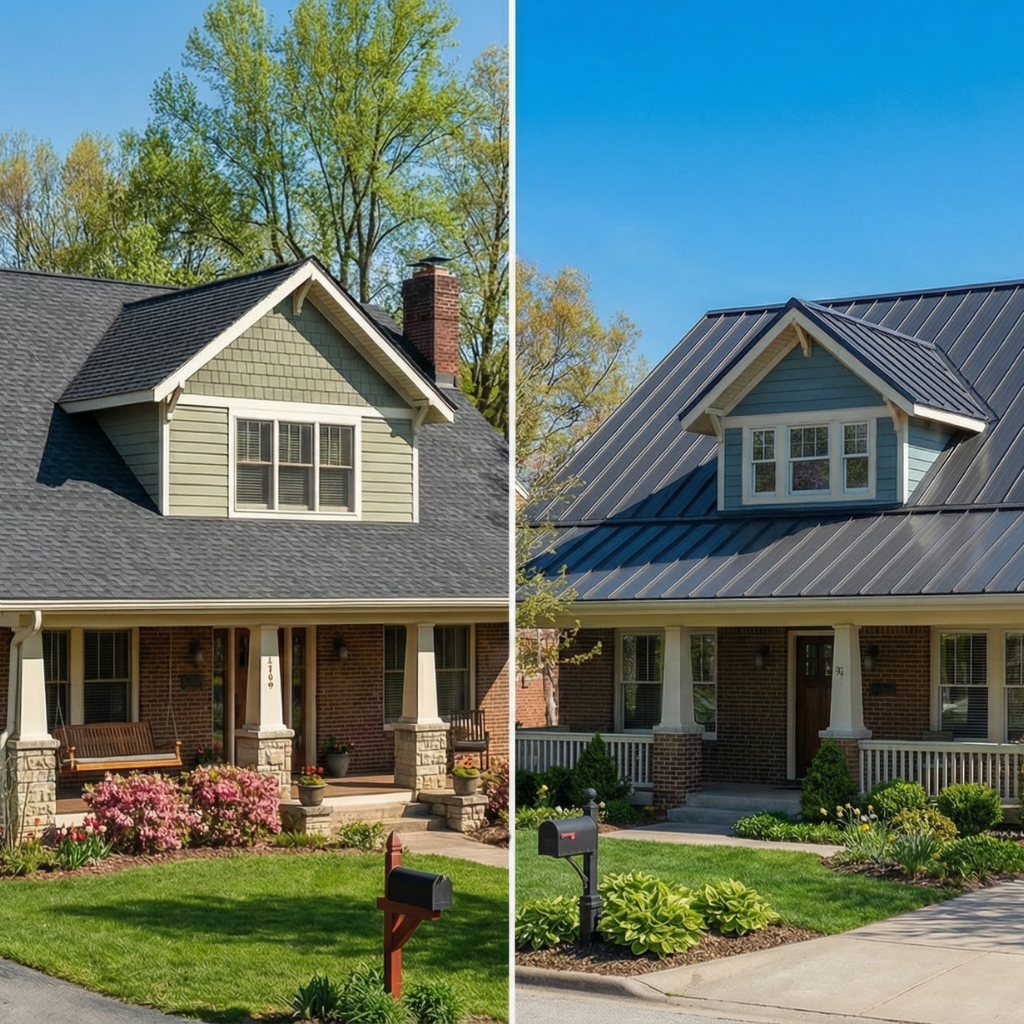
A contractor just asked you “shingles or metal?” and you do not have a confident answer. That is completely normal. Most homeowners in Springfield replace a roof once or twice in their lives. The wrong choice does not just cost you this season. It costs you another full replacement in 15 years.
This guide walks you through every roofing materials ProNail Exteriors installs, how each one performs in Southwest Missouri’s actual weather, and how your material choice affects your insurance. By the end, you will know exactly which material fits your home, your budget, and your timeline.
TLDR: ProNail Exteriors installs two categories: asphalt shingles (3-tab, architectural, and Class 4 impact-resistant) and standing seam metal. In Southwest Missouri’s hail corridor, Class 4 shingles offer the best combination of storm protection and value in asphalt. Standing seam metal costs more upfront but lasts 40 to 70 years and reflects up to 70 percent of solar heat. Your roof slope, insurance situation, and how long you plan to stay drive the final call.
The Two Categories ProNail Exteriors Installs
ProNail installs asphalt shingles and standing seam metal roofing. Not clay tile, not slate, not wood shakes, and not synthetic composites. This guide covers only the materials ProNail Exteriors actually puts on roofs across Springfield, Ozark, Nixa, and the broader Southwest Missouri region.
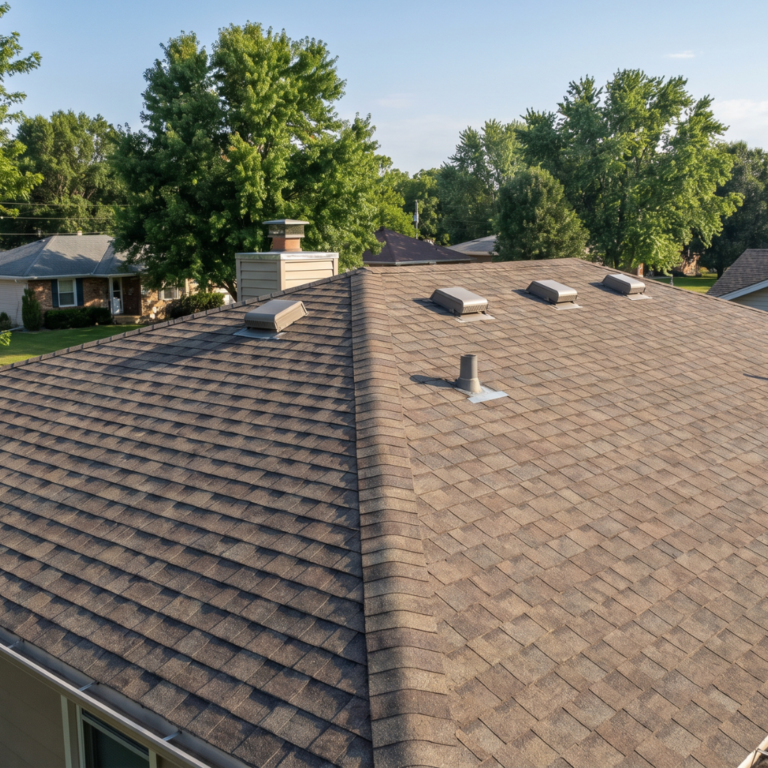
Asphalt shingles cover more than 80 percent of American homes and remain the dominant roofing material in the Springfield market. Within asphalt, there are three types: 3-tab (largely obsolete in this storm region), architectural (the standard workhorse), and Class 4 impact-resistant (the upgrade ProNail recommends for hail-prone areas).
Standing seam metal is the long-term investment option, especially for homeowners planning to stay 15 or more years. Both materials perform well in Southwest Missouri. The right choice depends on your budget, your timeline, your storm exposure, and your insurance situation.
| Material | Lifespan | Weight Per Square | Fire Rating | Min Slope (IRC 2018) | Best For |
|---|---|---|---|---|---|
| 3-Tab Asphalt | 15 to 20 years | 200 to 250 lbs | Class A | 2:12 | Budget replacement; selling within 5 years |
| Architectural Asphalt | 25 to 30 years | 200 to 250 lbs | Class A | 2:12 | Standard replacement; most Springfield homes |
| Class 4 Impact-Resistant | 30 to 40 years | 200 to 250 lbs | Class A | 2:12 | Hail exposure; insurance discount priority |
| Standing Seam Metal | 40 to 70 years | 100 to 150 lbs | Class A | Varies by system | Long-term homeowners; energy efficiency |
Pro tip: 3-tab shingles carry a basic wind rating of 60 to 70 MPH and are more prone to lift during high-wind events. Missouri averages 56 tornadoes per year statewide, and Southwest Missouri sits at the top of that list. In this region, 3-tab is rarely the right call anymore.
Asphalt Shingles: Three Versions, One Big Difference
3-Tab Shingles
3-tab shingles are single-layer with a flat, uniform look. They weigh about 200 to 250 lbs per square and typically last 15 to 20 years. Their basic wind rating makes them vulnerable to lift during storms that push 80 MPH gusts, which happens regularly during Southwest Missouri’s spring season. Increasingly rare in new installations across Springfield, Nixa, and Branson. Still relevant for outbuildings where budget is the overriding priority.
Architectural Shingles
Architectural shingles are two-layer shingles laminated together, creating a textured look that mimics wood shake. They carry stronger adhesion strips, better wind ratings of 90 to 110 MPH, and a lifespan of 25 to 30 years in Missouri conditions. This is the standard choice for most roof replacements in the Springfield area. Their multi-layer construction handles temperature swings better than 3-tab, which matters in a climate where July roof surfaces can reach 130 to 160 degrees without proper ventilation.
Class 4 Impact-Resistant Shingles
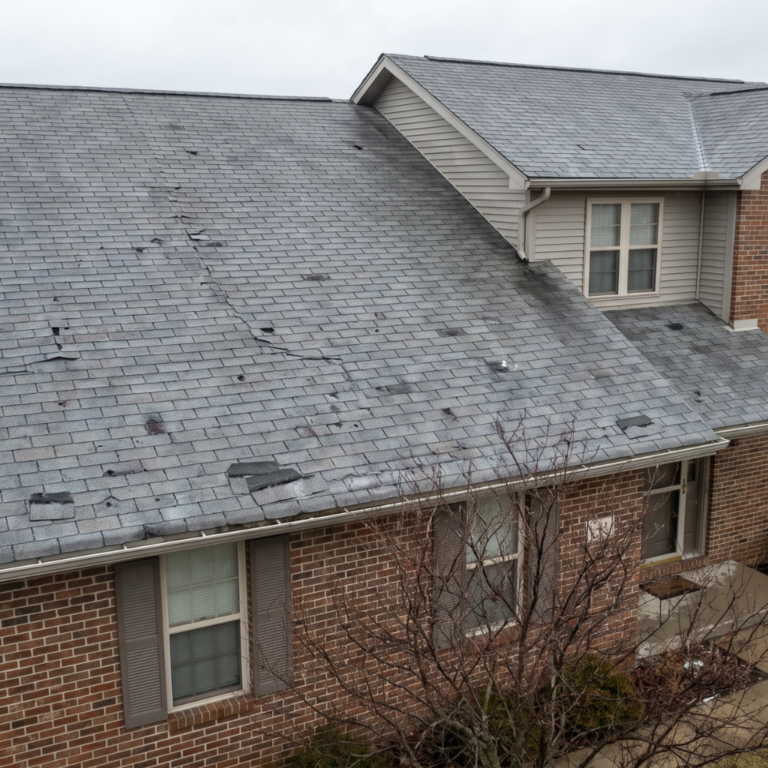
Class 4 is the highest rating in the UL 2218 impact resistance test. The shingle must survive a 2-inch steel ball dropped from 20 feet without cracking. Standard architectural shingles pass at Class 3 with a 1.75-inch ball from 17 feet. That difference matters because Southwest Missouri sees hail in the 1.5 to 2-inch range multiple times per decade. A Class 4 shingle absorbs that impact without cracking or losing protective granules.
The key ingredient is SBS (Styrene-Butadiene-Styrene) polymer-modified asphalt. Standard shingles use oxidized asphalt that becomes brittle in cold and soft in heat. SBS modification keeps the asphalt flexible across temperature extremes, which is critical during Springfield’s 57 freeze-thaw cycles per year and summer attic temperatures that exceed 150 degrees. Owens Corning Duration STORM shingles, which ProNail installs, use this technology to achieve UL 2218 Class 4 certification with a 130 MPH wind warranty.
Pro tip: The 130 MPH warranty on Duration STORM shingles requires the hip and ridge cap shingles to be hand-sealed at installation. Confirm with your contractor that this step is completed. It is part of the warranty terms, not optional.
Class 4 shingles typically qualify for a premium reduction of 10 to 27 percent depending on the insurer and ZIP code. Always verify with your specific carrier before installation. Not every Missouri insurer offers this discount, and documentation of the UL 2218 Class 4 certification is required. For a detailed comparison, read our guide on Class 3 vs. Class 4 shingles.
| Feature | 3-Tab | Architectural | Class 4 Impact-Resistant |
|---|---|---|---|
| Lifespan (Missouri) | 15 to 20 years | 25 to 30 years | 30 to 40 years |
| UL 2218 Rating | Class 1 to 2 | Class 3 | Class 4 |
| Wind Rating | 60 to 70 MPH | 90 to 110 MPH | 130 MPH (Owens Corning) |
| Freeze-thaw flexibility | Low | Moderate | High (SBS polymer) |
| Insurance discount potential | None | None | 10 to 27% (insurer-dependent) |
Pro tip: Ask any contractor to confirm UL 2218 Class 4 certification in writing. Some shingles marketed as “impact resistant” carry only a Class 2 or Class 3 rating. The UL 2218 Class 4 designation is the only rating Missouri insurers recognize for premium discounts.
Illustrative scenario: A homeowner in Ozark had standard architectural shingles on a 14-year-old roof when a spring hailstorm dropped 1.75-inch hail. Three slopes needed full replacement. Their neighbor had upgraded to Class 4 impact-resistant shingles at their last replacement and had only granule marks with no structural damage and no claim. The Class 4 homeowner also carried a lower annual premium, which had already partially offset the upgrade cost.
Standing Seam Metal: The Long-Game Option
How Standing Seam Works
Standing seam metal panels run vertically from ridge to eave, with raised seams that clip together above the flat panel surface. Fasteners are hidden beneath the seam clips rather than driven through the panel face. This concealed fastener design is the key structural difference from exposed-fastener metal (screw-down panels). Hidden fasteners eliminate the main failure point of metal roofing: exposed screws that rust, back out, or allow water in over time. The clip system also lets panels expand and contract with temperature changes without buckling, which is a real advantage across Missouri’s wide temperature range. For a full comparison, see our guide on standing seam metal vs. shingles.
Storm Performance
Standing seam metal achieves Class A fire ratings and Class 4 impact ratings, the same UL 2218 level as the best asphalt shingles. Unlike asphalt, metal panels do not crack, lose granules, or develop soft spots from hail impact. In Southwest Missouri’s storm corridor, where hail can reach 1 to 2.75 inches in severe events, standing seam panels may show cosmetic denting but will not develop leaks or lose structural integrity. Metal also sheds snow faster than textured asphalt, reducing ice dam risk during the winter freeze-thaw season.
Important: Some Missouri insurers apply a cosmetic exclusion to metal roofing. This means hail dents that do not compromise waterproofing integrity may not be covered. Verify with your insurer before installation and review the cosmetic exclusion language in your policy carefully.
Energy Efficiency
Metal roofs reflect 40 to 70 percent of solar heat, compared to just 5 to 25 percent for dark asphalt shingles. Research by national laboratories including Oak Ridge and Lawrence Berkeley found that reflective metal roofs can reduce cooling energy needs by 18 to 26 percent compared to dark asphalt, depending on climate and building configuration. In Springfield, where July highs average 89.6 degrees and roof surfaces on dark asphalt shingles can reach 140 to 160 degrees on summer afternoons, this heat reflection directly reduces cooling load during the costliest months.
Here is the counterintuitive fact most homeowners do not expect: standing seam metal weighs only 100 to 150 lbs per square, significantly less than asphalt at 200 to 250 lbs per square. Metal places less dead load on the roof structure, which is especially relevant when replacing an aging roof on an older Springfield home.
| Feature | Architectural Asphalt | Standing Seam Metal |
|---|---|---|
| Lifespan | 25 to 30 years | 40 to 70 years |
| Weight per square | 200 to 250 lbs | 100 to 150 lbs |
| Wind rating | 90 to 110 MPH | UL 580 Class 90 (pressure-tested; not a direct MPH rating) |
| Hail impact | UL 2218 Class 3 | UL 2218 Class 4 |
| Solar heat reflection | 5 to 25% | 40 to 70% |
| Cooling cost reduction | Minimal | 18 to 26% (national lab research) |
Illustrative scenario: A homeowner in Nixa had filed two hail damage claims in eight years on asphalt shingles. Both times the claims process disrupted their family for weeks and their premiums increased at renewal. After the second replacement, they upgraded to standing seam metal. Four years later, a May hailstorm dropped 2.5-inch hail across Christian County. Their neighbor was filing another claim. The metal homeowner had cosmetic contact marks on one panel section but nothing that affected performance or triggered a claim.
The Layer You Never See: Underlayment and Decking
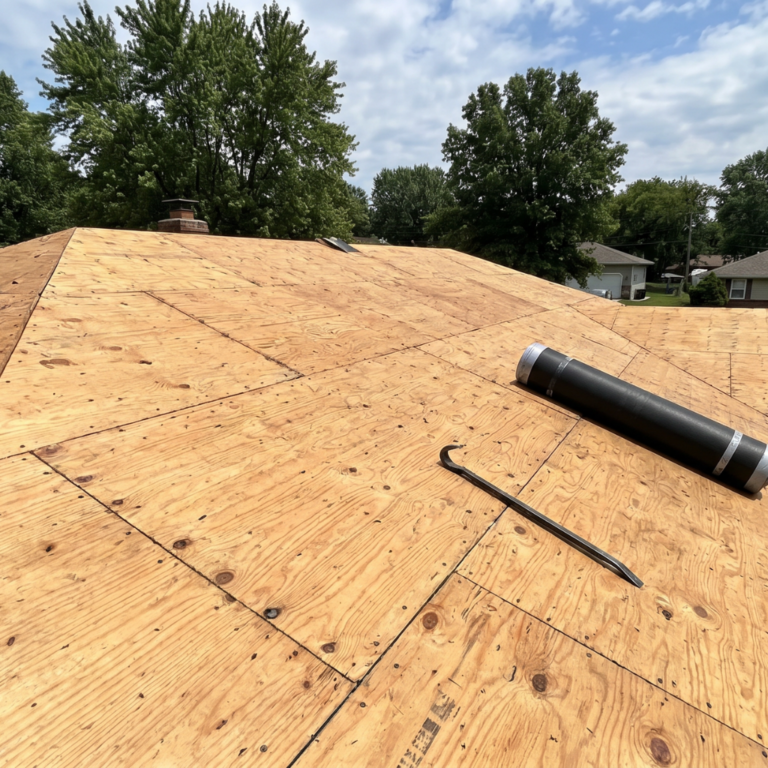
Underlayment is the moisture-resistant layer installed directly on the roof deck, beneath the primary roofing material. It is the secondary line of defense if the primary material is ever breached by wind-driven rain, ice, or impact.
Three main types exist: felt (15 or 30 lb), synthetic, and self-adhering (ice and water shield). Springfield does not require ice and water shield for full-coverage application because the city’s climate history does not trigger the IRC’s ice barrier threshold. However, synthetic underlayment remains the best practice for a region that receives 44.71 inches of rain per year and deals with an active storm season from April through June.
| Type | Material | Best Use | Durability | SW Missouri Notes |
|---|---|---|---|---|
| 15 lb felt | Organic felt and asphalt | Budget; short-term protection | Low | Minimum acceptable; degrades in heat |
| 30 lb felt | Heavier organic felt | Standard residential | Moderate | Better moisture resistance than 15 lb |
| Synthetic | Woven polyolefin | Standard to premium | High | Preferred for SW Missouri; resists UV |
| Self-adhering (ice and water shield) | Polymer-modified bitumen | Valleys, eaves, penetrations | Very high | Not code-required for full coverage in Springfield; used at vulnerable points |
The structural layer beneath the underlayment is the roof deck, typically plywood or OSB sheathing. During any roof repair or replacement, soft or water-damaged decking must be replaced before new material goes on.
Pro tip: Ask every contractor bidding your job: “What underlayment are you installing, and why?” The answer reveals how the contractor values the hidden layer. Felt is acceptable. Synthetic is better. A contractor who cannot answer without looking it up is a yellow flag.
Roof Slope, Material Compatibility, and Springfield Code
Not every material works on every roof. Springfield’s adopted building code sets minimum slope requirements by material type, and your roof’s pitch determines which materials are even eligible before aesthetics enter the conversation.
The most important number: 2:12 is the minimum slope for asphalt shingles under the IRC 2018. This is the most common residential roofline in Springfield. For asphalt on slopes between 2:12 and 4:12, two layers of underlayment are required. Some standing seam systems allow slopes as low as 1/4:12, which makes metal the only option for very low-pitch roofs.
| Material | Minimum Slope | Notes for SW Missouri |
|---|---|---|
| Asphalt shingles | 2:12 | Most common residential slope; double underlayment below 4:12 |
| Standing seam metal panels | 1/4:12 (low-slope systems) | Verify with manufacturer; hidden fastener systems preferred |
| Metal shingles | 3:12 | Steeper pitch required |
| Wood shingles | 3:12 | Not installed by ProNail |
| Slate | 4:12 | Not installed by ProNail |
Important: In Springfield, most standard asphalt re-roofing replacements do not require a building permit unless structural elements are altered or more than 32 square feet of deck sheathing is replaced. Switching from asphalt to metal may trigger a permit requirement. Requirements vary across Ozark, Nixa, Branson, Republic, and Rolla, so always confirm with your local building department.
What Southwest Missouri’s Weather Does to Roofing Materials
Springfield sits in one of the toughest weather corridors for residential roofs in the country. Here is what the data says and what it means for your material choice.
Springfield receives 44.71 inches of rain per year, well above the national average of 38 inches. May is the wettest month at 5.56 inches. July highs average 89.6 degrees. Missouri experienced 120 billion-dollar weather and climate disasters from 1980 to 2024, with Southwest Missouri taking the heaviest share of storm activity. The NWS Springfield forecast area averages about 10 tornadoes per year.
Then there are the freeze-thaw cycles. Springfield averages about 57 freeze-thaw cycles per year, according to NOAA engineering climate data. Each cycle forces water to expand about 9 percent inside cracks and shingle seams. SBS polymer-modified shingles handle this flexing. Standard oxidized asphalt does not.
| Season | Primary Threat | Effect on Asphalt | Effect on Standing Seam Metal |
|---|---|---|---|
| Spring (April to June) | Hail, tornadoes, wind | Impact cracking, granule loss, wind lift | Possible cosmetic denting; no leaks |
| Summer (July to September) | Heat, UV, humidity | Shingle softening, granule shedding | Heat reflected 40 to 70%; less surface degradation |
| Fall (October to November) | Wind events, early ice | Lifted shingles, flashing separations | Panels shed debris; concealed fasteners unaffected |
| Winter (December to March) | Freeze-thaw, ice, snow | Micro-crack formation, possible ice dams | Snow sheds faster; ice dam risk lower |
Illustrative scenario: A homeowner in Strafford had standard architectural shingles installed in 2007. By year 16, they were failing prematurely, cracking and losing granules faster than expected. The contractor who inspected found no installation defects and no unusual storm damage. The cause: an attic with inadequate ventilation where summer temperatures routinely exceeded 155 degrees. The heat combined with freeze-thaw cycling had baked and cracked the oxidized asphalt faster than expected. Proper ventilation paired with Class 4 SBS-modified shingles would have extended the roof’s life significantly. Read more about poor ventilation warning signs.
Pro tip: Ventilation is not a material decision, but it directly affects how long any material lasts. A new roof over a poorly ventilated attic will underperform regardless of shingle quality. Ask ProNail’s inspection team to assess ventilation at the same time as the roof.
How Your Material Choice Affects Your Insurance
Your roofing material has a direct impact on what you pay for insurance and what your policy covers after a storm.
Class 4 asphalt shingles typically qualify for a 10 to 27 percent premium discount with participating Missouri insurers. Standing seam metal may qualify for a smaller discount with some carriers, but may also carry a cosmetic damage exclusion that limits coverage for hail denting that does not affect waterproofing. Standard 3-tab and architectural shingles carry no discount.
The ACV vs. RCV policy distinction also intersects with material choice. Under an ACV policy, an older asphalt roof depreciates to near-zero value quickly. Standing seam metal has a much longer lifespan, so depreciation under ACV takes far longer to eat into your payout. Use the Missouri DCI free coverage comparison tool to see where your insurer stands. For a full breakdown, read our roof insurance claims guide.
| Material | Typical Premium Discount | ACV Depreciation Risk | Cosmetic Exclusion Risk | Claim Frequency Risk |
|---|---|---|---|---|
| 3-Tab Asphalt | None | High | None | High |
| Architectural (Class 3) | None | Moderate | None | Moderate |
| Class 4 Impact-Resistant | 10 to 27% | Moderate | None | Low |
| Standing Seam Metal | Varies; sometimes 5 to 15% | Low (long lifespan) | Possible (hail dents) | Very low |
Important: Always verify Class 4 discount availability with your specific Missouri insurer before purchasing materials. The discount is insurer-specific and ZIP code-specific, not universal.
How to Choose: A Decision Framework
The right material depends on your specific situation, not generic advice. Here are the questions that matter and what they point to.
| Situation | Recommended Material | Why |
|---|---|---|
| Selling in 1 to 5 years | Architectural asphalt | Cost-effective; improves curb appeal without overspending |
| Staying 10+ years, active storm history | Class 4 impact-resistant | Insurance discount + longer lifespan offsets upgrade cost |
| Staying 15+ years, energy cost concern | Standing seam metal | Longest lifespan; national lab research shows 18 to 26% cooling cost reduction; best hail protection |
| Older home, tight budget | Architectural asphalt | Better than 3-tab; warranties available |
| Low-slope roof (2:12 to 4:12) | Asphalt with two-layer underlayment | Double underlayment mandatory at this pitch |
| History of repeat hail claims | Class 4 or standing seam | Both reduce claim frequency; metal reduces it most |
Illustrative scenario: A family in Springfield planned to stay in their home for 20-plus years. They had already filed one hail claim and knew their southwest-facing slopes took the most punishment. ProNail’s inspection confirmed their roof was at the 50 percent life mark on existing architectural shingles. They chose Class 4 impact-resistant shingles: lower upfront cost than standing seam, a verified insurance discount with their carrier, and a projected lifespan that matched their timeline.
Illustrative scenario: A homeowner in Republic was planning to sell within three years. Their existing roof was 17 years old and showing cosmetic wear but no active leaks. They chose standard architectural asphalt. A Class 4 upgrade would not have been recouped in the sale, and standing seam metal would have been a significant overspend for the timeline.
How ProNail Exteriors Approaches Materials
ProNail Exteriors was founded after watching Southwest Missouri homeowners overpay, get underperforming materials, and deal with contractors who disappeared after the job. That experience built the approach the team uses today.
ProNail installs Owens Corning shingles as standard, with Class 4 as the priority recommendation and architectural as the budget-appropriate option. For long-term homeowners and anyone with a repeat storm damage history, the team recommends standing seam metal. Every material recommendation starts with a free inspection. The crew walks your roof, assesses the deck, checks ventilation, and gives you an honest answer before anything is signed. In-house crews handle every installation. No subcontractors.
If your roof has signs it needs attention or you need help deciding between repair and replacement, ProNail Exteriors will walk you through it.
Tip: Never sign with a contractor who recommends a material without walking your roof first. Material selection without a roof inspection is a guess, not a recommendation. Learn more about local roofers vs. storm chasers and why it matters in the Southwest Missouri market.
Frequently Asked Questions About Roofing Materials
Q: What is the best roofing material for Missouri weather? A: For most Springfield-area homeowners, Class 4 impact-resistant shingles offer the best combination of storm protection, lifespan, and insurance savings. For homeowners staying 15 or more years, standing seam metal is the premium answer.
Q: How long do asphalt shingles last in Springfield? A: 3-tab: 15 to 20 years. Architectural: 25 to 30 years. Class 4 impact-resistant: 30 to 40 years. Missouri’s heat, UV, and freeze-thaw cycles shorten lifespan compared to milder climates.
Q: Are Class 4 shingles worth the upgrade? A: For homeowners staying 8 or more years, yes. They last 5 to 10 years longer than standard architectural shingles and often qualify for 10 to 27 percent insurance discounts.
Q: How long does a standing seam metal roof last? A: A properly installed standing seam metal roof lasts 40 to 70 years. The concealed fastener design eliminates exposed screws, which are the main failure point in metal roofing.
Q: Do I need ice and water shield under my roof in Springfield? A: Springfield’s code does not require it for full-coverage application. However, self-adhering underlayment at valleys, eaves, and penetrations is best practice for Southwest Missouri’s wind-driven rain.
Q: What is the minimum roof slope for asphalt shingles? A: 2:12 is the IRC 2018 minimum. Roofs between 2:12 and 4:12 require two layers of underlayment. Asphalt cannot be installed below 2:12.
Q: What is the difference between 3-tab and architectural shingles? A: 3-tab are single-layer with a 15 to 20 year lifespan and basic wind rating. Architectural are multi-layer, last 25 to 30 years, and carry stronger wind ratings. ProNail uses architectural or Class 4 for virtually all residential installations.
Q: Does a metal roof make my home more energy efficient? A: Yes. Metal reflects 40 to 70 percent of solar heat and can reduce cooling energy needs by 18 to 26 percent according to national laboratory research.
Q: How does my roofing material affect my insurance? A: Class 4 shingles may qualify for 10 to 27 percent premium discounts. Standing seam metal may trigger a cosmetic damage exclusion in some policies. Verify with your carrier before choosing.
Q: Can I put new shingles over old shingles? A: The IRC permits a second layer over an existing layer if the substrate is sound. However, most manufacturer warranties require full tear-off. ProNail’s free inspection identifies whether tear-off is needed.
Key Takeaways
Know Your Two Categories: ProNail installs asphalt shingles (3-tab, architectural, Class 4) and standing seam metal. Both perform well in Southwest Missouri. The right choice depends on your timeline, storm history, insurance, and roof slope.
Skip 3-Tab: In Southwest Missouri’s tornado and hail corridor, 3-tab shingles are largely obsolete. The step up to architectural, and ideally Class 4, is the right minimum for most homes.
Class 4 Pays Back: The upgrade from architectural to Class 4 typically pays back through insurance savings in 4 to 8 years for homeowners in the Southwest Missouri hail corridor. Verify the discount with your carrier first.
Metal Is Lighter Than You Think: Standing seam metal weighs 100 to 150 lbs per square versus 200 to 250 lbs for asphalt. The structural load is lower with metal, which matters for older homes.
Underlayment Is the Hidden Layer That Matters: Ask every contractor what underlayment they are installing and why. Synthetic outperforms felt in Southwest Missouri’s heat and rainfall. Self-adhering underlayment at valleys and penetrations is best practice regardless of code minimums.
Slope Decides Compatibility: If your roof is 2:12 to 4:12 pitch, you can use asphalt with double underlayment. Below 2:12, asphalt is not permitted. Standing seam metal works on lower slopes. Know your slope before the material conversation starts.
Not Sure Which Material Fits Your Home?
ProNail Exteriors’ inspection team walks every roof before making a recommendation. No upsell. No pressure. Just the honest answer for your home in Springfield, Nixa, Ozark, Strafford, Republic, or anywhere across Southwest Missouri.
Call (844) 321-6245 or schedule your free inspection to find out what your roof actually needs.
This article is for informational purposes. Homeowners should consult their insurer regarding specific discount eligibility for roofing materials.
ProNail Exteriors | Roofing, Siding, Windows, Gutters, Decks, and More | Serving Southwest Missouri Since 2025