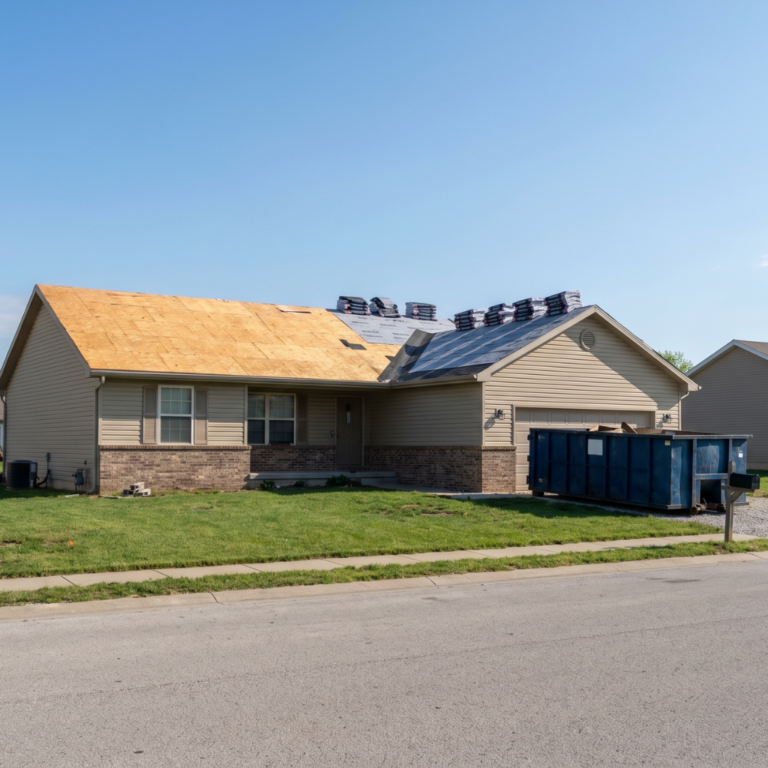
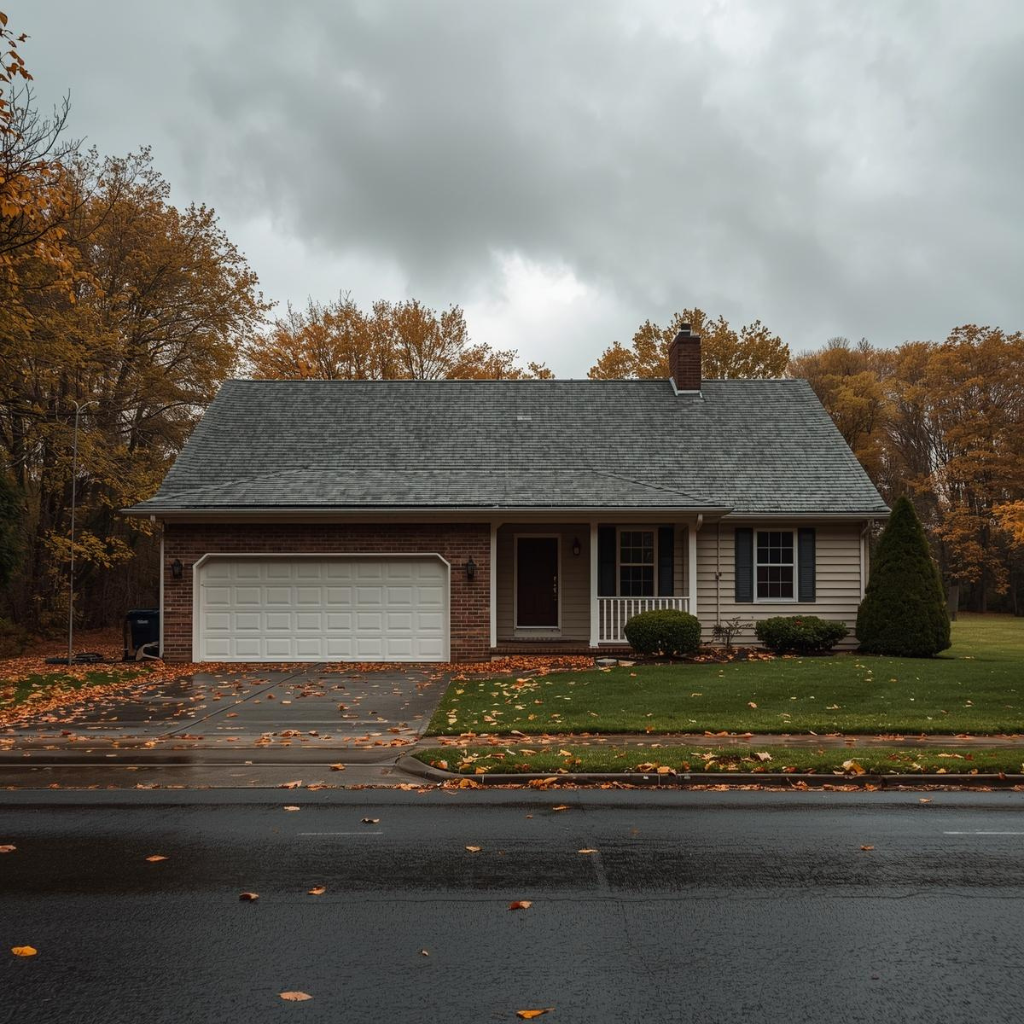
Even the best roofing materials fail when the installation is wrong. A roof repair quality checklist protects you twice: once before you hire, and again after the work is done. This guide gives Southwest Missouri homeowners both checklists so you can hire with confidence and verify the finished job before the crew leaves your property.
TLDR: The most common causes of early roof failure are installation errors, not bad materials. Before you hire, verify insurance, get a written estimate, and check for local code knowledge. After the work is done, inspect shingle alignment, flashing, cleanup, and get your warranty paperwork before making final payment.
Nail pattern mistakes, skipped starter shingles, missing flashing (metal pieces that seal roof edges and openings), and blocked ventilation cause more roof failures than defective materials. Manufacturer warranties mean nothing if the contractor ignored the installation specs. After every spring storm season in Southwest Missouri, demand spikes and timelines get tight. That is when corners get cut and the roof repair quality checklist below becomes your best tool.
Why the Contractor Matters More Than the Materials
Premium shingles like Class 4 impact-resistant options fail early when a contractor nails in the wrong zone, overdrives the nails, or skips required components. Manufacturers require four nails per shingle minimum, and six in high-wind zones. Your contractor should know which standard applies to your area. Each nail must sit in the designated nailing zone just below the adhesive strip and be driven flush. Overdriven nails punch through. Underdriven nails leave the shingle loose. Either one voids the warranty.
Without proper ventilation, attic temperatures in Southwest Missouri summers can reach 150 degrees, baking shingles from below and cutting their lifespan from 20 to 30 years down to 10 to 15.
Pro tip: Ask your contractor for time-stamped before, during, and after photos. If they refuse, that is a red flag.
The Pre-Hire Checklist: Green Flags vs. Red Flags
This roof repair quality checklist starts before you sign anything.
| Category | Green Flag | Red Flag |
|---|---|---|
| Insurance | Provides general liability AND workers’ comp certificates | Verbal confirmation only or avoids the question |
| Local presence | Verifiable local address in Southwest Missouri | PO Box or out-of-state address |
| Written estimate | Itemized quote with materials, labor, and timeline | Verbal quote or vague one-line estimate |
| References | Contact info for local homeowners you can call | Online reviews only, no direct contacts |
| Crew type | In-house crews on every project | Subcontracts to unknown crews |
| Code knowledge | Knows Ozark’s 2018 ICC stages and Springfield permit rules | Cannot answer basic code questions |
| Deductible offer | Never mentions covering your deductible | Offers to “help with” or waive your deductible |
| Sales pressure | Gives you time to compare estimates | Pushes you to sign today |
Missouri does NOT have a statewide general contractor license. Any contractor who claims a “state roofing license” is overstating their credentials. Focus on insurance, experience, and local references instead.
Important: Under Missouri RSMo 407.725, it is illegal for a contractor to offer to pay or waive any portion of your insurance deductible. Any contractor who makes that offer is breaking state law. Out-of-state storm chasers are the most common offenders.
Pro tip: Ask specifically, “Do you carry general liability and workers’ comp? Can I see the certificates and call your insurer?” Any hesitation is a warning sign.
What Quality Roof Work Actually Looks Like
Knowing what good installation looks like helps you evaluate the finished job.
| Item | What Quality Looks Like | Why It Matters |
|---|---|---|
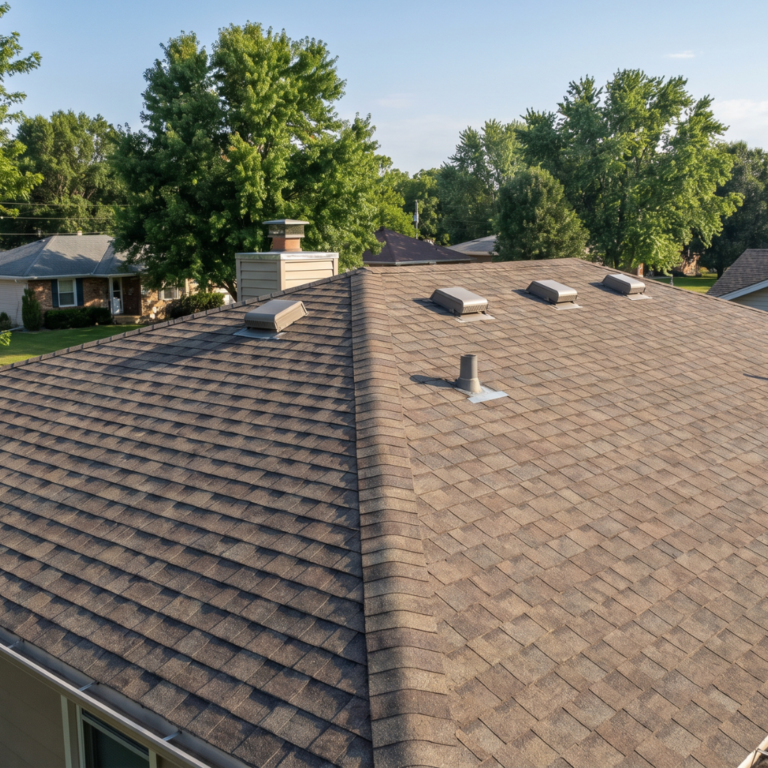
| Shingle alignment | Consistent spacing, uniform rows, no gaps | Misalignment allows water intrusion at seams |
| Nail pattern | 4 nails per shingle (6 in high-wind zones per manufacturer specs), flush, in the nailing zone | Wrong placement or count voids the warranty |
| Drip edge | Installed at all eaves and gable edges | Required under Ozark’s 2018 ICC and the 2012 IRC |
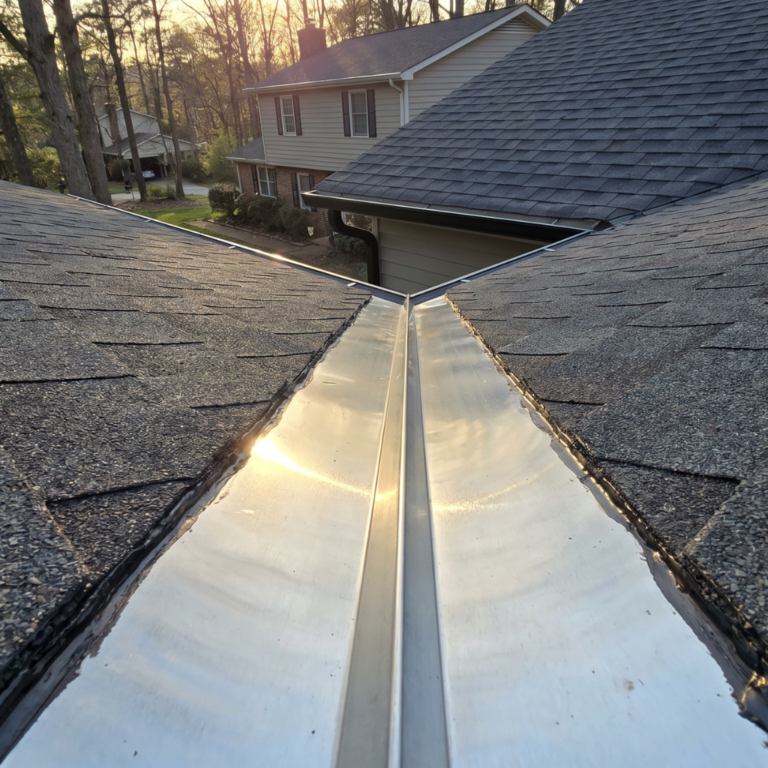
| Step flashing | Metal flashing at all wall and chimney intersections | Caulk-only solutions crack and fail within years |
| Ventilation | Maintained or improved, never blocked by new materials | Poor ventilation can cut shingle lifespan in half |
| Fastener type | Corrosion-resistant nails (galvanized or stainless steel) | Cheap smooth-shank nails can void the warranty |
| Starter shingles | Installed at eaves and rakes per manufacturer specs | Prevents wind uplift at the most vulnerable edges |
Ozark requires permits under the 2018 IRC and 2017 NEC, with staged inspections at the deck, underlayment, and final installation. Springfield requires permits for roof replacements and structural repairs. Nixa does NOT require a permit for standard re-roofing, but always confirm with the Nixa Building Department at 417-725-5850 for your specific project.
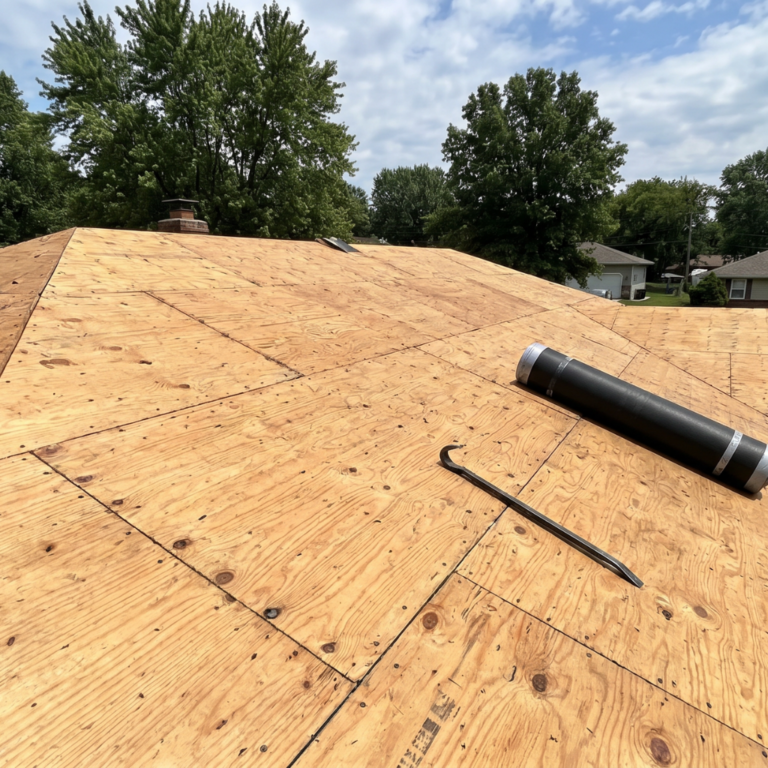
Pro tip: Ask your contractor to show you the decking after tear-off and before new underlayment goes down. Any soft spots, rot, or warping should be repaired before your new roof goes on.
Pro tip: Flashing should always be metal, not just caulk. Caulk cracks. Metal step flashing at chimneys, walls, and vents prevents leaks that destroy attic framing.
Post-Work Inspection: What to Check Before Final Payment
The day the job is done is when you have the most leverage.
| What to Check | What Good Looks Like | Red Flag |
|---|---|---|
| Shingle alignment | Even rows, consistent spacing, sealed edges | Crooked rows, visible gaps, lifted corners |
| Flashings | Tight seams, clean integration with gutters | Visible gaps, caulk-only repairs, loose edges |
| Gutters and fascia | Properly aligned, no damage from the work | Loose hangers, dents, or pry marks |
| Debris cleanup | Yard, driveway, and landscaping clear | Nails in the yard, shingle scraps left behind |
| Paperwork | Manufacturer AND workmanship warranty docs | Missing paperwork or verbal-only promises |
| Permit sign-off | Inspection passed where required | No permit pulled where one was required |
Check the attic within 48 hours for daylight gaps, water stains, or moisture. After the first heavy rain, inspect again at flashings, valleys, and penetrations. Under RSMo 407.725, if your insurance claim does not fully cover the project, you have five business days after written notice from your insurer to cancel the contract penalty-free.
Pro tip: Photograph everything the day the job is done. Date-stamped photos protect you in warranty disputes.
Understanding Your Two Warranties
Most homeowners do not realize they need two separate warranties for full protection.
| Type | Who Provides It | What It Covers | Typical Duration | Can It Be Voided |
|---|---|---|---|---|
| Manufacturer warranty | Shingle manufacturer | Material defects | 10 to 30 years | Yes, if installation ignores manufacturer specs |
| Workmanship warranty | Roofing contractor | Installation errors | 1 to 10 years | Yes, if the contractor goes out of business |
A workmanship error by your contractor can erase your material warranty too. If the nailing pattern, ventilation, or components do not meet published specs, the manufacturer denies coverage. Get both warranties in writing before work starts.
Pro tip: Manufacturer warranties often require registration within 30 to 90 days after installation. Confirm the deadline and make sure it gets done.
Illustrative Scenarios
Illustrative scenario: An Ozark homeowner hires a contractor after a hailstorm. The contractor pulls no permit, skips starter shingles, and uses smooth-shank nails instead of the galvanized ring-shank nails required by the manufacturer. Eighteen months later, shingles lift along the ridge line after a windstorm. The warranty claim is denied because the installation did not follow specs. The roof must be redone at the homeowner’s expense.
Illustrative scenario: A Republic homeowner gets three estimates. One contractor mentions they can “help with the deductible.” The homeowner recognizes this as a violation of RSMo 407.725 and declines. They hire a local, insured contractor who pulls the permit, installs metal step flashing at all wall intersections, and hands over warranty documentation the day the job is done. Six months later, a spring storm produces no leaks.
FAQs About Roof Repair Quality
Q: What should I look for in a roofing contractor? A: Proof of general liability and workers’ comp insurance, a local address, a written itemized estimate, contactable local references, and knowledge of local permit requirements. Missouri has no statewide contractor license, so insurance and experience matter most.
Q: How do I know if my roof repair was done correctly? A: Check shingle alignment, flashing condition, gutter attachment, and cleanup. Get warranty paperwork before final payment. Inspect the attic within 48 hours and again after the first heavy rain.
Q: What is a workmanship warranty? A: It covers installation errors by the contractor, typically lasting one to ten years. This is separate from the manufacturer warranty covering material defects.
Q: Do roofing contractors in Missouri need a license? A: Missouri does not require a statewide general contractor license. Verify insurance, local references, and manufacturer certifications instead.
Q: Is a building permit required for roof repair in Springfield? A: Yes. Springfield requires permits for replacements and structural repairs. Ozark also requires permits under the 2018 ICC. Nixa does NOT require a permit for standard re-roofing, but confirm with the Nixa Building Department at 417-725-5850 for your specific project.
Q: What does proper roof flashing look like? A: Metal step flashing at all wall and roof intersections, valley metal in all valleys, and drip edge at every eave and gable edge. Caulk-only solutions fail within a few years.
Q: How many nails should be in each shingle? A: Four minimum in standard conditions, six in high-wind zones per manufacturer specifications. Your contractor should know which standard applies to your area. Each nail goes in the nailing zone just below the adhesive strip, driven flush.
Q: Can I cancel a roofing contract in Missouri? A: Under RSMo 407.725, if your insurance claim does not fully cover the project and you receive written notice, you have five business days to cancel penalty-free.
Key Takeaways
Before You Hire. Verify insurance certificates directly. Get a written, itemized estimate. Ask about local code knowledge and permits. Do not hire anyone who offers to waive your deductible.
During the Work. Request time-stamped photos of the deck, underlayment, nailing, and flashing. Confirm ventilation is maintained.
After the Work. Walk the perimeter. Check flashings, gutters, and cleanup. Get both warranty documents in writing. Inspect the attic within 48 hours and after the first heavy rain. Hold final payment until everything checks out.
Missouri Law. RSMo 407.725 makes deductible waivers illegal and gives you a five-day cancellation right on insurance-related contracts. Permit rules vary: Springfield and Ozark require permits, Nixa does not for re-roofing. Know your city’s rules before work starts.
Quality Starts with Who You Hire
Every item on this roof repair quality checklist comes down to one decision: who you trust with your roof. The right contractor pulls permits, follows manufacturer specs, uses in-house crews, and hands you both warranties before they leave.
ProNail Exteriors provides free storm damage inspections across Southwest Missouri, including Springfield, Ozark, Nixa, Republic, Branson, and Forsyth. Every project gets an itemized written estimate, in-house crews, and warranty documentation the day the job is done. Whether you need a repair or a full replacement, the first step is an honest inspection with no pressure.
Call 844-321-6245 to schedule yours today.
ProNail Exteriors | Roofing, Siding, Windows, Gutters, Decks, and More | Serving Southwest Missouri Since 2025