
After a storm rolls through Southwest Missouri, you might spot dents on your car or AC unit. Your roof looks fine from the ground. But does that mean it actually is fine? This guide gives you a clear hail size chart for roof damage, shows you which sizes matter, and helps you decide when to call for an inspection.
TLDR: Hail under one inch rarely hurts your roof. Once hail reaches 1.5 inches, shingles can crack and lose protective granules. At two inches or larger, most standard roofs need full replacement. Class 4 impact-resistant shingles handle up to two-inch hail, and Southwest Missouri sees hail in that range periodically.
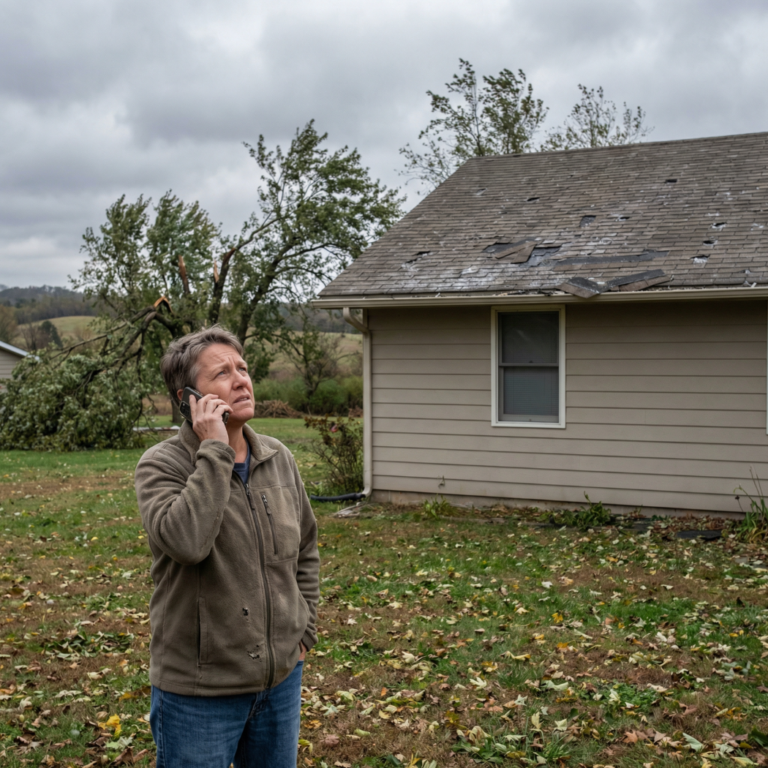
You just heard golf-ball-sized ice slamming your windows. The storm has passed, and the car has dents. The gutters look beat up. But you cannot see anything wrong with the roof.
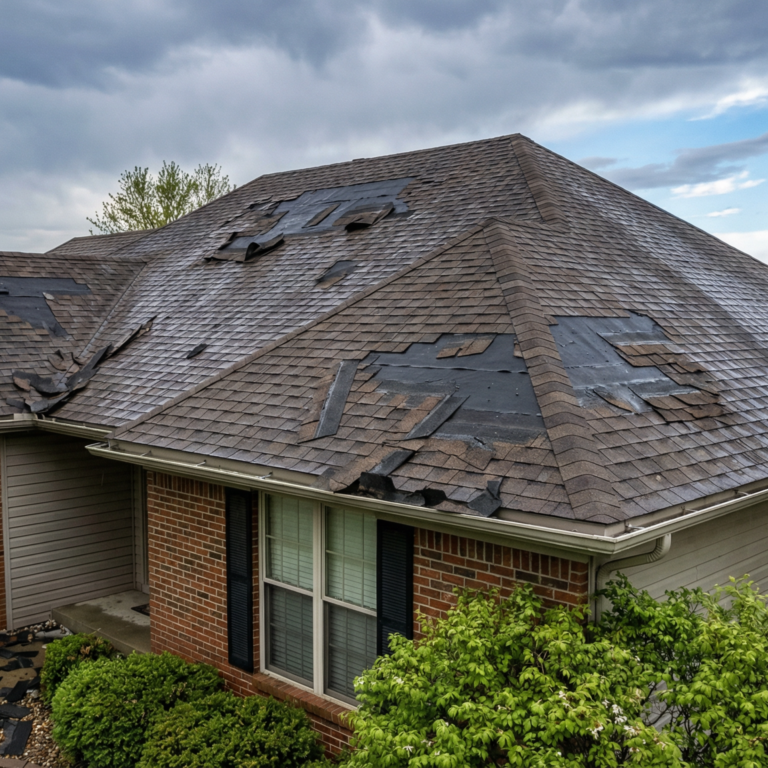
Here is the thing: roof damage from hail is almost never obvious from the ground. The real damage happens to the granules and seals on your shingles, and it takes a trained eye to spot it. That is why having a hail size chart for roof damage handy before storm season matters so much.
In this guide, we break down what each hail size does to a roof. We cover the testing standards behind impact ratings, what Nixa area storms look like, and when to call for an inspection versus when to wait.
Hail Size Chart for Roof Damage
Not all hail is created equal. A pea-sized piece of ice is harmless. A golf-ball-sized chunk can crack shingles and expose the layers underneath.
This table covers six hail size categories using official NWS object pairings and their effects on standard asphalt shingle roofs. Older roofs take more damage from the same size hail.
| Hail Size | NWS Object | Cosmetic Damage | Functional Damage | Recommended Action |
|---|---|---|---|---|
| Under 1″ | Pea to nickel | None | None | No action needed |
| 1 to 1.25″ | Quarter to half dollar | AC and car dents | Rare granule loss | Monitor your roof |
| 1.5″ | Ping pong ball | Granule bruising | Shingle cracking possible | Schedule inspection |
| 1.75″ | Golf ball | Heavy granule loss | Cracks likely | Schedule inspection; likely insurance claim |
| 2″ | Hen egg | Heavy granule loss | Cracks and potential leaks | Likely full roof replacement |
| 2.5″ and up | Tennis ball or larger | Severe surface damage | Full structural damage | Get an inspection now |
For Southwest Missouri homeowners, the 1.5-inch threshold is the one to watch. Hail at that size or larger shows up during active storm seasons.
Pro tip: Keep a quarter in your storm kit. If hail stones are bigger than a quarter, your roof needs a professional inspection.
How Hail Really Damages Roofs
Hail does not always punch a hole through your shingles. Most hail damage is hidden under the surface.
Cosmetic vs. Functional Damage
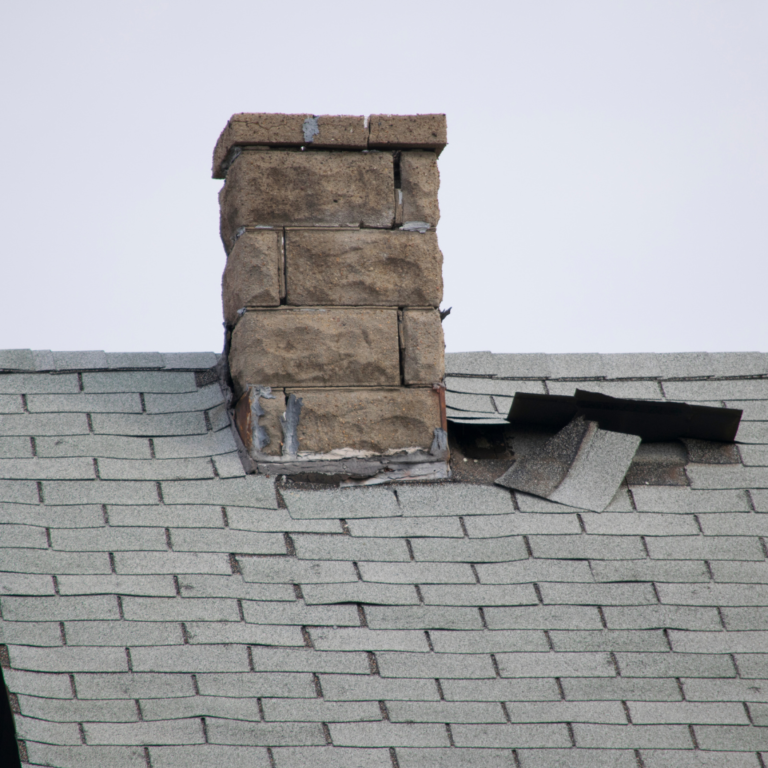
Cosmetic damage means dents and marks that look bad but do not affect how your roof works. Functional damage is the real concern. This includes cracked shingles, broken adhesive seals, and exposed fiberglass mat. Functional damage lets water sneak in and causes leaks over time.
Why Cumulative Hail Matters
One small hailstorm might not hurt your roof. But three or four storms in a single spring add up fast. Each hit weakens the granule layer a little more. Southwest Missouri sees this pattern often between April and June.
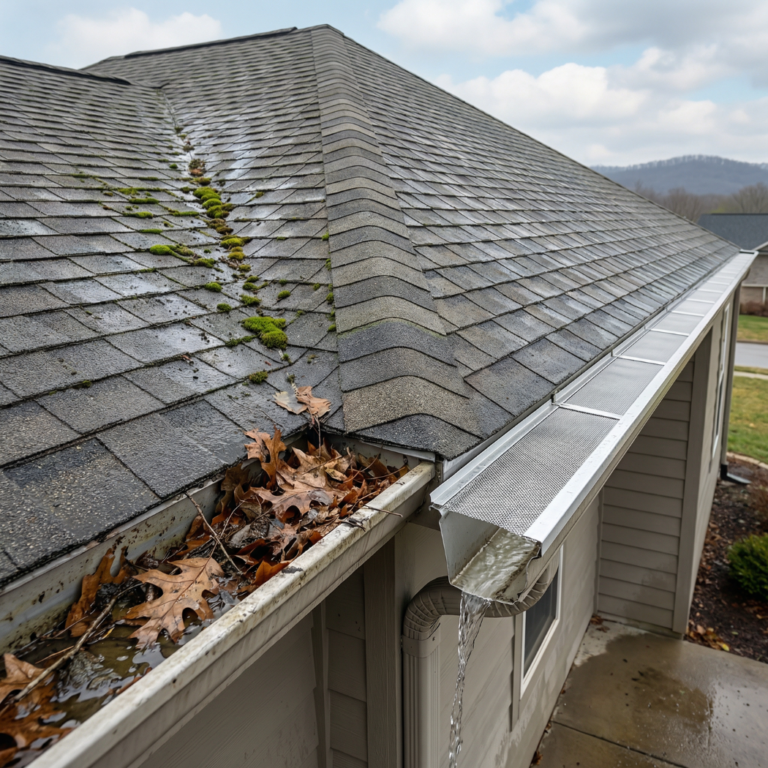
Tip: Check your gutters for granule buildup one to two weeks after any storm. Heavy granule loss in the gutters is a red flag.
A five-year-old roof handles 1.5-inch hail much better than a 15-year-old roof. Older shingles are more brittle, and their granule layer has already thinned from years of weather. If your roof is over 10 years old, even moderate hail deserves an inspection.
UL 2218 vs. FM 4473: Impact Testing Explained
When you hear about Class 4 shingles, the rating comes from a specific lab test. Two main tests exist, and insurers look at both.
UL 2218 drops a steel ball onto shingles from a set height. Class 4, the highest rating, uses a two-inch steel ball dropped from 20 feet. Class 3 uses a 1.75-inch ball dropped from 17 feet. FM 4473 uses an ice ball cannon instead. This test mimics real hail better because ice shatters on impact just like actual hailstones.
Here is a quick comparison of the two main impact resistance tests.
| Test Standard | Method | Class 4 Equivalent |
|---|---|---|
| UL 2218 | Steel ball dropped from 20 feet | 2-inch ball survives impact |
| FM 4473 | Ice ball fired at hail velocity | Mimics roughly 2-inch real hail |
Both tests confirm that Class 4 shingles handle hail up to about two inches. Class 3 shingles handle up to about 1.75-inch hail, which is marginal for Southwest Missouri. For a deeper comparison, see our guide on Class 3 vs. Class 4 shingles.
Pro tip: Ask any roofing contractor for both UL 2218 and FM 4473 ratings on the shingles they recommend.
What Nixa-Area Hail Storms Look Like
Southwest Missouri is no stranger to severe hail. According to NWS Springfield severe weather climatology, the Springfield NWS coverage area averages roughly 10 tornadoes per year, with hail and severe weather concentrated in the afternoon and evening hours. Many of those storms also produce large hail.
Hail in the one-inch range shows up multiple times per storm season in the Nixa and Springfield area. Larger hail, at golf-ball size or above, hits less often but still causes the bulk of roof claims when it does. Periodically, a storm drops two-inch or larger hail that can wreck standard roofing.
Tip: South-facing and west-facing roof slopes take the hardest hits. If you can only check one area, start there.
Repair, Replace, or Wait?
Not every hailstorm means you need a new roof. But waiting too long after real hail damage can make things worse. Use this hail damage roof decision guide to figure out your next step based on hail size and roof age.
This table helps you match hail size and roof age to the most likely course of action.
| Hail Size | Roof Age | Likely Action | Insurance Coverage |
|---|---|---|---|
| 1 to 1.25″ | Any age | Monitor | Cosmetic only |
| 1.5 to 1.75″ | Under 10 years | Roof repair likely | Possible |
| 1.75 to 2″ | 10 to 15 years | Full replacement likely | Likely covered |
| 2″ and larger | Any age | Full replacement | Typically covered |
Insurance typically covers functional damage but not cosmetic damage. That means dents on your gutters alone might not trigger a claim, but cracked shingles with exposed mat usually will. ProNail Exteriors can help with insurance claim assistance so nothing gets missed during the process.
Important: If you have Class 4 shingles, many Southwest Missouri insurance providers offer a meaningful premium discount. Discount levels vary by carrier, so confirm with your agent before committing.
The class rating on your shingles also plays a big role in how much damage your roof takes.
| Impact Class | Survives | Southwest Missouri Fit |
|---|---|---|
| Class 1 to 2 | Small hail only | Poor fit |
| Class 3 | Medium hail (1.75-inch ball from 17 feet) | Acceptable |
| Class 4 | Large hail (2-inch ball from 20 feet) | Best fit for this area |
When to Call a Nixa Roof Inspector
Do not wait if you notice any of these signs after a hailstorm:
- Granule buildup in your gutters after 1.5-inch or larger hail
- Cracked, lifted, or missing shingles visible from the ground
- Dents on metal roof vents, flashing (metal pieces that seal edges), or gutters
- Leaks or water stains in your attic within two weeks of a storm
Permit rules vary across Southwest Missouri. In Springfield, standard roof repair, replacement, and recover are classified as repair and maintenance, so a permit is not required for a typical reroof. A permit is only triggered if a structural element is altered or replaced, or if more than 32 contiguous square feet of deck sheathing is replaced. This is laid out in the City of Springfield Roofing and Re-roofing Bulletin. Permit rules in Nixa, Ozark, Branson, and other Southwest Missouri cities are set by those jurisdictions, so confirm with the relevant local building department before work begins. ProNail Exteriors handles any required permit paperwork as part of every project.
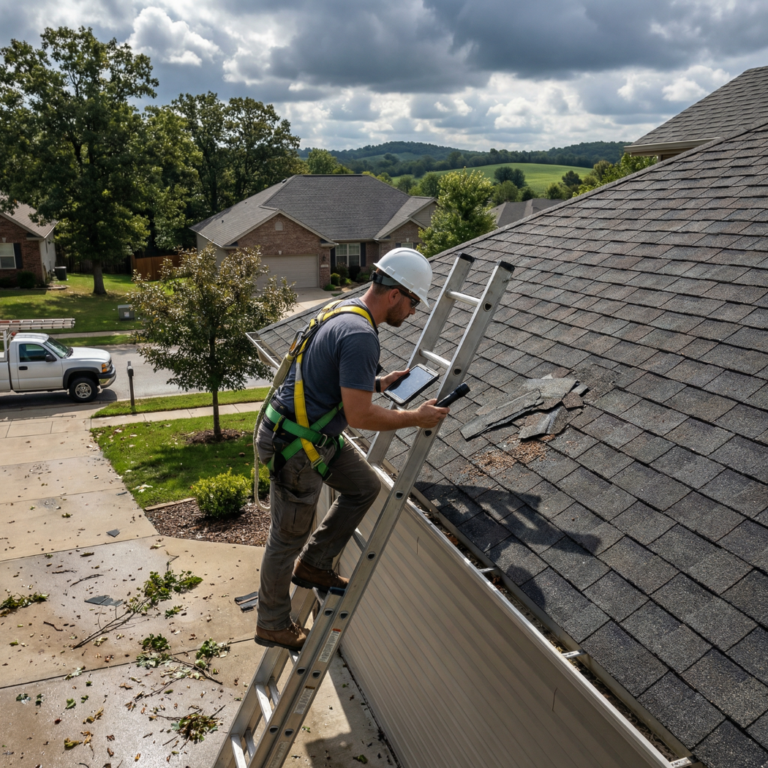
Pro tip: Get two to three inspections before committing. Choose an insured, local contractor with in-house crews over out-of-town storm chasers.
Tip: Document everything right away. Photograph hailstones next to a ruler or coin for scale. This is critical for your insurance claim. The roof insurance claim process walks you through what comes next.
Illustrative scenario: A Nixa homeowner found quarter-sized hail dents on their car after an April storm. Gutters had heavy granule buildup. A ProNail Exteriors crew inspected the roof and found bruising and granule loss on the south-facing slope. The shingles were 15 years old. Insurance approved the claim, and the crew replaced the roof with Class 4 impact-resistant shingles within two weeks. The homeowner now has stronger storm protection going into the next season.
Frequently Asked Questions
Q: What hail size damages roofs? A: Hail at 1.5 inches and larger causes functional roof damage on most standard shingles. This includes cracking, granule loss, and broken seals. Hail under one inch rarely causes concern.
Q: Is one-inch hail a problem for my roof? A: One-inch hail usually causes only cosmetic damage like dents on gutters or AC units. Monitor your roof, but do not panic unless the shingles are very old.
Q: How do I know if hail caused functional damage? A: Functional damage includes cracked shingles, exposed fiberglass mat, and heavy granule loss. A professional inspection is the best way to confirm it.
Q: What is UL 2218 Class 4? A: UL 2218 is a lab test that rates shingle impact resistance. Class 4 is the highest rating. The shingle must survive a two-inch steel ball dropped from 20 feet without cracking.
Q: Do insurance companies use steel ball or ice ball tests? A: Both. UL 2218 uses a steel ball, and FM 4473 uses an ice ball cannon that mimics real hail. Ask your insurer which test they recognize for discounts.
Q: How soon after hail should I inspect my roof? A: Schedule an inspection within one to two weeks of any storm with 1.5-inch or larger hail. Waiting too long lets small problems grow, especially if rain follows.
Q: Can small hail events add up over time? A: Yes. Repeated small hail events wear down the granule layer on your shingles over time. Southwest Missouri sees multiple storms each spring, and the cumulative hail damage adds up.
Q: Do Nixa roofs need permits after hail damage? No permit is required for the replacement/installation of re-roofing rules in Nixa, which is a standard set by the City of Nixa. ProNail Exteriors handles any required permit paperwork as part of every project.
Q: Will Class 4 shingles survive two-inch hail? A: Class 4 shingles typically survive two-inch hail in lab testing. They are the best asphalt option for Southwest Missouri’s hail-prone climate.
Q: How do I document hail damage for insurance? A: Photograph damage from multiple angles right after the storm. Include shots of hailstones next to a coin or ruler for scale. ProNail Exteriors also documents damage during free inspections.
Key Takeaways
Hail Size Thresholds
- Hail under one inch rarely affects roofs
- 1.5 inches is the hail damage threshold for standard shingles
- Two-inch hail causes serious damage without Class 4 protection
Testing and Ratings
- UL 2218 and FM 4473 are the two main impact tests
- Class 3 is tested with a 1.75-inch ball from 17 feet; Class 4 with a 2-inch ball from 20 feet
- Class 4 is the best fit for Southwest Missouri
Action Steps
- Inspect after any storm with 1.5-inch or larger hail
- Check south and west slopes first
- Document hail damage with photos right away for insurance
Local Considerations
- In Springfield, standard reroofs do not require a permit; structural framing changes or more than 32 contiguous square feet of decking replacement do
- Permit rules in Nixa, Ozark, Branson, and other cities are set by those jurisdictions, so confirm locally. For example, Nixa does not require a permit for the replacement/installation of re-roofing
- ProNail Exteriors offers free inspections with no pressure
Ready to Find Out if Your Roof Took Damage?
Now that you have a clear hail size chart for roof damage thresholds, you know when to act and when to wait. The next step is getting a professional set of eyes on your home.
ProNail Exteriors brings over a decade of hands-on roofing experience to every inspection. We use in-house crews, never random subcontractors. We document everything and help with the insurance process from start to finish.
- Free roof inspection and hail damage documentation
- Honest, no-pressure assessment of your roof’s condition
- Help with insurance claims so nothing gets missed
- Class 4 impact-resistant shingle installation
- Clear communication every step of the way
Not sure if that last storm hurt your roof? We will walk you through it.
Call 844-321-6245 to schedule your free estimate today.
We serve Nixa, Springfield, Ozark, Branson, Rolla, and all of Southwest Missouri.
ProNail Exteriors | Roofing, Siding, Windows, Gutters, Decks, and More | Serving Southwest Missouri Since 2025