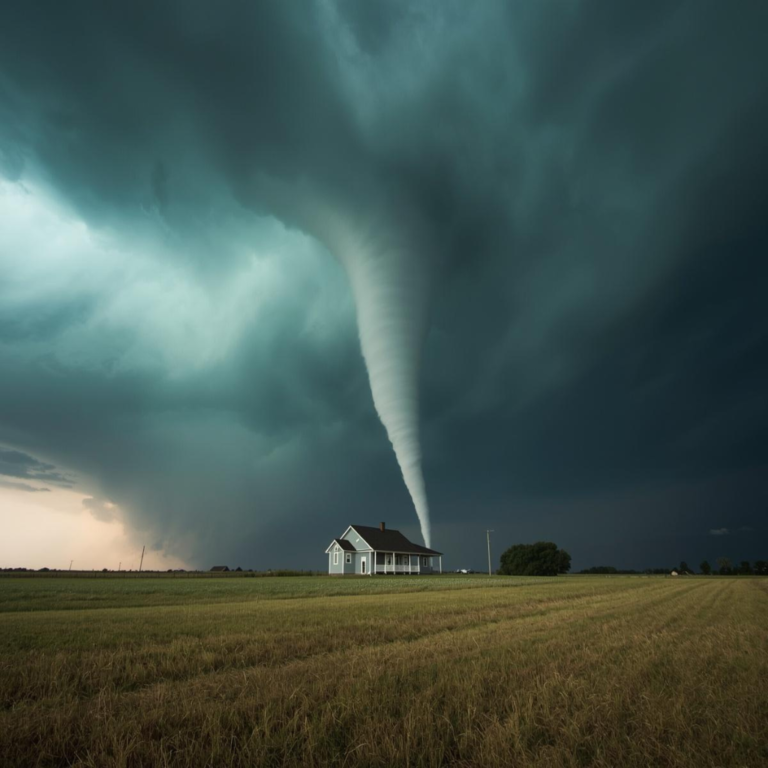
Southwest Missouri storms hit fast. One minute you are at work, the next you are pulling into the driveway staring at shingles in the yard. This guide gives Springfield-area homeowners a clear, step-by-step plan from the moment the storm passes through the start of roof repairs.
TLDR: After a storm, stay off the roof. Document all damage with photos before touching anything. Protect the interior with buckets and tarps. Call your insurer and a local contractor. Mold can start growing within 24 to 48 hours, so speed matters. Do not make permanent repairs until the adjuster visits.
Not All Storm Damage Is an Emergency
When you see damage after a storm in Republic or Battlefield, the first question is how urgent it really is.
| Damage Type | Category | Action Needed |
|---|---|---|
| Active water leak near electrical fixtures | Emergency | Turn off breaker, call a professional immediately |
| Tree limb through the roof deck | Emergency | Do not touch, call a professional for tarping |
| Large section of shingles missing with exposed deck | Emergency | Tarp if safe, call for same-day inspection |
| Sagging or bowing ceiling section | Emergency | Stay away, it may collapse without warning |
| Multiple missing shingles, no active leak | Urgent | Schedule inspection within 1 to 2 days |
| Granule loss in gutters after hail | Monitor | Schedule inspection within a week |
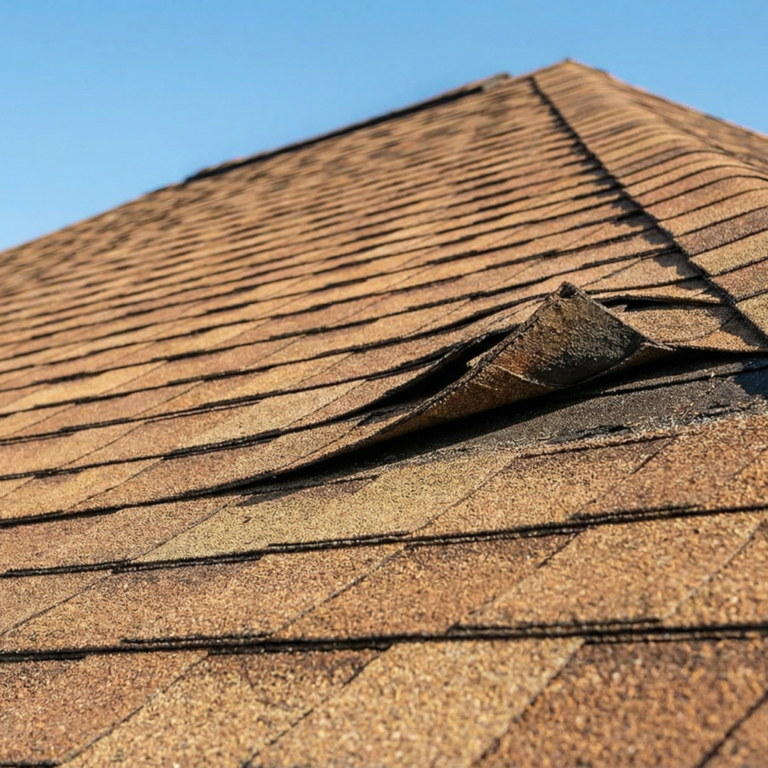
| Single lifted shingle edge | Monitor | Schedule inspection before next storm season |
Mold can begin growing on wet surfaces within 24 to 48 hours after water intrusion. That clock turns “urgent” damage into an emergency fast. Springfield’s April through June storm season regularly brings back-to-back severe events, and damage from one storm can compound in the next.
Pro tip: If water is dripping near any light fixture or outlet, turn off power to that area at the breaker before doing anything else.
Stay Safe and Stay Off the Roof
The most dangerous mistake homeowners make after a storm is climbing the roof. Wet shingles, residual wind gusts, and possible structural damage create a dangerous combination.
Instead, do a slow walk around the outside of your home from the ground. Use binoculars or the zoom on your phone camera to check the ridge and slopes. Watch for downed power lines, hanging tree limbs, and broken glass. Stay away from any sagging section of ceiling inside, because a bulge in drywall can hold gallons of water and drop without warning.
NWS Springfield severe weather climatology shows that hail and severe storm activity is concentrated in the afternoon and evening hours. Most storm damage happens while families are at work, and homeowners come home to a surprise.
Pro tip: Do not touch any debris until you have photos from the ground. Fallen branches on the roof, shingles in the yard, and debris patterns all support your insurance claim.
Document Everything Before Touching Anything
Your phone is your most valuable tool in the first 30 minutes.
| What to Photograph | Why It Matters |
|---|---|
| Full roof from all four corners | Establishes the complete picture for the adjuster |
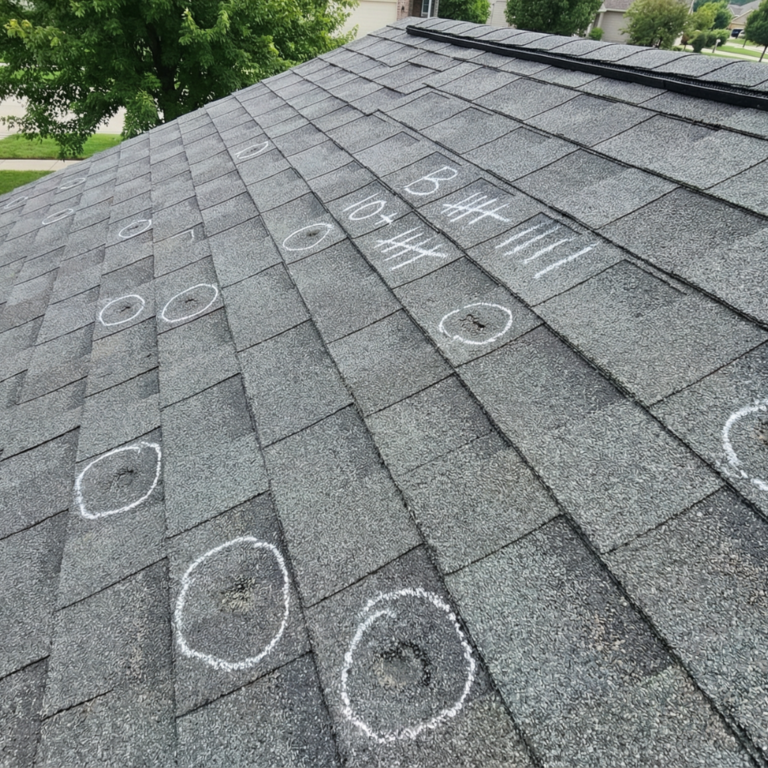
| Gutters and downspouts | Granule buildup and dents prove hail impact |
| AC unit, mailbox, and vehicles | Dents on soft metal connect damage to the storm |
| Hailstones with a coin or ruler for scale | Proves hail size on the date of loss |
| Interior ceiling stains and dripping areas | Documents active water intrusion |
| Shingles and debris still in the yard | Shows storm origin of the damage |
Enable date and time stamps on your phone’s camera. In Missouri, claims are tied to the “date of loss,” which is the storm date, not the day you notice the leak. For a deeper walkthrough by category, see our storm damage inspection checklist.
Pro tip: Check your phone’s geotagging settings before the next storm season. Location and timestamp data embedded in photos is some of the strongest evidence for an insurance claim.
Protect the Interior and Get the Tarp Right
While you wait for professional help, place buckets under active drips. Move furniture and electronics away from wet areas. Lay plastic sheeting over anything you cannot move. Most insurance policies require homeowners to take reasonable steps to prevent additional damage, so document every mitigation step with photos.
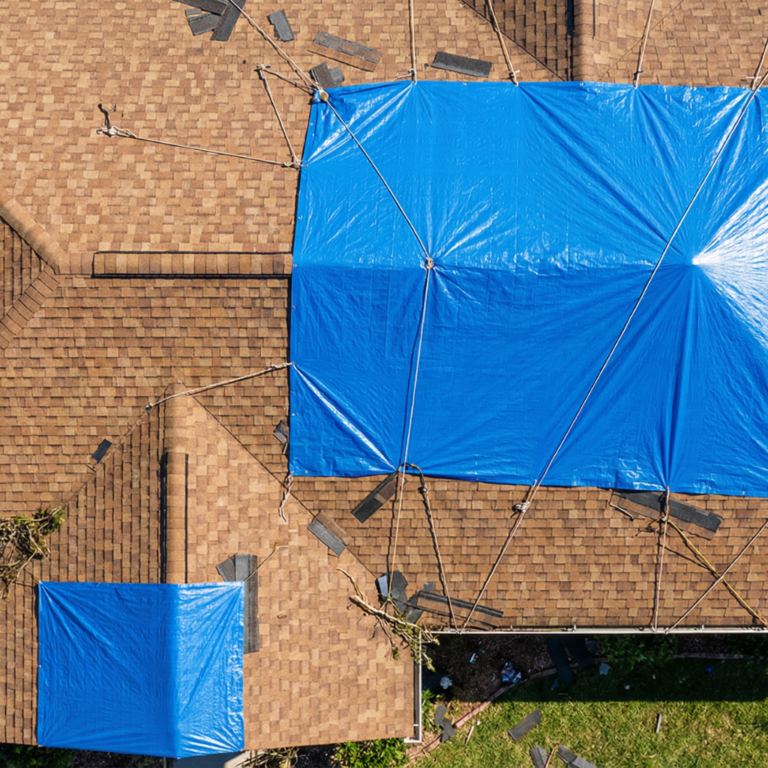
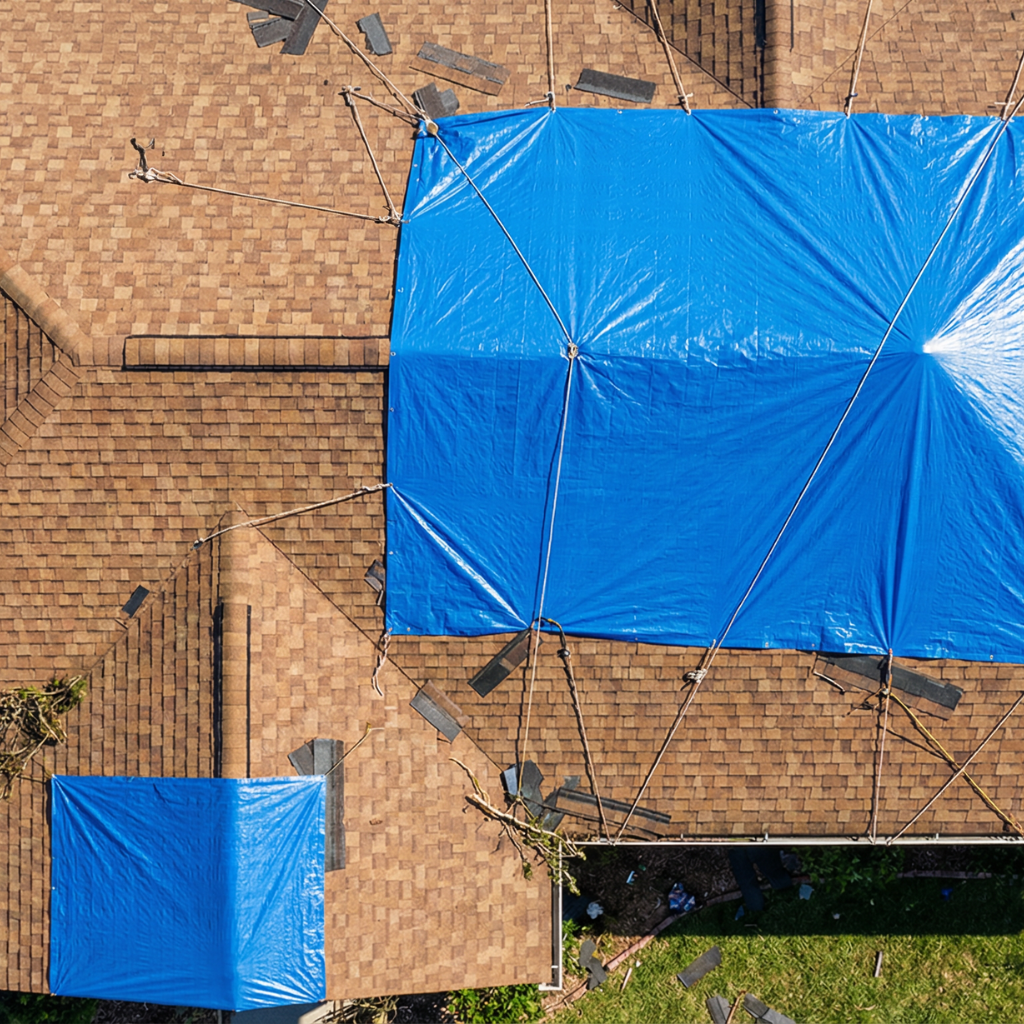
If a large section of the roof is exposed, emergency tarping is needed.
| Condition | DIY Tarping? | Call a Professional? |
|---|---|---|
| Storm has fully passed, low-slope roof | Possible with a helper | Optional |
| Steep pitch or wet surface | No | Yes |
| Visible structural sagging | No | Yes |
| Limb still resting on the roof | No | Yes |
| You are alone with no second person | No | Yes |
If you do tarp, use a heavy-duty waterproof tarp secured with 2×4 boards, not nails. Nails create new holes. Extend the tarp over the ridge so water does not pool at the top seam.
Important: Most insurance policies cover emergency tarping as part of the claim. Save all receipts and photograph the installation.
Call Your Insurance and Know What to Expect
Missouri does not set a single statewide deadline for filing storm damage claims. Your deadline is in your policy, and some require reporting within 60 days of the storm date. File as soon as possible.
The Missouri Department of Commerce and Insurance provides consumer guidance on claim expectations. Missouri law requires your insurer to acknowledge your claim within 10 working days, per 20 CSR 100-1.030. They must affirm or deny coverage within 15 working days after receiving all forms necessary to establish the nature and extent of the claim. If the insurer needs more time, it must notify you within that 15-working-day window with the reasons more time is needed, then update you on the status every 45 days until the claim is resolved.
When you call, report the storm date, describe the visible damage, and ask about emergency tarping coverage. Do not make permanent repairs before the adjuster visits. Having your contractor present during the inspection often leads to better outcomes. They can document overlooked items and submit supplements for anything missing. This guide on how the insurance claim process works covers each step in detail.
Pro tip: Before the adjuster arrives, ask your contractor to walk the property with you and prepare their own independent assessment. Two sets of documentation are better than one.
Emergency Repair vs. Full Replacement
Not every storm leads to a full replacement.
| Factor | Lean Toward Repair | Lean Toward Replacement |
|---|---|---|
| Roof age | Under 15 years | Over 20 years |
| Damage extent | Isolated to one area | Spread across multiple sections |
| Percentage affected | Less than 25% | More than 30% |
| Structural decking damage | None | Present |
The percentages above are general decision factors, not permit triggers. In Springfield, permit rules are based on what gets touched during the work, not on what percentage of the roof took damage. The City classifies standard roof repair, replacement, and recover as repair and maintenance, so a permit is not required for a typical reroof. A permit is only triggered if a structural element is altered or replaced, or if more than 32 contiguous square feet of deck sheathing is replaced. This is laid out in the City of Springfield Roofing and Re-roofing Bulletin. Permit rules in Ozark, Nixa, Branson, and Marshfield are set by those jurisdictions, so check with your local building department before work begins.
A professional inspection gives you the documentation to make the repair-versus-replace call with confidence, and supports the claim whether the outcome is roof repair or full replacement.
Illustrative Scenario
Illustrative scenario: A homeowner in Battlefield gets home at 5:30 p.m. to find their yard covered in shingles. A thunderstorm passed through earlier that afternoon. They see bare deck near the ridge. Instead of climbing up, they photograph everything from the ground: roof from all four corners, gutters, hail dents on the AC unit, and shingles in the yard. They call a local contractor that evening. The crew tarps the exposed section, documents everything, and helps the homeowner file the claim the next morning before follow-up rain arrives.
Frequently Asked Questions
Q: What should I do first if a storm damages my roof? A: Stay off the roof. Check for water near electrical fixtures and turn off the breaker if needed. Document everything with photos before moving debris. Then place buckets under drips and call your insurer and a local contractor.
Q: How fast does mold grow after a roof leak? A: Mold can begin growing within 24 to 48 hours after water intrusion. Visible colonies appear in 3 to 12 days. Quick interior mitigation matters.
Q: Is it safe to tarp my own roof after a storm? A: Only if the storm has fully passed, the structure looks sound, the slope is manageable, and you have a second person helping. If the roof is steep, wet, or sagging, call a professional.
Q: How long do I have to file a storm damage claim in Missouri? A: Missouri does not set a statutory deadline for opening the claim. Your policy sets the timeline, and standard Missouri policies typically require proof of loss within 60 days, though the exact window varies by policy. The clock starts on the storm date, not when you discover the leak.
Q: Does insurance cover emergency tarping? A: Most homeowners policies cover tarping as part of the claim. Save all receipts and photograph the installation.
Q: Should I repair or replace my roof after a storm? A: Isolated damage on a roof under 15 years old usually calls for repair. Widespread damage on an older roof, or damage covering a large portion of the surface, often points toward replacement.
Q: Do I need a permit for emergency roof repairs in Springfield? A: A standard tear-off and reroof does not require a permit in Springfield because the City classifies it as repair and maintenance. A permit is only triggered if a structural element is altered or replaced, or if more than 32 contiguous square feet of deck sheathing is replaced. Small shingle repairs do not require a permit. Rules in Ozark, Nixa, Branson, and Marshfield are set by those jurisdictions, so confirm with the local building department before work begins.
Q: How do I avoid storm chaser contractors after a hailstorm? A: Watch for door-to-door crews, large upfront deposit requests, no local office, and pressure to sign immediately. Use a local contractor with a verifiable history and get at least two to three estimates.
Key Takeaways
Immediate Safety: Stay off the roof. Turn off power if water is near electrical fixtures.
Documentation: Photograph everything from the ground before touching debris. Enable timestamps. Capture hailstones with a size reference and dents on soft metals.
Speed Matters: Mold starts in 24 to 48 hours. Tarp exposed areas promptly. Missouri has no statewide claim deadline, but your policy does.
Repair vs. Replace: Damage limited to one slope on a newer roof usually means repair. Widespread damage on an older roof often means replacement. In Springfield, permit triggers are tied to structural framing changes and decking thresholds, not damage percentage.
Just Had a Storm Roll Through?
If you are reading this with shingles in the yard, the next step is simple. Get a professional out to document the damage, tarp what needs tarping, and give you honest answers.
ProNail Exteriors offers free storm damage inspections across Springfield, Ozark, Nixa, Republic, Battlefield, Branson, and Marshfield. In-house crews, no subcontractors, no pressure. Call (844) 321-6245.
ProNail Exteriors | Roofing, Siding, Windows, Gutters, Decks, and More | Serving Southwest Missouri Since 2025