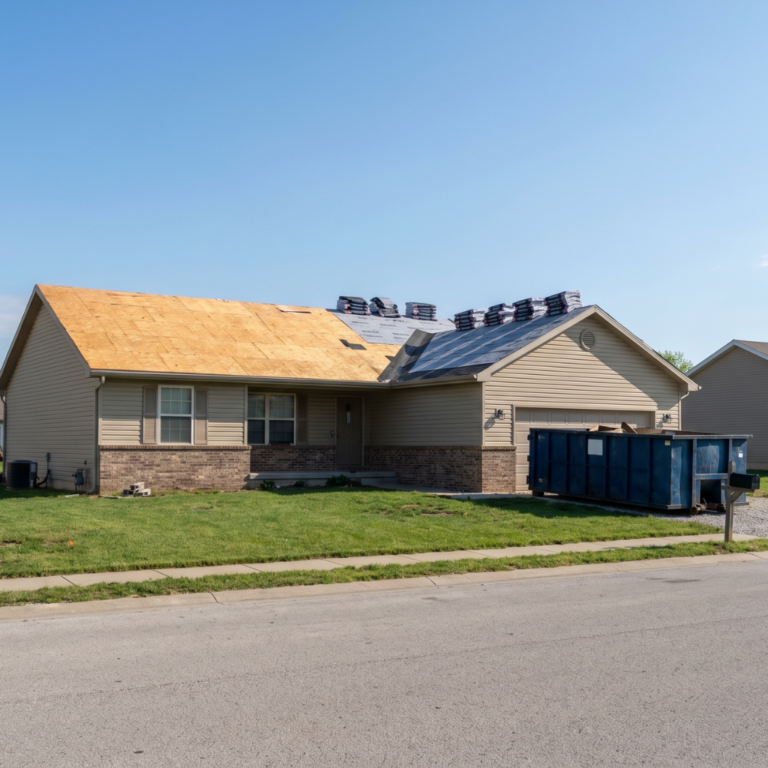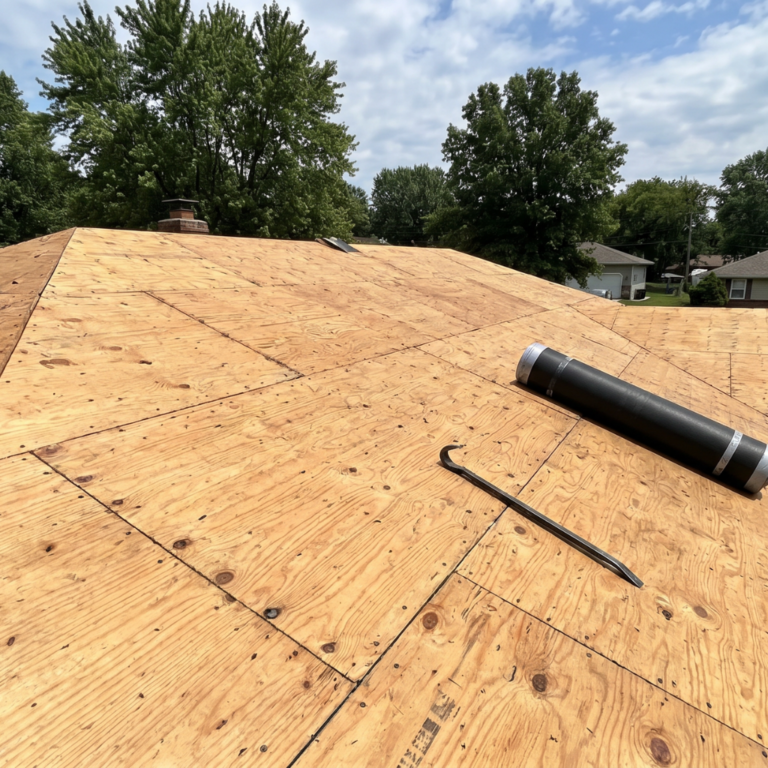
Hail does not strike a roof evenly. Wind drives it sideways, certain zones absorb stress that others do not, and after a storm like April 28, 2026, the damage clusters in predictable places. This guide walks through the seven spots most likely to be leaking right now or by winter, why each one is uniquely vulnerable, and how to do a smart ground-level check before you call for an inspection.
TLDR: After a big hailstorm, the most vulnerable spots on a Southwest Missouri roof are the ridge cap, the valleys, the pipe boots, the chimney flashing, the skylights, the soffit and fascia edges, and the field shingles on south and west slopes. Spring hail damage that goes unchecked routinely turns into a winter leak once freeze-thaw cycles get to work on it.
You looked at the roof from the driveway after the storm. The shingles look mostly fine. The gutters might be dented. There is no obvious gaping hole. Probably okay, right? Probably not. Hail damage rarely shows up where homeowners first look. It clusters in zones the average person never thinks about, and most of those zones are invisible from the ground.
Why Hail Hits Some Spots Harder Than Others
Hail in a real storm does not fall straight down. Wind drives it at angles, often steep ones. The slope and edge facing the storm take the hardest hits. In Southwest Missouri, the spring storms that produce most of our large hail typically move from the southwest toward the northeast. That means south and west-facing slopes, rake edges on gable ends, and roof penetrations on those exposures take disproportionate impact. Storm direction data from NWS Springfield confirms this pattern across decades.
Tip: Check your gutters first. The slope under the gutter with the heaviest pile of loose granules is almost always the slope that took the most direct hits.
Ridge Caps Sit Higher and More Exposed Than Anything Else
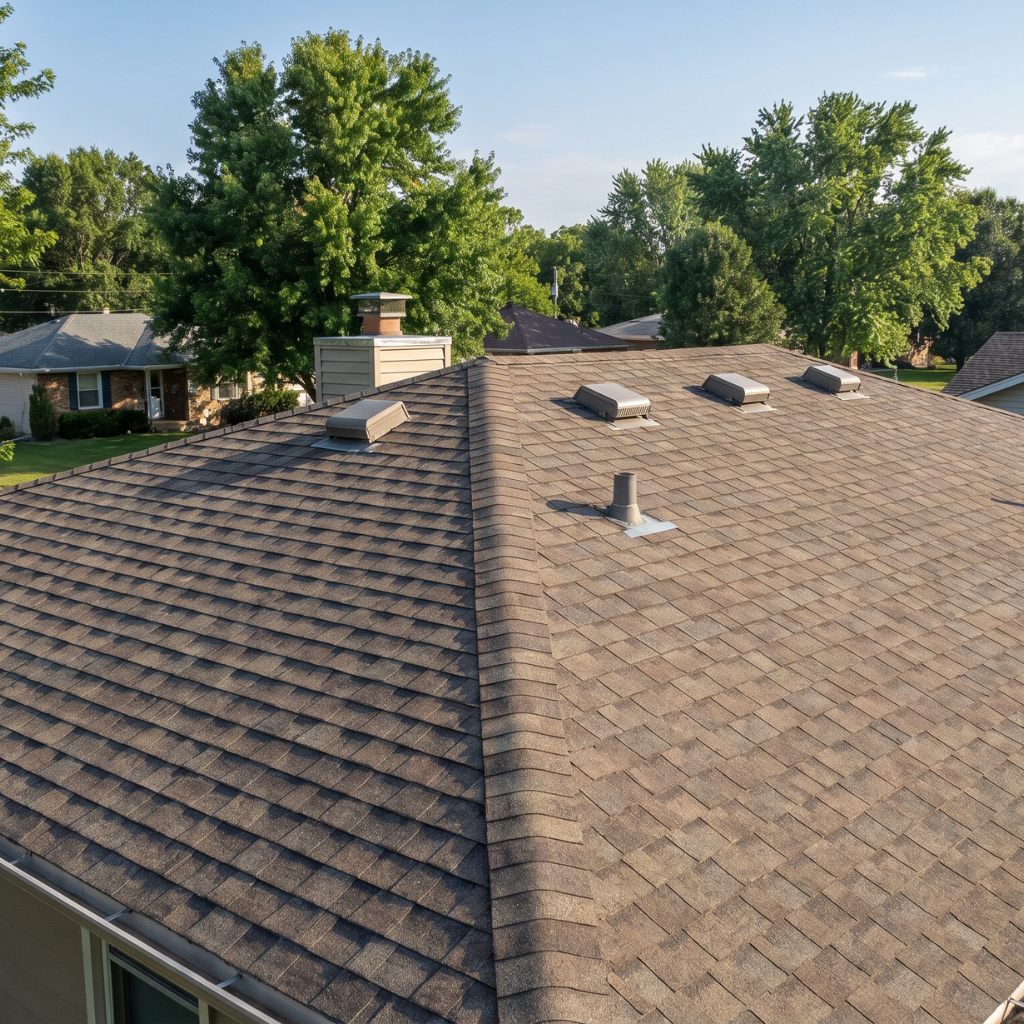
Ridge cap shingles run along the absolute peak of the roof. They are bent over the ridge, exposed on both sides, and held in place only at the fold point. That bend is where hail concentrates its force and where the asphalt mat cracks first. Large hail can punch straight through ridge caps. Smaller hail bruises the fold in ways that hold water out for a few months and then fail.
Tip: Zoom in on the full ridge line from each end of your house with your phone camera. Displaced or cracked caps are leaks waiting for the next storm.
Valleys Are Where Volume Overwhelms the System
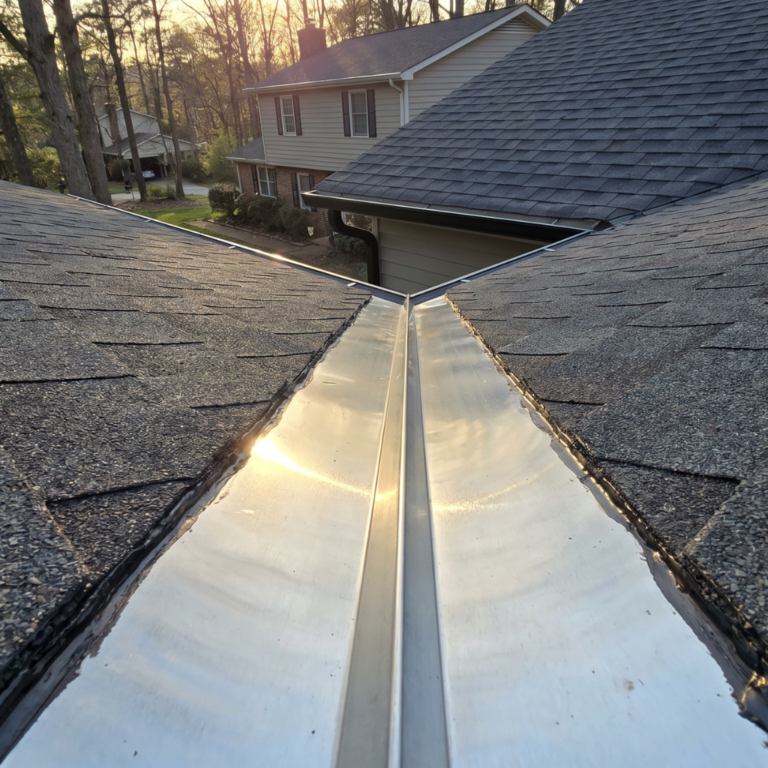
A valley is where two slopes meet in a V. Every drop from both planes flows through it. In a heavy storm in Ozark or Forsyth, the volume alone can exceed what the valley is built to handle. Hail dents valley flashing, cracks the membrane at underlayment seams, and breaks up debris that then settles into the V. A clogged valley fails even when the membrane is fine.
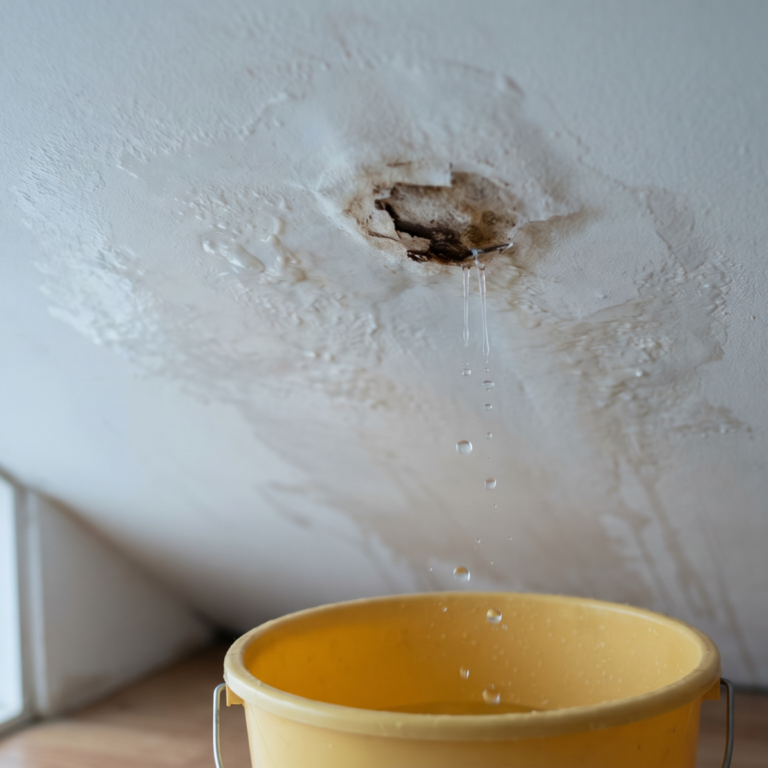
Inside, valley leaks show up as stains where two ceiling planes meet or in the corner of a dormer.
Pipe Boots Are the Hidden Leak Most Homeowners Miss
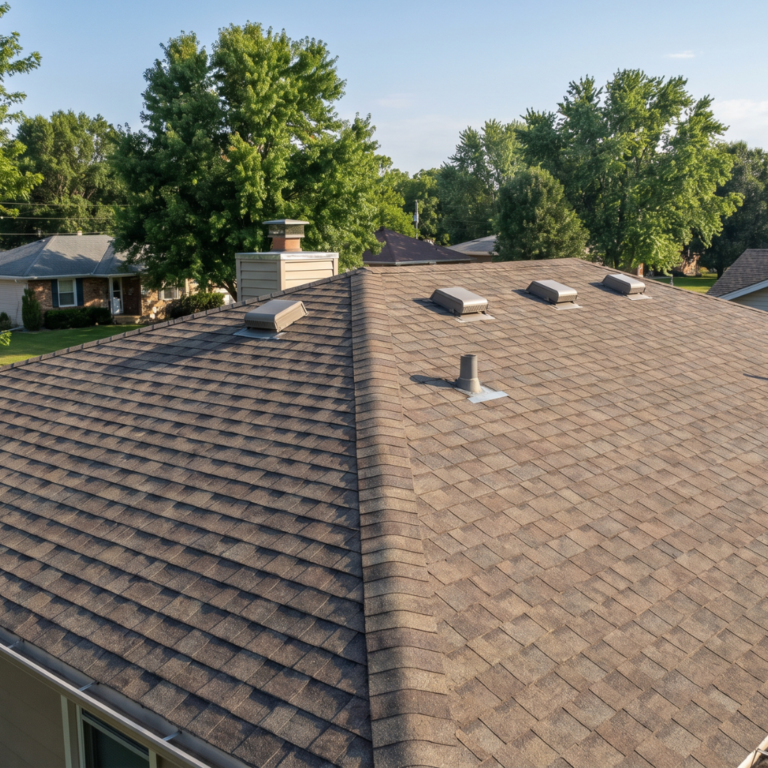
Every plumbing vent and exhaust pipe on the roof is sealed by a pipe boot, usually rubber. Standard boots last about 10 to 15 years, but most roofs last 25 to 30. Pipe boot failure is nearly guaranteed at some point. A storm just speeds up the timeline. After the official hail size data from the April 28 event was confirmed, any rubber boot approaching the end of its lifespan in Willard, Rogersville, or Galena should be treated as suspect.
Pro tip: Take a zoomed photo of every vent pipe from the ground. Cracked, compressed, or torn rubber at the base often shows up clearly even from below.
Chimney Flashing Fails Quietly and Costly
The chimney-to-roof joint uses step flashing and counterflashing sealed together with caulk or mortar. Wind-driven hail lifts the step tabs, cracks the sealant behind the counterflashing, and wedges debris into the gap. Even a slightly lifted tab works fine in vertical rain but fails the moment wind drives water sideways.
Stains on drywall near the fireplace, brown streaks down the chimney wall, or a musty smell near the hearth all point to chimney flashing damage. The same vulnerability hits dormers, additions, and porch roofs attached to the main house.
Skylights Are a Weak Link That Hail Finds
Skylights are complex assemblies. The dome, the curb, the step flashing around the curb, and the apron flashing below it all need to work together. Hail cracks older acrylic domes outright. Even when the dome survives, the impact force can loosen the seals around the curb.
After a storm of this scale, any acrylic dome on a south or west-facing slope should be inspected for crazing, the fine surface cracking that catches the light when a flashlight angles across the inside.
Soffit, Fascia, and Drip Edge Sneak Water In Below the Shingles
The drip edge is the metal strip at the roof edge that guides water into the gutter. The fascia board supports the gutter mount. The soffit is the underside of the overhang. Hail dents drip edge, pulls gutters loose, and cracks soffit panels. Dented gutters often mean dented fascia behind them.
Tip: Dented gutters on one side of the house but not the other map exactly to the storm’s direction. Photograph that pattern before any cleanup. An adjuster will read it as evidence of hail size and direction.
Field Shingles Look Fine Even When They Are Not
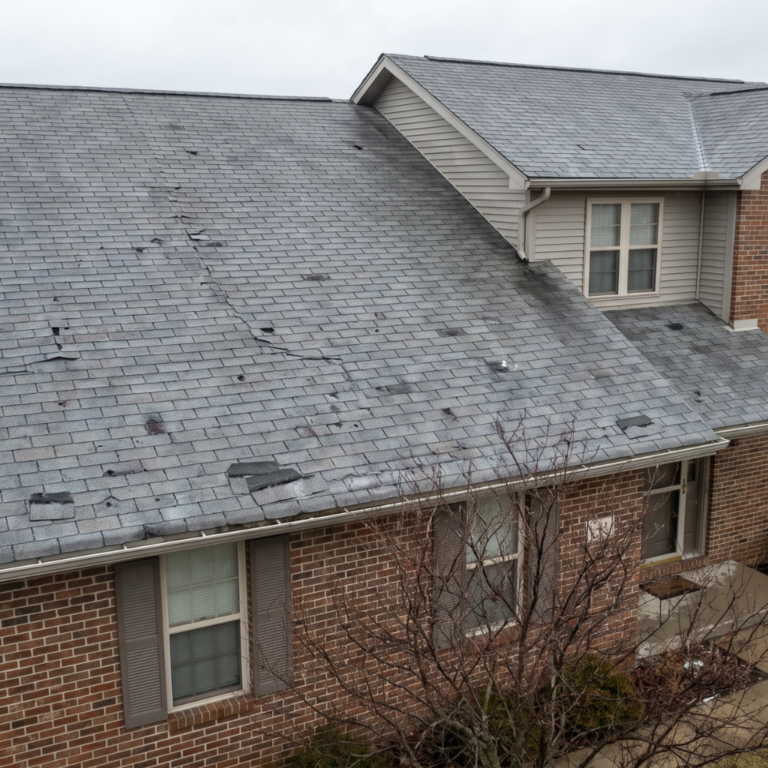
The flat field shingles are what most homeowners look at, and they are often the last thing to visibly fail. Hail bruises the asphalt mat, cracks the fiberglass webbing inside, and knocks granules off. None of that is reliably visible from the ground on dark shingles.
| Hail Size | Field Shingles | Penetrations and Metal |
|---|---|---|
| Under 1 inch | Light granule loss | Light boot wear |
| 1 to 1.5 inches | Visible granules in gutters | Older boots crack |
| 1.5 to 2 inches | Mat bruising; spongy when pressed | Newer boots split; ridge caps fold |
| 2 to 3 inches | Functional damage across slopes | Metal flashing dents and lifts |
| 3 to 4.75 inches (April 28) | Functional damage on most shingles | Even new rubber boots crack |
Class 4 shingles resist a 2-inch steel ball drop in the Class 4 testing protocol from IBHS. The April 28 storm produced hail more than twice that size. Even stronger shingle options may show functional damage. NOAA’s research on hailstones explains how supercells produce stones that large.
All Seven Zones at a Glance
| Zone | Why It Fails | Ground-Level Check | Urgency |
|---|---|---|---|
| Ridge cap | Bent shingles, fully exposed peak | Zoom on the ridge line | High |
| Valleys | High water volume, debris dams | Look for piled leaves in the V | High |
| Pipe boots | Aging rubber, direct impact | Zoom on each vent collar | High |
| Chimney flashing | Lifted step tabs, cracked sealant | Stains near the fireplace | Moderate to high |
| Skylights | Dome crazing, curb flashing | Flashlight angle on dome | Moderate |
| Soffit and fascia | Dented gutters, displaced soffit | Walk the perimeter | Moderate |
| Field shingles (S and W) | Mat bruising, granule loss | Granule piles in gutters | Often delayed |
Frequently Asked Questions
What part of my roof is most likely to leak after a hailstorm? Pipe boots, ridge caps, valleys, and flashings tend to show active leaks fastest. Field shingles often have functional damage that takes months to appear inside.
How do I know which side of my roof was hit hardest? Granule piles in gutters, dents on gutters and AC units, and splatter marks on the driveway all point to storm direction. In Southwest Missouri, south and west slopes usually take the worst of it.
Can my roof leak only in heavy rain after a hailstorm? Yes. Hail damage creates loose seals and micro-cracks that fail under high-volume rain but not light rain.
What does hail damage look like on a shingle? Circular dark spots where granules were knocked off, soft or spongy feel when pressed, random pattern across the slope. Rarely visible from the ground on dark shingles.
Should I worry about my ridge cap? Yes. Ridge caps are among the most vulnerable spots on any roof. After 2-inch or larger hail, ridge cap damage is common.
Can hail crack my pipe boots? Yes. Rubber boots are vulnerable, especially as they age. Standard boots begin showing wear around the 10-year mark, and the April 28 hail sizes are large enough to crack even newer boots.
Does a recent roof replacement mean I am safe? Newer Class 4 shingles resist hail better, but no shingle is immune at three or four inches. Pipe boots, flashing, and ridge caps are still vulnerable regardless of how recent the field is.
What happens to hail damage over winter? Springfield averages about 57 freeze-thaw cycles per year. Water seeps into hail micro-cracks, freezes, expands, and widens the crack every cycle. Spring hail damage left alone routinely becomes an active winter leak.
Key Takeaways
- Seven zones, not one. Ridge caps, valleys, pipe boots, chimney flashing, skylights, soffit edges, and field shingles all fail in different ways after hail.
- Storm direction matters. South and west slopes usually take the worst hits in Southwest Missouri spring storms.
- The gutters tell the story. Granule piles and dent patterns map directly to where the hail struck hardest.
- Field shingles look fine longer than they are. Mat bruising hides for months before becoming a leak.
- Spring damage is winter’s problem. Freeze-thaw cycles turn small hail cracks into active leaks by December.
Seven Spots. One Storm. One Crew Checks All of Them.
After a storm like April 28, 2026, the worst thing a homeowner can do is rely on a driveway-level glance. ProNail Exteriors checks all seven zones systematically, not just the obvious shingle field. Founded by Eden Branson in Ozark, the company runs vetted crews who serve Forsyth, Willard, Rogersville, Galena, Bolivar, Monett, and every community within fifty miles of Springfield. The team meets adjusters on-site and gives you the straight answer either way.
Call 844-321-6245 for a free post-hail inspection. If you have already taken photos from the ground, send us your photos and the team can give you an initial read before the visit. For a deeper dive on documenting roof damage for an insurance claim, or on whether a Class 3 vs 4 upgrade is right for a future replacement, the team can walk you through both.
ProNail Exteriors | Roofing, Siding, Windows, Gutters, Decks, and More | Serving Southwest Missouri Since 2025