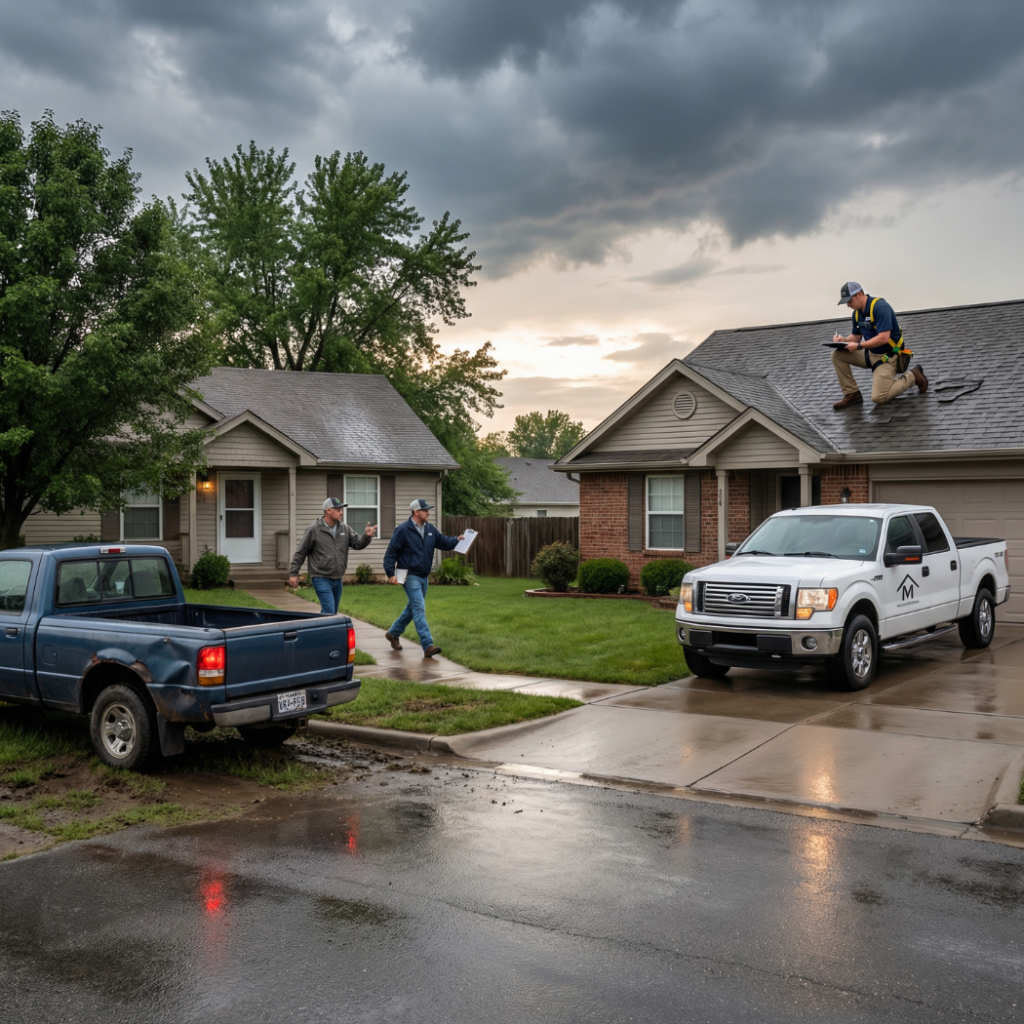
After a major hailstorm, out-of-state roofing crews flood towns like Marshfield and Springfield within hours. Many homeowners are stressed, their roof is damaged, and a stranger is at the door with a business card and a big promise. Some of these contractors do good work and leave. Others take a deposit and disappear. This post shows you how to tell the difference before you sign anything.
TL;DR: Storm chasers push for fast signatures and large deposits right after a storm. Local roofers have offices nearby, know Marshfield permit requirements, and give you time to decide. Know the 8 red flags, ask the right questions, and get at least 3 written estimates before you commit to anyone.
The hail woke you up at 2 in the morning. By 8 a.m., there is a truck in your driveway with an out-of-state plate and a guy holding a clipboard. He says he already spotted damage on your roof from the street. He can start tomorrow. He just needs a signature and a check to hold your spot.
This is not a coincidence. Storm chasers use radar apps and hail damage maps to find neighborhoods that got hit. They drive in fast, knock on every door they can reach, and try to lock in contracts before homeowners have time to think. It happens in Marshfield every spring, and it happens in Springfield and Ozark too.
By the time you finish reading this, you will know exactly what to look for. You will have a list of red flags, a list of green flags, the right questions to ask every roofer, and a step-by-step plan for what to do after a storm.
Why Storm Chasers Target Southwest Missouri
Southwest Missouri is one of the most storm-active regions in the country. According to NOAA, Missouri recorded 120 billion-dollar weather and climate disasters between 1980 and 2024. Of those, 82 were severe storm events involving hail and high winds. That is a lot of damaged roofs spread across a lot of zip codes.
Southwest Missouri sees more tornadoes than any other part of the state. The NWS Springfield forecast office covers an area that averages about 10 tornadoes per year. Peak storm season runs April through June, but severe weather hits year-round. Any given spring can bring multiple large hail events across Webster, Greene, and Christian counties.
Marshfield sits in Webster County directly in the Springfield storm corridor. That location puts it in the crosshairs every spring. Storm chasers know this. They have weather data, they have crews staged in adjacent states, and they move fast. Legitimate local companies do not need to chase storms because they already have a full schedule of homeowners who know and trust them.
Pro tip: If a roofing company showed up on your street within 24 hours of a storm, that alone is worth paying attention to. It does not mean they are dishonest, but it does mean you should ask more questions before you sign anything.
8 Red Flags of a Storm Chaser
Not every contractor who knocks after a storm is a scammer. But the following patterns should put you on high alert. If you see more than two of these together, slow down.
Red Flag 1: They knocked on your door right after the storm. Storm chasers track damage neighborhoods and send crews in within 24 to 48 hours. A trustworthy local company earns calls through reputation. They do not go hunting for jobs street by street the morning after a hailstorm.
Red Flag 2: Out-of-state license plates on their trucks. Local companies run Missouri-plated vehicles. If the whole crew drove in from Texas or Oklahoma, they will drive back after the job is done. When your roof leaks six months later, there is no one to call.
Red Flag 3: They left “free inspection” flyers or door hangers on your street. The BBB has specifically flagged mass door-hanger free inspection campaigns as a known storm chaser tactic following major weather events. Local roofers build their business through word of mouth and repeat customers, not mass marketing the morning after a storm.
Red Flag 4: High-pressure sales — “Sign today or you will lose your insurance claim.” This is not how insurance works. Claim deadlines are set by your policy and your carrier, not by a roofer’s timeline. Any contractor who pressures a same-day signature is trying to stop you from comparing options.
Red Flag 5: A large upfront cash deposit — 30 to 50 percent before work starts. The industry standard for a deposit is anywhere from zero to 10 percent. A large deposit funds their travel expenses and makes it easier for them to walk away. You have very little leverage once that money is gone.
Red Flag 6: No local office or physical address — just a phone number. If there is no local office, there is no one to call when your roof leaks next spring. Any contractor worth hiring can tell you their office address without hesitation.
Red Flag 7: “We work directly with your insurance” or “We handle your claim for you.” Roofers can help you document damage and answer questions from your adjuster. They cannot legally manage your insurance claim. This promise often leads to assignment of benefits problems where you lose control of your own coverage.
Red Flag 8: They disappear after payment. No return calls, no warranty service, no one at the number they gave you. The Missouri Attorney General has pursued felony charges against roofing contractors who collected deposits from homeowners in Greene County and abandoned the work entirely. These are not isolated incidents.
The table below gives you a quick reference for each red flag and what to do when you spot it.
| Red Flag | Why It Is Dangerous | What to Do |
|---|---|---|
| Door knocking right after a storm | Targets homeowners in a vulnerable moment | Do not sign anything on the spot |
| Out-of-state trucks and plates | No local accountability after the job | Ask for local office address |
| Large upfront cash deposit | Funds their exit strategy | Never pay more than 10% upfront |
| “Sign today” pressure | Prevents you from comparing options | Take 7 to 10 days minimum |
| “We will file your claim” | Assignment of benefits risk | File the claim yourself |
Pro tip: Before you meet with any roofing company, search their name plus the word “scam” and their name plus “reviews” in Google. Spend five minutes doing that before you let anyone on your roof.
8 Green Flags of a Trustworthy Local Roofer
Knowing what to look for in a good contractor is just as important as knowing what to avoid.
Green Flag 1: Permanent office within 50 miles of Marshfield. A local address means accountability. If something goes wrong on your roof in 18 months, there is somewhere to go and someone to talk to.
Green Flag 2: In-house crews — no subcontractors. When a company uses its own trained, supervised crews on every job, quality stays consistent. With subcontractors, you have no idea who is actually on your roof.
Green Flag 3: They know Marshfield and Webster County permit requirements. A contractor who does regular work in this area knows exactly which permits are needed and who pulls them. Vague answers about permits are a warning sign.
Green Flag 4: They show proof of liability insurance AND workers compensation before starting. Both certificates matter. If a worker gets hurt on your property and the contractor has no workers compensation coverage, you could be responsible.
Green Flag 5: They provide a detailed written estimate. Everything — materials, labor, timeline, warranty — should be in writing before you sign. Verbal promises disappear the moment there is a disagreement.
Green Flag 6: They give you time to decide. An honest company wants you to make a good decision, not a fast one. If a contractor tells you the offer expires tonight, that is pressure, not service.
Green Flag 7: They offer a labor warranty separate from the shingle manufacturer warranty. Manufacturer warranties cover materials. Labor warranties cover the installation itself. Both matter. Ask specifically what the labor warranty covers and for how long.
Green Flag 8: They have Google reviews from local homeowners year-round. Storm chasers come in, collect a wave of reviews during peak season, and disappear. A local company with reviews spread across multiple years from Marshfield, Springfield, and nearby towns has a real track record.
Here is a quick reference table for when you are sitting across from a contractor and need to know what to ask.
| Green Flag | Why It Matters | Question to Ask |
|---|---|---|
| Local office | Warranty service is actually possible | “What is your office address?” |
| In-house crews | Consistent quality and accountability | “Do you use subcontractors?” |
| Permit knowledge | Code compliance and legal protection | “Who pulls the Marshfield permit?” |
| Dual insurance certificates | Protects you if a worker is injured | “Can I see both certificates today?” |
| Written estimate | No surprise charges after the job starts | “Can I get everything in writing?” |
Pro tip: Ask if you can visit their local office before you sign anything. A company with nothing to hide will say yes without hesitation. If they do not have a local office at all, that tells you what you need to know.
What Happens When You Choose the Wrong Roofer
Storm chaser roofs often fail within 6 to 18 months. The installation looks fine from the street, but shortcuts in underlayment, flashing around chimneys and vents, and fastener placement create problems that do not show up until the next heavy rain. By then, the crew is working a storm zone in another state.
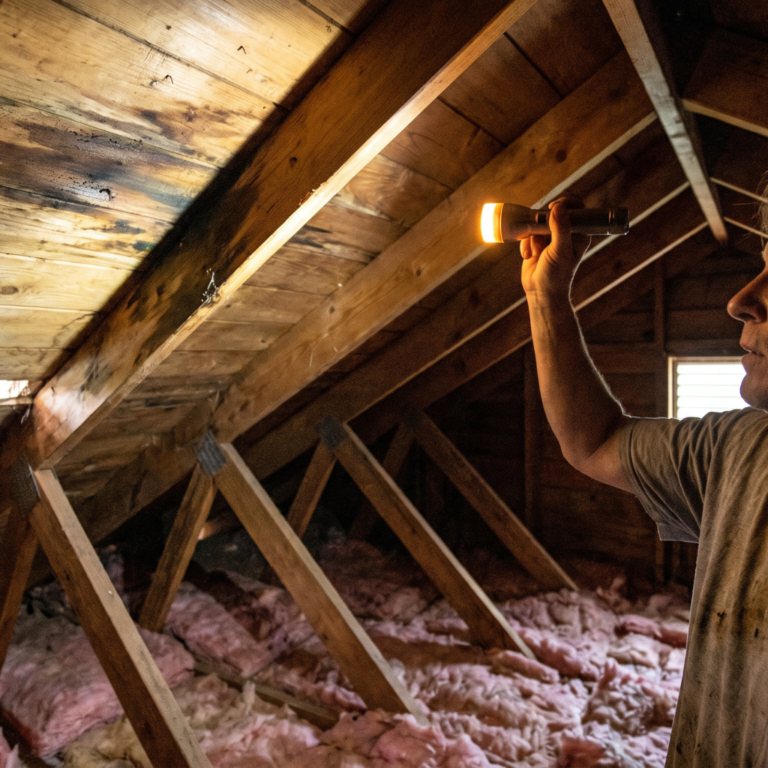
Water gets in through a bad seam or a missed flashing detail. Drywall soaks. Insulation takes on moisture. What started as a manageable storm claim becomes a much larger interior repair. And your insurance company may be reluctant to pay a second claim for the same area when the first repair was done by a contractor who did not pull a permit and cannot be found.
The Missouri Attorney General has also filed felony charges against contractors who collected large deposits from homeowners and abandoned jobs before completion. This has happened in both Greene County and Jackson County. These cases are not rare exceptions. They represent a well-documented pattern that follows major storm seasons across Missouri.
Pro tip: A roof done wrong always costs more to fix than one done right the first time. The savings from going with the cheapest, fastest option rarely survive the first big rain.
7 Questions to Ask Every Roofer Before Signing
Before you let anyone on your roof or sign any paperwork, ask these seven questions. Write down every answer. Then compare your notes across at least three companies.
- Do you have a local office within 50 miles of Marshfield?
- Do you use your own in-house crews, or do you hire subcontractors for this job?
- Can I see your liability insurance and workers compensation certificates today?
- Who pulls the building permit with the Marshfield or Webster County building department?
- What is your labor warranty, separate from the shingle manufacturer warranty?
- How many roofs have you completed in this zip code in the last 12 months?
- Can you give me three local references from jobs completed in the last six months?
For more common questions about roofing and the process of choosing a contractor, visit our frequently asked questions page.
Pro tip: Any contractor who gets defensive, vague, or impatient when you ask these questions is telling you something important. A good contractor expects these questions and welcomes them.
Your Step-by-Step Action Plan After a Marshfield Storm
When a storm hits, the pressure to act fast can feel real. Here is the right order to do things so you protect yourself at every step.
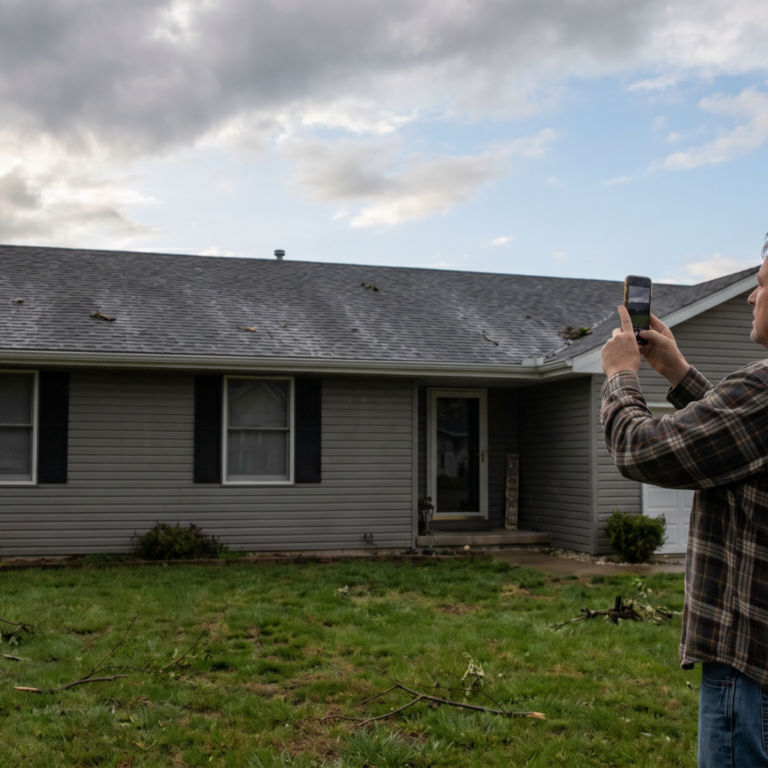
- Walk your property from the ground and photograph all visible damage from multiple angles. Get the gutters, the vents, the AC unit, and any shingles on the ground.
- Check your gutters for shingle granules, which look like coarse sand. Granule loss is one of the first signs of hail impact.
- Contact two or three local, insured roofing companies for written estimates. Give yourself 7 to 10 days to gather them before committing.
- Call your insurance agent to report the damage and begin your claim. Do this yourself, not through a contractor.
- Compare all written estimates side by side. Look at materials, labor warranties, permit responsibility, and timeline.
- Confirm that your chosen contractor will pull permits before any work begins. In Marshfield and across Webster County, permits are required for full roof replacements. The ICC building code standards that most Missouri cities follow require permit-pulled inspections on structural roofing work.
- Do not release the final payment until the job passes inspection.
The table below lays out a reasonable timeline so you are not rushing decisions or letting things drag.
| Timeframe | What to Do |
|---|---|
| Day 1 to 2 | Photograph all damage from multiple angles |
| Day 3 to 7 | Get 3 written estimates from local, insured companies |
| Day 7 to 10 | File your insurance claim directly with your agent |
| Day 10 to 14 | Choose your contractor and sign a written contract |
| After completion | Release final payment only after inspection passes |
Pro tip: Never sign an assignment of benefits form without speaking to an attorney first. This form transfers your insurance claim rights directly to the contractor. Once you sign it, you lose control over your own coverage.
FAQs About Storm Chasers vs Local Roofers
Q: How do storm chasers find my house so fast after a storm?
They use weather radar apps and hail tracking services that map damage zones in near real-time. Some purchase storm data that shows exactly which zip codes received significant hail. Crews are staged in advance during peak storm season and can be on the road within hours of a major weather event.
Q: Are all out-of-state roofers storm chasers?
Not every out-of-state contractor is a scammer, but the risk increases significantly when a company has no local office and showed up right after a storm. Always verify proof of insurance, ask for a local office address, and request references from homeowners in this area before signing anything.
Q: What is assignment of benefits in roofing?
Assignment of benefits is a legal document that transfers your insurance claim rights to the contractor. Once you sign it, the contractor deals directly with your insurance company and you lose the ability to manage or dispute the claim yourself. Never sign this without consulting an attorney first.
Q: Should I let a roofer file my insurance claim for me?
A roofer can and should help you document the damage, walk the roof with the adjuster, and answer technical questions. But the claim itself should be filed by you. Letting a contractor take control of your claim is a warning sign, not a service.
Q: How do I verify a roofing contractor’s insurance?
Ask for a certificate of insurance showing both general liability coverage and workers compensation. Then call the insurance company listed on the certificate directly to confirm that the policy is active. A photo of a card is not enough. Confirm it independently.
Q: Does Marshfield require a permit for roof replacement?
Yes. Roof replacements in Marshfield require a building permit through the city or Webster County building department. Your contractor is responsible for pulling that permit before work begins. If a contractor tells you permits are not necessary for a standard reroof, that is a red flag.
Q: Why do local roofers seem slower than storm chasers?
Local companies with solid reputations are already busy. Their schedule is full because homeowners in the area trust their work and refer their neighbors. That pace is actually a good sign. Storm chasers move fast because they are collecting deposits, not because they are more efficient.
Q: Can a storm chaser really get my insurance to pay faster?
No. Insurance timelines are controlled entirely by your carrier. No contractor can speed up an adjuster’s schedule or approval process. Any roofer who promises faster insurance payment is making a claim they have no ability to keep.
Q: What should I do if a storm chaser roof starts leaking?
Try to reach the company first. If they do not respond, file a complaint with the Missouri Attorney General’s office and the Better Business Bureau. Document everything in writing. You may need to hire a local contractor to fix the damage and pursue the original contractor through small claims court or an attorney.
Q: How many estimates should I get after storm damage?
Get at least three written estimates from local, insured companies. Compare materials, warranties, timelines, and whether permits are included in the scope of work. The goal is not just the lowest price. It is the best combination of materials, accountability, and long-term protection.
Key Takeaways
Why Southwest Missouri is a storm chaser target
- Missouri has seen 120 billion-dollar disasters since 1980, with 82 severe storm events involving hail and wind.
- Southwest Missouri sees more tornadoes than any other part of the state. Marshfield sits directly in the Springfield storm corridor.
8 red flags to watch for
- Door knocking right after a storm, out-of-state plates, free inspection door hangers, same-day signature pressure, large cash deposits, no local office, promises to manage your claim, and no response after payment.
8 green flags to look for
- Local office within 50 miles, in-house crews, permit knowledge, dual insurance certificates, written estimates, time to decide, a labor warranty, and year-round local reviews.
Protecting yourself
- Get at least 3 written estimates from local, insured companies before signing.
- File your own insurance claim. Do not hand that control to a contractor.
- Never sign an assignment of benefits form without speaking to an attorney.
- Permits are required for roof replacement in Marshfield and Webster County.
Ready to Get a Straight Answer About Your Roof?
If a storm just hit Marshfield or anywhere nearby in Southwest Missouri, you do not have to figure this out alone. ProNail Exteriors is based in Ozark and serves Marshfield, Springfield, and all of Southwest Missouri with in-house crews and no subcontractors. Every job starts with an honest inspection and ends with work we stand behind.
Get a free roof inspection with zero pressure. ProNail Exteriors will tell you exactly what they see, walk you through your options for roof repair or full roof replacement, and help you navigate the insurance process without handing your claim rights to anyone. You make the call when you are ready.
Give us a call at 844-321-6245 or head to pronailexteriors.com to schedule yours.
ProNail Exteriors | Roofing, Siding, Windows, Gutters, Decks, and More | Serving Southwest Missouri Since 2025