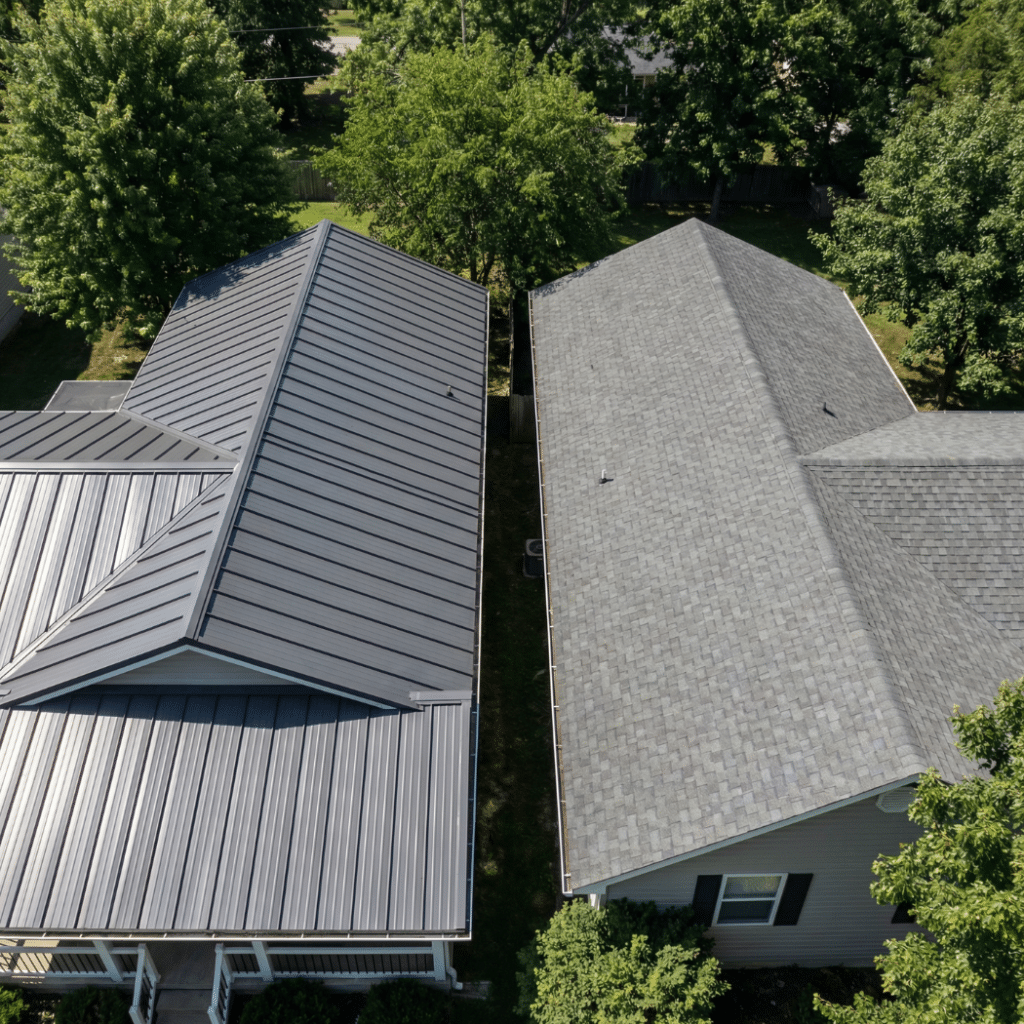
If you are replacing your roof and a contractor brought up both asphalt shingles and standing seam metal, you are probably trying to figure out whether the price difference is worth it. Both options protect your home, but they do it differently, they last differently, and they cost differently over time. This guide breaks down storm performance, lifespan, maintenance, and long-term cost so you can make the right call for your home in Rolla or anywhere across Southwest Missouri.
TLDR: Asphalt shingles cost less upfront and fit a traditional look. Standing seam metal handles bigger hail, lasts 50 or more years, and typically costs less when you look at the full picture over 30 years. For Rolla and Southwest Missouri homeowners dealing with regular hailstorms and high winds, metal roofing is the stronger long-term investment for most situations. Keep reading to see exactly how the two stack up.
You asked a roofer a simple question and got a complicated answer. Shingles or metal? Each contractor seems to have a strong opinion, and neither one fully explains why the price is what it is or what you are actually getting for the difference.
Here is what matters in Rolla and across Southwest Missouri: this region gets hit hard. Missouri has recorded 120 billion-dollar weather and climate disasters between 1980 and 2024, and 82 of those were severe storm events involving hail and high winds. Your roof is not just a cosmetic choice. It is the primary thing standing between your home and repeated storm damage.
In this guide, we cover the basics of how each material works, how they perform in real Southwest Missouri storms, which one lasts longer, and how to decide which is right for your home.
How Standing Seam Metal and Asphalt Shingles Are Built
Before comparing how they perform, it helps to understand what each material actually is.
Asphalt shingles are flat pieces made from asphalt and mineral granules. They overlap each other like fish scales, with each row nailed down through the one below it. They are the most common residential roofing material in the country, and most homeowners have lived under them at some point.
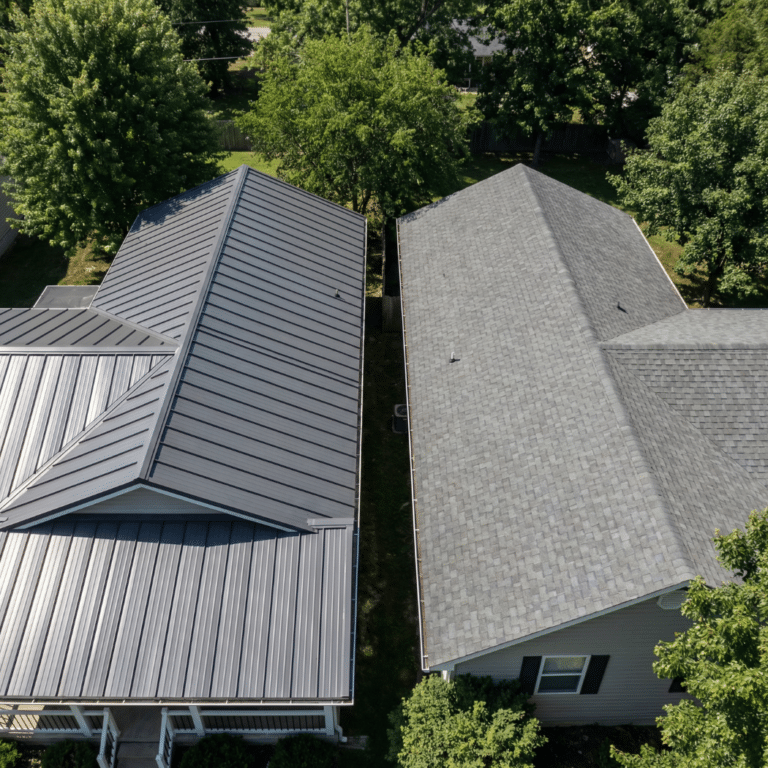
Standing seam metal panels are long steel or aluminum sheets that run vertically from the ridge of your roof to the edge. The panels connect to each other through raised, interlocking seams. There are no exposed nails or fasteners on the surface of the roof. Each panel clips to the roof deck underneath and locks to its neighbor at the seam.
The table below lays out the basic differences between the two materials.
| Feature | Asphalt Shingles | Standing Seam Metal |
|---|---|---|
| Material | Asphalt and granules | Steel or aluminum panels |
| How It Attaches | Nailed through each layer | Clips to deck, no exposed fasteners |
| Appearance | Traditional, blends in | Modern, clean lines |
| Best For | Budget-conscious or traditional homes | Long-term ownership, storm areas |
The absence of exposed fasteners on standing seam metal is a big deal. Every nail hole in a shingle roof is a potential leak point over time. Standing seam eliminates that vulnerability entirely.
Pro tip: When comparing quotes, ask each contractor how the panels or shingles attach to the roof deck. In-house crews who install both materials daily will give you a straight answer on which system makes more sense for your home.
Storm Performance in Southwest Missouri: Hail and Wind
This is where the two materials separate most clearly for Rolla homeowners.
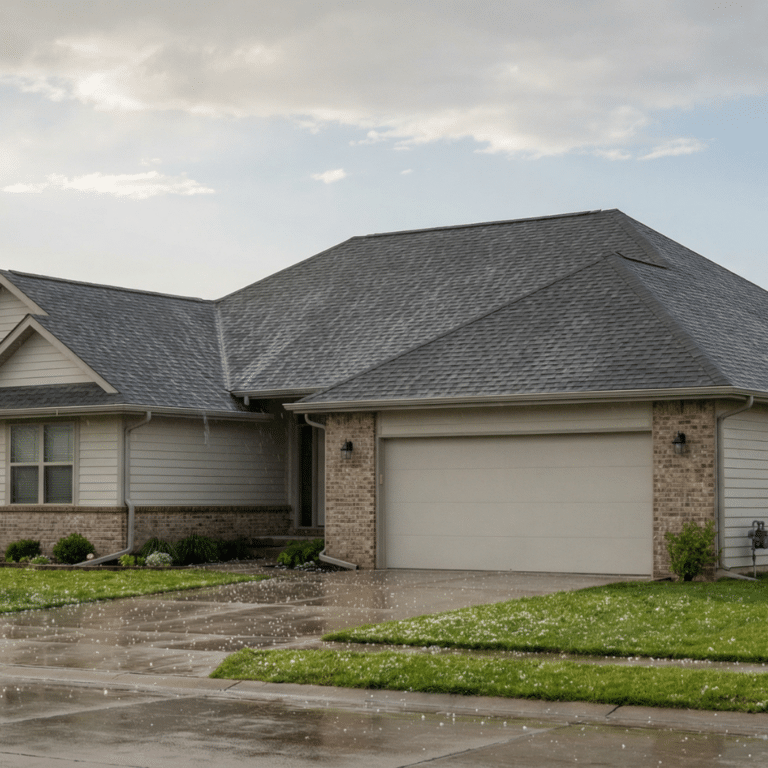
Southwest Missouri sees hail between 1 and 1.5 inches several times each year. Hail in the 2 to 2.5-inch range comes through every few years. The Springfield NWS forecast area, which covers Phelps County and Rolla, logs approximately 10 tornadoes per year along with frequent severe hail events.
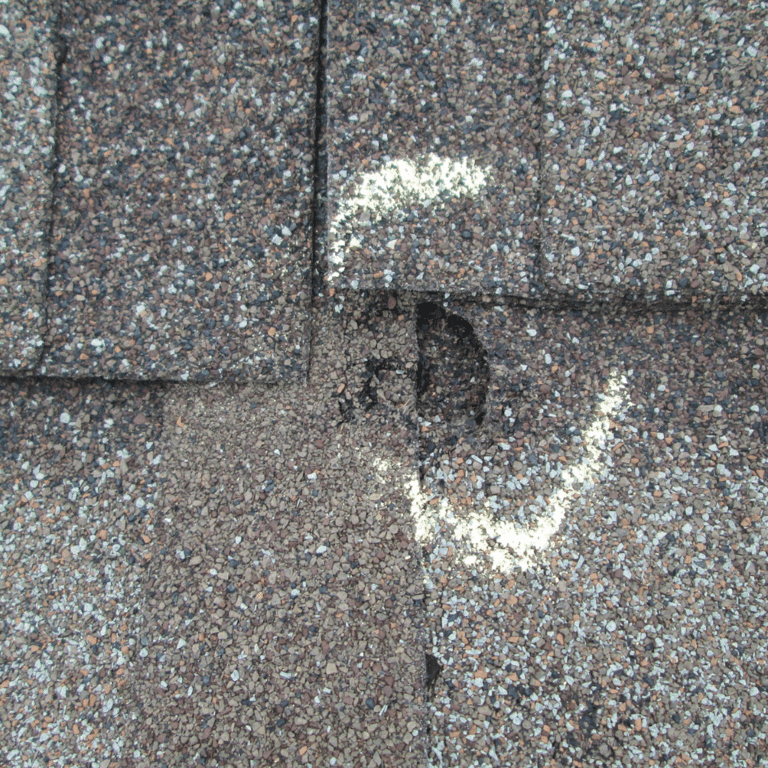
Class 4 asphalt shingles, which are the highest impact-resistant asphalt option available, are rated to survive hail up to about 2 inches under the UL 2218 test. Standing seam metal holds up against hail up to 2.5 to 3 inches. Metal panels may show minor dents at that size, but they do not crack, split, or allow water intrusion the way shingles can.
The table below shows how each material handles the kinds of storms common to Rolla and Springfield.
| Storm Type | Asphalt Shingles (Class 4) | Standing Seam Metal |
|---|---|---|
| 1.5 to 2 inch hail | Possible cracking, granule loss | Survives without damage |
| 2.5 inch and larger hail | Likely failure, leaks possible | Minor dents only, watertight |
| 130 MPH winds | Edge lift risk | Secure, stays in place |
| Ice and snow | Ice dams possible | Sheds snow and ice naturally |
Wind resistance tells a similar story. Class 4 shingles are rated for 110 to 130 MPH wind uplift. Standing seam metal is rated for 140 to 160 MPH. The interlocking seam system and clipped installation make it significantly harder for wind to get under the panels.
Metal also sheds snow and ice better because the smooth surface lets frozen precipitation slide off rather than accumulate. This eliminates ice dam risk, which can be a real problem for shingle roofs during January and February in Southwest Missouri.
Pro tip: Metal roofs rarely need storm repairs in Southwest Missouri. That means fewer calls, fewer insurance claims, and fewer times you need a crew back on your roof after a bad spring.
Lifespan, Warranties, and Maintenance
Lifespan is one of the strongest arguments for standing seam metal roofing when you plan to stay in your home long-term.
Asphalt shingles typically last 20 to 40 years depending on the product, installation quality, and how many storms they absorb along the way. In a storm-heavy climate like Southwest Missouri, shingles at the lower end of that range are not uncommon. Annual inspections are recommended, and repairs are likely every five to ten years. Most residential shingle warranties are lifetime but carry prorated terms, meaning coverage decreases significantly over time.
Standing seam metal lasts 50 or more years with minimal care. Annual cleaning is the main maintenance task. Metal roofs rarely need repairs and often outlast the mortgage on the home. Metal warranties run 40 to 70 years and tend to hold their coverage longer.
| Factor | Asphalt Shingles | Standing Seam Metal |
|---|---|---|
| Lifespan | 20 to 40 years | 50+ years |
| Maintenance | Annual inspection, repairs every 5-10 years | Annual cleaning |
| Warranty | Lifetime (prorated) | 40 to 70 years |
| Replacements Over 50 Years | 1 to 2 full roofs | None |
In Southwest Missouri’s climate, shingles at the middle of their lifespan have already been hit by dozens of storms. Metal is built to absorb all of that and keep going.
Pro tip: When evaluating your options, think about how many times you want a roofing crew back on your home over the next 50 years. Metal is typically once. Shingles are not.
30-Year Cost of Ownership
Upfront cost is usually the first thing homeowners notice. Standing seam metal costs more to install than asphalt shingles. That is a real number and it matters. But it is only part of the picture.
When you add up the repairs every five to ten years, the potential for one full replacement mid-life, and the insurance savings that often come with a metal roof, the total cost over 30 years often lands lower for metal than shingles. Metal also reflects heat away from the attic, which can reduce cooling costs during Missouri summers.
| Cost Factor | Asphalt Shingles | Standing Seam Metal |
|---|---|---|
| Upfront cost | Lower | Higher |
| Repairs | Every 5-10 years | None expected |
| Replacements | 1 to 2 over 50 years | None |
| Insurance discount | Moderate (Class 4 shingles) | Often higher for metal |
| Energy savings | Standard | Metal reflects heat |
| Total 30-year cost | Higher | Lower for most homeowners |
For insurance claims related to storm damage, metal roofs file far fewer claims over time. That track record is part of why many Missouri carriers offer stronger discounts for metal.
Pro tip: Ask your insurance agent what discount your carrier offers specifically for standing seam metal roofing before your replacement is scheduled. That annual savings number changes the math on total cost significantly.
Aesthetics and Home Value
This is where personal preference matters, and both materials have real strengths.
Asphalt shingles offer a traditional look that blends in with most neighborhoods. They come in many colors and profiles and work well for craftsman, colonial, or classic home styles. For homeowners who want a roof that looks like every other roof on the street, shingles are the natural choice.
Standing seam metal has a clean, modern appearance with visible vertical lines and a low-profile seam. It works especially well on farmhouses, contemporary homes, and any style where clean geometry is part of the design. It stands out in a neighborhood and tends to appeal to buyers looking for a newer, lower-maintenance home.
Metal roofing can add 4 to 6 percent to home value in storm-prone areas. For a home in Rolla or Springfield, that is a meaningful return when it comes time to sell.
Pro tip: Metal roofing is available in a wide range of colors and finishes, so it is not limited to gray or silver. Talk to your installer about options that match your home’s style before assuming metal will not fit your look.
Rolla Homeowner Decision Guide: Which Roof Is Right for You?
Rolla sits in Phelps County and requires permits for roofing projects through the city building department. Springfield has its own building codes and permit requirements. Both cities follow versions of the IRC and IBC. Missouri does not have a statewide general contractor license, so look for a roofing contractor who is insured, experienced, and uses their own in-house crews. ProNail Exteriors handles permits as part of every roof replacement project.
Here is how to match the right material to your situation.
| Priority | Asphalt Shingles | Standing Seam Metal |
|---|---|---|
| Tighter upfront budget | Best fit | Consider long-term cost |
| Maximum storm protection | Good (Class 4) | Best choice |
| Staying 10+ years | Situational | Best choice |
| Traditional neighborhood look | Best fit | Situational |
| Long-term lowest total cost | Situational | Best choice |
Choose shingles if you are selling within a few years, working with a tight cash budget, or your home style calls for a traditional look. Choose standing seam metal if you plan to stay long-term, want the strongest storm protection available, and want a roof you do not have to think about for decades.
Illustrative scenario: A Rolla homeowner replaced an 18-year-old shingle roof after wind damage. They chose standing seam metal for the 50-year lifespan and the reduction in future repair calls. Over the next few years, two hail events came through the area. Neighbors with shingle roofs filed repair claims both times. The metal roof showed no functional damage either time. When the homeowner eventually sold the property 25 years later, the metal roof was still in excellent condition and factored positively into the sale.
Pro tip: Get two or three quotes from local contractors before deciding. Ask each one to walk you through both options and explain the long-term cost difference. An honest contractor will not push you toward the most expensive choice if it does not fit your situation.
Frequently Asked Questions About Metal Roof vs Shingles
For more answers to common roofing questions, visit our FAQs page.
Q: What is stronger, shingles or standing seam metal?
A: Standing seam metal is stronger in every measurable category. It handles larger hail, higher wind speeds, and lasts significantly longer than asphalt shingles. Class 4 asphalt shingles are the strongest shingle option available, but standing seam metal still outperforms them in storm resistance. For Southwest Missouri homeowners dealing with regular severe weather, that difference is meaningful.
Q: Do metal roofs dent from hail?
A: They can dent from very large hail, but they do not crack or allow water in the way shingles do. Hail up to 2.5 to 3 inches typically causes only cosmetic denting on metal panels. The roof remains fully watertight. Shingles, by contrast, can crack, lose granules, and eventually allow leaks when struck by hail at or above their rated size.
Q: How long does standing seam metal last in Missouri?
A: Standing seam metal typically lasts 50 years or more, even in storm-active climates like Southwest Missouri. With annual cleaning and no major repairs needed, it is common for metal roofs to outlast the original homeowner’s tenure in the home. Shingles in the same climate last 20 to 40 years depending on storm exposure and maintenance.
Q: Are metal roofs noisier in rain?
A: Metal roofs on homes with standard attic insulation and a roof deck are not noticeably louder than shingle roofs. The decking and insulation absorb most of the sound. This is a common concern that rarely proves to be a real issue after installation.
Q: Can I walk on standing seam panels?
A: You can, but it takes care. Standing seam metal can be slippery when wet, and walking on the panels incorrectly can dent them. For inspections or maintenance, it is better to have a trained installer do the roof walking. ProNail Exteriors handles all roof access as part of our inspection and installation process.
Q: Does Rolla require permits for metal roofing?
A: Yes. Roofing projects in Rolla go through the city building department, and permits are typically required for full replacements and material type changes. Requirements can differ for properties in unincorporated Phelps County. ProNail Exteriors handles the permit process for every project so you do not have to navigate it on your own.
Q: Is metal roofing worth it compared to shingles?
A: For most Rolla and Southwest Missouri homeowners who plan to stay in their home long-term, yes. The higher upfront cost is offset by zero repair costs, a longer lifespan, energy savings, and typically stronger insurance discounts. For shorter-term ownership or tighter cash budgets, Class 4 shingles are still a strong and sensible choice.
Q: What colors are available for standing seam metal roofing?
A: Standing seam metal comes in a wide range of colors, from neutral grays and tans to bold reds, greens, and blues. Most manufacturers offer dozens of factory finishes. ProNail Exteriors can walk you through available colors and finishes based on your home style and neighborhood during your free estimate.
Q: Do metal roofs save on energy bills?
A: Yes, in most cases. Metal roofs reflect solar heat away from the attic, which reduces cooling loads during Missouri summers. This can translate to noticeable savings on air conditioning over time. Shingles absorb more heat, which transfers into the attic and makes cooling systems work harder.
Q: How do I choose between shingles and metal for my home?
A: Start with three questions. How long do you plan to stay in the home? What is your upfront budget versus your long-term cost tolerance? And how important is maximum storm protection to you? If you are staying long-term and want the strongest protection with the lowest total cost over time, metal is typically the answer. If upfront cost is the deciding factor, Class 4 shingles are a strong second choice. ProNail Exteriors can walk you through both options in detail at your free inspection.
Key Takeaways
Storm Protection
- Standing seam metal handles hail up to 2.5 to 3 inches. Class 4 shingles are rated for about 2 inches.
- Metal wind resistance tops out at 140 to 160 MPH. Shingles reach 110 to 130 MPH.
- Metal sheds ice and snow naturally, eliminating ice dam risk.
Lifespan and Maintenance
- Standing seam metal lasts 50 or more years. Asphalt shingles last 20 to 40 years in Southwest Missouri.
- Metal needs annual cleaning only. Shingles need annual inspections and repairs every 5 to 10 years.
- In 50 years, you will likely replace shingles one to two times. Metal stays in place.
Cost Over Time
- Metal costs more upfront. Shingles cost more over 30 years when you add repairs, replacements, and storm claims.
- Metal roofs often qualify for stronger insurance discounts than shingles.
- Metal reflects heat and can reduce summer cooling costs.
Aesthetics and Value
- Shingles offer a traditional look that fits most neighborhoods.
- Metal adds a modern, clean appearance and can increase home value 4 to 6 percent in storm areas.
- Both are available in many colors and styles.
Choosing the Right Material
- Metal is the best long-term choice for Rolla and Southwest Missouri homeowners planning to stay 10 or more years.
- Class 4 shingles are the right choice when upfront budget is the primary constraint or when short-term ownership is the plan.
- Permits are required in Rolla and Springfield for either option. ProNail Exteriors handles them.
Which Roof Makes Sense for Your Home? Let’s Talk.
You now have a clear side-by-side picture of how these two materials compare in the conditions Southwest Missouri actually delivers. The next step is a conversation with a team that knows this region and will give you a straight answer.
ProNail Exteriors serves Rolla, Ozark, Springfield, and all of Southwest Missouri with multiple in-house crews and no subcontractors. Every project starts with a free inspection and an honest walk-through of your options.
Here is what working with us looks like:
- Free roof inspection with no pressure and no scare tactics
- Honest comparison of standing seam metal vs shingles for your specific home
- Help with storm damage documentation and the insurance claim process
- In-house crews that are professional, clean, and respectful of your property
- A 6-star experience at a fair price, every time
Ready to get started?
Contact ProNail Exteriors for your free estimate today.
We serve Rolla, Ozark, Springfield, and all of Southwest Missouri.
ProNail Exteriors | Roofing, Siding, Windows, Gutters, Decks, and More | Serving Southwest Missouri Since 2025