TLDR: Most roof leaks do not come from a missing shingle. They come from a failed valley or a piece of bent flashing, the metal that seals the seams where your roof meets a wall, a chimney, or a vent. In Strafford, aging homes and Greene County hail make these failures common. Hail bent flashing is a covered insurance event that adjusters often miss, so a roof level inspection and good documentation matter as much as the repair itself.
The water stain showed up on your ceiling, and your first thought was a missing shingle. Almost always, it is not. The most common source of a roof leak is a valley or a flashing failure, and most homeowners cannot tell the two apart, let alone spot which one is causing the problem.
Here is why that matters in Strafford specifically. Homes on the east side of the Springfield metro are aging into the exact window where original flashing wears out. A good shingle roof can run twenty years or more, but the thin aluminum flashing installed on a 1980s or 1990s home is often past its useful life well before the shingles are. Add the hail that rolls through the Greene County storm corridor, and you have the most common hidden leak source in the area.
This guide explains valleys and flashing in plain language, shows you how to tell what is failing, and walks through what a real repair looks like. It also covers the part that saves homeowners the most money: when hail bends your flashing, that is a covered insurance event, and it is one adjusters miss all the time. If your situation turns out to be bigger than a single repair, professional roof repair in Strafford starts with knowing exactly what you are dealing with.
What Are Valleys and Flashing, in Plain Language
Two parts of your roof do the hardest work against water, and they are the two most likely to leak.
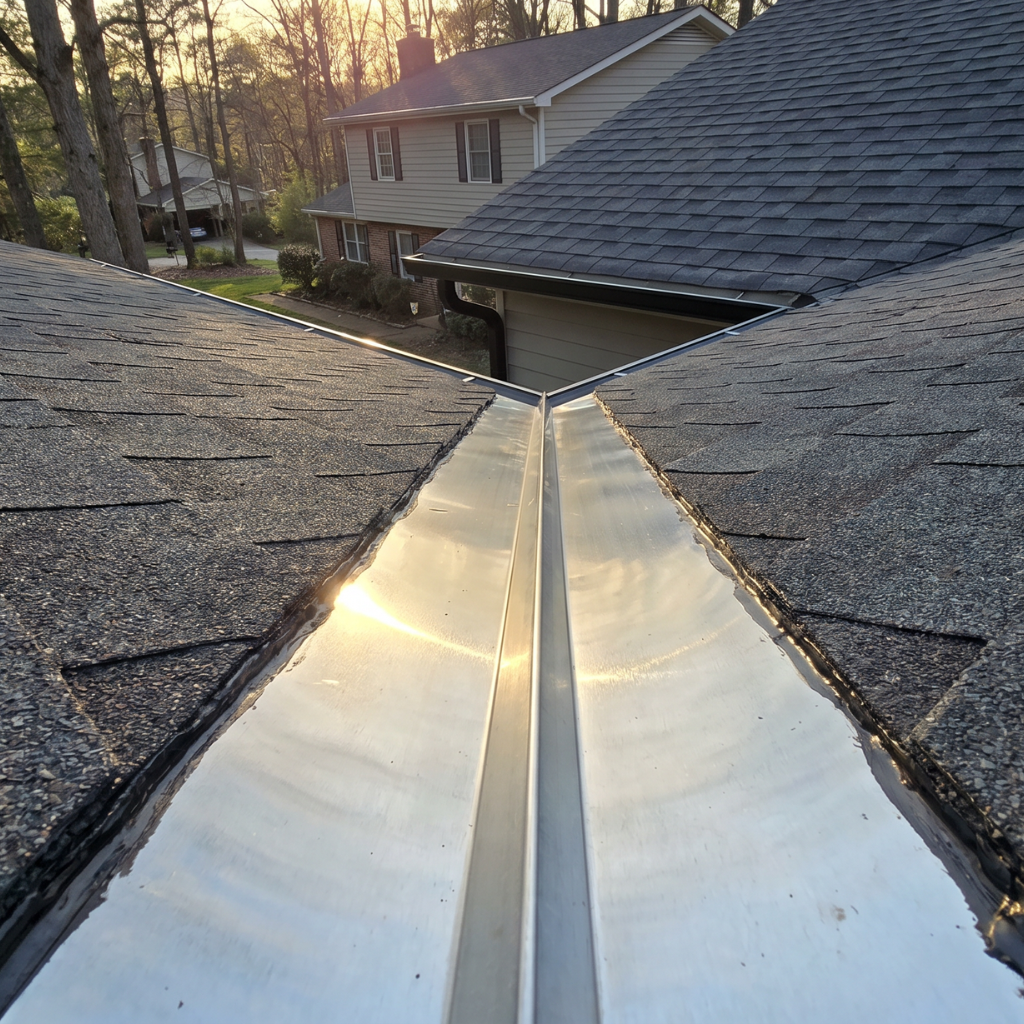
A valley is the line where two roof slopes meet and angle down together, like the inside crease of an open book. All the water from both slopes funnels into that crease, so valleys handle more runoff than any other part of the roof. That volume is exactly why they are vulnerable.
Flashing is the metal that seals the transition points on a roof, the spots where shingles alone cannot keep water out. You have flashing in your valleys, around your chimney, along any wall or dormer the roof meets, and around every pipe and vent that pokes through. When flashing is solid, water rolls right past these seams. When it bends, lifts, or corrodes, water sneaks behind it and into your home.
Both fail for predictable reasons. Aluminum oxidizes and galvanized steel loses its zinc coating with age. Hail bends and kinks the metal at its fold lines. Wind lifts and creases it. And season after season, the metal expands and contracts until seams loosen. In an active hail belt, the hail part of that list moves the timeline up fast.
The Three Valley Types You Might Have
Knowing your valley type helps you understand your own roof and any repair estimate you are handed. There are three common kinds.
| Valley Type | What It Looks Like | Notes |
|---|---|---|
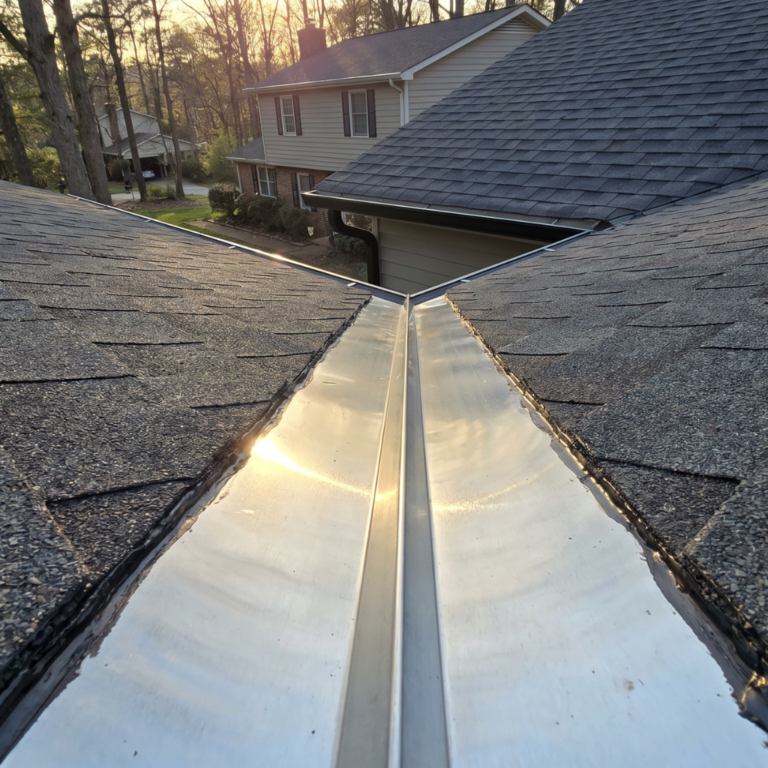
| Open valley | A visible metal channel runs down the crease, with shingles stopping short on each side | Easy to inspect and clean, sheds water fast, the most common choice in Southwest Missouri |
| Closed cut valley | Shingles from one slope cross the valley, and shingles from the other are trimmed in a straight line over them, so no metal shows | Clean look, but debris can collect and it is harder to inspect |
| Woven valley | Shingles from both slopes alternate and weave through the valley | Good leak resistance when done right, but labor intensive and not compatible with laminated or architectural shingles |
You can usually tell which you have from the ground. If you see a strip of metal running down the crease, you have an open valley. If the valley is fully shingled with no visible metal, you have a closed cut or woven valley. For the Greene County climate, an open valley has real advantages, since it is the easiest to inspect for hail damage and the fastest to shed a heavy downpour.
Common Signs of Valley and Flashing Failure
The location of a stain or a symptom usually points to the source. Use this table to read the clues.
| Symptom | Likely Source | Urgency |
|---|---|---|
| Ceiling stain where two roof planes meet | Valley failure | High |
| Ceiling stain near the chimney | Chimney step or counter flashing | High |
| Ceiling stain near a bathroom or kitchen vent | Pipe boot failure | High |
| Ceiling stain near a dormer | Dormer wall flashing | High |
| Granules piling at only one downspout | A valley concentrating runoff and losing granules | Moderate |
| Lifted metal edge visible near the chimney | Step or counter flashing pulling away | High |
| Rust streaks on the fascia below one valley | Valley flashing starting to fail | Moderate |
| Water entry only during driving wind and rain | Flashing lifted by wind | High |
If a leak shows up only during hard, wind driven storms, that is a classic flashing signature. The wind drives water up and under a piece of flashing that has lifted just enough to let it in. In calm rain, the same roof may stay dry.
What Hail Does to Your Flashing
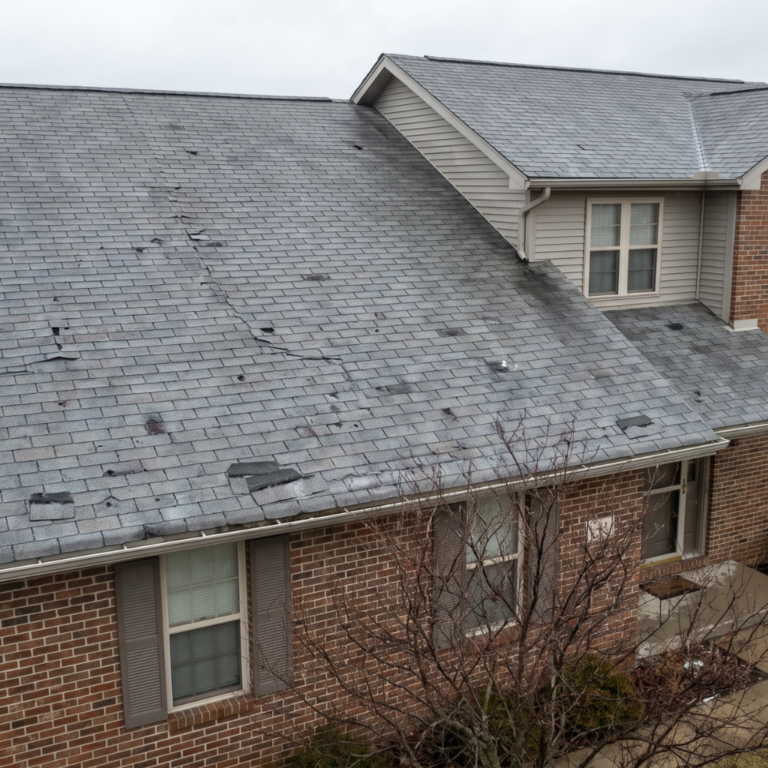
This is the part most homeowners, and a surprising number of adjusters, get wrong. Hail does not usually punch holes in flashing. It bends and kinks the metal along its fold lines.
That bending does real damage. A kinked open valley flashing creates tiny channels where water can redirect sideways, toward the open roof field instead of straight down the valley where it belongs. Step flashing along a chimney or dormer gets knocked loose by hail and separates from the wall surface, opening a gap behind it. None of this looks dramatic from the driveway, which is exactly the problem. It helps to know where hail hits hardest on a roof, because those are the same spots where valleys and flashing take the worst of it.
Because the damage is subtle, it requires a close, roof level look to find. An inspector standing on the roof can see a kinked valley or a separated step flashing in seconds. From the ground, or from a quick walk around, it disappears. So if you had a hail event and now have a leak near a valley or a chimney, treat it as a possible insurance claim, not just a maintenance call.
The Insurance Angle for Strafford Homeowners
Here is the money point, and it deserves to be near the top, not buried at the end. Hail bent valley or step flashing is covered under a standard homeowners policy as sudden storm damage. You do not have to absorb that cost yourself.
The catch is that adjusters miss it constantly. Bent flashing without obvious shingle damage looks minor from a distance, so it gets left off the initial scope. That is not necessarily bad faith, it is just hard to see without getting up close. The fix is documentation. Have your contractor present at the adjuster inspection, and document the flashing damage with roof level photos.
When the adjuster’s first scope leaves out flashing that is clearly damaged, the roof supplement process is how those missed items get added back. Your contractor documents the overlooked flashing and submits it for the insurer to include. Understanding how a roof claim works before you file makes this whole process smoother, and repairing storm damage the right way always starts with a complete, honest scope. To tie your damage to a specific event, pull the storm record for your Strafford zip from the NOAA Storm Events Database.
Is This a Repair or a Replacement Signal?
Sometimes failing flashing is a simple fix. Sometimes it is the first sign the whole roof is near the end. Age and pattern tell you which.
| Your Situation | Likely Recommendation |
|---|---|
| Roof under 10 years old, one cracked pipe boot | A targeted repair, replace the boot only |
| Roof 15 to 20 years old, chimney step flashing failing | A repair may buy a few years, but consider full replacement |
| Roof 20 plus years old, flashing failing in several spots | The flashing is a symptom, plan for a full inspection and likely replacement |
| Hail bent valley flashing on an otherwise sound roof | An insurance claim plus a targeted repair |
| New roof with flashing already leaking | A workmanship issue, call the installing contractor back under warranty |
The pattern matters more than any single failure. One bad pipe boot on a young roof is just maintenance. Flashing failing in several places on an older roof usually means the metal across the whole roof has reached the end of its life at the same time, and chasing one leak at a time becomes a losing game.
The Repair Process: What to Expect
Different flashing repairs involve very different amounts of work. Here is how the common ones go.
Pipe Boot or Single Point Flashing
This is the fastest repair. The crew removes a few courses of shingles around the failed piece, usually two to four rows, takes out the old boot or flashing, and installs the new one. For a pipe boot, getting the right size for the pipe diameter is what makes the seal watertight. Then the shingles go back and every edge gets sealed. Most of these are done in one to four hours.
Valley Flashing Replacement
This is more involved. On a closed valley, shingles have to come off both sides of the valley. On an open valley, shingles are removed several inches back on each side. The old flashing comes out and the valley gets cleaned down to the deck. New underlayment goes in along the full length of the valley, extending at least eighteen inches on each side. The new flashing is centered in the valley and fastened near its outer edges only, about an inch in, never through the center water channel where nail holes would invite leaks. Any seams overlap at least six inches, with the upper piece lapping over the lower so water always runs over a joint, not into it. These details follow long established copper valley flashing standards that carry over to metal valleys generally. Then the shingles are re-laid and sealed.
Chimney Saddle or Counter Flashing
This is the most complex, and often the most important. A chimney saddle, sometimes called a cricket, sits behind the chimney and splits water around it. Counter flashing seals the chimney sides over the step flashing. This work frequently requires custom fabrication to fit your specific chimney. Copper is the most durable and traditional material here. Some older Strafford homes still have lead chimney flashing, which calls for careful handling and proper disposal when it is replaced.
DIY or Pro: The Honest Assessment
Some of this is reasonable for a confident, well equipped homeowner. Most of it is not, mainly because of fall risk and the precision a watertight seal demands.
| Task | DIY Possible? | The Honest Recommendation |
|---|---|---|
| Caulking a visible gap on accessible flashing | Possible | Use a roofing grade polyurethane or silicone sealant, and only if you can reach it safely |
| Replacing a pipe boot | For an experienced DIYer | Real fall risk, and correct sizing is critical for the seal |
| Open valley flashing replacement | Pro recommended | Requires proper shingle removal and re-installation |
| Chimney step flashing | Pro strongly recommended | Complex, and a small error creates a hidden leak |
| Any work on a wet or steep roof | Never DIY | The fall risk is simply too high |
If a leak is active and water is getting into your home while you line up a proper repair, do not wait it out. A fast emergency repair protects your interior until the full job can be scheduled.
Why Flashing Fails in Strafford Right Now
This is not a theoretical problem here, it is a timing problem. Strafford sits about ten miles east of Springfield along Interstate 44, and a large share of its housing stock was built from the 1970s through the 1990s. The shingles on many of those homes may have been replaced once already, but the original flashing often has not, and it is now well past its useful life.
Layer the weather on top. Strafford sits in the same Springfield National Weather Service forecast area as the rest of Greene County, a zone that averages roughly ten tornadoes a year and sees hard hail through the spring. Springfield’s National Weather Service tracks the events that age local flashing faster than the calendar alone would. The bigger picture backs this up: NOAA’s billion dollar disaster record shows Missouri logged 120 separate billion dollar weather and climate disasters between 1980 and 2024. Aging metal plus a steady diet of hail is why flashing failures are common in Strafford today, not just possible someday.
Your contractor handles any required permits as part of the job.
While flashing is the focus here, it often shares a root cause with other roof problems like trapped attic heat and moisture. If your home has shown other warning signs, the signs of poor roof ventilation are worth a look too, since ventilation and flashing both protect the same structure.
Practical Application: How to Handle a Suspected Flashing Leak
If you think a valley or flashing is leaking, work this list in order.
- Note exactly where the stain or drip appears inside, since the location points to the source.
- From the ground, look for lifted metal near the chimney, rust streaks below a valley, or granules at one downspout.
- Check whether the leak only happens during wind driven rain, a classic flashing sign.
- If you had a recent hail event, treat the leak as a possible insurance claim from the start.
- Photograph everything you can see safely, and note the date of the storm you suspect.
- Schedule a roof level inspection rather than guessing, since flashing damage hides from the ground.
- If it is storm related, have your contractor present when the adjuster inspects.
- Pull the storm record for your zip so your claim ties to a documented event.
The honest truth is that flashing damage is hard to assess from the ground, which is the whole reason it gets missed. Our professional roof repair work always starts with a real look, and booking a free inspection is the simplest way to find out whether you are facing a quick fix or something larger.
Frequently Asked Questions
What is the most common cause of roof leaks in Strafford? Failed valleys and flashing, not missing shingles. The metal that seals your valleys, chimney, and vents wears out or gets bent by hail, and water sneaks in behind it. On Strafford’s older homes, original flashing is frequently past its useful life even when the shingles still look fine, which makes it the leading hidden leak source in the area.
How do I know if my valley is leaking? Look for a ceiling stain where two roof planes meet inside the house. From the ground, check for rust streaks on the fascia below a valley or granules piling at the downspout that valley feeds. A valley leak often gets worse during heavy rain, when the most water is funneling through that crease. A roof level inspection confirms it.
What is the difference between an open and a closed valley? An open valley has a visible metal channel running down the crease, with shingles stopping short on each side. A closed valley is fully shingled, with no metal showing. Open valleys are easier to inspect and shed water faster, which is why they are popular here. Closed valleys look cleaner but can hide damage and collect debris.
Is flashing damage covered by homeowners insurance in Missouri? Hail bent or storm damaged flashing is generally covered as sudden storm damage. The challenge is that adjusters often miss it, because bent flashing without obvious shingle damage looks minor from a distance. Have your contractor present at the inspection and document the damage with roof level photos so it makes it onto the claim.
How long does flashing repair take? A single pipe boot or one flashing piece is often a one to four hour job. A full valley flashing replacement takes longer because shingles must come off and go back on. Chimney saddle or counter flashing work can take longer still, especially when custom fabrication is needed. An inspection gives you an accurate time estimate for your specific roof.
Can hail damage flashing without damaging the shingles? Yes, and this is exactly why so much flashing damage gets missed. Hail bends and kinks metal at its fold lines while leaving the surrounding shingles looking intact. That bent flashing still lets water in, but from a distance the roof appears fine. It takes a close, roof level inspection to catch it.
What type of flashing should my Strafford home have? Most local homes use aluminum, which resists rust and is the standard residential choice. Galvanized steel is also common but needs paint over time. Copper is a premium, long lasting option often used on chimney work or historic homes. Some older Strafford homes have lead chimney flashing, which should be replaced with the correct material and handled carefully.
Do I need a permit for flashing repair in Strafford? Your contractor handles any required permits as part of the job. Ask upfront so nothing delays your start date.
How do I know if I need a full replacement instead of just flashing repair? Age and pattern are the clues. One failed flashing point on a young roof is usually a simple repair. Flashing failing in several places on a roof that is twenty years or older often means the metal across the whole roof has reached the end of its life together, which points toward replacement. A full inspection settles the question honestly.
Key Takeaways
Where Leaks Really Start
- Most leaks come from valleys and flashing, not missing shingles.
- Valleys funnel the most water and are the most vulnerable spot.
- Flashing seals the seams at walls, chimneys, valleys, and vents.
What Hail Does
- Hail bends and kinks flashing rather than punching holes.
- Bent flashing redirects water and opens gaps behind it.
- The damage hides from the ground and needs a roof level look.
The Insurance Point
- Hail bent flashing is covered storm damage.
- Adjusters miss it often, so document with roof level photos.
- A supplement adds missed flashing items back to the claim.
Repair or Replace
- A single failure on a young roof is usually a quick repair.
- Multiple failures on an older roof point toward replacement.
- Age and pattern, not a single leak, tell the real story.
Not Sure If It Is Flashing or Something Bigger?
A valley or flashing leak can be a simple afternoon repair, or it can be the first sign your roof is ready to be replaced. The only way to know which is to have someone get up there and look closely at the metal, the valleys, and the seams.
The crews at ProNail Exteriors trace leaks to their real source on roofs across Southwest Missouri and know exactly where flashing fails on Strafford’s older homes. A free inspection gives you a straight answer and a written report you can use if hail damage turns it into an insurance claim. Call (844) 321-6245 and we will tell you precisely what you are dealing with, with no pressure either way.
ProNail Exteriors | Roofing, Siding, Windows, Gutters, and More | Serving Southwest Missouri Since 2025