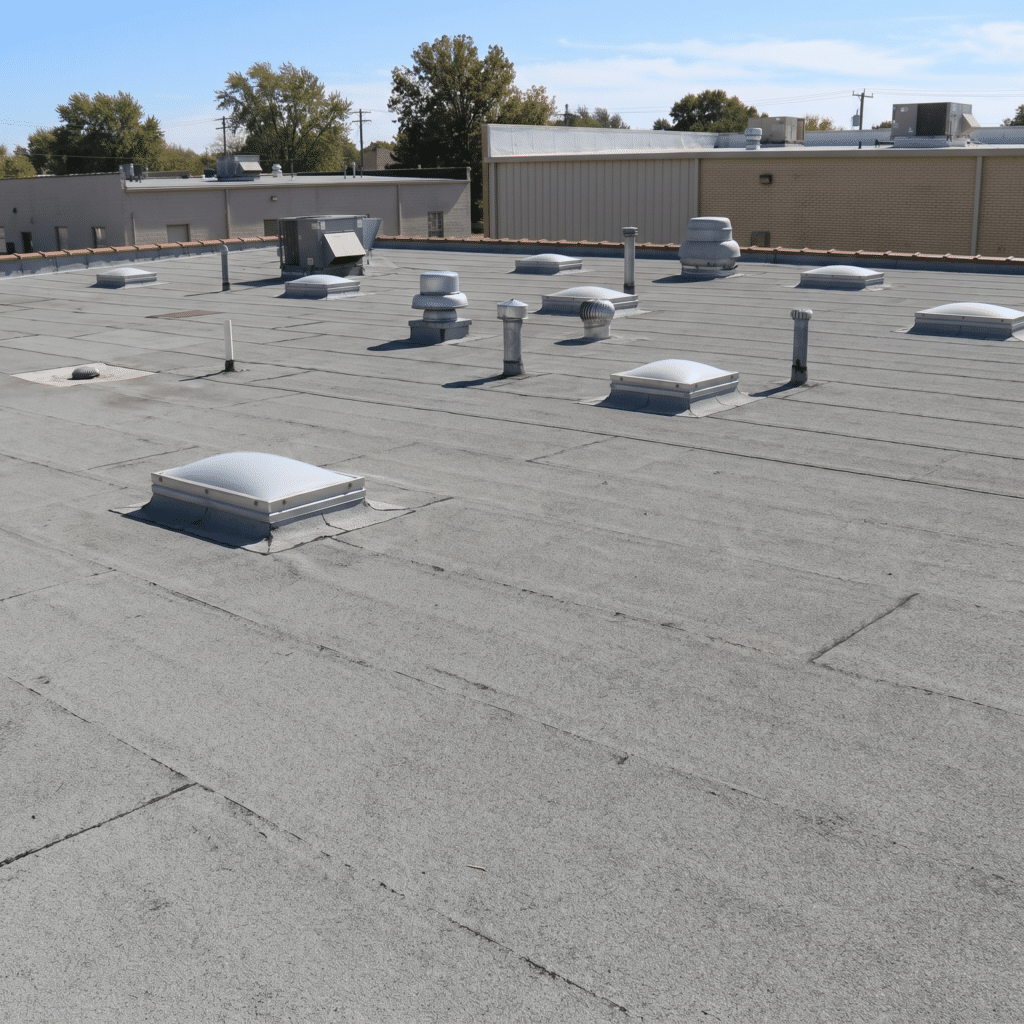
TLDR: Flat and low-slope roofs on local homes usually show up on garages, additions, and porch covers, not the whole house. They use membrane systems, not shingles, so they fail in their own ways. The six problems to know are ponding water, seam and flashing failure, blistering, punctures, shrinkage, and age. This guide shows how to spot each one, when repair beats replacement, and what to do after a storm. ProNail repairs all three common membrane types.
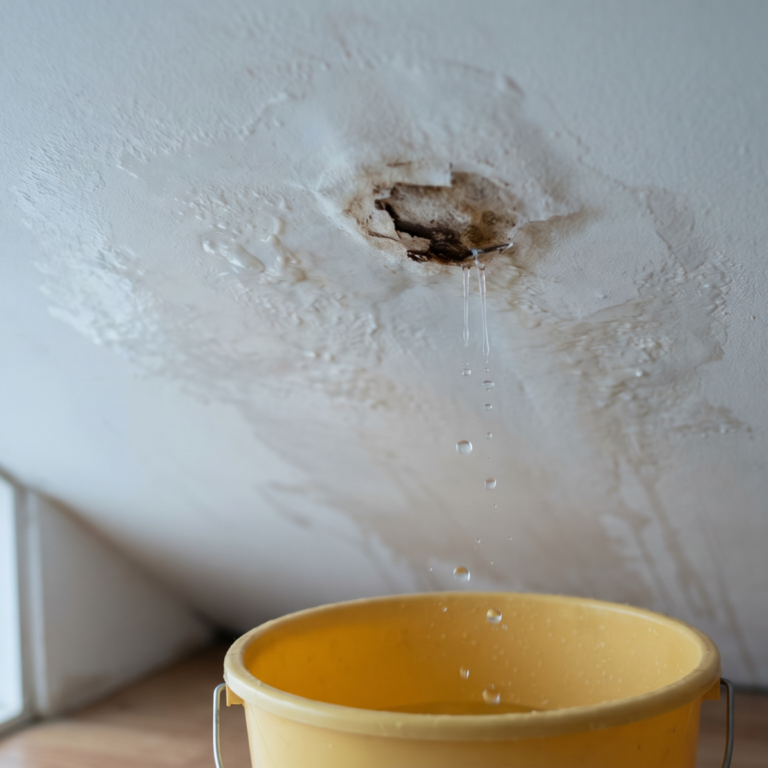
You noticed a stain spreading across the ceiling of your garage or back addition, and the strange part is the main roof looks fine from the yard. The shingles up top are not the problem. The low, flat section over the addition is.
Flat roofs behave nothing like the sloped, shingled roofs most homes have. They shed water differently, leak in different places, and need a different kind of repair. If you have never thought about yours, that is normal. Most homeowners do not learn what they have up there until water shows up inside.
This guide covers where these roofs hide, the three membrane systems you might have, the six ways they fail, how to tell repair from replacement, and what to do after a storm.
Where homeowners find flat roof sections
Most homes around Greene County are sloped, shingled construction. The flat parts are almost always secondary: a spot here or there, not the whole roof.
A flat roof is roofing shorthand. A true flat roof has almost no pitch. A low slope roof has a pitch of about 3 in 12 or less, meaning less than 3 inches of rise for every 12 inches across. Both shed water too slowly for shingles, so they use a smooth membrane instead. That membrane is the waterproof skin that does the work shingles would do on a steep roof.
You will usually find these sections on attached and detached garages, home additions and sunrooms, porch and carport covers, and the low connector areas between steeper slopes on a complex roofline. Many of these were added to Ozark, Republic, and Battlefield homes between the 1980s and the 2000s, which means a lot of them are now reaching the age where leaks begin.
The three membrane systems, and what you might have
Flat sections use one of three single ply or layered membrane systems. ProNail repairs all three. Here is how to tell them apart and what each one does well.
TPO is a white or light colored single ply membrane. Its seams are heat welded, which makes a strong bond when the work is done right. It lasts roughly 15 to 25 years, and its reflective surface helps cut summer cooling load. Its weak points are seam separation and punctures. You will see it most on newer construction and additions built in the last 15 to 20 years.
EPDM is a black synthetic rubber membrane. Its seams are joined with tape or adhesive, which were once the weak link but have improved a lot. It lasts about 20 to 30 years and handles freeze and thaw cycles very well. The catch is that the black surface absorbs heat, which can shorten its life on sun beaten slopes. It is common on garages and additions from the 1990s and 2000s.
Modified bitumen is a multi layer asphalt system, applied by torch or cold adhesive. It lasts roughly 15 to 20 years and stands up to foot traffic better than the others, which suits roofs that get walked on for service. It is more sensitive to heat cycling in our hot summers, and the torch version needs experienced installers to avoid fire risk. Older garages and additions in the area often have this system.
| System | Typical lifespan | Seam type | Heat performance | Foot traffic |
|---|---|---|---|---|
| TPO | 15 to 25 years | Heat welded | Best, reflective | Low to moderate |
| EPDM | 20 to 30 years | Tape or adhesive | Absorbs heat | Low to moderate |
| Modified bitumen | 15 to 20 years | Torch or cold applied | Moderate | High |
Most homeowners do not know which system they have until a leak forces the question. A quick look by someone who works on these will tell you fast.
Six common flat roof problems and what causes them
Flat roofs fail in a handful of predictable ways. Knowing them helps you describe the problem and judge how serious it is.
1. Ponding water. This is the most common flat roof problem by far.
Ponding is water that still sits on a flat roof more than 48 hours after rain. Low slope roofs get little help from gravity, so any low spot, clogged drain, or install flaw turns into a standing pool. That standing water breaks down the membrane, stresses the seams, and eventually finds a way in. Our heavy summer downpours expose weak drainage fast.
The fix is about drainage, not just patching. Clearing the drains and scuppers (the drain openings at the roof edge), adding drains or the small raised ridges called crickets, or laying tapered insulation to steer water toward the outlets all help.
2. Seam and flashing failure. Seams and flashings are the most vulnerable points on any flat roof. Heat and cold make the materials expand and contract, and over the years seams lift, crack, or separate. The flashings at walls, curbs, and roof penetrations are usually where the first leak shows. The fix re-welds or re-adheres the seam, or replaces the flashing with proper metal or membrane material. Caulk alone is not a flashing repair. It cracks and fails within a couple of years.
3. Blistering. Blisters form when moisture gets trapped under the membrane and the sun heats it, pushing up a bubble. A small, dry blister can sometimes be left alone. A large one, or any that has broken open, needs repair. The fix opens the blister, lets it dry fully, then patches and seals it flat with compatible material.
4. Punctures. Foot traffic, falling branches, hail, and rooftop service visits all put holes in a membrane. EPDM and modified bitumen resist punctures better than TPO. Our hail seasons add real risk here. The fix patches the hole with matching membrane cut to extend several inches past the damage on every side, then seals all the edges.
5. Shrinkage and pull back. EPDM in particular can shrink over time and pull away from edges, walls, and penetrations, opening gaps for water. Poor installation speeds this up. The fix re-adheres the pulled sections and adds membrane where gaps have formed. If it is widespread, replacement may be the better answer.
6. Age and end of life. Every membrane has a finite life. As it ages it grows brittle, loses flex, and develops fine cracks. At some point repeated repairs cost more than a new roof. A close inspection tells you whether the membrane still has useful years left or has crossed that line.
Illustrative scenario: A homeowner notices a ceiling stain in the attached garage after a severe spring storm. The sloped shingles look fine from the ground, so that is where attention goes. The real leak is the flat deck section over a back addition, where a seam has separated and is channeling water toward the garage wall. The sloped roof gets inspected, the flat section gets missed, and the leak keeps going. Checking every roof surface after a storm is the only way to find the true source.
Repair or replace: how to decide
Not every flat roof problem means a new roof. Often a targeted repair is the right call. Use this as a starting guide, and let an inspection settle the close cases.
| Condition | Repair | Replace |
|---|---|---|
| One seam failure, newer membrane | Yes | No |
| Multiple seam failures across the surface | No | Yes |
| Single puncture, sound membrane | Yes | No |
| Widespread blistering | No | Yes |
| Local ponding at one clogged drain | Yes | No |
| Ponding across several low spots | Maybe | Likely |
| Soft deck in one small area | Maybe, with deck repair | Depends on extent |
| Soft or rotted deck across a large area | No | Yes |
| Membrane past 20 years and brittle | No | Yes |
The short version: repair makes sense when the damage is local, the membrane is still flexible, and the deck beneath is dry. Replacement makes sense once the membrane has passed roughly 75 to 80 percent of its life, the ponding cannot be drained away, or the deck has taken on moisture across a wide area.
The biggest mistake I see on flat roof repairs is patching the visible damage while ignoring the drainage. A patch holds water in place just as well as the original membrane did. If the drain is clogged or the low spot is built in, that patch buys you months, not years.
How our weather is hard on flat roofs
Southwest Missouri gives flat roofs a workout. Summer thunderstorms dump heavy rain fast, which overwhelms slow draining roofs and starts the ponding cycle. Freeze and thaw swings flex the seams until they give. And long, hot summers age every membrane, especially dark EPDM.
Hail is the quiet one. A stone that barely marks an asphalt shingle can punch right through an aging membrane. After a spring hailstorm, the flat section on a home in Strafford or Willard is often the first thing to leak, not the shingles above it. That is why a storm inspection should cover the low slope areas too, not just the steep roof.
What to do after a storm
Storm damage to a flat roof from hail, wind, or falling debris is covered the same way sloped roof damage is, as long as it is sudden and storm related. The trick with flat roofs is that the evidence is subtle. There is no dramatic missing shingle, so adjusters sometimes chalk a flat roof leak up to drainage or maintenance instead of the storm.
That makes documentation everything. After a storm, photograph the whole roof surface, any dented rooftop equipment, damaged scuppers, and any debris that landed up there. Date your photos. The more you can tie the damage to the storm, the stronger your claim.
A couple of legal points worth knowing. Under Missouri’s roofing contractor law, a contractor cannot waive or cover your deductible, and cannot negotiate the claim on your behalf. Those rules apply to flat roof work the same as shingle work. Missouri also sets deadlines for an insurer to acknowledge a claim and then approve or deny it once they have the documentation they need. If you feel an insurer is not acting fairly, you can file a complaint with state regulators.
For more on the claim process, our explainer on how a roof insurance claim works walks through the stages, and if the leak is active, our emergency roof repair page covers the urgent steps. You can also pull storm context from the area’s severe weather data.
A note on permits
Permit rules depend on where your home sits and what work is being done. In Springfield, standard roof repair and re-cover, including flat roof work, is treated as repair and maintenance, and a permit is not required for a typical repair. A permit is required only when a structural framing element is altered or when more than a set area of roof deck sheathing is replaced.
Rules in Ozark, Nixa, Republic, and unincorporated Greene County are set by those jurisdictions, not by the largest city in the region. Confirm your specific job with the relevant local building department before work begins. A good contractor handles this step for you.
Frequently asked questions
How long does a flat roof last in Missouri? It depends on the system. TPO runs about 15 to 25 years, EPDM about 20 to 30, and modified bitumen about 15 to 20. Our heat, hail, and heavy rain tend to push real world lifespans toward the lower end of those ranges, and good drainage and installation push them higher.
What causes ponding water on a flat roof? Ponding happens when water cannot drain within about 48 hours of rain. The usual culprits are a clogged drain or scupper, a low spot from settling or a slight install flaw, or drainage that simply cannot handle a heavy downpour. Standing water then breaks down the membrane and stresses the seams until it leaks.
How do I know if my flat roof needs repair or replacement? Repair usually makes sense when the damage is local, the membrane is still flexible, and the deck below is dry. Replacement makes sense once the membrane is past about 75 to 80 percent of its life, ponding is widespread, or the deck has moisture damage across a large area. An inspection settles the close calls.
Does homeowners insurance cover flat roof repairs? Sudden, storm related damage from hail, wind, or debris is generally covered, the same as on a sloped roof. The challenge is that flat roof damage is less obvious, so insurers sometimes call it a maintenance issue. Strong, dated photos of the storm damage are the best way to support a covered claim.
Can hail damage a flat roof even if there are no visible holes? Yes. Hail can bruise and weaken a membrane, crack an aging surface, and split seams without leaving an obvious hole. The damage often shows up later as a leak. That is why a flat section should be inspected after any hailstorm, even when it looks fine from the ground.
Key takeaways
Know what you have
- Flat sections usually sit on garages, additions, and porches, not the whole house.
- The three systems are TPO, EPDM, and modified bitumen, and most homeowners learn theirs only when it leaks.
Know how they fail
- Ponding water is the number one problem, and it is a drainage issue.
- Seams, flashings, blisters, punctures, and shrinkage cause most leaks, and hail can damage a membrane with no visible hole.
Know your next step
- Repair local damage on a sound membrane, replace a worn out one.
- Document storm damage with dated photos, and fix the cause, not just the visible spot.
Have a flat roof leak? Get it looked at the right way
A flat roof leak is easy to misdiagnose and easy to patch wrong. The fix has to address the drainage and the seam, not just the wet spot, or it will be back within a season. ProNail Exteriors repairs all three common flat and low slope systems, TPO, EPDM, and modified bitumen, and inspects the sloped sections of your roof in the same visit.
If your garage, addition, or porch roof is leaking, call (844) 321-6245 for a flat roof inspection. We will find the real source and explain your options with no pressure. For sloped roof work, see our roof repair process, storm damage roof repair, and roof repair quality checklist.
ProNail Exteriors | Roofing, Siding, Windows, Gutters, and More | Serving Southwest Missouri Since 2025