
A roof can look untouched from the ground and still drip water through your ceiling a week later. After the April 28, 2026 storm, hundreds of Southwest Missouri homeowners are watching brown stains spread across their drywall and wondering what is actually broken up there. This guide walks through the most common storm-related leak sources and why the stain on your ceiling almost never sits directly under the actual entry point.
TLDR: Most storm-related roof leaks come from flashing, pipe boots, valleys, wind-driven rain, or hail bruising. The drip inside is rarely directly below where water is entering the roof. Some hail damage from April will not produce a visible leak until fall or winter. A real inspection starts in the attic, not on the ceiling stain.
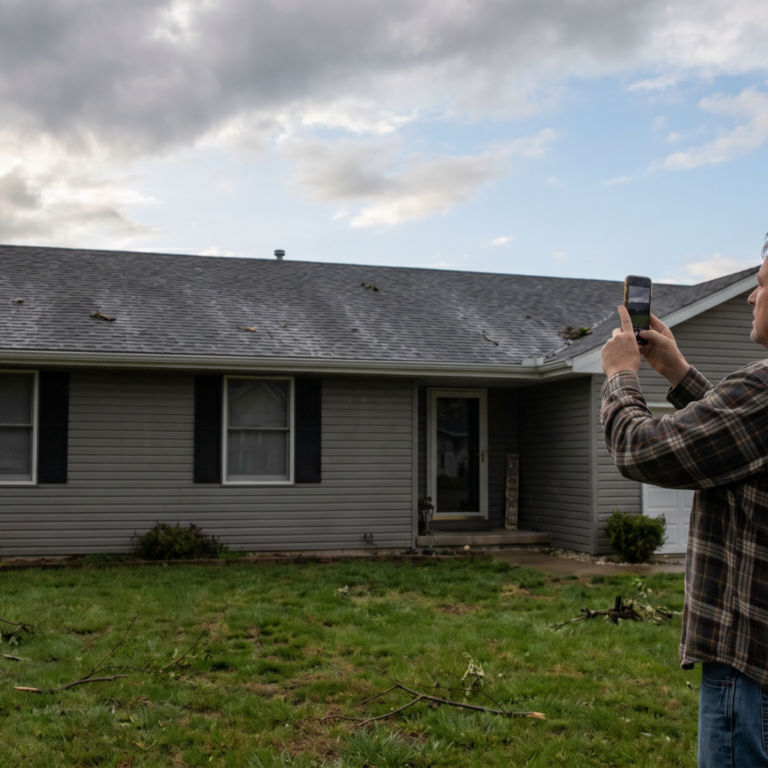
You walked through your house after the storm and everything looked fine. No missing shingles in the yard. No daylight in the attic. A week later, a brown ring shows up on the ceiling. A roof is a water-shedding system, not a waterproof barrier. It works in normal rain. A real storm tests every seam, every penetration, and every transition at once. Most of what fails is invisible from the driveway.
The Leak Is Almost Never Where the Stain Is
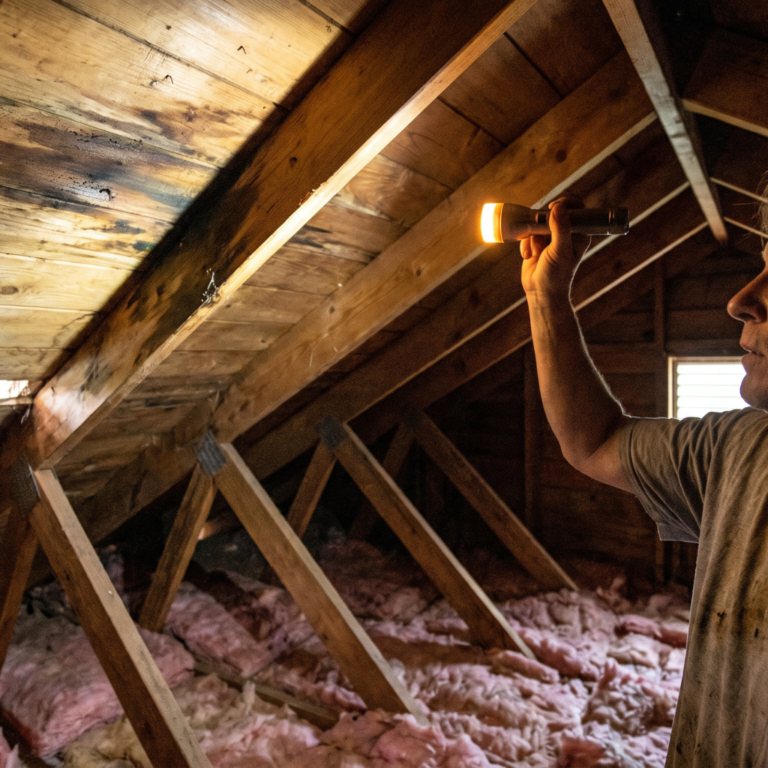
Water that enters at a damaged spot on your roof does not fall straight down. It travels along the underside of the decking, runs down a rafter, and drips through wherever gravity finally pulls it through the drywall. A ceiling stain can sit three or four feet from the actual entry point, sometimes farther.
Caulking the spot directly above the stain almost always patches the wrong thing. The water keeps coming, the stain reappears in a few weeks, and the real damage continues.
Tip: Always check the attic first. Wet insulation, water trails on rafters, or dark stains on the underside of the decking will point you closer to the real entry point than any ceiling stain will.
Flashing Is the Most Common Cause You Have Never Heard Of
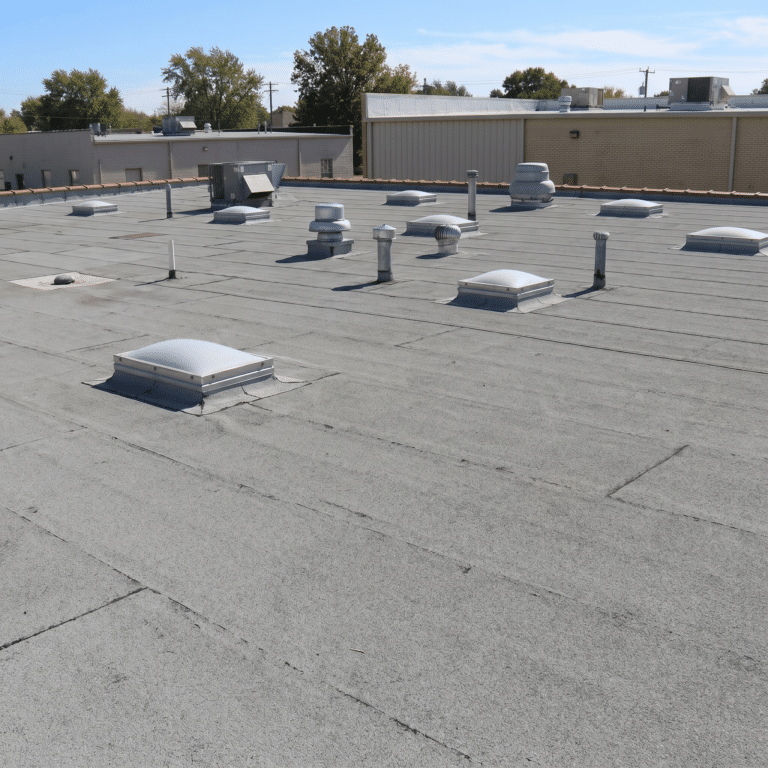
Flashing is the thin metal that seals every transition on your roof, including the chimney, the wall-to-roof joint, the skylight edges, and every valley. It is where most leaks actually start.
Hail can dent or crack the metal. High wind can lift or shift it. The sealant behind it can dry out and break under impact force. Even a slightly lifted piece creates a path that works fine in vertical rain but fails the moment wind pushes water sideways.
| Flashing Type | What It Does | What a Storm Does to It |
|---|---|---|
| Chimney step flashing | Seals the chimney-to-roof joint | Wind lifts; sealant cracks; metal dents |
| Valley flashing | Channels water from two slopes | Hail dents; debris dams water against it |
| Skylight flashing | Seals around skylight curb | Direct hail hits crack seams |
| Pipe boot | Seals around vent pipes | Rubber cracks; flange lifts in wind |
| Drip edge | Directs water into gutter | Bends under hail; pulls loose in wind |
Warning signs inside: brown streaks down a chimney wall, water stains in a corner where the ceiling meets an exterior wall, or mold on the attic roof-wall joint. Our full storm damage walkthrough covers what each pattern means and how to document it for an insurance claim.
Pipe Boots Are the Hidden Leak Most Homeowners Miss
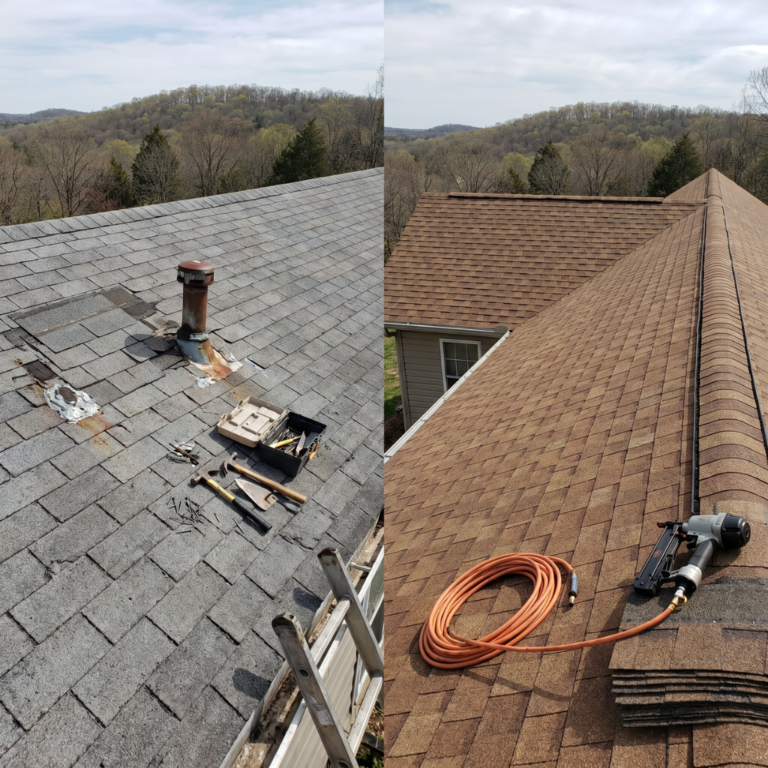
A pipe boot is the rubber or metal collar around every plumbing vent coming through your roof. Standard rubber boots last roughly 10 to 15 years, but most roofs last 25 to 30 years. Pipe boot failure is nearly guaranteed at some point. A big storm just speeds up the timeline.
Hail cracks aging rubber. Wind dislodges the nails holding the flange. Even a new boot can take a direct hit from large hail and split open. Pipe boot leaks are one of the few cases where the interior stain actually sits roughly below the entry point.
Pro tip: Take a zoomed photo of the rubber collar at the base of each vent pipe from the ground after a storm. Visible cracks, lifted flanges, and torn rubber often show up clearly even from below.
Wind-Driven Rain Explains Storm-Only Leaks
Normal rainfall falls close to vertical. Roofs are built to shed that. Wind-driven rain hits at 45 to 90 degrees and pushes water horizontally into seams that vertical rain never touches. The Springfield hailstorm event brought both extreme hail and high-angle rain to the same homes.
Wind-driven rain exploits any small weakness, including a slightly lifted shingle, a dried sealant bead, or a single missing flashing nail, that would never cause a problem in a normal downpour. If your roof leaked during the storm but does not leak in regular rain, do not assume it is fine. That pattern usually means a localized vulnerability that the next high-wind storm will find again. NWS data on local storm patterns confirms storms in our region routinely combine hail and high-angle rain in the same event.
Hail Damage Often Shows Up Months Later
Homeowners in Ozark, Nixa, Forsyth, Marshfield, Bolivar, Rolla, and Strafford should pay special attention here. Hail rarely punches a clean hole through a shingle except at very large sizes. What it usually does is bruise the asphalt mat, knock granules loose, and crack the fiberglass webbing inside. The shingle keeps shedding water for a while. Then it does not.
| Time Since Storm | What Is Happening to the Shingle | Visible Sign | Leak Risk |
|---|---|---|---|
| Day of impact | Mat bruised; granules dislodged | Shiny circular marks | Low |
| 1 to 3 months | Granules wash off; mat exposed | Dark circular spots | Low to moderate |
| 3 to 6 months | UV bakes the cracked mat | Granule piles in gutters | Moderate |
| 6 to 12 months | Cracks widen with heat cycling | Felt sponginess underfoot | Moderate to high |
| 12 months and beyond | Freeze-thaw opens the cracks | First visible leak inside | High |
A storm that hit in April can produce its first ceiling stain in November or December. NOAA’s hail science research covers how hailstones form and grow inside severe storms. Independent shingle impact ratings from IBHS confirm that even Class 4 asphalt shingles are rated only to 2-inch hail. The softball-sized hail recorded on April 28 was more than twice that threshold.
Important: No leak right now does not mean no damage right now. A roof can hide hail bruising for most of a year before the first drop comes through.
Why Tracing a Leak Takes a Professional
A proper inspection starts in the attic, looking for daylight, wet insulation, and water trails on the rafters. From there it moves to the roof surface and checks every penetration, every valley, every edge, and every transition. The goal is to find the entry point, not the stain.
| Actual Entry Point | Where the Stain Shows Up Inside |
|---|---|
| Chimney flashing | Wall near fireplace, ceiling 3-6 ft away |
| Pipe boot | Ceiling directly below the vent |
| Valley | Ceiling at slope intersection or dormer |
| Wind-lifted shingle | Ceiling near eave or rake edge |
| Hail-bruised field | Multiple small stains across one room |
After a regional storm, homes often have multiple damage types at once. A wind-lifted shingle, a hail-cracked pipe boot, and a debris-clogged valley can all be present on the same roof. An honest roof checkup finds all of them in one visit.
Frequently Asked Questions
Why is my roof leaking now when it never leaked before? Storms create conditions normal rainfall does not. Wind drives water sideways into seams that work fine in vertical rain, and hail bruises shingles invisibly.
My roof looks fine from the ground. How is it leaking? Most storm damage is invisible from the ground. Flashing dents, cracked pipe boots, valley membrane gaps, and shingle bruising all need an on-roof inspection to spot.
How long after a hailstorm can a leak appear? Hail damage can take 6 to 12 months to show up as a visible leak. UV exposure and freeze-thaw cycles slowly widen the micro-cracks that the impact created.
Why is water coming in near my chimney? Almost always chimney flashing. Storm wind lifts the metal while hail cracks the sealant behind it.
Why is water coming in around a vent pipe? A pipe boot failure is the usual cause. The rubber collar ages out before the rest of the roof, and a direct hail hit can crack it open in one storm.
Is this storm damage or a pre-existing problem? Often both. A roof near the end of its useful life can be pushed past the edge by a single storm. Documentation, photos, and an inspection that ties damage to a specific event matter for the claim.
Should I caulk the leak myself? Temporary measures like buckets and towels are fine. Do not make permanent roof repairs before an adjuster visits. Caulking the ceiling never addresses the actual entry point.
How do I know if the valley is leaking? Check the valley from the ground for debris piles. Stains where two ceiling planes meet, or in dormer corners, point toward a valley problem.
Key Takeaways
- The leak is rarely directly below the stain. Water travels along rafters before it drips through.
- Flashing causes most storm leaks. Chimney, valley, skylight, and pipe boot flashing all fail under storm stress.
- Pipe boots wear out before the rest of the roof. Storm impact often pushes a marginal boot over the edge.
- Wind-driven rain exposes weaknesses regular rain never touches. A storm-only leak is still a real leak.
- Hail damage hides for months. April bruising often shows up as a December leak.
Call a Crew That Finds the Real Problem
Not sure where your roof is actually leaking? ProNail Exteriors hunts for the real entry point, not just the spot on the ceiling. Our crews are based in Ozark and serve Southwest Missouri from Springfield to Rolla, Forsyth to Bolivar. Founded by Eden Branson, the company runs vetted crews who know where water hides on a roof and in an attic.
Call 844-321-6245 for a free roof inspection. If a leak is hiding from the April 28 storm or any other event, the team will find it before it costs you new drywall, new insulation, or worse. If your roof has reached the end of its useful life, you will get the straight answer on replacing the whole roof as well. Talk to our crew and stop guessing about what is happening up there.
ProNail Exteriors | Roofing, Siding, Windows, Gutters, Decks, and More | Serving Southwest Missouri Since 2025